By Gordon Brown, Project Syndicate | Oct 9, 2025
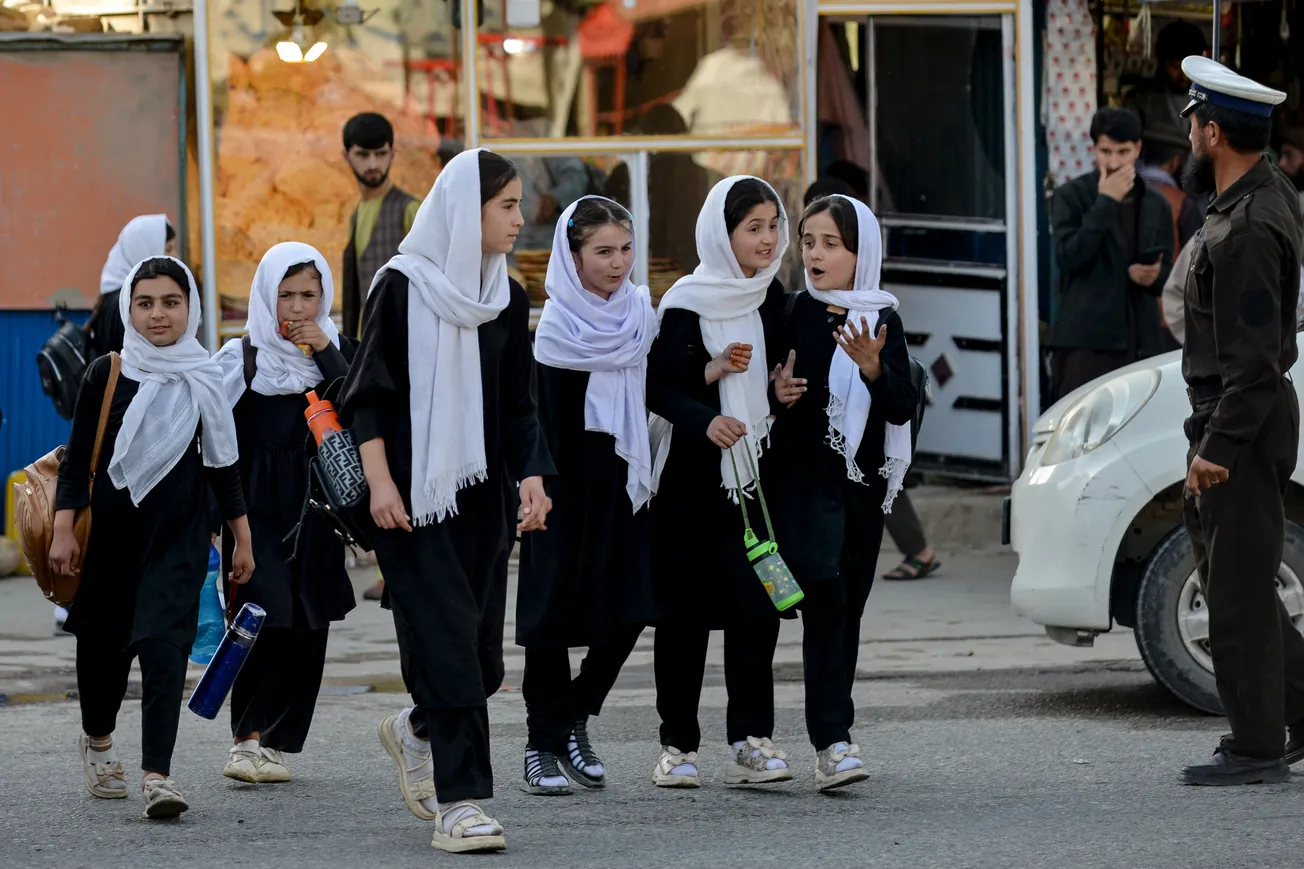
To evade the Taliban’s ban on female secondary education, Afghan girls and women have flocked to online courses. But a recent two-day internet blackout in Afghanistan, which briefly cut off this crucial lifeline, could be the start of a worrying expansion of the regime’s gender apartheid.

EDINBURGH – Four years after the Taliban excluded girls and women in Afghanistan from secondary and higher education, the regime shut down the internet, depriving them of one of their last opportunities to learn. What started as a ban in a few provinces to “prevent immoral activities” escalated to a nationwide internet blackout on September 29. While access was restored on October 1, many Afghans say that service remains slow and unstable.
The nearly 2.2 million Afghan girls barred from attending school beyond the primary level now live in fear that they will lose their last lifeline to an education. Remote learning is one of the few available alternatives (together with underground and homeschooling) for these girls to receive a secondary education while remaining in the country.
Over the last four years, Education Cannot Wait (ECW), (which I used to chair), UNICEF, and strategic partners have provided an education to 160,000 Afghan girls excluded from the classroom by scaling up community-based and accelerated learning programs in remote and underserved areas. But many of these programs have an online component and thus are almost impossible to continue when the Taliban curtails access to the internet. While the regime has yet to give an official explanation for the recent shutdown, it knew that such a cut would deny Afghans – in particular, girls and women – access to knowledge from the outside world.
The internet blackout is only the latest example of the Taliban’s increasingly brutal assault on girls’ and women’s rights. After banning girls over the age of 12 from getting an education, the regime barred women from most forms of employment, excluded them from nearly all public spaces, and prohibited them from traveling anywhere without a male chaperone. The Taliban’s draconian dress code requires women to wear burqas covering them from head to toe.
By 2024, the Taliban’s edicts became even more repressive. Women – already banned from speaking in public – were prohibited from praying aloud or reciting the Quran in the presence of other women. In 2025, as part of a broader ban outlawing the teaching of human rights and sexual harassment, the Taliban removed books written by women from universities. This included titles like Safety in the Chemical Laboratory, which the regime found to be of “concern” due to “anti-Sharia and Taliban policies.”
Against this backdrop of tightening restrictions, access to the online world was one of the few freedoms Afghan girls and women were allowed. “The only hope left for us was the internet and online learning,” one woman from the northern province of Takhar explained to the BBC. “When I heard that the internet had been cut, the world felt dark to me,” she added. Another woman, who lives in an eastern province, described feeling “helpless” in the face of internet outages: “[My sisters and I] dreamed of finishing our education and helping our father financially, but now... we all sit at home doing nothing.”
The Taliban’s cruel policies and human-rights violations have long-term consequences not only for Afghan girls and women, but also for the country’s economic growth. According to UNESCO, the lost income from the exclusion of women and girls from education will total $9.6 billion – equivalent to two-thirds of today’s GDP – by 2066. Such a huge loss would be catastrophic for a country where roughly 85% of people live on less than $1 a day, and around half the population needs humanitarian assistance to survive.
This is not the future Afghans want. A recent United Nations Women report found that 92% of the country’s population supports girls’ secondary schooling. Afghan girls continue to risk arrest by sharing their powerful testimonies and demanding the right to study in ECW’s #AfghanGirlsVoices campaign.
The UN must urgently classify gender apartheid – defined as “inhumane acts committed within the context of an institutionalized regime of systematic discrimination, oppression, and domination by one group over another or others, based on gender, and committed with the intention of maintaining that regime” – as a crime against humanity. Such a move would represent an important step toward holding the Taliban accountable for its systemic efforts to segregate, control, and silence girls and women in Afghanistan.
Muslim-majority countries have vociferously criticized the Taliban’s education ban. Qatar, which has long served as a mediator between the regime and the West, expressed deep concern about the policy. Saudi Arabia also condemned the decision, which it described as “astonishing in all Islamic countries” and as “contrary to giving Afghan women their full legitimate rights, foremost of which is the right to education.” The United Arab Emirates pushed for the ban’s swift reversal, denouncing it as a violation of “the teachings of Islam.”
Islamic teaching does indeed support girls’ education. “Iqra,” meaning to read, is the first word of the Quran. “The seeking of knowledge is obligatory for every Muslim,” states Al-Tirmidhi, Hadith 74, one of the six canonical teachings in Sunni Islam and a sign of the faith’s deep commitment to learning by men and women alike. In accordance with these beliefs, the Organization of Islamic Cooperation is working “to unite scholars and religious authorities in the Islamic world against the decision to prevent girls from education.”
Although the Taliban’s internet blackout was abruptly lifted, the expansion of its assault on girls’ education into the online realm is a worrying development. The regime’s leadership, in particular its religious leaders who reside in Kandahar, must be reminded as often as possible that there is no foundation in Islamic law for the Taliban’s efforts to revoke the right to learn. And the international community must take steps to hold the Taliban accountable, especially as its activities penetrate well into Pakistan, and before it pushes its inhumane policy to yet another new extreme.
Gordon Brown, a former prime minister of the United Kingdom, is World Health Organization Ambassador for Global Health Financing.
Copyright Project Syndicate
TIPP Takes
Geopolitics, Geoeconomics, And More
1. Trump Says Tomahawk Missiles For Ukraine Are Possible - TIPP Insights
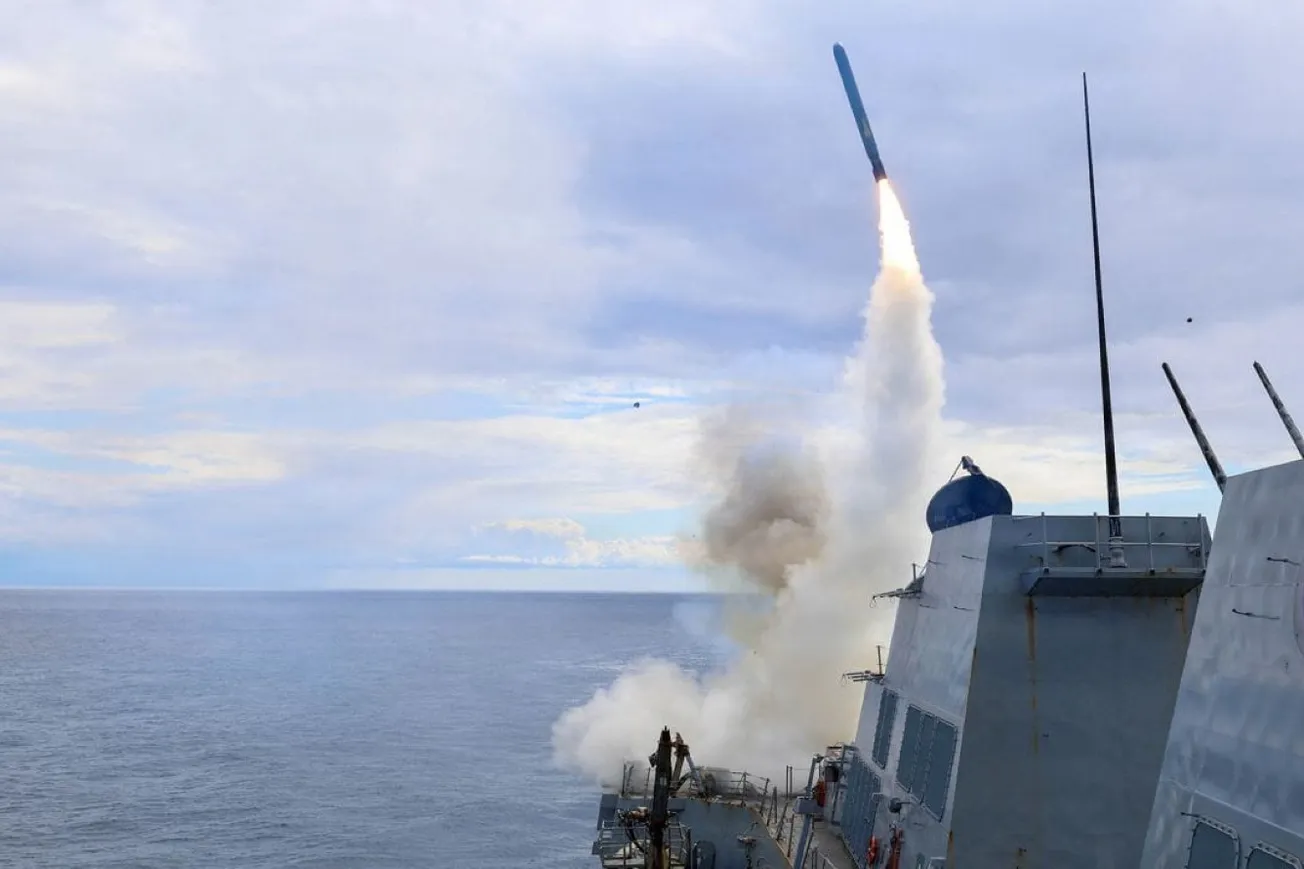
President Donald Trump has warned that he may offer long-range Tomahawk missiles that could be used by Kyiv if Russia does not end the war in Ukraine.

Nearly 2,000 Russian military sites would fall within range of Ukraine’s forces if the U.S. approves delivery of Tomahawk missiles, the Institute for the Study of War (ISW) says.
Moscow has previously warned Washington against providing long-range missiles to Kyiv, saying it would cause a major escalation in the conflict and strain U.S.-Russian relations.
Tomahawk missiles have a range of 2,500 km, which would put Moscow within reach for Ukraine, the BBC said.
2. Trump Hosts Argentina’s Milei After $20 Billion U.S. Bailout Deal - TIPP Insights
Argentina's President Javier Milei arrived at the White House on Tuesday to meet President Donald Trump, just days after the U.S. approved a $20 billion bailout for Argentina’s struggling economy.

The deal, structured as a currency swap with Argentina’s central bank, aims to stabilize the Latin American nation and bolster Milei’s leadership ahead of crucial midterm elections.
3. Trump Orders Deadly Strike On Narco-Terror Vessel Off Venezuela - TIPP Insights
President Donald Trump announced on Truth Social that U.S. forces carried out a lethal strike on a narcotrafficking vessel linked to a designated terrorist organization off Venezuela’s coast.

Acting under his authority as Commander-in-Chief, Trump said six narcoterrorists were killed in international waters, with no American casualties.
The vessel was reportedly tied to illicit narcoterror networks.
4. U.S. Falls Out Of World’s Top 10 Most Powerful Passports - TIPP Insights
The United States has dropped out of the world’s top 10 most powerful passports for the first time, according to the latest Henley Passport Index.

The U.S. now ranks 12th, tied with Malaysia, offering visa-free access to 180 destinations. Singapore leads the list with 193, followed by South Korea and Japan.
The decline stems from multiple countries tightening entry for Americans. Brazil reinstated visa requirements in April, while China, Vietnam, and others excluded the U.S. from new visa-free policies. Analysts say the slide reflects waning global mobility and soft power.
5. Is BlackRock’s IBIT Flows Keeping Bitcoin Above $100k? - Cryptoslate
The market cracked under tariff fears, but when the smoke cleared, one detail stood out — BlackRock’s IBIT kept buying while every other ETF blinked.

The main question arising from this weekend’s volatility is whether the US spot ETF complex, led by BlackRock’s IBIT, functioned as a shock absorber that kept the Bitcoin price from sliding deeper into a hole.
📊 Market Pulse — October 14, 2025
📉 S&P 500 — 6,644.31 ▼ 0.16%
Stocks dipped slightly as traders awaited major bank earnings and remarks from Fed Chair Jerome Powell.
💵 10-Year Treasury — 4.02% ▼ 2.9 bp
Yields slipped as investors priced in further Fed rate cuts amid continued data delays from the government shutdown.
🛢️ WTI Crude — $58.52 ▼ 1.62%
Oil slid on renewed trade tensions and concerns over weakening global demand.
🏦 U.S. Dollar Index — 99.07 ▼ 0.20
The dollar eased, reflecting cautious sentiment ahead of key inflation data and Powell’s speech.
₿ Bitcoin — $113,061.38 ▼ 0.20%
Crypto drifted lower as risk appetite softened, mirroring broader market caution.
🥇 Gold — $4,143.82 ▲ 0.39%
Gold extended its record-breaking rally as safe-haven demand stayed strong amid policy uncertainty.