
Skip to content
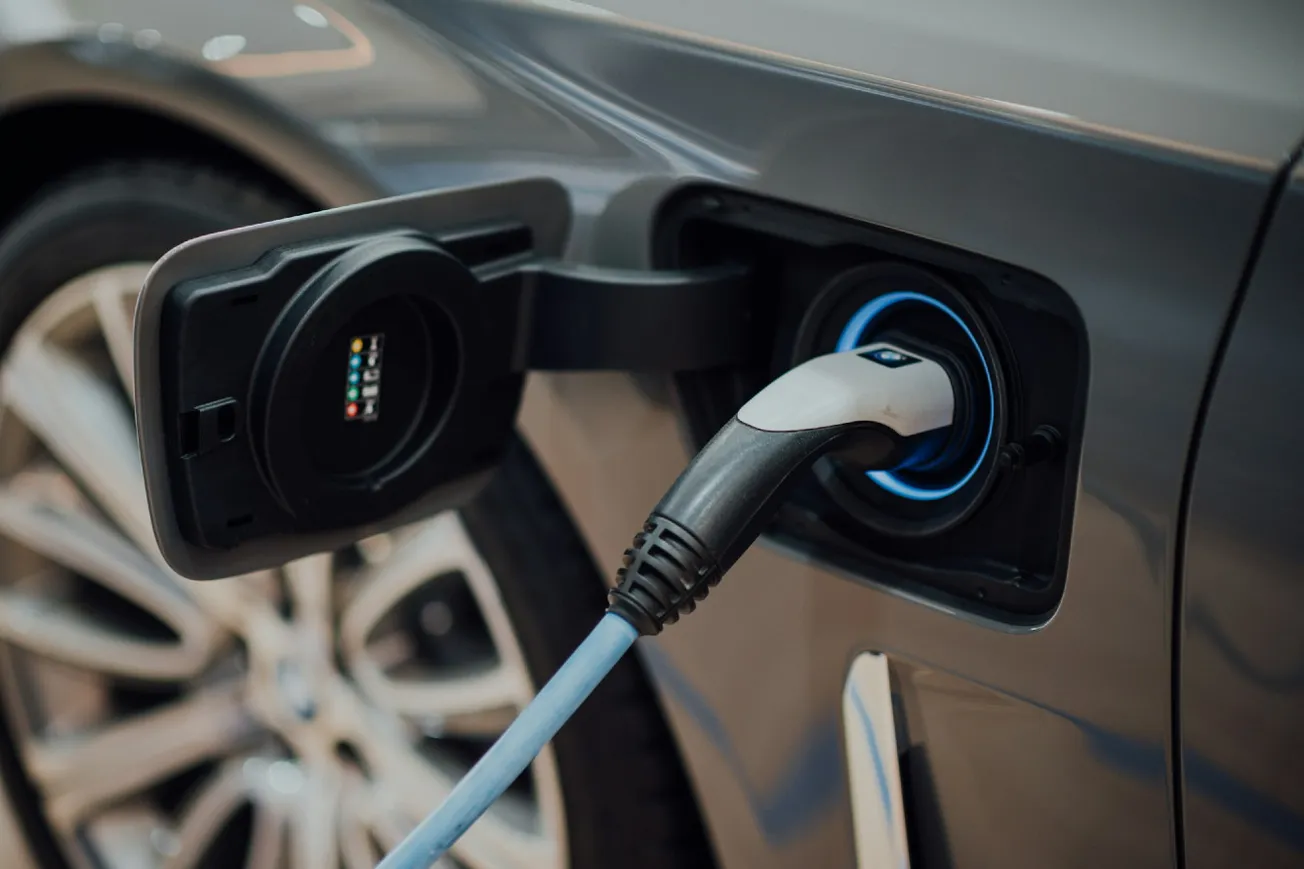
Photo by James Wiseman / Unsplash

By Kingsley Moghalu, Project Syndicate | October 3, 2025

As global demand for critical minerals surges, Africa has a once-in-a-century opportunity to break the “resource curse” and convert its vast natural wealth into economic and social transformation. But, to seize it, the continent’s leaders must avoid falling into old traps.

WASHINGTON, DC – Critical minerals, especially rare earths, have become an integral part of national security strategies and are a central feature of the great-power competition between the United States and China. With demand for minerals such as lithium projected to rise by as much as 1,500% by 2050, Africa has an important opportunity to position itself as an engine of the future global economy – and to accelerate growth, development, and social progress across the continent.

Critical minerals are necessary to manufacture computer chips and other high-tech inputs, including those needed to power the green transition and advanced weapons systems. Africa possesses one-third of the world’s known reserves, including 80% of its platinum and chromium, 47% of its cobalt, and 21% of its graphite, as well as significant rare-earth reserves, such as monazite and scandium, in Nigeria and elsewhere.

As it stands, China controls roughly half of the world’s known reserves of rare-earth minerals, meaning that the US is scrambling to strengthen its own position in the critical-mineral supply chain. To this end, US President Donald Trump’s administration is embracing “rare-earth diplomacy,” which involves exchanging benefits like security guarantees or market access for a share of countries’ mineral wealth.

Africa knows firsthand just how lopsided resource-sharing agreements can be. Its resources have long fueled prosperity in the world’s industrialized economies, which import the continent’s raw commodities as low-cost inputs and sell them back to Africa embodied in expensive finished products. Largely as a result of these arrangements, countries with abundant natural resources have often experienced slower economic growth, increased political instability, and worse development outcomes. The Democratic Republic of the Congo is a prime example of this “resource curse”: despite being among the world’s most resource-rich countries – if not at the top of the list – it is a desperately poor failed state.

If Africa’s critical-mineral resources are to be a blessing rather than a curse, its leaders must avoid becoming pawns in a great-power chess game. African countries cannot embrace extreme economic nationalism, because they lack the technology fully to exploit their critical minerals. They must share a portion of these resources with the great powers – either as part of conflict-resolution deals or through normal economic and investment transactions. But they must also ensure that any agreement credibly and fairly advances their own interests.

For the DRC, the most immediate priority is to promote stability after more than three decades of turbulence. When Rwanda’s brutal civil war – which included a genocide against the Tutsi minority by the extremist-led Hutu government – ended in 1994, the defeated Hutu forces fled across the border to the DRC, where they allied with the Congolese government. That government, now led by President Félix Tshisekedi, has since been at war with domestic ethnic minorities aligned with Rwandan President Paul Kagame’s government and with Rwandan forces fighting what they view as an existential struggle to secure their country’s borders.

The complex conflict, involving scores of militias, has had a destabilizing effect on the entire region, while efforts by other African countries to broker peace have repeatedly stalled or collapsed. So, in February, a desperate Tshisekedi offered the US access to his country’s critical minerals in exchange for security assistance. The proposal proved compelling, and the Trump administration, together with Qatar, subsequently brokered a peace agreement between the DRC and Rwanda.

If this leads to durable peace for the DRC, the long-suffering Congolese will finally get the chance to begin rebuilding their country. But for any African country seeking to make the most of critical-mineral deals with great powers, a long-term strategy for investing the proceeds is essential. Critical minerals must serve as an anchor for national social contracts.

This will require a change of mindset among Africa’s political elites, who often use their positions to increase their personal wealth rather than to deliver broad-based benefits to the people they serve. More concretely, transparent governance frameworks will be needed to institutionalize a consensus on the use of critical-mineral revenues to advance social and economic transformation.

But as long as resources are exported in their raw form – only about 5% of Africa’s critical minerals are currently processed on the continent – these revenues will remain limited. That is why agreements must include provisions to increase the amount of value added within Africa. By forming an OPEC-like “critical-minerals cartel,” African countries could strengthen then their negotiating position vis-à-vis major powers like the US.

Moreover, to increase longer-term resilience, African policymakers should leverage critical-mineral revenues to diversify their economies and use their mineral supplies to advance their own energy transitions. Africa’s growth depends on delivering reliable electricity to the continent’s 1.5 billion people, around 600 million of whom currently lack access.

Africa has a once-in-a-century opportunity to break the “resource curse” and convert its vast natural wealth into sustainable development and social progress. But, to seize it, the continent’s leaders must avoid falling into old traps.

Kingsley Moghalu, a former deputy governor of the Central Bank of Nigeria, is President of the Institute for Governance and Economic Transformation.

Copyright Project Syndicate

Your feedback is incredibly valuable to us. Could you please take a moment to grade the article here?

TIPP Takes

Geopolitics, Geoeconomics, And More

1. Russia Targets Ukraine's Natural Gas Facilities In Biggest Attack Of The War – AP

Russia launched its biggest attack of the war overnight against natural gas facilities run by Ukraine’s state-owned Naftogaz Group, officials said Friday.

Russia fired a total of 381 drones and 35 missiles at Ukraine, according to Ukraine’s air force. in what officials was an attempt to wreck the Ukrainian power grid ahead of winter and wear down public appetite for the 3-year-old conflict.

“This is deliberate terror against civilian facilities that provide gas extraction and processing for the normal life of people,” Serhii Koretskyi, chief executive of Ukraine’s state-owned gas company Naftogaz, said in a statement. “It has no military purpose. This is yet another act of Russian malice aimed solely at disrupting the heating season and depriving Ukrainians of warmth in winter.”


2. Putin Warns Of ‘New Stage Of Escalation’ If U.S. Supplies Long-Range Missiles To Ukraine - CNBC

Russian President Putin said the prospect of the U.S. supplying long-range missiles to Ukraine would not change the situation on the battlefield, but warned it would mark a “new stage of escalation.”

His comments come after a series of reported incursions into European airspace in recent weeks.

European Union leaders recently backed calls to establish a drone wall on the region’s eastern flank.


3. Hamas Agrees To Free Hostages Under Trump Plan, Israel Reveals Sumud Flotilla Had No Aid – The Jerusalem Post

Hamas said that it would release all of the hostages in an effort to re-enter negotiations, in a Friday statement.

The statement released by the terror organization said that it would release all hostages, living and dead, "according to the exchange formula outlined in President Trump’s proposal, provided that field conditions necessary for the exchange are secured."

Hamas gave mediators its response to US President Donald Trump's plan for ending the Gaza war earlier Friday evening. 


4. Trump, Canadian PM Mark Carney To Meet Amid Tensions Over Trade And Security - TIPP Insights

Canadian Prime Minister Mark Carney will meet U.S. President Donald Trump at the White House on Tuesday for a “working visit” focused on economic and security ties, according to Carney’s office.

The trip comes as Ottawa seeks tariff relief, with U.S. duties on autos, steel, aluminum, lumber, and energy weighing heavily on Canada’s economy. Unemployment in Canada hit 7.1% in August, the highest since 2016 outside the pandemic, government data show.


5. Hegseth: Narco-Terrorists Killed In Strike Near Venezuela - TIPP Insights

On President Donald Trump’s orders, U.S. forces carried out a lethal strike on a narco-trafficking vessel off Venezuela’s coast Friday, Secretary of War Pete Hegseth announced.

Four narco-terrorists were killed, with no U.S. casualties reported. The vessel, operating in international waters, was transporting large quantities of narcotics bound for America.


6. U.S. To Power AI Data Centers With Advanced Nuclear Energy - TIPP Insights

The U.S. National Nuclear Security Administration (NNSA) has invited private sector proposals to build large-scale Artificial Intelligence data centers at historic nuclear sites, including the Savannah River Site in South Carolina and the Oak Ridge Reservation in Tennessee.

The initiative seeks to pair advanced nuclear energy with next-generation computing, ensuring a reliable and sustainable power supply for the growing energy demands of AI.


7. Scientists: Fix Food Systems To Avert 15 Million Deaths Annually - TIPP Insights

Scientists say transforming global food systems could prevent 15 million deaths a year and cut agricultural emissions by 15 percent, the EAT-Lancet Commission report finds.

The review links diets, farming, biodiversity and labor to human and planetary health and concludes that a shift to healthier plant-based diets is essential to avoid the worst effects of climate change.

The commission recommends one serving of animal protein and dairy per day and limiting red meat to about once a week in wealthy countries. With higher yields and less food waste, cuts could reach 20 percent.


8. Bitcoin Rallies To Within 1% Of All-Time High, Gaining Safe Haven Status During Shutdown - CNBC

Bitcoin rallied on Friday to within striking distance of its record high as the U.S. government’s shutdown entered its third day.

The world’s oldest cryptocurrency is trading up roughly 2% on the day at $123,874. That’s about 1% below its all-time high price of just north of $124,000 that it reached in mid-August.

Investors are flocking to the decentralized asset after U.S. lawmakers failed to strike a deal on federal funding, forcing the U.S. government to shutdown on Wednesday. Bitcoin is up 12% this week alone.

“The shutdown matters this time around,” wrote Standard Chartered’s Geoff Kendrick. “During the previous Trump shutdown (22 Dec 2018 to 25 Jan 2019) Bitcoin was in a different place than now, so it did little.”


📊 Market Pulse — Oct 3, 2025

📈 S&P 500 — 6,715.79 ▲ +0.01%
Stocks ended flat, holding gains despite shutdown uncertainty.

📈 10Y Treasury — 4.12% ▲ +3 bp
Yields ticked higher as markets awaited fresh data.

🛢️ Crude Oil — $60.48 ▼ -2.10%
Oil slid, capping its steepest weekly loss since June.

💵 U.S. Dollar — 97.70 ▼ -0.15%
Dollar slipped as traders weighed shutdown risks and Fed cuts.

🪙 Bitcoin — $122,444.84 ▲ +8.5%
Bitcoin jumped above 122K, extending its strong rebound.

🥇 Gold — $3,856.12 ▼ -0.23%
Gold eased but stayed near record highs on safe-haven demand.


📧
Letters to the editor email: editor-tippinsights@technometrica.com
📰
Subscribe Today And Make A Difference. Consider supporting Independent Journalism by upgrading to a paid subscription or making a donation. Your support helps tippinsights thrive as a reader-supported publication. Contact us to discuss your research or polling needs.

Comments

Latest