
Beijing has begun construction of the world’s largest hydropower facility, a $167 billion five-cascade project, raising concerns about displacement of Tibetan communities and the environmental impact downstream in India and Bangladesh.
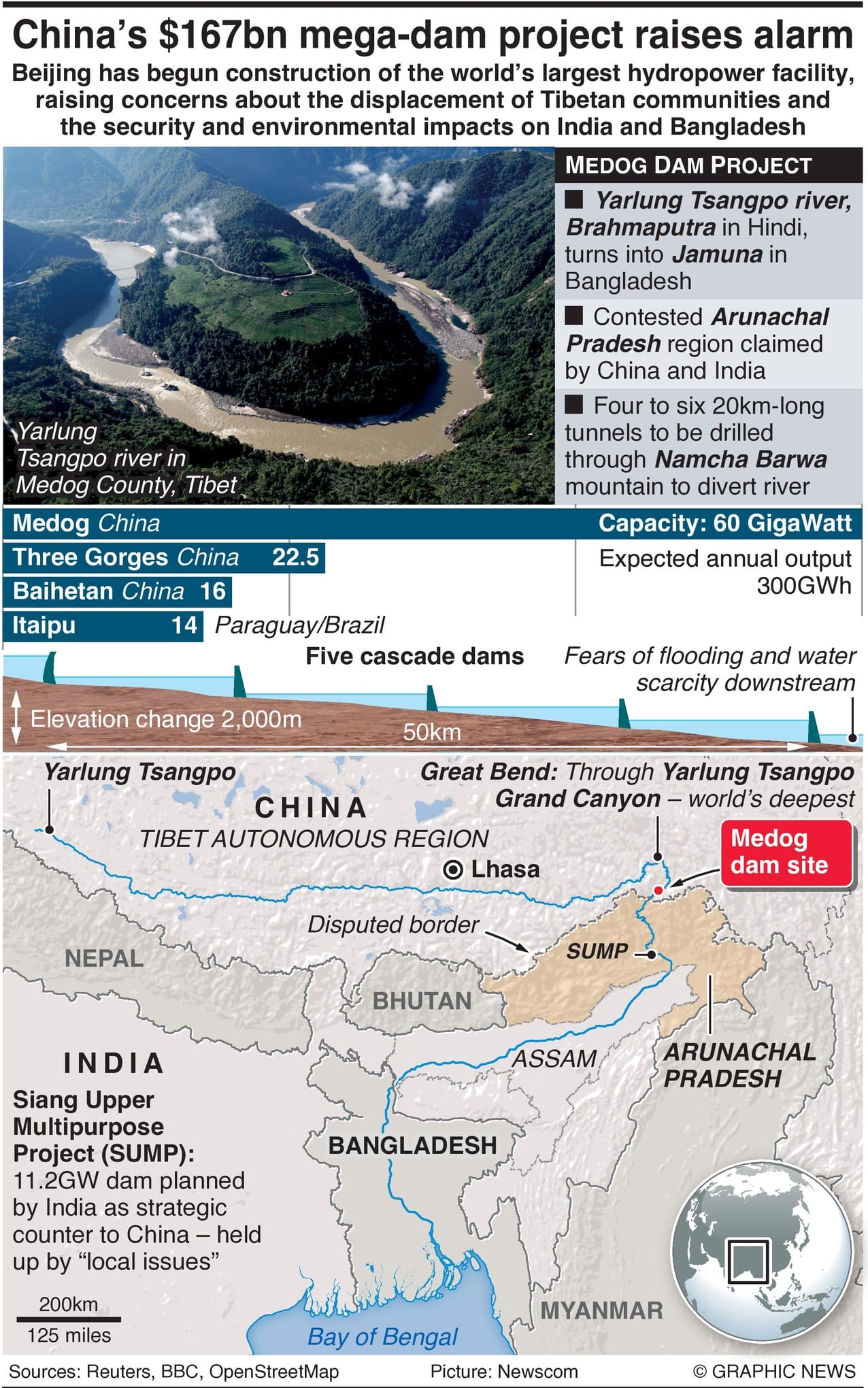
The Medog dam, being built in the lower reaches of the Yarlung Tsangpo river, could generate 60 gigawatts of electricity, nearly triple that of the Three Gorges Dam in central China – currently the world’s biggest.
The project aims to harness the river’s immense hydropower potential as it descends from the Tibetan Plateau, generating more than 300 billion kilowatt-hours of electricity annually.
China says the project is a key part of its efforts to hit peak carbon emissions by 2035 and to become carbon neutral by 2060.
However, India fears that the dam could cause floods and exacerbate water scarcity, while giving China the upper hand in any potential military standoff. Shortly after announcing its plans for the Yarlung Tsangpo, Indian media reported that its government was exploring a 11-gigawatt hydropower dam in as a way of counteracting the impacts of the Chinese project, currently held up by “local issues”.
The project is expected to cost as much as 1.2 trillion yuan ($167bn), which would make it the most expensive infrastructure project in the world. Activists allege that the 193 hydropower projects built in Tibet since 2000 have led to serious environmental and human rights violations.