
Skip to content
Getty

By Stephen S. Roach, Project Syndicate | October 27, 2025

As Chinese leaders prepare the 15th Five-Year Plan, early signs indicate that it will focus on continuing China’s extraordinary technological ascendancy. But they should be more concerned with boosting consumer demand, which means setting a clear target of raising household consumption to 50% of GDP by 2035.

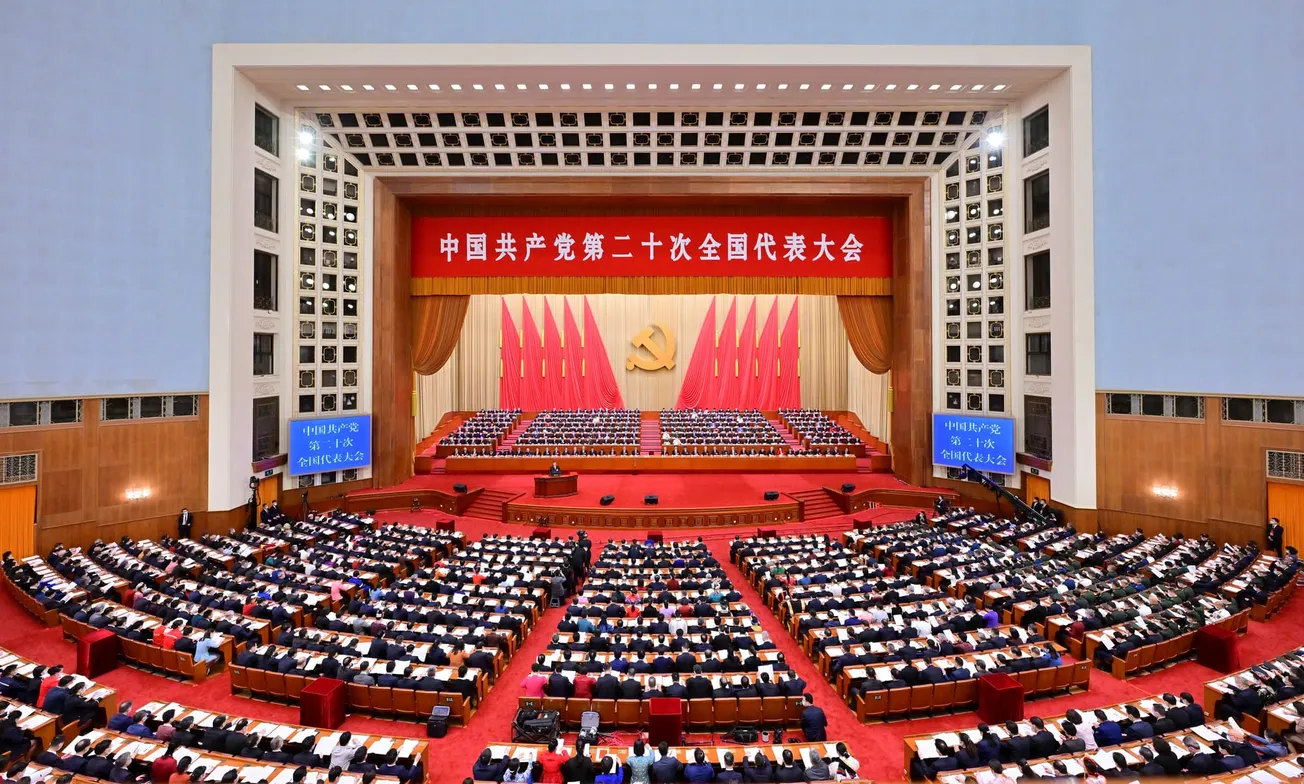
SHANGHAI – The Chinese planning season is in full swing. Ahead of the formal release of the 15th Five-Year Plan (running from 2026 to 2030) in March 2026, early signs coming out of the just-completed Fourth Plenum of the Communist Party of China suggest that it will be more of the same: a focus on continuing China’s extraordinary industrial and technological ascendancy, driven by what Chinese President Xi Jinping has called “new productive forces.”

That would be a mistake in the following sense: China’s techno-industrial prowess is so well established that it is unnecessary to dwell on the obvious. The planning exercise should instead aim to tackle the country’s most dauting challenge: a long-awaited consumer-led rebalancing. To that end, the 15th Five-Year Plan should set an explicit target of boosting household consumption as a share of GDP from its latest reading of nearly 40% to 50% by 2035.

By now, the debate over rebalancing has dragged on for decades. It was first raised in March 2007 by former Premier Wen Jiabao as the second of his now-famous “four uns” – unstable, unbalanced, uncoordinated, and unsustainable – that, he argued, jeopardized the seemingly strong Chinese economy. Of course, “unbalanced” is only an elliptical reference to the Chinese consumer. But in the context of all four uns, it raises what has since become the most important structural issue for the Chinese economy: the need to find new sources of growth.

While Chinese authorities have been especially adept at addressing the first “un” (instability), as demonstrated during the global financial crisis of 2008-09 and the COVID-19 pandemic, the fourth “un” is where the rubber meets the road for the political promise of Xi’s Chinese Dream. If its economic growth is unsustainable, China will fall short of its aspirational goal of becoming a “great modern socialist country,” with living standards similar to advanced economies, by mid-century. According to my calculations, that will require China’s real per capita GDP growth to reach 5.75% per year over the 2030-49 period – a significant pickup from the 4.25% pace of 2022-30, but well short of the 8.4% average between 1981 and 2021.

Achieving this won’t be easy, because many of China’s most powerful growth engines are tapped out. The beleaguered property sector is likely to remain under downward pressure for years to come. China’s seemingly resilient export sector will almost surely be buffeted by rising protectionism. Even all-powerful fixed-asset investment, which currently accounts for around 40% of Chinese GDP, is reaching its limit.

By process of elimination, that puts the onus on the Chinese consumer to fill the gap. I have been hammering home this point since Wen first articulated the four uns, and others have come to the same conclusion. But while the Chinese government always mentions boosting consumer demand when discussing its economic challenges, it comes alongside a raft of other goals, from spurring employment growth and addressing income inequality to developing alternative energy and indigenous innovation. What an unbalanced Chinese economy actually needs is a single-minded focus on invigorating the Chinese consumer’s role as a more powerful driver of growth.

I do not mean to suggest that China should walk away from all that it has accomplished over the past 50 years, especially its recent technological advances. Nor am I suggesting that China revert to its central-planning legacy in an attempt to steer its economy in a different direction. To me, a target and a plan are two different things: A plan provides a broad strategic framework, whereas a target specifies a numerical objective that is consistent with that plan. China can walk and chew gum at the same time – it can both plan and target.

Admittedly, a household consumption-to-GDP ratio of 50% would be a tough target to hit; my estimates suggest that it would require household consumption to grow twice as fast as the rest of the Chinese economy. That outcome may seem unlikely, but it is doable, given the weakness expected in housing, exports, and fixed-asset investment.

China’s consumption target should be viewed as akin to price-stability or full-employment goals in the West. We call them “mandates,” but that’s just another word for targets. Setting such targets is useful for the management of any economy, providing focus and encouraging accountability.

The bottom line is that the time has come for China to establish an explicit household-consumption target. How Chinese leaders shape their policies to hit this target is of course up to them. I have long favored strengthening the social-safety net to reduce high levels of fear-driven precautionary saving in a rapidly aging society. Others have focused on reforming the antiquated hukou (residency permit) system, especially for migrant workers, raising the retirement age, developing the “silver economy,” and, the government’s recent favorite, implementing trade-in campaigns for consumer durable goods.

At this point, I care less about the debate over the most effective policies and more about the commitment to a specific rebalancing goal. Over the years, I have learned that China excels in tackling such challenges. If the 15th Five-Year Plan were to set a clear target of raising household consumption to 50% of GDP by 2035, I am confident that Chinese policymakers would then settle on the right mix of pro-consumption measures.

A new target would go a long way toward forcing Chinese leaders to resolve what has become a tedious and now increasingly urgent debate. As Wen presciently warned almost 19 years ago, failure to rebalance the Chinese economy is not a sustainable option.

Stephen S. Roach, a faculty member at Yale University and former chairman of Morgan Stanley Asia, is the author of Unbalanced: The Codependency of America and China (Yale University Press, 2014) and Accidental Conflict: America, China, and the Clash of False Narratives (Yale University Press, 2022).

Copyright Project Syndicate

Your feedback is incredibly valuable to us. Could you please take a moment to grade the article here?

TIPP Takes

Geopolitics, Geoeconomics, And More

1. Putin Withdraws Russia From Nuclear Plutonium Deal With U.S. TIPP Insights

Russia has officially withdrawn from a landmark nuclear deal with the United States that required both nations to dispose of 34 tons of weapons-grade plutonium — enough for thousands of warheads.

The decision effectively ends one of the last Cold War–era arms control pacts, further eroding the global nuclear security framework.

While Putin has proposed maintaining limits under the New START Treaty, its future remains uncertain ahead of its 2026 expiry.


2. Russia Tests Nuclear-Powered Cruise Missile - TIPP Insights

President Vladimir Putin says Russia has successfully tested its nuclear-powered Burevestnik cruise missile and will move towards deploying the weapon.


3. UN Says Russia Committed War Crimes Through Drone Attacks, Deportations - TIPP Insights

A new United Nations report accuses Russia of committing war crimes and crimes against humanity in Ukraine, citing drone attacks on civilians and the forcible transfer of residents from occupied territories.

The UN Independent International Commission of Inquiry on Ukraine said Russian forces intentionally targeted civilian areas — including homes, hospitals, power facilities, and schools — in regions such as Dnipropetrovsk, Kherson, and Mykolaiv, killing more than 200 people and injuring over 2,000 since July 2024.


4. What China’s ‘Global Governance Initiative’ Means Ahead Of Trump-Xi Talks - TIPP Insights

China’s top diplomat Wang Yi declared that “a multipolar world is emerging,” outlining Beijing’s Global Governance Initiative (GGI) as an alternative to U.S.-led international systems, according to South China Morning Post.

Analysts see the GGI as a counter to Trump’s “America First” approach and an attempt to win influence in the Global South. Yet critics argue that Beijing’s new vision repackages existing ideas under new branding without addressing core issues in global governance.


5. Trump Eyes TikTok Deal Ahead Of Xi Meeting At APEC Summit - TIPP Insights

President Donald Trump signaled optimism about reaching a final deal on TikTok’s U.S. ownership ahead of his expected meeting with Chinese President Xi Jinping at the APEC Summit in South Korea this week.

Analysts say a potential TikTok deal could ease tensions temporarily, but deeper structural disputes between Washington and Beijing will remain.


6. Argentina’s Javier Milei Hails Midterm Election Victory - TIPP Insights

President Javier Milei’s party has won Argentina’s midterm elections, giving the libertarian leader a strong foothold in Congress to push his free-market policies, which have earned support from President Trump.


7. Massive Cyber Breach Exposes 183 Million Passwords Across Major Email Platforms - TIPP Insights

A massive data leak has exposed over 183 million passwords, with Gmail, Outlook, and Yahoo users among those affected, according to cybersecurity expert Troy Hunt, who disclosed the breach on his Have I Been Pwned website.

The stolen data — totaling 3.5 terabytes — includes email addresses, associated websites, and passwords collected through “stealer logs,” malware-generated files that capture login credentials from infected devices. Hunt described the breach as a compilation of numerous smaller leaks, not a single incident.


8. Qualcomm’s Stock Soars 15% After Announcing AI Chips To Rival Nvidia, AMD - TIPP Insights

Qualcomm announced its entry into the artificial intelligence chip race on Monday, unveiling two new AI accelerator chips—the AI200 (launching in 2026) and AI250 (set for 2027)—to compete directly with Nvidia and AMD in the booming AI data center market.

The global race for AI chip dominance is intensifying, with Nvidia controlling over 90% of the market and a valuation above $4.5 trillion.

Qualcomm’s entry adds fresh competition as tech giants like Google, Amazon, and Microsoft also develop their own AI accelerators.


9. Driving While Tired Is Just As Risky As After Drinking, Experts Warn - Health News

Nearly half of U.S. adults have driven while so tired it affected their ability to stay safe behind the wheel, a new survey finds, taking a risk that can be just as deadly as drunken driving.

In an American Academy of Sleep Medicine survey, 41% of adults admitted they've been so drowsy while driving that it impaired their performance, including 50% of men and 33% of women.


Market Pulse

Credit: Barchart

📧
Letters to the editor email: editor-tippinsights@technometrica.com
📰
Subscribe Today And Make A Difference. Consider supporting Independent Journalism by upgrading to a paid subscription or making a donation. Your support helps tippinsights thrive as a reader-supported publication. Contact us to discuss your research or polling needs.

Comments

Latest