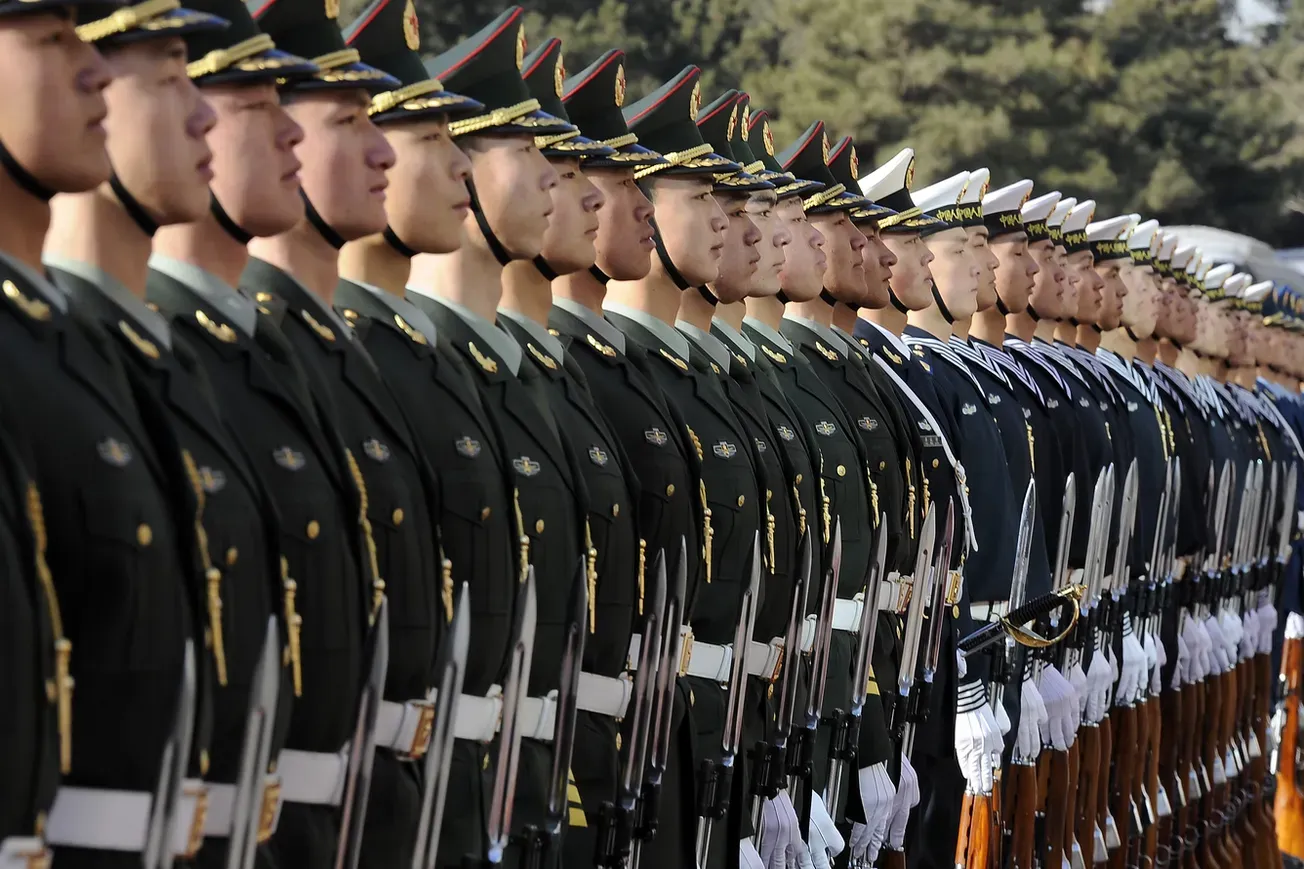
From nuclear-armed missiles to air-defence lasers, hypersonic weapons and sea drones, China sends a broad message of deterrence with its largest-ever military parade in Beijing.
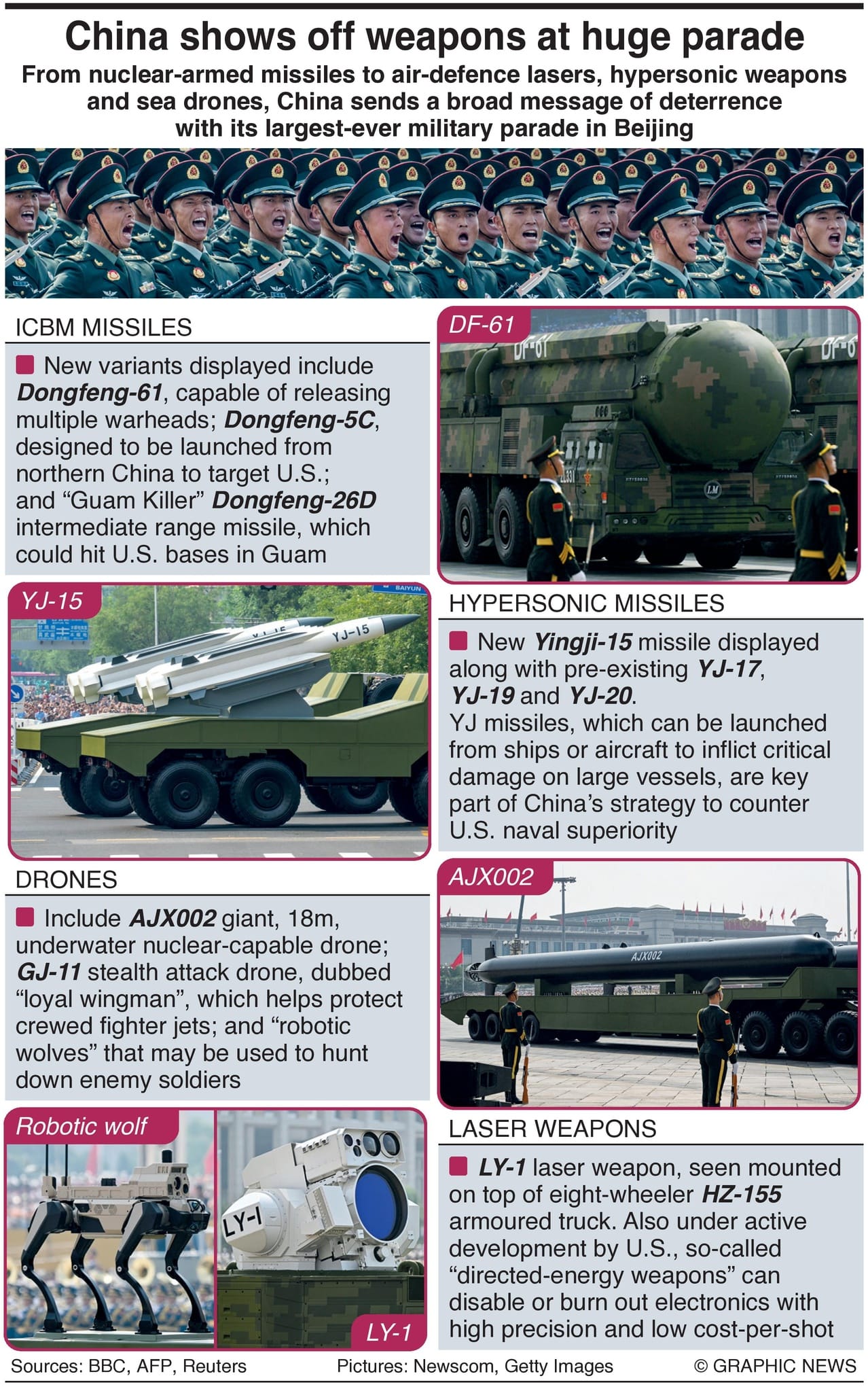
Among the weapons there were new variants of intercontinental ballistic missiles (ICBMs). These included the Dongfeng-61, capable of carrying multiple warheads, and the Dongfeng-5C, designed for launches from northern China to reach targets across the U.S. Another highlight was the Dongfeng-26D, often dubbed the “Guam Killer,” an intermediate-range missile capable of striking American bases in the Pacific.
The parade also featured advances in hypersonic weaponry. The new Yingji-15 missile was displayed alongside existing systems such as the YJ-17, YJ-19, and YJ-20. The YJ series, deployable from both ships and aircraft, is intended to threaten large surface vessels – a cornerstone of U.S. naval power in the region.
China’s growing drone fleet also made an appearance. Among the most striking was the AJX002, a giant 18-meter-long underwater drone believed to be nuclear-capable. The GJ-11 stealth attack drone, often described as a “loyal wingman,” is designed to fly alongside manned fighters and enhance their combat effectiveness. On the ground, robotic “wolf” drones were showcased, raising speculation about their potential use in hunting down enemy soldiers.
In a nod to next-generation warfare, China displayed the LY-1 laser system, mounted on an eight-wheeled HZ-155 armoured truck. Such “directed-energy weapons,” also under development in the U.S., can disable or destroy enemy electronics with high precision at relatively low cost per shot.