
The world’s second-largest economy grew 4.8% in the third quarter, powered by strong exports and factory investment, while weak retail sales and slowing business investment reveal vulnerabilities.
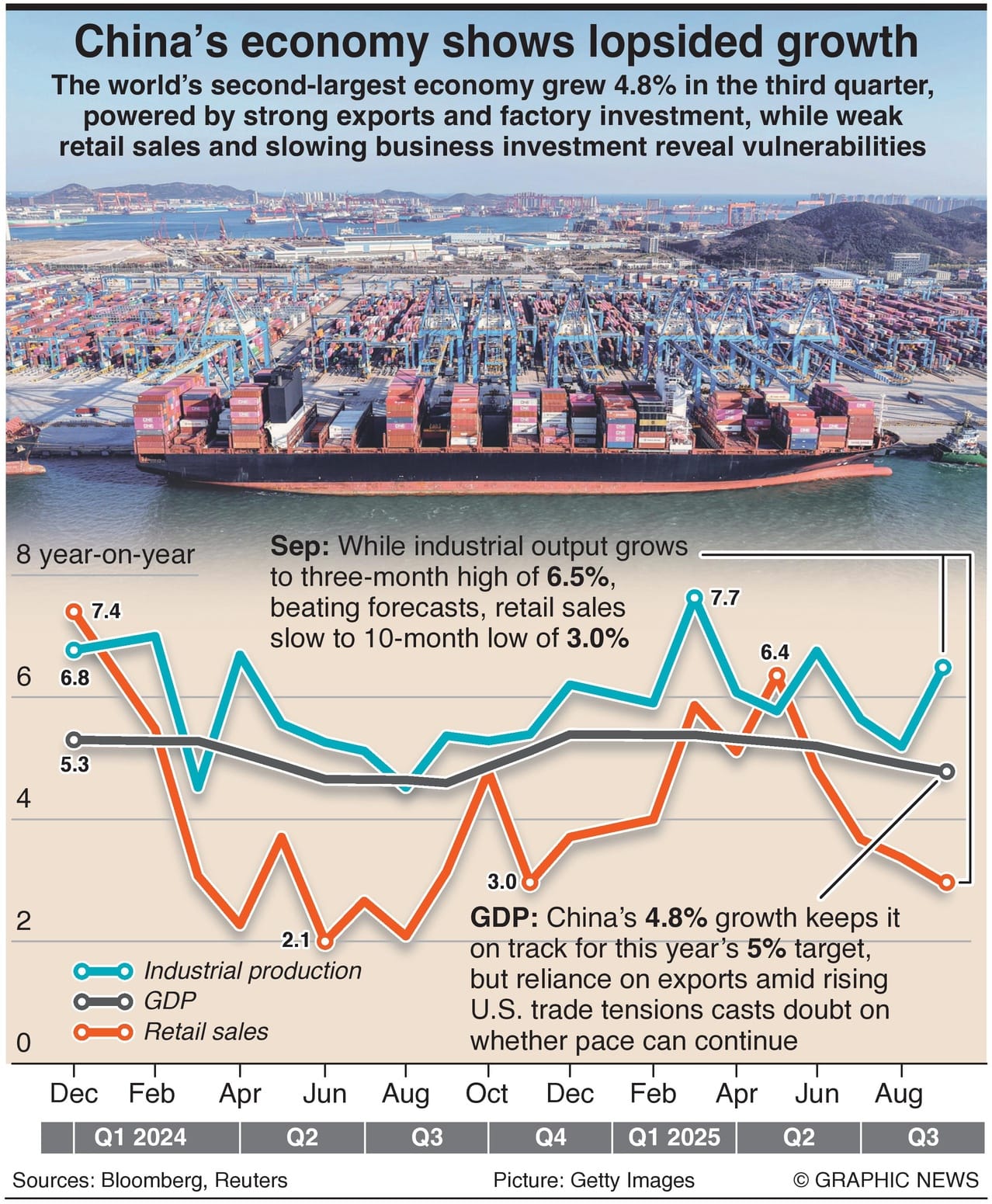
China’s economy grew 4.8% in the third quarter, keeping it on track to meet this year’s 5% target, as strong exports and factory investment offset weak consumer spending and slowing business investment. Industrial output rose 6.5% in September, the fastest pace in three months and above forecasts, but retail sales growth slowed to a ten-month low of 3%.
The housing market remains a major drag, with falling home prices, shrinking sales, and developers abandoning projects amid a broader property downturn. While robust exports continue to power growth, China’s heavy reliance on external demand, especially amid rising trade tensions with the United States, raises questions about the sustainability of its recovery.
The latest figures come as top leaders gather in Beijing for the Communist Party’s fourth plenum to outline economic plans through 2030. Governments and investors are watching closely to see whether President Xi Jinping will push policies to shift growth toward domestic consumption – a move seen as key to addressing structural imbalances in the world’s second-largest economy.