By Ian Bremmer, Project Syndicate
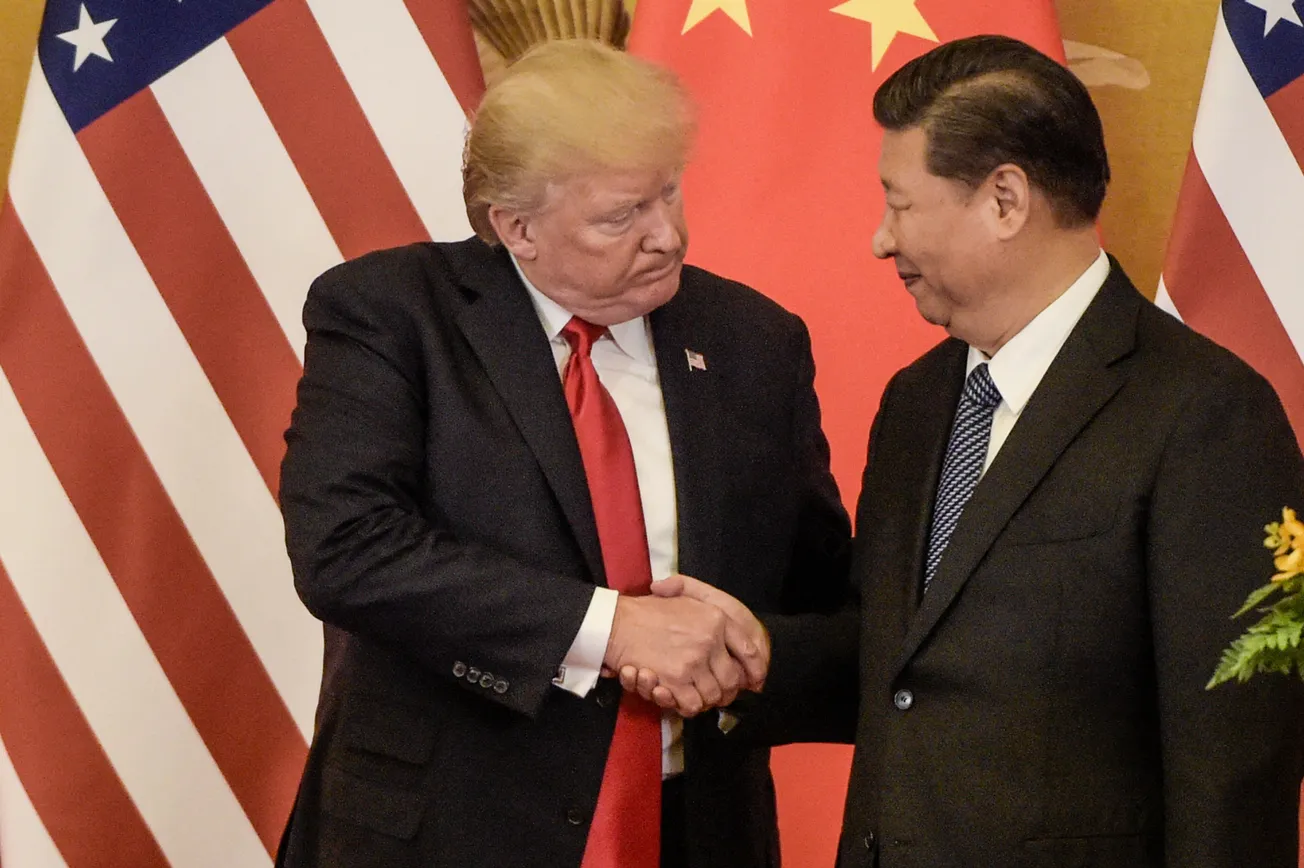
Faced with an unreliable administration in the United States, many countries are now seeking alternatives to reduce their long-term exposure to US policymaking. China has taken note and is billing itself as a steady hand that remains committed to multilateralism, long-term deals, and “non-interference.”
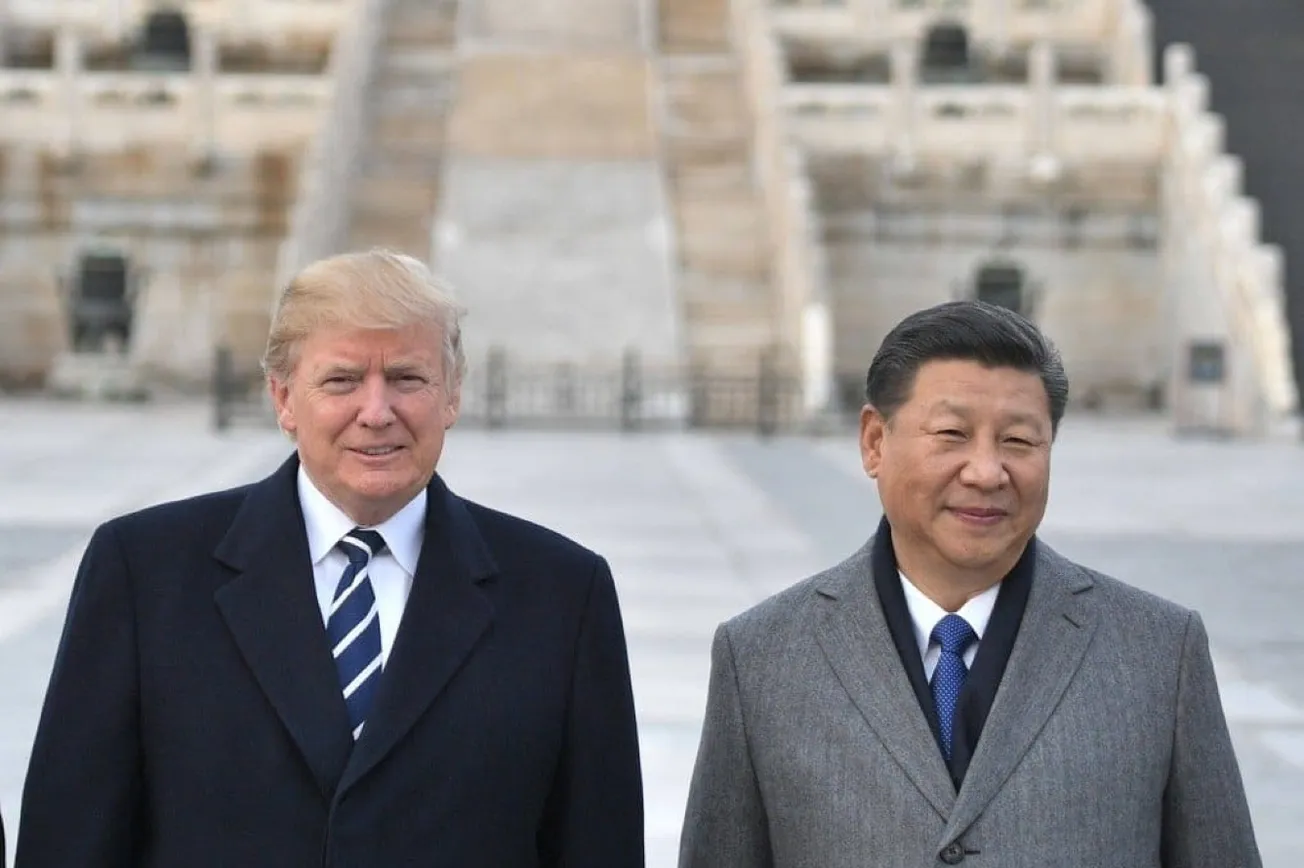
NEW YORK – Don’t mistake the photos of Chinese President Xi Jinping alongside Russian President Vladimir Putin and North Korean leader Kim Jong-un at Beijing’s Victory Day parade for a new world order. Xi is in no position to lead one. But he does see a global leadership vacuum and he is moving to exploit it.
The real story from last week wasn’t the military hardware rolling through Tiananmen Square. It was the guest list for the preceding Shanghai Cooperation Organization (SCO) summit, the largest since the organization was founded in 2001. Faced with a unilateralist White House whose policies change as fast as US President Donald Trump’s mood, more than two dozen world leaders – overwhelmingly from Asia and the Global South – turned up at Tianjin with one thing in common: a shared desire to diversify away from the United States.
In what I call the “G‑Zero world” – where no country is willing and able to set global rules, and where the US is increasingly seen as not just unpredictable but unreliable – the premium on optionality has gone through the roof. The distinction between unpredictability and unreliability matters. Unpredictability can be tactically useful for keeping adversaries off balance and galvanizing allies to do more. NATO is stronger today than it was before Trump first came to office, partly because his unpredictability (along with Putin’s full-scale invasion of Ukraine) pushed the Europeans to increase their defense spending and add two new members to the alliance. But unreliability has the opposite effect, driving everyone – friends included – to hedge their bets.
Across trade, technology, and security, Trump has imposed sweeping tariffs, withdrawn from formal agreements, and pressured even close allies into narrowly transactional negotiations. In the near term, countries are playing defense, handing the White House “wins” – non-reciprocal concessions here, tariff carve-outs there – to avoid further escalation. But they are also seeking alternatives – new trade ties, financial infrastructure, and supply chains – to reduce long-term exposure to US policy changes.
China has taken note and is billing itself as a steady hand that is committed to multilateralism, long-term deals, and “non‑interference.” At Tianjin, this message was explicit: we will stand by our agreements; the US will not. The message is landing, not because others believe that China has suddenly turned into a benevolent hegemon, but because it is the only player with the scale and the policy consistency to anchor a long-term hedging strategy now that the US has become unreliable.
Xi used the SCO summit to pitch a sovereignty-first multipolar alternative to the Western-led order, to criticize Trump’s “unilateral coercive measures,” and to add a new Global Governance Initiative to his set of branded platforms. The summit’s joint statement echoed his talking points, and members agreed to create yet another development bank to facilitate transactions in national currencies rather than the dollar. While these deliverables were predictably modest, the optics were potent: even governments that do not necessarily buy into China’s global vision, and that would rather work with America, are looking for options to boost their resilience.
India is the most consequential example. Prime Minister Narendra Modi made his first visit to China in seven years, meeting Xi (and Putin) in Tianjin at a time when the US-India relationship is becoming more adversarial and volatile. While the thaw with China had been quietly building since last fall, a personal rift with Trump, who has slapped a 50% tariff on Indian exports to the US, pushed Modi to hedge more strongly. India is signaling that it has options to help it withstand US pressure.
Of course, China won’t replace the US as India’s primary strategic, economic, and technological partner. India and China remain strategic adversaries with border disputes and competing interests across South Asia – from Bangladesh and Tibet to the Maldives – and Indian public sentiment toward China is still unfavorable.
Moreover, China’s tight security relationship with Pakistan, like India’s deepening ties with Japan and the Philippines, continues to breed mutual mistrust. Modi went to Japan before arriving in Beijing, and he skipped Xi’s military parade. India was the only SCO member that refused to endorse China’s Belt and Road Initiative in the summit’s communiqué, signaling that it still prioritizes its relations with the West. Positive as it is for global stability, the India-China thaw will remain narrow and opportunistic. There will be some selective economic easing and some prudent border de-escalation, but no strategic pivot.
Similarly, American unreliability makes the SCO marginally stronger, but it doesn’t turn it into the China-led equivalent of NATO or the G7. Though China exhibited formidable convening power last week, its capacity to marshal collective action remains limited. Its global initiatives on security, development, and AI suggest that it is better at branding than at delivering concrete outcomes. The SCO has outgrown its original counterterrorism and climate remit, but it hasn’t found a unifying purpose. It is a sprawling club whose mismatched interests – from India-Pakistan antagonism to Central Asian suspicion of Moscow – will keep coordination shallow.
Diplomatically, China still punches consistently below its economic weight. In conflicts beyond its neighborhood, its actions still tend to lag its rhetoric. The SCO will be more vocal, but no more relevant on the biggest security questions. It won’t impact Ukraine or Gaza anytime soon.
Even so, the incremental creation of new global plumbing – including a new SCO bank (if well-funded) operating alongside the Asian Infrastructure Investment Bank and the BRICS New Development Bank, more national-currency settlement, anti-sanctions mechanisms, and more South-South coordination – could matter down the line. These are small steps, but they will make diversification away from the US easier over time, and harder to unwind later. American unilateralism has made the costs of overreliance unmistakable, handing China an obvious opening. All it needs to do is present a simple contrast: at least we are consistent. In a G-Zero world, that counts more than perfection.
For the US, the solution is obvious: become a reliable partner again. Refrain from imposing surprise tariffs on allies and withdrawing from painstakingly negotiated deals, and show more follow-through on commitments that will outlast a news cycle. Until then, other countries’ pursuit of optionality will continue, and the world’s center of gravity will keep inching eastward.
Ian Bremmer, Founder and President of Eurasia Group and GZERO Media, is a member of the Executive Committee of the UN High-level Advisory Body on Artificial Intelligence.
Copyright Project Syndicate
TIPP Takes
Geopolitics, Geoeconomics, And More
Moscow’s Brutal Attack On Village Leaves Dozens Dead, Kyiv Says – TIPP Insights
A Russian airstrike killed at least 24 civilians and injured 19 others in the eastern Ukrainian village of Yarova, Ukrainian officials said Tuesday. President Volodymyr Zelensky condemned the attack as “brutally savage,” noting it struck people gathered to collect pension payments.

Video shared by Zelensky showed bodies in civilian clothing near a destroyed postal service van and a playground. Local authorities said rescue teams are still working at the site.
Putin Does Not Vacation And Sleeps Only A Few Hours A Day, Kremlin Says -The Moscow Times
President Vladimir Putin does not take vacations and sleeps only “a few hours a day,” Kremlin spokesman Dmitry Peskov said Monday.

“Honestly, sometimes it’s hard for me to understand where he finds so much strength,” Peskov told the state-run TASS news agency. “He is always at the peak of concentration. And he sleeps just a few hours a day, without exaggeration. I cannot understand it either.”
Putin himself has previously said he usually sleeps about six hours a night, sometimes less.
Macron Names Ally Sébastien Lecornu As New French PM – BBC
President Emmanuel Macron has named close ally Sébastien Lecornu as the new French prime minister, 24 hours after a vote of confidence ousted François Bayrou as head of his government.

Lecornu, 39, was among the favorites to take over the job and has spent the past three years as armed forces minister, with a focus on France's response to Russia's war in Ukraine.
1M Gaza City Residents Ordered To Leave Ahead Of Military Incursion - UPI
The Israeli military on Tuesday ordered around 1 million residents of Gaza City to immediately evacuate to the south, warning an attack of "great force" was imminent.

Using the hashtag "Urgent," the Israel Defense Forces told residents of Gaza's most populous city via an online post that, for their own safety, they should "move immediately toward the humanitarian zone in Al-Mawasi."
Israeli Strike Targets Senior Hamas Leadership In Qatar – TIPP Insights
Israel has struck Hamas targets in Qatar, escalating its conflict with the Palestinian militant group by targeting its political leadership in the Gulf state for the first time.

Flotilla For Gaza Says Boat Struck By Drone At Tunisian Port – TIPP Insights
Organizers of a Gaza-bound flotilla carrying humanitarian aid say one of its boats carrying activists, including Greta Thunberg, was attacked by a drone at a port in Tunisia. Tunisian authorities deny claims.

Congress Mulls Lifting Sanctions On Syrian Leader – The Daily Signal
Congress is weighing whether to lift sanctions on Syrian President Ahmed al-Sharaa, a former jihadist seeking to legitimize himself on the world stage.

Rep. Josh Brecheen, R-Okla., is making clear he’s not eager to lift those sanctions on the newly minted leader, given the killings and clashes involving ethnic minorities that have occurred during his tenure.
“He was a thug six months ago,” Brecheen told The Daily Signal. “This Islamist, ISIS thug, he’s put ISIS leaders in his military, the same people that I’m convinced that are complicit in trying to exterminate these people.“
Japan Set To Choose Its Fourth PM In Five Years – TIPP Insights
The resignation of Japan’s Prime Minister Shigeru Ishiba sets the stage for yet another ruling party leadership contest in Tokyo, the third in five years.

LeBron James Pens Op-Ed For China’s State-Run Newspaper Amid Trade Tensions – TIPP Insights
NBA star LeBron James is drawing scrutiny after penning an op-ed for China’s state-run People’s Daily, praising basketball as a “bridge that connects us” amid ongoing U.S.-China tensions.

The rare move comes as President Donald Trump pressures Beijing with tariff threats while seeking a trade deal with President Xi Jinping.
Nepal Parliament Set On Fire After PM Resigns Over Anti-Corruption Protests - BBC
Prime Minister KP Sharma Oli has resigned amid Nepal's worst unrest in decades, as public anger mounts over the deaths of 19 anti-corruption protesters in clashes with police on Monday.

On Tuesday, crowds set fire to parliament in the capital Kathmandu, sending thick black smoke billowing into the sky. Government buildings and the houses of political leaders were attacked around the country.
Iranian Regime Confirms It Has Lost Access To Its Stockpiles Of Enriched Uranium – Washington Times
An Iranian government spokesperson confirmed Tuesday that the Islamic republic does not have access to its stockpiles of enriched uranium following its 12-day war with Israel.

Spokesperson Fatemeh Mohajerani said during a press briefing that Iran’s stockpiles are out of reach for Tehran and international inspectors.
“In regard to uranium, we do not have access to it. It is in a location where access does not exist,” Ms. Mohajerani said without divulging where exactly the stockpiles are located.
Pressure Mounts On Bolsonaro As First Of Five Judges Finds Him Guilty - BBC
The first of five Supreme Court justices who will decide the fate of the former Brazilian president, Jair Bolsonaro, has found the ex-leader guilty of plotting a coup.

But Bolsonaro will only be convicted if at least three out of the five justices find him guilty.
Justice Alexandre de Moraes said there was "no doubt" that there had been a coup attempt after Bolsonaro lost the 2022 presidential election to his left-wing rival, Luiz Inácio Lula da Silva.
Maduro Decrees Oct. 1 Start Of Christmas In Venezuela - UPI
Venezuela will begin to observe the annual Christmas holiday on Oct. 1 for a second straight year, Venezuelan President Nicolas Maduro has ordered.

Maduro announced the change via statements aired on Venezuela's state television channel, VTV, with the intention of improving the nation's economy.
"It has gone very well for us: for the economy, for culture, for joy, for happiness," Maduro said in the statement, as reported by Colombia One on Tuesday.
High Blood Pressure In Kids Identified As Heart Disease Risk Factor – Health News
A heart health journey may start much earlier than once thought, as new research shows that kids with higher blood pressure at age 7 had a sharply increased risk of dying of heart disease by their mid-50s.

The preliminary findings were presented Sunday at an American Heart Association meeting in Baltimore and simultaneously published in the Journal of the American Medical Association.
📊 Market Pulse — September 9, 2025
🟢 Stocks (S&P 500): The S&P 500 rose 0.27% to 6,512.61, staying near record highs as optimism around a Fed rate cut kept equities supported. Momentum remains strong above key averages.
🔴 10-Year Yield (TNX): Yields edged up to 4.074$ (+6.9 basis points), though still near recent lows. Traders continue to bet on rate cuts, capping bond-market pressures.
🟠 Crude Oil (WTIC): Oil gained 0.70% to $62.70, rebounding modestly but still rangebound. OPEC+ supply moves and geopolitical tensions are shaping sentiment.
🟣 Bitcoin (BTCUSD): Bitcoin slipped to $111,183, consolidating after volatility, with price action hovering around its 50-day average.
🟡 U.S. Dollar Index (DXY): The dollar dipped to 97.78 (-0.34%), extending weakness on Fed cut expectations, while aiding risk assets and commodities.
🟤 Gold (XAU/USD): Gold held firm at $3,631 (-0.13%), steadying after a record run. Safe-haven demand remains strong amid tariff uncertainty and rate cut bets.