Skip to content

Comrade Mamdani’s Utopian Tosh

Idealism collides with arithmetic as New York’s progressive experiment faces reality.

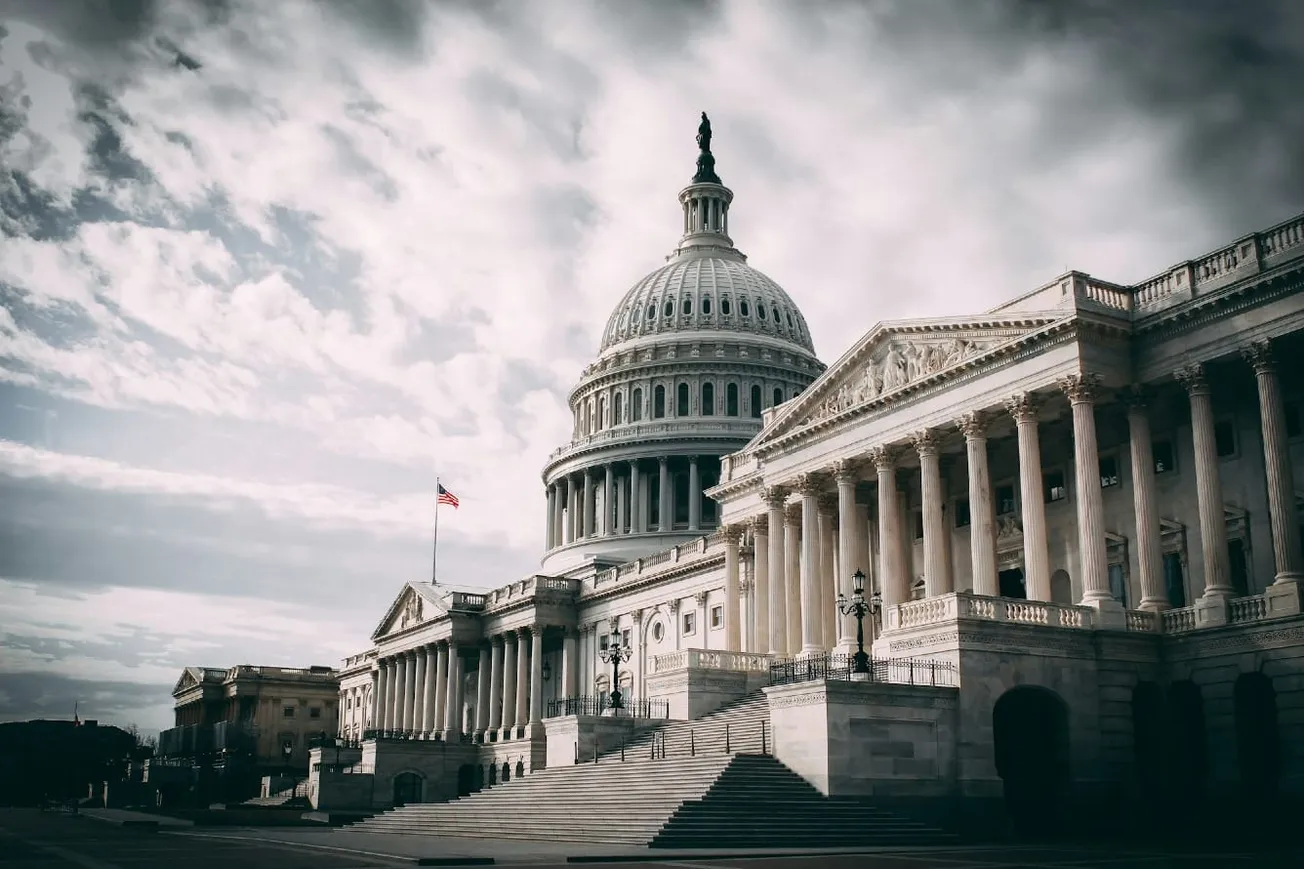
Photo by Todd Quackenbush / Unsplash

Zohran Mamdani is discovering what many idealistic politicians learn too late: governing with practical constraints is not as easy as campaigning on sweeping promises. The Democratic Socialist assembly member and newly elected mayor of New York City hasn't even assumed office, yet the contradictions and complications inherent in his ambitious agenda are becoming apparent. His vision for transforming New York into a social democratic haven may resonate with progressive activists. But the fiscal and legal realities suggest his plans could accelerate the city's decline rather than reverse it.

At the heart of Mamdani's platform lies a familiar progressive formula: expand services dramatically while assuming the money will somehow materialize to pay for them. He has promised New Yorkers free fast buses, heavily subsidized housing, and universal childcare. These aren't modest pilot programs or incremental expansions of existing services. They represent a fundamental reimagining of municipal government's role, transforming City Hall into a comprehensive provider of services that have traditionally been handled through a combination of public, private, and nonprofit entities.

The problem with his plans extends beyond mere cost, though the price tag is staggering. By offering an ever-expanding menu of free or heavily subsidized services, Mamdani risks creating powerful incentives that could overwhelm the city's capacity to deliver. New York already struggles with its population density, housing scarcity, and strained infrastructure. Advertising the city as a place where childcare, transportation, and housing are either free or deeply discounted will inevitably attract more residents to a metropolis that can barely accommodate its current population.

This creates a vicious cycle that progressive policymakers consistently fail to anticipate. Generous benefits attract beneficiaries faster than the tax base expands to support them. Unlike a state or the federal government, cities face unique constraints. Residents and businesses can relocate relatively easily, taking their tax contributions with them, while those seeking services flow in. The result is a fiscal death spiral that has plagued cities from Detroit to San Francisco, where ambitious social programs collide with eroding revenue bases.

Mamdani's solution to this revenue problem reveals his remarkable naiveté, or deliberate evasion, of political reality. He has proposed raising taxes on New York City companies to match those of neighboring New Jersey. Setting aside the question of whether matching tax rates with New Jersey, a state that itself struggles to retain businesses, is wise policy, the proposal faces an insurmountable obstacle: Mamdani cannot implement it unilaterally.

Any significant change to New York City's tax structure requires approval from the state legislature in Albany. This is where Mamdani's campaign rhetoric crashes into the wall of political reality. The New York State Legislature, while Democratic-controlled, represents constituencies across the entire state, many of whom have little interest in facilitating New York City's transformation into a high-tax social democracy. Upstate Republicans and even moderate Democrats have consistently resisted policies they perceive as Manhattan-centric or economically risky.

Perhaps most tellingly, Governor Kathy Hochul, a Democrat who should theoretically be aligned with a Democratic mayor of New York City, has already shown coolness toward Mamdani's candidacy. Reports from a rally leading up to election night noted that Hochul conspicuously did not share in the celebration of Mamdani's campaign. This is no minor detail. Hochul faces her own reelection in 2026, and she must balance the demands of progressive New York City voters with suburban and upstate constituencies that are far more moderate. Embracing Mamdani's tax-and-spend agenda could prove politically fatal for her own ambitions.

The political reverberations have already begun. Republican Rep. Elise Stefanik, launching her bid for governor, wasted no time linking Hochul to Mamdani’s hard-left agenda. In a pointed campaign video centered on New York’s affordability crisis, Stefanik accused Hochul of “cozying up to an anti-police, tax-hiking, antisemitic communist,” as footage rolled of Mamdani supporters chanting “tax the rich.” Her message is clear: Mamdani’s utopian economics won’t just test City Hall; they could reshape statewide politics, offering Republicans a vivid foil for 2026.

Without Hochul's support and without a reliable majority in Albany, Mamdani's tax proposals are dead on arrival. He would either have to abandon his campaign promises or attempt to fund them through budget gimmicks and one-time revenue sources, the same fiscal sleight of hand that has left New York City's finances perpetually precarious.

To fund his expensive promises, Mamdani has also proposed a 2% tax on what his campaign calls "the wealthiest 1% of New Yorkers, those earning above $1 million annually." His platform estimates the "millionaire tax" will raise $4 billion annually to help fund projects like universal free early childcare, free bus services, and more affordable housing. Mamdani estimates that the tax would impact about 34,000 households.

On its face, the math seems straightforward: tax 34,000 wealthy households to generate $4 billion for social programs. But this arithmetic ignores a fundamental reality about high earners. They are mobile, sophisticated, and have access to the best tax planning advice money can buy. When faced with a significant new tax burden, many will simply leave. And unlike middle-class families with deep community ties, high earners often have the flexibility to relocate with relative ease.

This is where Mamdani's proposal becomes truly problematic. He has indicated that his millionaire tax would extend to those who flee the city, presumably attempting to tax former New York City residents who continue to earn income after relocating elsewhere. This extraordinary claim raises profound constitutional questions that Mamdani appears not to have seriously considered.

The Constitution's protections of interstate mobility and commerce create clear limits on a jurisdiction's taxing authority. Generally, states and localities can tax residents and those who earn income within their borders. But taxing someone who has genuinely relocated and established residency elsewhere stretches these principles to the breaking point. If a millionaire moves to Florida, establishes a home there, and severs ties with New York City, on what basis can the city continue to claim a portion of their income?

Mamdani might argue that these individuals continue to benefit from past New York City services or maintain economic connections to the city. But this rationale leads to absurd conclusions. Should every city where someone once lived maintain perpetual taxing authority? The logical endpoint of Mamdani's theory would allow municipalities to chase former residents indefinitely, creating a nightmare of overlapping tax claims and administrative chaos.

The practical implications become even more troubling when considering reciprocity. If New York City can tax millionaires who flee to other states, what prevents other jurisdictions from adopting identical policies? Every high-tax city facing fiscal pressure would have an incentive to adopt similar exit taxes, creating a patchwork of competing claims on the same income.

This scenario raises fundamental questions about the nature of citizenship and mobility in America. When someone leaves a city, shouldn't that departure mean escape from both its benefits and its obligations? If you no longer use city services, send your children to city schools, or drive on city streets, why should you remain liable for city taxes? The whole premise of local taxation rests on the connection between services received and taxes paid. Severing that connection by taxing non-residents transforms taxation into something closer to indentured servitude.

The broader lesson here extends beyond Mamdani's particular proposals. Progressive politicians consistently underestimate the behavioral responses to taxation. High earners are not passive revenue sources to be tapped at will. They respond to incentives, and a 2% surtax on top of existing federal, state, and city taxes represents a powerful incentive to relocate. Even if only a fraction of those 34,000 households leave, the revenue projections collapse. And if the city attempts to pursue them beyond its borders, the resulting legal battles would consume resources and generate uncertainty, causing more departures.

Mamdani's vision for New York City reflects a common affliction among progressive politicians: the belief that good intentions can overcome economic laws and political constraints. His platform sounds appealing in campaign speeches, but it crumbles under scrutiny. The services he promises are unaffordable without revenue sources that are both politically unattainable and likely unconstitutional. His assumption that wealthy residents will passively accept dramatically higher taxes ignores decades of evidence about tax migration. And his apparent willingness to pursue former residents who relocate reveals either a troubling ignorance of constitutional limits or a cavalier disregard for them.

As Mamdani navigates the gap between campaign promises and ground reality, New Yorkers may come to appreciate why most politicians temper their ambitions with at least some acknowledgment of practical constraints. Governing requires building coalitions, respecting constitutional limits, and making difficult tradeoffs. Campaigning just requires making promises, and Mamdani is learning that the former is infinitely harder than the latter.

Your feedback is incredibly valuable to us. Could you please take a moment to grade the article here?

🧠 TIPP Investing Weekly

Week Ending: November 7, 2025

The Hot 10 Stocks 🔥

A data-driven look at the week’s 10 best-performing stocks — all trading above $20 with over 1M in volume.

Tickers: GMED| SNDK | LITE | DDOG | EXPE | COHR | TEVA | DD | SGI | MTSI

🔍 Stock to Watch: GMED

Globus Medical, Inc. develops medical devices for treating musculoskeletal disorders. Its products include spinal and orthopedic implants, biologics, and surgical instruments used in spine, orthopedic, and neurosurgical procedures. The company also offers imaging, navigation, and robotic-assisted surgery technologies to make operations safer and more precise. Globus Medical is headquartered in the U.S. and operates globally.

Access our Featured Stocks and TIPP Top-20 archives — exclusive to paid subscribers. Subscribe now → $99/year.

Subscribe

The Hot 10 ETFs 📈

A data-driven look at the 10 best-performing ETFs, all above $20 in price, with over 300K in average volume and $ 250 M+ in assets.

Tickers: PPH| SDVY |IGF |VYMI | RING | EUFN | DVY | KBWB | FTGC | HGER

📈 ETF to Watch: PPH

The VanEck Vectors Pharmaceutical ETF tracks the MVIS US Listed Pharmaceutical 25 Index, which measures the performance of companies engaged in drug research, development, production, and sales. The fund’s expenses are capped at 0.35%.

Market round-up in 5 minutes. We bring you up to speed. Subscribe to TIPP Insights for $99/year.

Subscribe

📅 Key Events This Week

📧
Letters to the editor email: editor-tippinsights@technometrica.com
📰
Subscribe Today And Make A Difference. Consider supporting Independent Journalism by upgrading to a paid subscription or making a donation. Your support helps tippinsights thrive as a reader-supported publication. Contact us to discuss your research or polling needs.

Comments

Latest