Skip to content
Photo by Nikola Johnny Mirkovic / Unsplash

By Jeffrey Wu, Project Syndicate | October 16, 2025

By advancing open AI models and investing in renewable-energy capacity, China is creating an energy-compute flywheel: more clean power enables more compute, which in turn optimizes the grid. This puts China at a distinct advantage vis-à-vis the West, where energy constraints are creating digital bottlenecks.
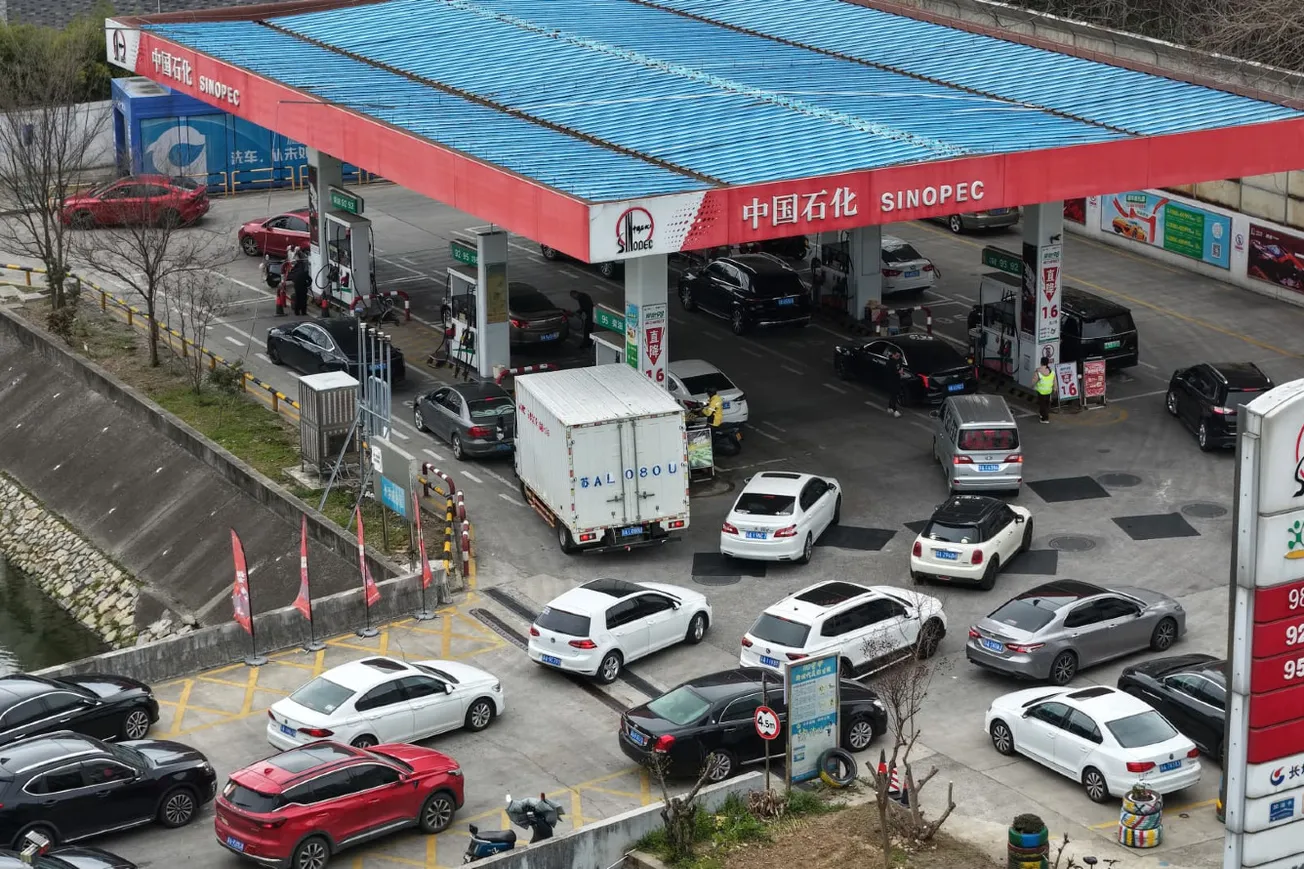
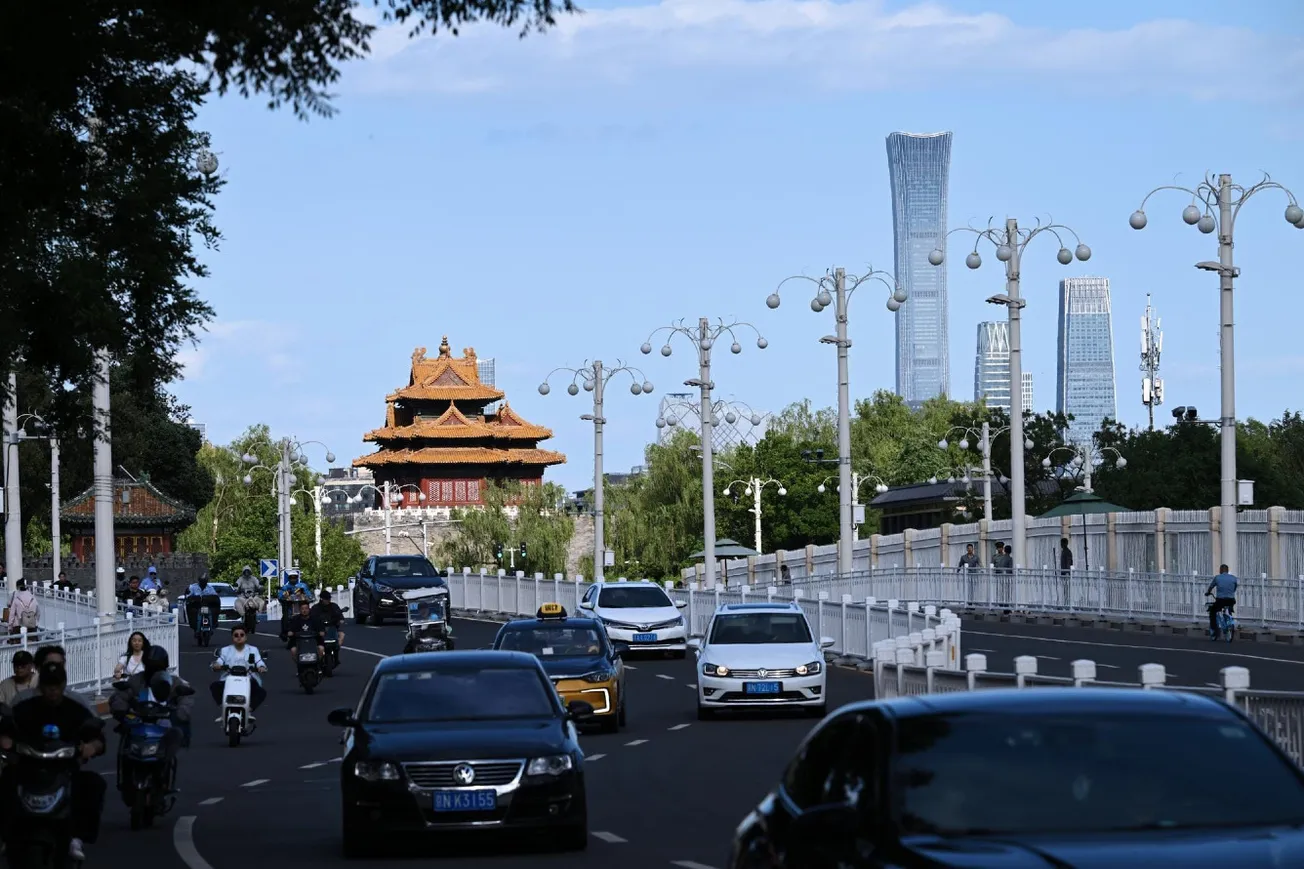
HONG KONG – The next stage of the global AI race will be decided not by algorithms or chips, but by electricity – and that puts China at a distinct advantage. While Western tech giants are emphasizing closed, capital-intensive models that demand enormous computing power, China is embracing open-source AI and massively expanding its renewable- and nuclear-energy capacity, thereby positioning itself to deploy powerful AI technologies at scale without breaking the bank.

These differences reflect a more fundamental split. Whereas the United States and its allies have treated AI as a proprietary technology, China has approached it as public infrastructure, building an open AI ecosystem that reflects the same philosophy it applied to manufacturing: broad adoption, fast iteration, and relentless cost reduction. Chinese open-source models like DeepSeek, Qwen, and Kimi are not just scientific achievements; they are strategic instruments designed for participation, and they are transforming the economics of AI.

DeepSeek’s latest version reportedly matches the capabilities of frontier systems, like those being developed by US companies, at a fraction of their compute cost. Qwen and Kimi’s API prices have fallen by orders of magnitude. In purely economic terms, the marginal cost of “thought” is collapsing. The inference costs of some Chinese models are a tenth or less of those incurred by OpenAI’s GPT-4.

The cheaper AI becomes, however, the more of it the world consumes, with each token saved inviting a thousand more to be generated. The same dynamic that once powered the coal age now drives the digital one. In China, this is by design: low inference costs, together with the open weights of Chinese models, are intended to invite experimentation across universities, startups, and local governments. But all that activity requires energy: the International Energy Agency expects global electricity consumption from data centers to double by 2030 (from 2024 levels), driven largely by AI workloads. Training GPT-4 alone likely consumed millions of kilowatt-hours – enough to power San Francisco for three days.

What once was a contest of algorithms is fast becoming a contest of kilowatts, and China is setting itself up to win. In 2024, the country added 356 gigawatts of renewable-energy capacity – more than the US, the European Union, and India combined – with 91% of all new generation coming from solar, wind, and hydro. Battery storage tripled from 2021 levels, and an ultra-high-voltage grid now carries clean power thousands of miles, from deserts to data hubs.

China is also investing heavily in nuclear energy. According to the Information Technology and Innovation Foundation, its nuclear research and development spending is roughly five times higher than that of the US. As its fourth-generation reactors and small modular designs advance from pilot to deployment, nuclear energy is quietly providing the baseload power that intermittent renewables cannot.

This combination of open AI models, cheap renewables, and a stable supply of nuclear power forms what might be called an energy-compute flywheel: more clean power enables more compute, which in turn optimizes the grid. Already, machine-learning systems are predicting solar output, managing energy storage, and balancing load across China’s vast power network in real time. The result is a reorganization of industry, as the traditional boundaries between energy, semiconductors, and software vanish. Data centers are the new power plants; GPUs are the new turbines. China is not merely electrifying its industry; it is electrifying its intelligence.

Beyond strengthening its own clean-energy grid, China is exporting the building blocks of the world’s new energy system. Its clean-tech exports – including solar panels, grid batteries, and electric vehicles – hit a record $20 billion this past August, overtaking its consumer-electronics shipments from a decade earlier. Even if the West exports chips and software, it is China that is producing the electrons that make them useful.

Meanwhile, the West’s energy constraints – aging grids, slow permitting processes, and high prices – are creating digital bottlenecks. In the US and elsewhere, data-center expansion is increasingly limited by access to a reliable supply of electricity. Some jurisdictions – such as Virginia and Dublin – face moratoria on new data centers.
Industrial revolutions have always favored the societies that could convert energy into productivity most efficiently. In the 19th century, coal was the key to empire. In the 20th, oil was king. And in the 21st, it will be clean power paired with compute. Whoever commands the cheapest electrons will command the cheapest intelligence – and enjoy growing abundance on both fronts.

China is currently positioning itself to occupy this coveted position, thanks to a systemic alignment of investment and incentives that democracies would find difficult to replicate quickly. But it is not the only country that stands to gain from its success. For emerging economies that have long been priced out of high-performance computing, open-weight models and falling energy costs could make AI accessible and even essential, much like electricity or broadband.

But abundance does not guarantee stability. Without sufficient investment in clean-energy generation and storage, surging energy demand for AI could strain grids and undermine progress on decarbonization. Like in the industrial age, efficiency could lead to excess, and progress could be accompanied by growing imbalances. Managing the tension between abundance and restraint will determine whether AI becomes a tool of empowerment or a new driver of inequality.

Two centuries ago, the steam engine converted heat into motion – and remade the global economy. Today, AI is transforming electricity into cognition, and whoever masters both will again rewrite the rules of progress.

Jeffrey Wu is Director at MindWorks Capital.

Copyright Project Syndicate

Your feedback is incredibly valuable to us. Could you please take a moment to grade the article here?

TIPP Curated

Handpicked articles from TIPP Insights & beyond

1. Confronting Conservative Antisemitism—Victor Davis Hanson, The Daily Signal

2. Mamdani Era: The Democrat Party Is Changing Rapidly George Caldwell, The Daily Signal

3. How Trump Can Thwart Socialist NYC Mayor-Elect Mamdani Elizabeth Troutman Mitchell, The Daily Signal

4. Senate Defeats Schumer-led Opposition To Opening Government; Funding Bill Heads To House—Bradley Devlin, Jacob Adams & George Caldwell, The Daily Signal

5. House Members Ready To Finish The Job, End Shutdown George Caldwell, The Daily Signal

6. The Environmental Costs Of AI Are Overblown—J.W. Rich, Mises Wire

7. Why The Supreme Court May Never Review Gay Marriage—Fred Lucas, The Daily Signal

8. Who Died And Made Trump The Global Drug-War King?—Jacob G. Hornberger, Ron Paul Institute for Peace and Prosperity

9. Congressional Republicans Must Stand Up To The President On Venezuela!—Ron Paul, Ron Paul Institute for Peace and Prosperity

10. BBC Should Go The Way Of NPR After Trump J6 Speech Deceptive Edits Scandal—Jarrett Stepman, The Daily Signal

11. Trump’s Economic ‘Miracle’ Depends On His Foreign Policy Reset Jarrett Stepman, The Daily Signal

12. Federal & State Governments Are Rooting Out DEI & ESG Harry Roth, The Daily Signal

13. Mamdani’s Far-Left Playbook Will Be Replicated Across The Country—Jarrett Stepman, The Daily Signal

14. Trump Pardons Dozens Of MAGA Allies Accused Of Attempting To Overturn 2020 Election—Elizabeth Troutman Mitchell, The Daily Signal

15. SNAP's $96 Billion Question—Rajkamal Rao, Substack

16. UN Diplomats Weigh Banning Surrogacy At Advice Of Special Rapporteur—Grace Melton, The Daily Signal

17. 5 Veteran Presidents Who Fought On The Battlefield—George Caldwell, The Daily Signal

18. Innovation Is Not The Key Driver Of Economic Growth—Frank Shostak, Mises Wire

19. Consumer Group Targets ESG-Pushing Pact Under Antitrust Review—Rebecca Downs, The Daily Signal

20. Strengthening Veteran Mental Health: A Vital Mission—Mo Syed & Carrie Sheffield, The Daily Signal

21. Access denied Rothbard: World War I As The Triumph Of Progressive Intellectuals Murray N. Rothbard, Mises Wire

22. Senate Judiciary Committee Advances Legislation Designed To Help Holocaust Families—Jacob Adams, The Daily Signal

23. With These 3 Bills, Arizona’s Biggs Salutes Veterans—Jacob Adams, The Daily Signal

24. VETERANS DAY: Remembering Thomas Harris, A US Marine Vet Who Gave His All In Ukraine—Uliana Boichuk, The Daily Signal

25. In Hot Water: Jasmine Crockett Faces Probe Over Conflicting Financial Disclosures—Fred Lucas, The Daily Signal

26. On Resisting Evil—Murray N. Rothbard, Mises Wire

27. ICE Arrests Child Rapist—Virginia Allen, The Daily Signal

28. The Humiliating ‘No Kings’ Boycott Failure—Scott Hogenson, The Daily Signal

29. Trump Moves Onward And Forward With The ‘Club Of Strength—Anthony B. Kim, The Daily Signal

30. Remains Of Hostage Returned To Israel After 11 Years—Virginia Allen, The Daily Signal

31. Did The Military Violate Trump’s DEI Executive Order?—Tyler O'Neil, The Daily Signal

32. Democrats Call On Schumer To Resign Leadership Post For Shutdown Failures—Jacob Adams, The Daily Signal

From our News Editor at TIPP Insights

33. EU Ministers To Meet In Ukraine As Membership Talks Face Hungarian Block

34. U.S. Joins NATO War Games In Sweden Amid Russian Hybrid Warfare Fears

35. China And Canada Pledge To Speed Up Cooperation After Years Of Strained Ties

36. BBC Chief Urges Staff To “Fight For Truth” As Trump Threatens $1 Billion Lawsuit

37. Twelve Killed In Islamabad Court Blast As Pakistan Blames Taliban Militants

38. House Budget Chair Jodey Arrington To Retire After A Decade In Congress

39. Trump Asks Supreme Court To Overturn $5 Million E. Jean Carroll Verdict

40. UK Halts Intelligence Sharing With U.S. Over Deadly Caribbean Boat Strikes

41. Flight Chaos Deepens As FAA Cuts Ground More Planes Nationwide

42. Shutdown Deal Adds $203M To Protect Lawmakers Amid Rising Threats

43. Duffy Vows Fast Pay Relief For Unpaid Air Traffic Controllers After Shutdown Ends

44. DOJ Probes UC Berkeley Unrest After Turning Point Rally Erupts In Violence


📊 Market Mood — Wednesday, November 12, 2025 (Pre-Market)

🟩 Futures Rise As Government Reopening Looms
U.S. stock futures edged higher early Wednesday as investors awaited confirmation of a deal to end the nation’s longest-ever federal government shutdown.

🟨 Reopening Set To Restore Data Flow
The Senate has already approved a temporary funding bill through January 30. The House, with its Republican majority, is expected to pass it this week, paving the way for President Trump’s signature. Reopening would restart vital economic indicators such as the monthly jobs report, critical for gauging the economy and shaping Fed policy.

🟩 Fed Path Still Clouded
With data blackouts and a slowing labor market, policymakers remain split ahead of the December 10–11 meeting. Futures now imply a 61.9% chance of another 25-bp rate cut, up from 57.8% yesterday, reflecting lingering caution on growth.

🟨 Corporate Focus On Cisco, Chevron, Oklo
Cisco Systems reports after the bell amid strong AI-driven infrastructure demand. Chevron will unveil its post-Hess-acquisition strategy update, while nuclear startup Oklo inched higher despite widening losses.

🟩 Crude Pulls Back After Rally
Oil prices eased as traders locked in profits. Brent -0.9% to $64.58 and WTI -1.0% to $60.46 after Tuesday’s 1.5%+ gains tied to reopening hopes and expected holiday-travel demand.


🟧 Wednesday, November 12
No major economic releases scheduled.

Access our Featured Stocks and TIPP Top-20 archives — exclusive to paid subscribers. Subscribe now → $99/year.

Subscribe
📧
Letters to editor email: editor-tippinsights@technometrica.com
📰
Subscribe Today And Make A Difference. Consider supporting Independent Journalism by upgrading to a paid subscription or making a donation. Your support helps tippinsights thrive as a reader-supported publication. Contact us to discuss your research or polling needs.

Comments

Latest