By Moon of Alabama via Ron Paul Institute for Peace and Prosperity | December 17, 2025
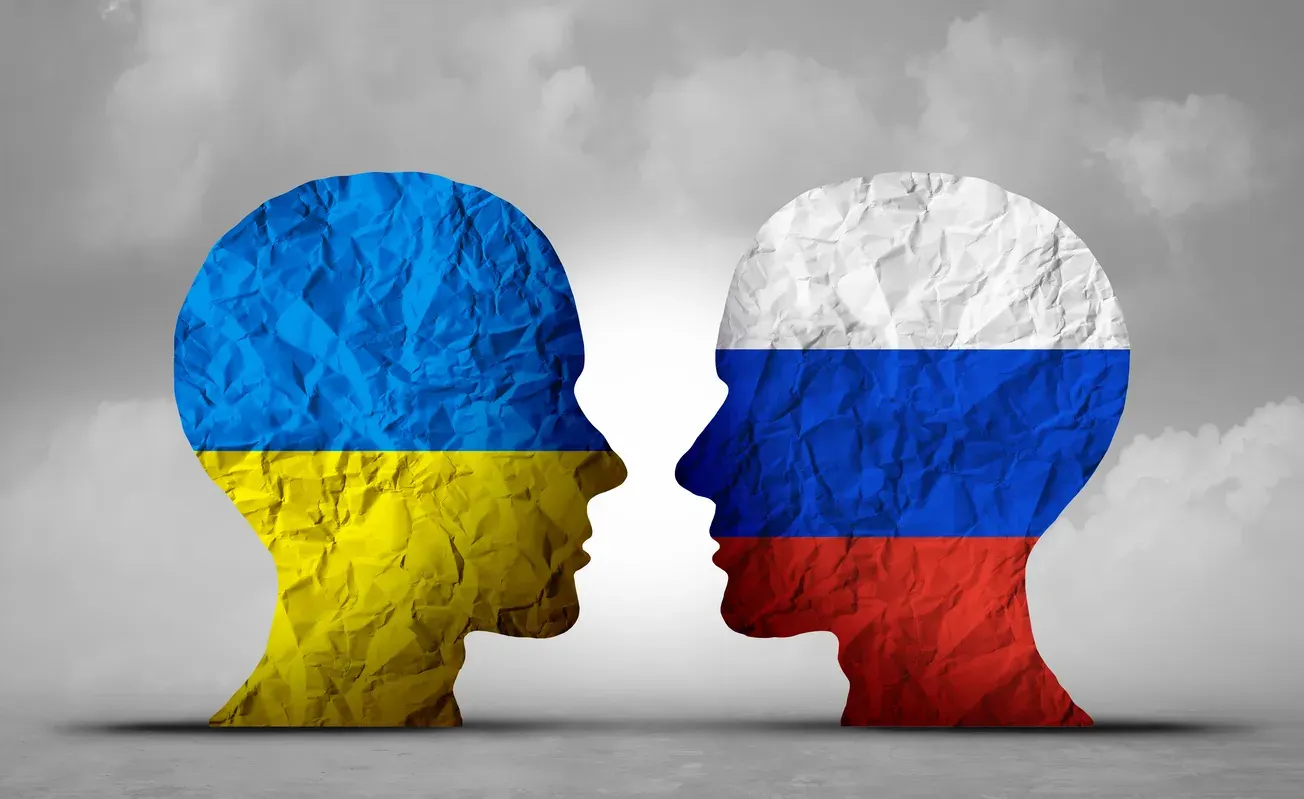
The negotiations over the weekend between the U.S., Ukraine and Europe about the parameters of a ceasefire or peace agreement with Russia were surreal. The three sides are fighting each other over detailed points that Russia is sure to reject. They also left out important points which Russia had named as its priority items.
There is no way that any of this will lead to peace. Which may well be the point of the whole theater.
Zelenskyy and Trump hail peace talks progress as US offers security guarantees – Politico.eu
Western leaders welcomed major progress in talks on a potential peace deal on Monday after nearly four years of full-scale war in Ukraine, for the first time outlining how security guarantees could prevent Vladimir Putin from invading again.
Ukrainian President Volodymyr Zelenskyy gave an upbeat assessment of a dramatic new offer from American officials to provide a NATO-style assurance to protect Ukraine.
The proposals look “pretty good,” Zelenskyy said at the end of two days of talks with Donald Trump’s negotiators in Berlin. Trump himself said “we are closer now than we have been ever” to peace.
But the Ukrainian president cautioned that the plans were only a “first draft,” with significant questions remaining unresolved. For example, there was still no deal on what should happen to contested territory in the Donbas region of eastern Ukraine, much of which is occupied by Russian troops. And there’s no indication that Russian dictator Vladimir Putin will agree to any of it.
German Chancellor Friedrich Merz, who hosted the talks, welcomed what he called the “remarkable” legal and “material” security guarantees that American negotiators Steve Witkoff and Jared Kushner, Trump’s son-in-law, had proposed.
“For the first time since 2022, a ceasefire is conceivable,” Merz said at a press conference with Zelenskyy. “It is now entirely up to Russia whether a ceasefire can be achieved by Christmas.”
Where to start?
No, Mr. Merz, there is no conceivable ceasefire. Russia does not want one. A ceasefire would allow Ukraine to recover and get ready for the next round of war. Russia wants a peace agreement that not only covers Ukraine but defines a new security architecture for the whole of Europe. Russia also wants physical control over the four oblast, plus Crimea, that voted to become members of the Russian Federation. It wants a Ukraine that is disarmed and denazified.
Neither seems to be on offer.
Instead we get some spectacle over U.S. ‘security guarantees’ conditioned on Ukrainian concessions of land. Zelenski is trying to cash in the first while not conceding the second:
“The basis of that agreement is basically to have really, really strong guarantees, Article 5-like,” a senior U.S. official said. “Those guarantees will not be on the table forever. Those guarantees are on the table right now if there’s a conclusion that’s reached in a good way.”
…
[T]he American officials mostly avoided specifics on how they aimed to bridge other gaps on territorial disputes. They said they left Zelenskyy with “thought-provoking ideas” on how to do so.
Translation: “This is pure flim flam.”
The Europeans are likewise delusional:
Merz, along with his counterparts from Denmark, Finland, France, Italy, the Netherlands, Norway, Poland, U.K., Sweden and the EU put out a statement welcoming “significant progress” in the U.S. effort and committing to helping Ukraine to end the war and deter Russian aggression, including through a European-led multinational force for Ukraine supported by the U.S.
The joint statement by the Europeans makes several points which are completely unrealistic and which neither the U.S. nor Russia nor European voters will be willing to accept or support:
Both the US and European leaders committed to work together to provide robust security guarantees and economic recovery support measures for Ukraine in the context of an agreement on ending the war. This would include commitments to:Provide sustained and significant support to Ukraine to build its armed forces, which should remain at a peacetime level of 800,000 to be able to deter conflict and defend Ukraine’s territory.A European-led ‘multinational force Ukraine’ made up from contributions from willing nations within the framework of the Coalition of the Willing and supported by the US. It will assist in the regeneration of Ukraine’s forces, in securing Ukraine’s skies, and in supporting safer seas, including through operating inside Ukraine.A US led ceasefire monitoring and verification mechanism with international participation to provide early warning of any future attack and attribute and respond to any breaches along with a deconfliction mechanism to work on mutual deescalatory actions that can be taken to benefit all parties.A legally binding commitment, subject to national procedures, to take measures to restore peace and security in the case of a future armed attack. These measures may include armed force, intelligence and logistical assistance, economic and diplomatic actions.Invest in the future prosperity of Ukraine, including making major resources available for recovery and reconstruction, mutually beneficial trade agreements, and taking into account the need for Russia to compensate Ukraine for the damage caused. In this vein, Russian sovereign assets in the European Union have been immobilised.Strongly support Ukraine’s accession to the European Union.
Each of those points is hybris and wishful thinking.
- There is no way Ukraine, with barely 25 million inhabitants left half of which are pensioners, can sustain a 800,000 strong peacetime army.
- Russia has rejected any foreign forces in Ukraine and has announced that it will attack those that appear there.
- The U.S. is party of the conflict. It has started the proxy war against Russia and continues to take part in it by supporting the Ukrainian military with intelligence and communication. A party of a war can not be the one to monitor a ‘ceasefire’.
- One major reason for the conflict in Ukraine was the prospect of its membership in NATO. To reintroduce that under the guise of a multilateral ‘legally binding commitment’ will not be accepted by Russia.
- Europe does not have the money to invest in Ukraine. Russia is winning the war. It will not ‘compensate Ukraine’ for
any damage but may well ask for reparations paid by Ukraine for damage it has caused on Russian land. - There will be no accession of Ukraine into the European Union in any foreseeable future. Some 65% of the EU budget are payments to more rural countries under the ‘Common Agricultural Policy’. Poland’s farmers are currently the biggest net-recipients. If Ukraine enters the EU nearly all of the CAP money would flow towards it. It is implausible that Poland and other rural EU members will vote for this.
The whole delusion plan the European leaders have put out in their joint statement is designed to prolong the conflict. As Elijah Magnier summarizes the joint statement:
Rather than integrating Ukraine into a post-war European security order, the EU plan institutionalises Ukraine as a frontline security asset, not a normalised state. The EU want Ukraine to become a permanently militarised society.
The current negotiated parameters can not lead to a peace agreement with Russia.
The Trump administration needs to take a step back. It can deliver the currently negotiated package to Russia which will study it and ask for negotiations of ‘details’ that will take several years to find some end point. Or it can put the whole issue aside for now and go for a retry in six to twelve months.
By then Ukraine will be much worse off than it is today: All of Ukraine will have been de-electrified, Zelenski may well be gone, Zaparozhia and Kerson may well have fallen to Russian forces, European willingness to support Ukraine will have dwindled further.
By then resistance to a peace agreement, be it by Ukraine or Europe, will have decreased. Only then will peace in Ukraine and Europe become a real possibility.
Reprinted with permission from Moon of Alabama.
Moon Of Alabama was opened as an independent, open forum for members of the Whiskey Bar community to discuss politics, economics, philosophy and blogger Billmon's Whiskey Bar writings.
Original article link