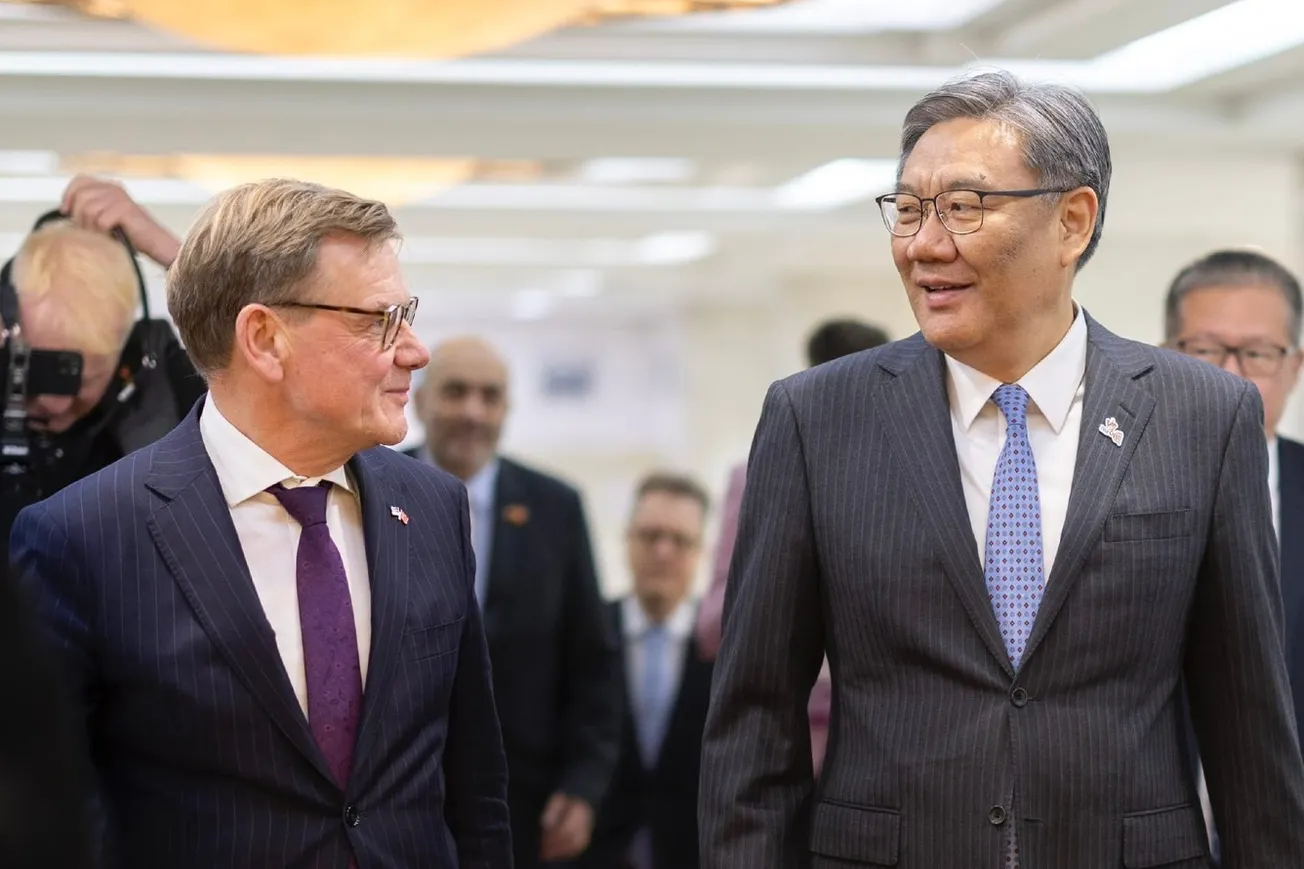
Germany pressed China for clarity on rare earth and semiconductor exports during Foreign Minister Johann Wadephul’s meetings in Beijing, underscoring Berlin’s growing alarm over supply-chain vulnerabilities.
Wadephul told Chinese Commerce Minister Wang Wentao that uncertainty over deliveries must end, noting that German manufacturers depend heavily on Chinese minerals. China controls about 70% of global rare earth mining and 90% of processing, giving Beijing significant leverage over European industry.
The entire word relies on China for rare earths:
— The Kobeissi Letter (@KobeissiLetter) October 31, 2025
Brazil imports 97% of all its rare earths from China, the most among major global economies.
Turkey follows with 93%, while Germany and the UK import 91% and 89%, respectively.
Korea relies on China for 80% of its rare earth… pic.twitter.com/yhAXbBk7Ag
Wadephul, who is paving the way for Chancellor Friedrich Merz’s visit next year, reiterated Germany’s desire to expand trade while warning that restrictions on critical minerals, steel and electric mobility remain major concerns.
China has resisted granting broad export licenses, even as Berlin seeks to enforce earlier assurances of “reliable” shipments.
🇩🇪 Germany faces challenges securing rare earth export licenses from China. Foreign Minister Wadephul emphasizes the need for fair trade practices and cooperation. #Germany #China #TradeRelations 🌏https://t.co/AwoJyKlqit
— Global Banking & Finance Review (@GBAFReview) December 8, 2025
Talks also touched on political tensions, including Germany’s trade deficit and Beijing’s sensitivities over Taiwan. China urged Berlin to uphold the one-China policy and promote stable China-EU ties.
Also read:
 TIPP Staff
 TIPP Staff