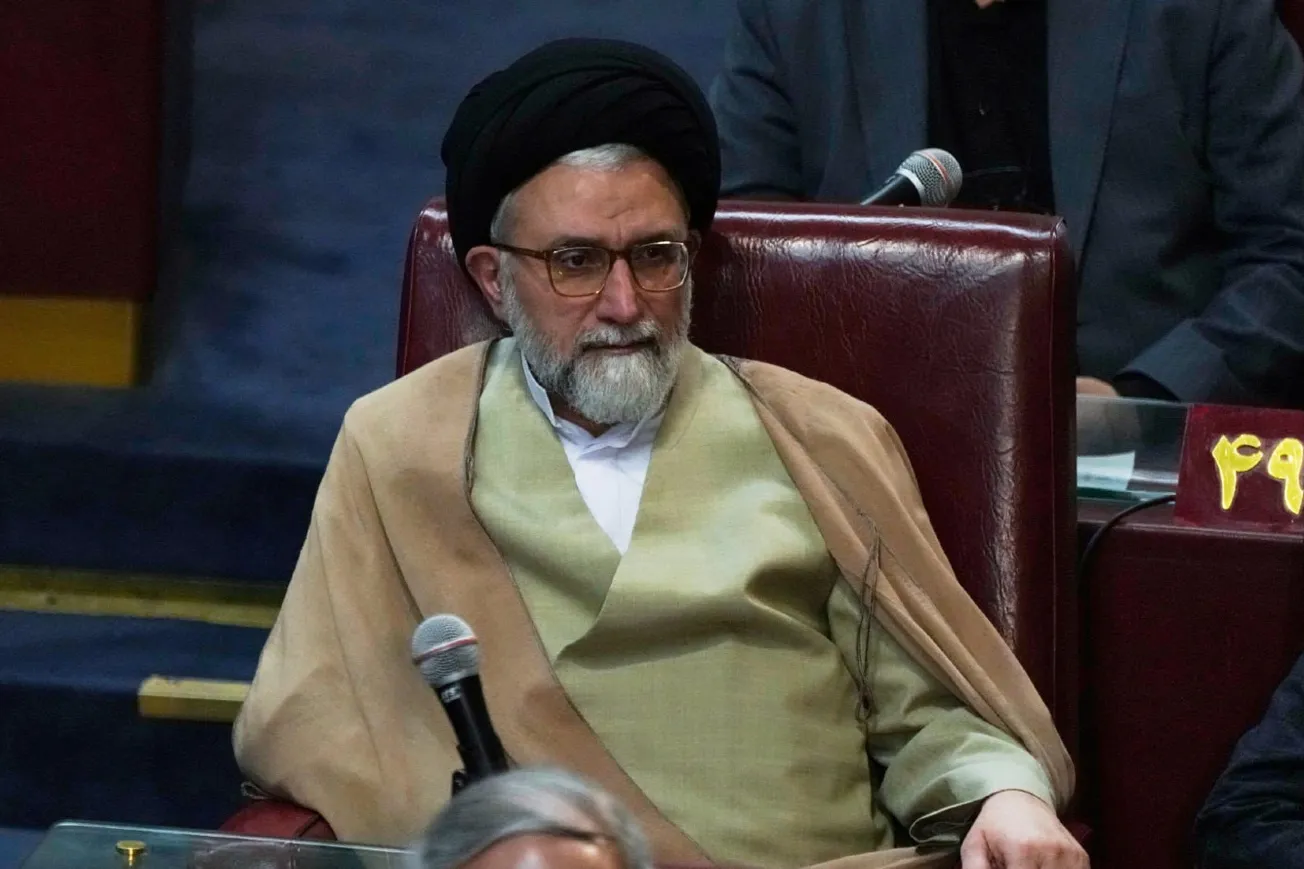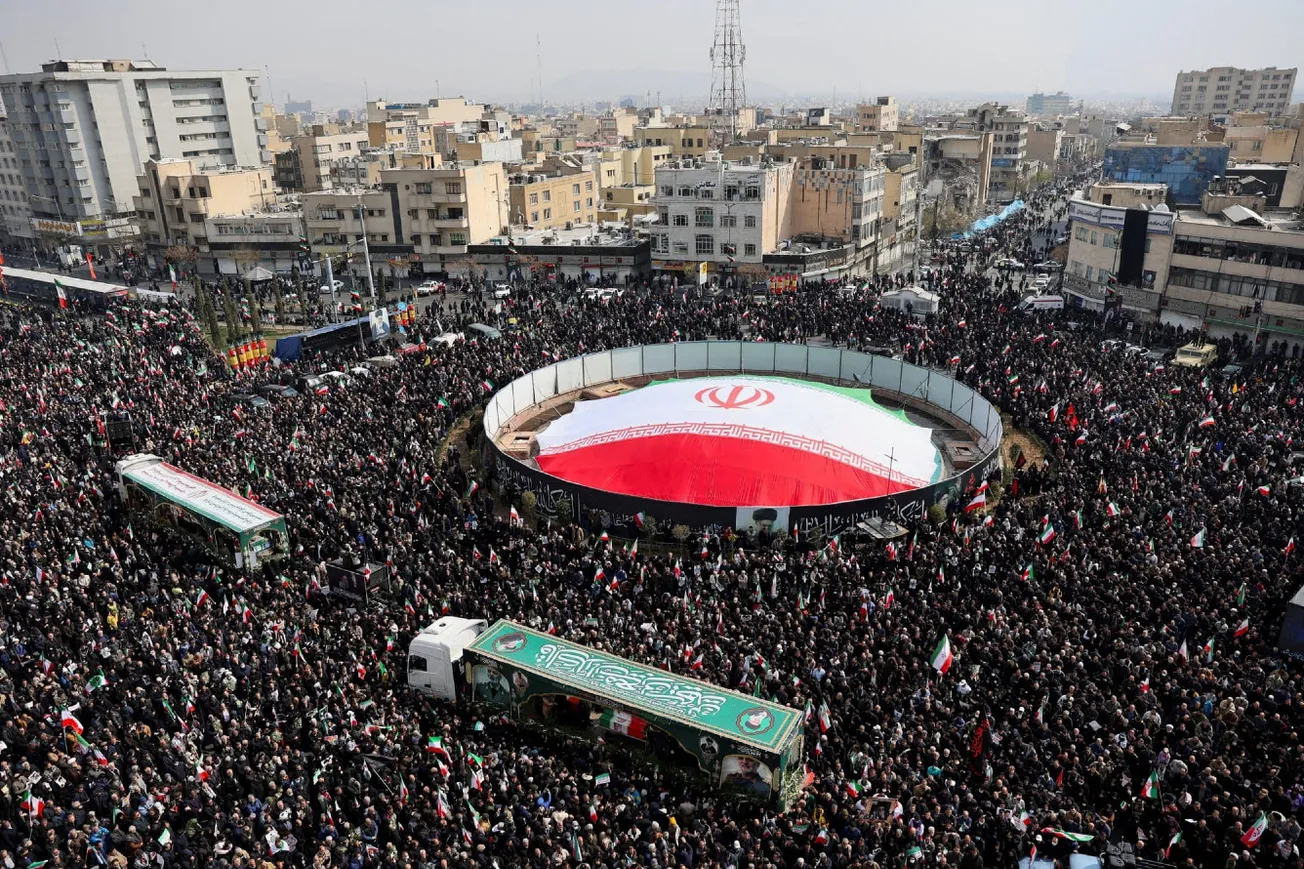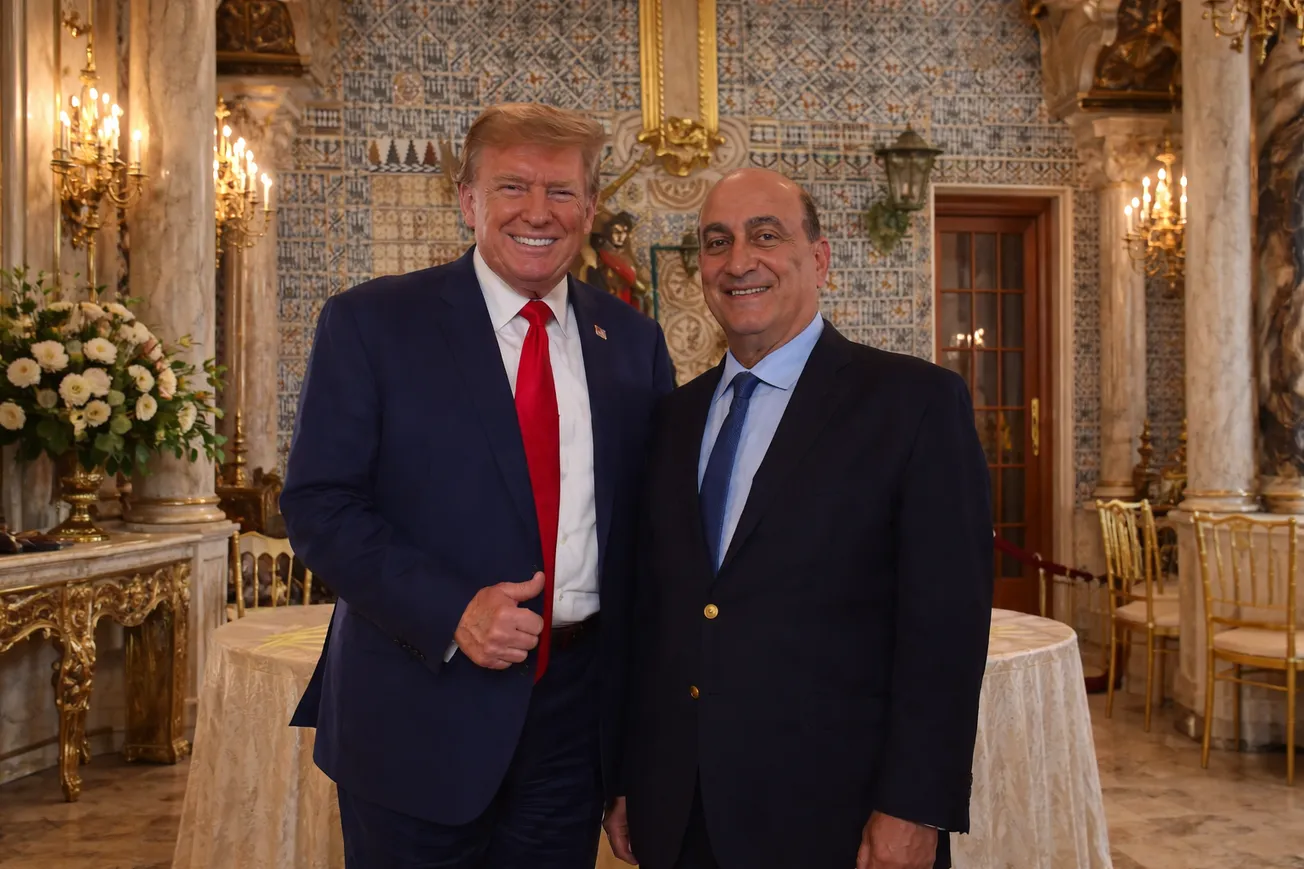

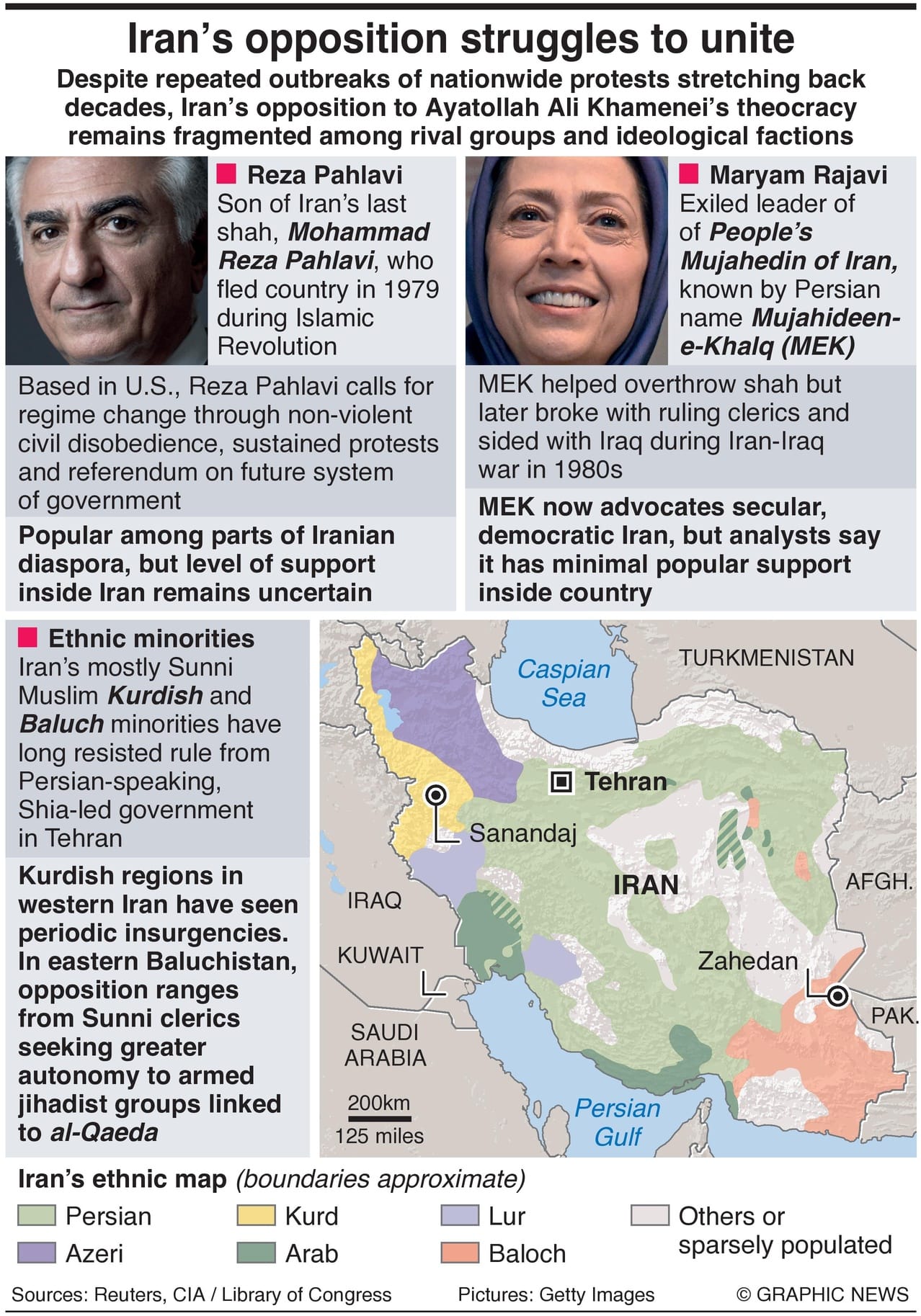
Despite repeated outbreaks of nationwide protests stretching back decades, Iran’s opposition to Ayatollah Ali Khamenei’s theocracy remains fragmented among rival groups and ideological factions.
The clerical establishment is currently under mounting pressure as economic hardship fuels public discontent. Inflation has surged sharply since a conflict last June, when Israeli and U.S. forces carried out airstrikes, primarily targeting Iran’s nuclear facilities.
Among the prominent opposition figures is Reza Pahlavi, son of Iran’s last shah. Based in the U.S., Pahlavi advocates regime change through non-violent civil disobedience, sustained protests, and a referendum on the country’s future system of government. While he enjoys support among segments of the Iranian diaspora, his backing inside Iran remains uncertain.
Another key opposition leader is Maryam Rajavi, exiled head of the People’s Mujahedin of Iran (MEK or Mujahideen-e-Khalq). The MEK initially helped overthrow the shah but later broke with the clerical rulers and sided with Iraq during the Iran-Iraq war in the 1980s. Today, the group calls for a secular, democratic Iran, though analysts say it has minimal popular support within the country despite some backing from Western politicians.
Ethnic minorities in Iran, particularly Sunni Kurdish and Baluch populations, have also long resisted the Persian-speaking, Shia-led government. Kurdish regions in western Iran have experienced periodic insurgencies, while opposition in eastern Baluchistan ranges from Sunni clerics seeking greater autonomy to armed jihadist groups linked to al-Qaeda.