By Tyler O'Neil, The Daily Signal | March 03, 2026
It is no small thing to grasp the true significance of current events, let alone their spiritual meaning.
Sure, any man can tell you that the southern states seceded because Abraham Lincoln won the 1860 presidential election, and that they did so because Lincoln aimed to keep slavery out of the federal territories.
Few at the time, however, understood the North’s massive economic and logistical advantage over the South, and deduced that beginning a civil war might have doomed the institution of slavery itself.
It took an act of astounding genius, however—or perhaps divine inspiration—to see that God brought the Civil War upon America as judgment for the United States’ hypocrisy in denying to black people the freedom we so valiantly fought for in the Revolution.
The Second Inaugural
On March 4, 1865, a mere 41 days before his assassination and 36 days before the surrender at Appomattox Courthouse that ended the war, Lincoln captured the spiritual significance of an entire war in a 701-word Second Inaugural Address.
With heavy poignancy, he noted that both the North and the South “read the same Bible and pray to the same God and each invokes His aid against the other.”
“The prayers of both could not be answered—that of neither has been answered fully,” Lincoln noted.
My favorite two sentences ring like a thunderclap.
“Fondly do we hope—fervently do we pray—that this mighty scourge of war may speedily pass away,” the president said. “Yet, if God wills that it continue until all the wealth piled by the bondsman’s two hundred and fifty years of unrequited toil shall be sunk and until every drop of blood drawn with the lash shall be paid by another drawn with the sword, as was said three thousand years ago, so still it must be said, ‘The judgements of the Lord are true and righteous altogether.'”
With due humility, Lincoln does not dare to state that God brought the Civil War on the United States as the just punishment for slavery, but he firmly suggests as much. He does not suggest that the North, the force fighting for freedom, is guiltless.
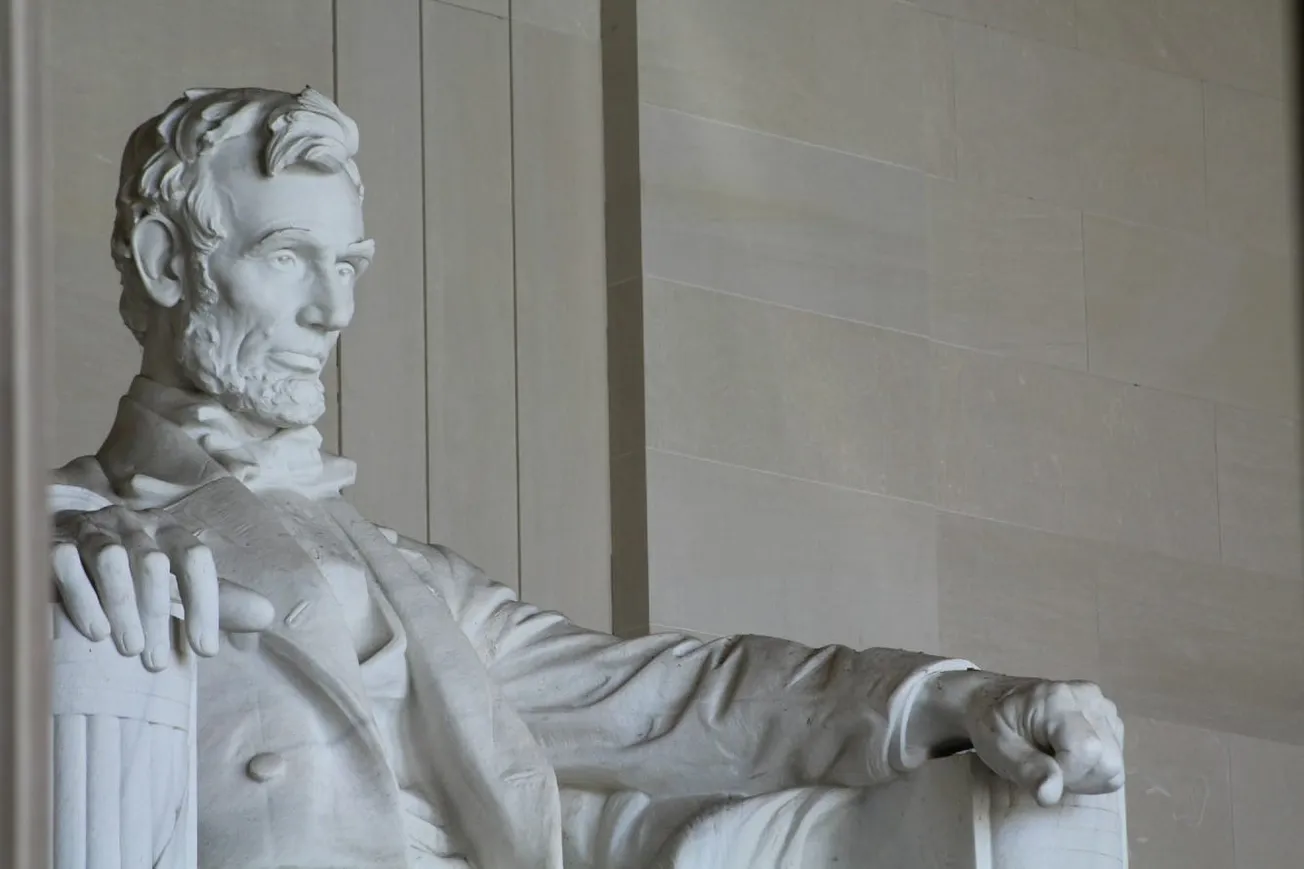
Perhaps for this reason, Americans have agreed with Lincoln, and honored this interpretation by etching it into the wall of the Lincoln Memorial.
Americans may be surprised to hear it, but Lincoln was an unwilling abolitionist. You might say that God forced his hand.
Why Didn’t Lincoln Always Support Abolition?
Lincoln saw slavery as an evil, yes, but he was willing to put up with it to preserve the union.
It’s hard for us, who rightly abhor slavery, to understand the political circumstances at the time.
Southern slaveholders had a great deal of power, and the salient political issue wasn’t whether slavery would be abolished but whether slavery would be allowed to spread west into new lands that became their own states.
One of the earliest laws in American history, the Northwest Ordinance, excluded slavery from the territories that now make up Illinois, Indiana, Ohio, Michigan, Minnesota, and Wisconsin. The Founders anticipated that slavery—which they saw as a necessary evil—would disappear because it was growing economically unprofitable. Eli Whitney’s invention of the cotton gin changed that, and by the 1820s, southerners had started defending slavery as a positive good.
The 1820 Missouri Compromise drew a line, allowing slavery in territories south of the line but forbidding it in territories above the line. Yet the southern slave interests had so much power in the federal government that they kept demanding slavery north of the line. Lincoln’s political career grew from his opposition to the notion of “popular sovereignty,” which stated that territories north of the line could enter the union as slave or free states based on the votes of white men.
Lincoln’s opponent for U.S. Senate in 1858, Democrat Stephen Douglas, supported popular sovereignty. Douglas played a large role in passing the Kansas-Nebraska Act of 1854, which applied this principle to the territories of Kansas and Nebraska. The law inspired a mini-civil war in Kansas, as pro-slavery settlers battled anti-slavery settlers for the incoming state’s future.
Restrainers like Lincoln didn’t advocate for abolition—abolitionists were considered fringe extremists—but they did champion a return to the older principle of limiting slavery to southern states and territories. The South’s rejection of that compromise—morally flawed though it was—spurred the secession movements.
When Lincoln won the 1860 election, those who wanted to expand slavery could not abide a president who wanted to restrain it.
The Crucible of War
The war itself convinced Lincoln to dismantle slavery. The freedmen in the North proved their mettle on the battlefield. The Emancipation Proclamation, a war measure, only freed slaves in Confederate-held territory in order to encourage revolts there.
Only with the ratification of the 13th Amendment did the United States fully abolish slavery—and the states did not ratify that amendment until Dec. 6, 1865, long after Lincoln’s death.
Most of us would be foolish to attempt to divine God’s purposes in human events, but Lincoln—like the humble prophet Moses before him—spoke from his own experience what God had been doing.
As the Left and the Right seem ever more divided on basic truth and morality, I pray that the Almighty would preserve us from such a fate. From killing babies in the womb to mutilating the bodies of children, I can think of more than one great sin in our country today. The ugly spirit of Confederate nullification has reared its ugly head among Democrats attempting to nullify federal immigration law, as some former conservatives seek to blame the Jews for America’s ills.
There are times when I tremble for my country to remember that God is just.
Tyler O'Neil is senior editor at The Daily Signal and the author of two books: "Making Hate Pay: The Corruption of the Southern Poverty Law Center," and "The Woketopus: The Dark Money Cabal Manipulating the Federal Government."
Original article link