By Larry C. Johnson, Ron Paul Institute for Peace and Prosperity | February 18, 2026
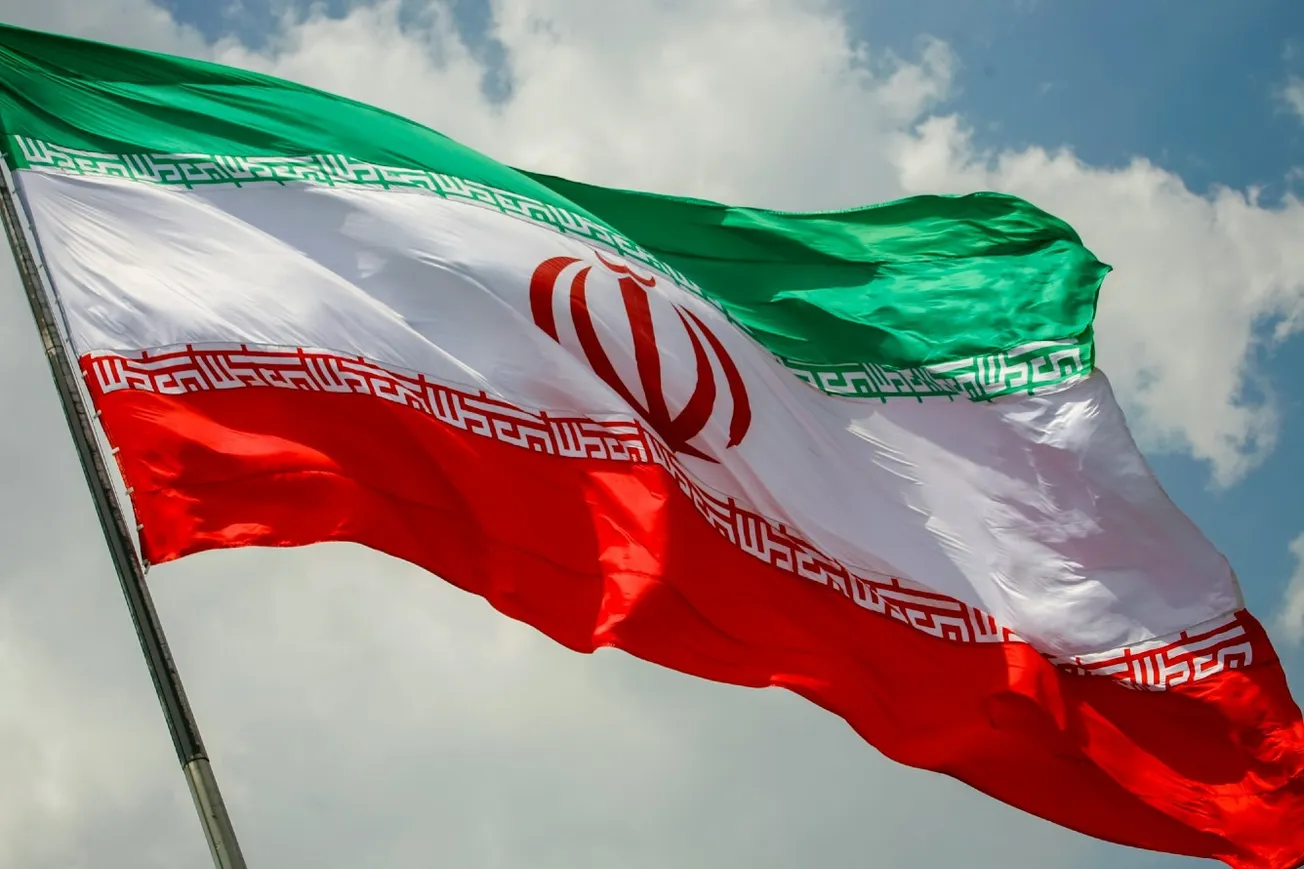
As part of the US campaign to engineer a regime change in Iran, the US military and intelligence community are using Operational Preparation of the Environmnet aka OPE.
OPE is defined in joint publications (e.g., JP 3-05 Special Operations) as non-intelligence activities conducted prior to or in preparation for potential military operations to set conditions for success. It encompasses shaping the operational environment through intelligence, surveillance, reconnaissance, information operations, civil affairs, psychological operations, and other preparatory actions—often in denied or politically sensitive areas.
I believe that one of the major OPE efforts is to convince the US public that the overwhelming majority of Iranians despise the Islamic Republic and want it overthrown. In my opinion, a major player in this OPE is a polling outfit known as GAMAAN. GAMAAN (Group for Analyzing and Measuring Attitudes in Iran) collaborates with Psiphon VPN, which is widely used across Iran. GAMAAN findings have been consistent in painting a picture of massive opposition to the Iranian regime:
According to GAMAAN polls taken prior to 2025, a significant majority of Iranians — around 70% — oppose the continuation of the Islamic Republic. The highest level of opposition, 81%, occurred during the “Woman, Life, Freedom” uprising in late 2022. Support for “the principles of the Islamic revolution and the Supreme Leader” has decreased from 18% in 2022 to 11% in 2024. Opposition to the Islamic Republic is higher among the youth, urban residents, and the highly educated. An overwhelming majority of Iranians (89%) support democracy. Gamaan
Only about 20% of Iranians support the continuation of the Islamic Republic. When asked about preferred alternatives, about 26% favor a secular republic and around 21% support a monarchy. For 11%, the specific form of the alternative system doesn’t matter. About 22% report lacking sufficient information to choose an alternative system.
But what are the funding sources for GAMAAN and Psiphon VPN? Let’s start with GAMAAN. GAMAAN describes itself as an independent, non-profit research foundation registered in the Netherlands. It emphasizes its academic credentials (e.g., founded by scholars at Dutch universities like Tilburg and Utrecht) and innovative online methods (e.g., anonymity sampling via VPNs like Psiphon) to overcome self-censorship in authoritarian contexts.
GAMAAN operates under the supervision of a board including Dr. Ammar Maleki (founder and director), assistant professor of comparative politics at Tilburg University, and Dr. Pooyan Tamimi Arab, associate professor of secular and religious studies at Utrecht University. Maleki is an assistant professor of Comparative Politics and a self-described activist for democracy in his native Iran. Tilburg University Critically, he does not hide his political stance — his Tilburg University profile explicitly states that he is “a pro-democracy activist and political analyst of Iranian politics” and that he tries “to have an impact on political debates around democratization of Iran.”
This is where the picture becomes more contested. GAMAAN has relied on US government-funded VPN provider Psiphon to disseminate its surveys; collaborated with the USAID-funded Tony Blair Institute; and collaborated with and received funding from historian Ladan Boroumand, co-founder of the Abdorrahman Boroumand Center for Human Rights in Iran, which is in turn supported by the US government-funded National Endowment for Democracy (NED).
Psiphon is owned and operated by Psiphon Inc., a Canadian corporation based in Ontario. Psiphon was originally developed by the Citizen Lab at the University of Toronto, with version 1.0 launching on December 1, 2006, as open-source software. In early 2007, Psiphon, Inc. was established as a Canadian corporation independent of the Citizen Lab and the University of Toronto.
It has a notable funding history. In 2008, Psiphon, Inc. was awarded sub-grants from the US State Department Internet Freedom program, administered by the Bureau of Democracy, Human Rights, and Labor. In 2010, Psiphon began providing services to the Broadcasting Board of Governors (US), the US Department of State, and the BBC. More recently, in April 2024, the Open Technology Fund (OTF) announced increased long-term funding for Psiphon, with subsequent OTF awards totaling US$18.54 million for 2024 and US$5.87 million for 2025.
The Open Technology Fund (OTF) is administered by the US Agency for Global Media (USAGM), an independent federal agency of the US government. USAGM provides OTF with its primary funding through annual grants, which originate from Congressional appropriations under the Department of State, Foreign Operations, and Related Programs budget. OTF operates as an independent nonprofit corporation (since 2019) but remains a grantee under USAGM’s oversight and governance, as authorized by Congress (e.g., via the 2021 National Defense Authorization Act).
So while Psiphon Inc. is technically an independent Canadian company, it has historically been substantially funded by the US government and other Western institutions — a fact worth noting given its role as the methodology partner for the GAMAAN polling inside Iran. In other words, it is a cut out that, in my opinion and based on my experience, is supporting a CIA information operation to portray Iran as a country on the precipice of overthrowing the Islamic Republic.
There is an alternative polling database that paints a radically different picture of the mood in Iran with respect to the Islamic Republic… The Center for International and Security Studies at Maryland has conducted a separate series of surveys using phone-based methods, which show more moderate results. Their findings from 2023 and 2024 found that about 75% of respondents expect Iran’s constitution and political system to be about the same in ten years, and only 17% agreed with protesters’ calls for the Islamic Republic to be replaced. However, three in five now think the government should not be strict in enforcing Islamic laws, distinctly up from 2018, and support for demands that the government fight corruption has been consistently near-unanimous since 2018.
On the protests themselves, asked in 2024 to think about waves of demonstrations over the past ten years, two thirds say their main objective was to demand that officials pay greater attention to people’s problems, while only one in five think their main objective was to demand greater freedoms or bring about change in Iran’s system of government.
President Pezeshkian, based on the polls from 2024, was viewed favorably by 66% of those polled at the start of his term… and 70% expressed confidence that he would be an honest and trustworthy president, though only a quarter were very confident. Majorities expressed some confidence that he can improve relations with neighboring countries and protect citizens’ freedoms, notably women’s rights, but majorities are not confident that he can lower inflation or improve relations with the West.
There have been no new polls in the wake of Israel’s surprise attack on June 13, 2025. Based on my conversations with both Nima and Professor Marandi, the reaction in Iran has been similar to what happened in the United States in the aftermath of the 9-11 attacks… National unity increased.
The failed color revolution launched on December 28, 2025 by the United States and Israel has reinforced support for the Islamic Republic. President Pezeshkian has openly admitted his government’s failures on the economic front and he has taken some steps to institute reforms. A more important development was the signing of the Trilateral Security Agreement with Russia and China at the end of January. Those two countries are now providing more resources and support to stabilize the Iranian government and improve the economic lives of the Iranian people.
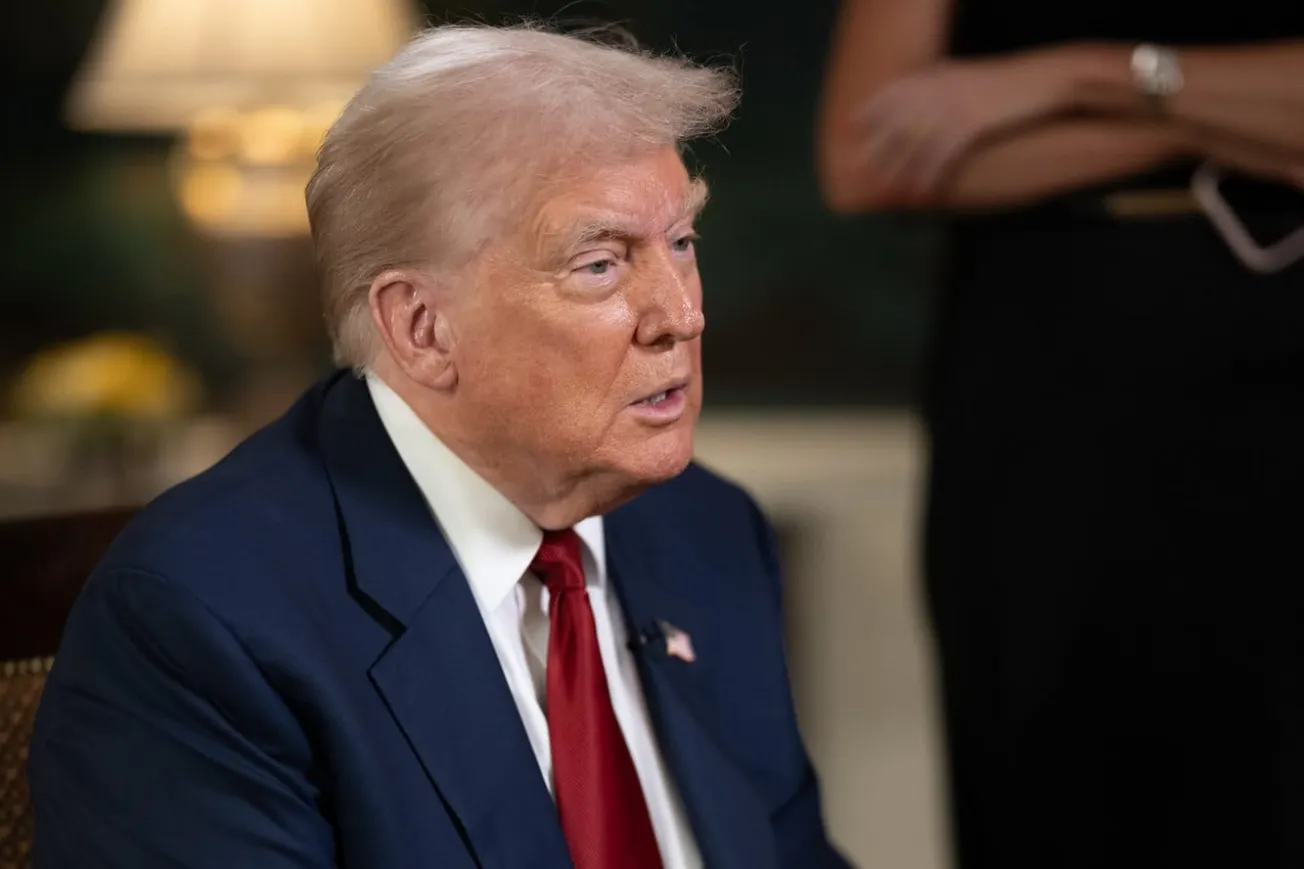
Donald Trump’s threats to attack Iran are backfiring among the majority of the population in Iran. Yes, there are some Iranians who still want to bring an end to the Islamic Republic, but they are dramatically outnumbered. Remember the boost in popularity that George W Bush enjoyed in the aftermath of 9-11? He even picked up support from Democrats who had previously despised him. That same phenomena has happened in Iran. Prior to the June 13, 2025 attack, Iranians under the age of 50 had no vivid memory of Iran/Iraq war — where Iran was attacked with the encouragement and support of the United States. The June 2025 attack, coupled with the foreign instigated late December 2025 protests and violence, have awakened a new sense of nationalism among the Iranian public that has strengthened support for the Islamic Republic.
The belief in the West that Iran is more vulnerable now than at anytime in the last 46 years is the creation of a US funded propaganda campaign that relied on an ideologically biased pollster to produce results that have been used to convince most Americans that Iran is yearning to breath free… All we have to do is kill off the leadership in Iran.
Reprinted with permission from Sonar21.
Larry C. Johnson is a former analyst at the U.S. Central Intelligence Agency. He is the co-owner and CEO of BERG Associates, LLC (Business Exposure Reduction Group).
Original article link