
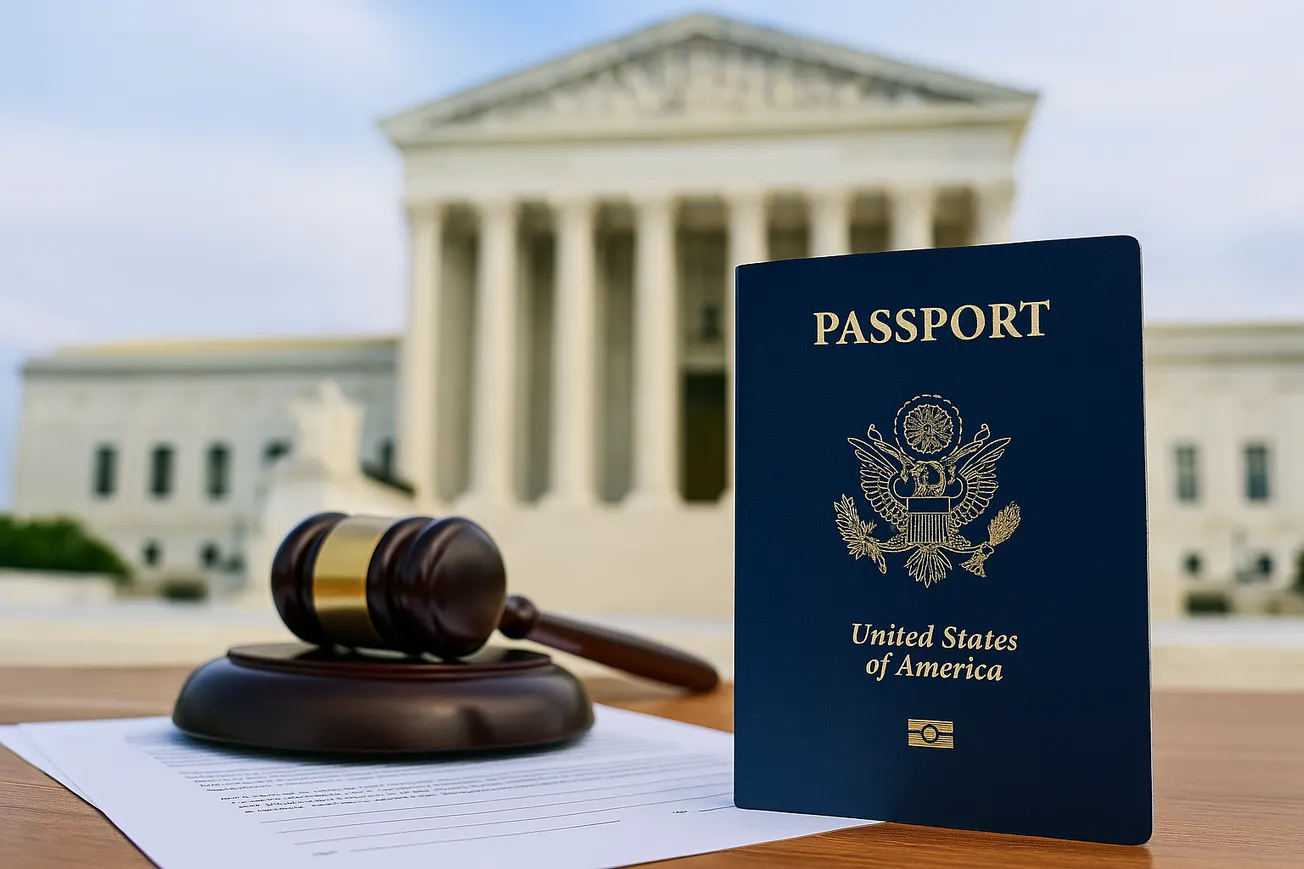
Unconditional birthright citizenship, or jus soli, grants automatic citizenship to anyone born on a country's soil, regardless of their parents' nationality or immigration status.
Most wealthy nations do not offer unconditional birthright citizenship; instead, they favor conditional jus soli or jus sanguinis (citizenship by descent). These include: Australia, Austria, Belgium, Denmark, Finland, France, Germany, Iceland, Ireland, Italy, Japan, Luxembourg, the Netherlands, New Zealand, Norway, Singapore, South Korea, Sweden, Switzerland, and the United Kingdom.
President Trump's Executive Order ending birthright citizenship in cases where at least one parent is not a legal resident relied heavily on the practices of these countries. The American justice system is primarily derived from English Common Law. References to British judicial decisions and legal arguments are standard in the United States Supreme Court. The United Kingdom ended unconditional jus soli in 1983. It introduced jus sanguinis, whereby citizenship is granted to children born in the UK only if at least one parent is a British citizen or is legally settled (i.e., a permanent resident). Trump's EO was merely attempting to replicate what the UK did 42 years ago.
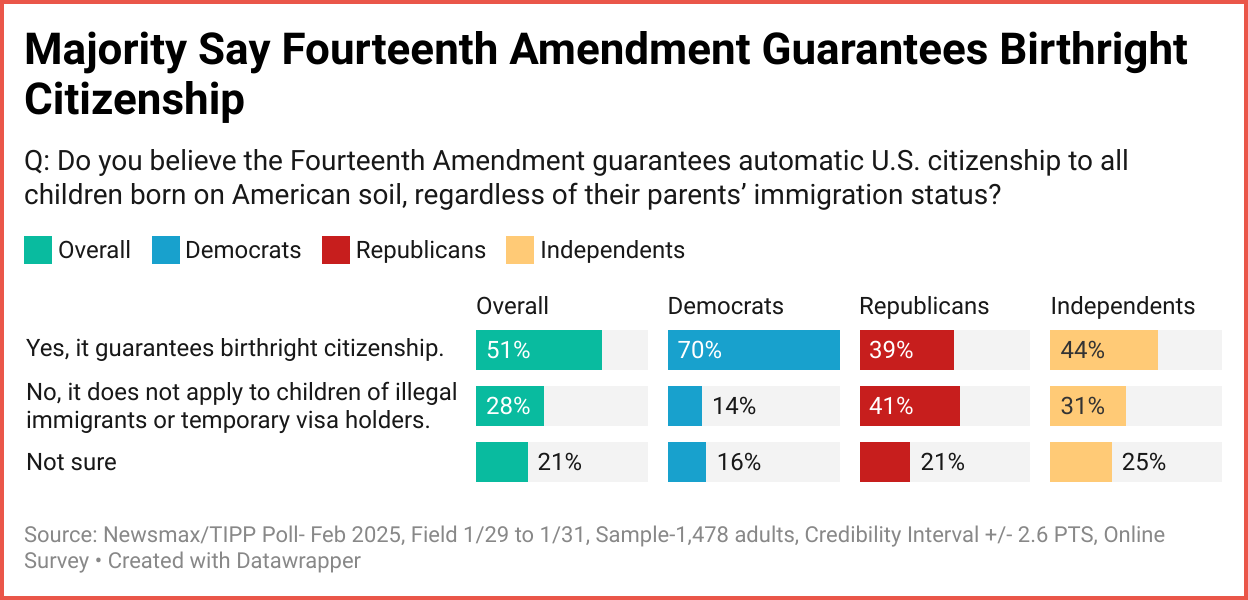
Public opinion reflects this legal ambiguity. A Newsmax/TIPP Poll conducted in January this year shows that while a slim majority of Americans believe the Fourteenth Amendment guarantees birthright citizenship, the issue remains deeply partisan.
Despite the sound legal reasoning, American courts have shown an extraordinary unwillingness to interpret Trump's executive order with any nuance. In a 2–1 decision this week, the United States Court of Appeals for the Ninth Circuit upheld a district judge's ruling in Washington State that rejected any reinterpretation of the Fourteenth Amendment. So far, every federal court to address the constitutional question has ruled that the United States must continue granting automatic citizenship to anyone born on American soil, regardless of their parents' citizenship status.
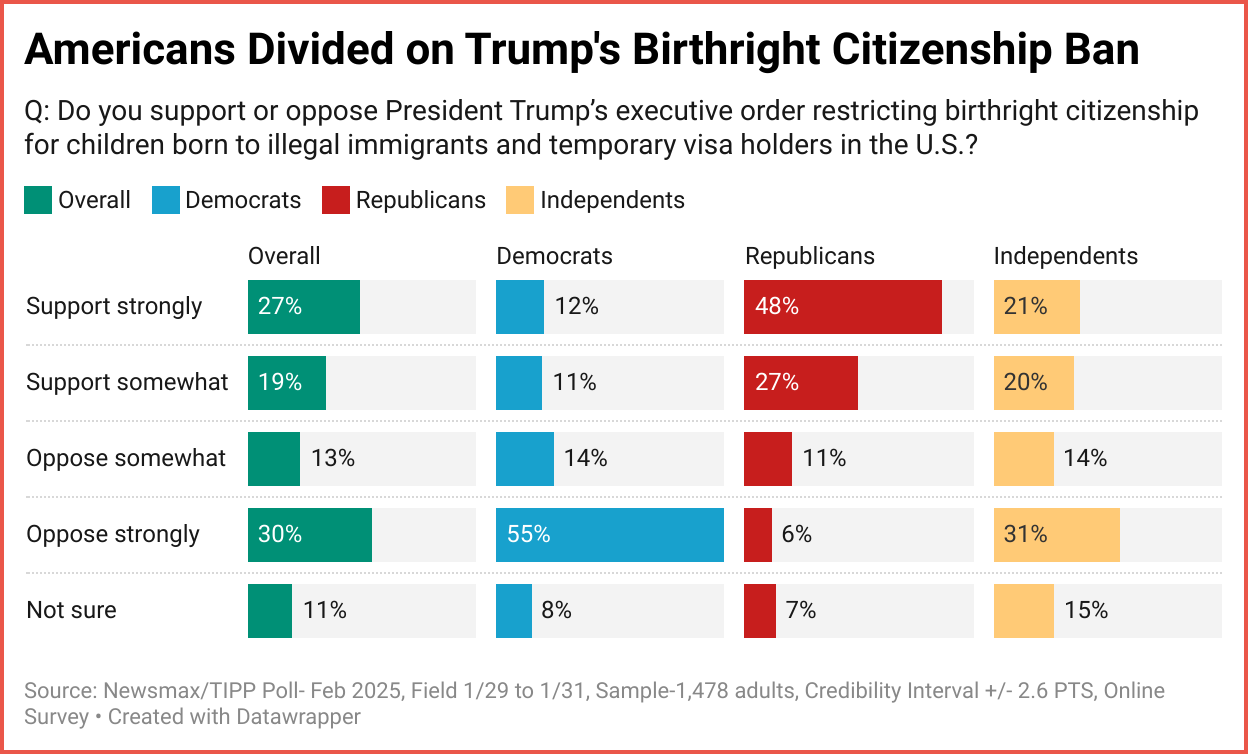
This judicial stance stands in contrast to the strong support the policy enjoys among Republicans and significant backing from independents, as shown below.
The debate over the meaning of the Fourteenth Amendment centers on the clause "subject to the jurisdiction thereof." Advocates of unconditional citizenship argue that this phrase is irrelevant and should be ignored. Courts have largely agreed. However, such a reading contravenes the fundamental principle that every word in the Constitution holds significance and was crafted with intentional precision. Every clause that survived the grueling process of drafting, debate, and ratification was placed with purpose.
So, what does "subject to the jurisdiction thereof" truly mean? Opponents of automatic citizenship argue that it implies allegiance to the United States. In colonial times, loyalty to the sovereign was essential. A subject received protection from the king in exchange for allegiance. By extension, a child born to parents who entered the country illegally cannot owe such loyalty. The parents' allegiance remains with their country of origin, and their presence in the United States violates American law. Suppose these parents return home, and America engages in a conflict with that country. In that case, the child, now an American citizen, may be forced to choose between fighting for the United States and against his own family.
Such moral dilemmas are unnecessary and avoidable. Conditioning citizenship on the legal status of at least one parent ensures that a child is raised with values of loyalty and commitment to the United States. A parent who has sworn allegiance to the country has taken a meaningful step that benefits both the parent and the child.
During the Vietnam War, many Americans claimed conscientious objector status to avoid military service, asserting that their First Amendment rights superseded national policy. But such claims do not exempt citizens from obeying the law. The Supreme Court has consistently ruled that personal objections, no matter how sincere, do not justify violating federal statutes or executive orders. One cannot refuse to pay taxes or follow legal directives simply because of personal disagreement.
Beyond the legal and moral arguments, the practical reality of birthright citizenship is alarming. The overwhelming majority of those crossing the southern border do not come from countries that provide reciprocal birthright citizenship. Over 99 percent of asylum seekers have little chance of succeeding in court. However, court proceedings can take a decade or more to complete. During that time, if they have a child in the United States, that child automatically becomes a citizen under current interpretations of the law.
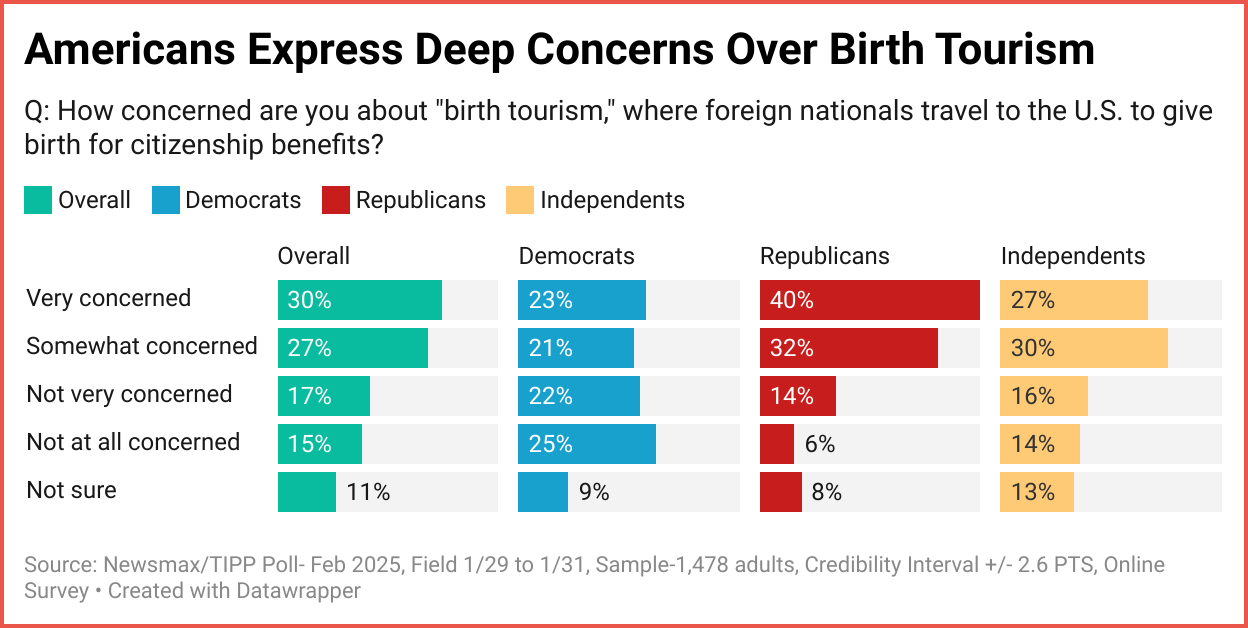
The concern isn’t theoretical. Americans are alarmed by birth tourism—foreign nationals giving birth in the U.S. to secure citizenship for their children.

This creates a bureaucratic nightmare. The American-born child becomes eligible for federal, state, and local benefits, while the illegal parents do not. Yet, no mechanism ensures the child exclusively receives those benefits. There is no realistic oversight to prevent illegally domiciled parents from exploiting resources intended solely for the child. Fraud is rampant. Local governments often face such administrative paralysis that they grant benefits to entire households without verification.
The Trump Administration's recent legislation has addressed some of these abuses. Illegal immigrant families seeking federal tax credits based on a citizen child must now provide a valid Social Security number for at least one parent. The same standard applies to accessing Medicaid and other federally funded healthcare programs. While these measures may seem harsh, they represent long-overdue reform. For over 150 years, illegal immigrants have exploited loopholes in American generosity, while the nation struggles to support its legitimate citizens amid crushing debt.
The Ninth Circuit's ruling will almost certainly be appealed to the Supreme Court. At least five justices recognize the extent of the problem. A verdict that limits birthright citizenship to children of legal residents would be a landmark decision in line with sound public policy. It would place the United States more in line with most developed countries that impose some form of legal or residency requirement before granting citizenship to newborns. Some of these reforms were adopted only in the twenty-first century, underscoring the ongoing recognition that unconditional birthright citizenship encourages illegal immigration and places unsustainable burdens on public services.
The alternative is far more dangerous. If the Court affirms that anyone born in the United States is automatically a citizen, regardless of the legality of their parents' presence in the country, the floodgates will open. America's immigration crisis will only deepen, and citizens will be left to bear the consequences.
TIPP Market Brief – July 25, 2025
Your Morning Snapshot
📊 Market Snapshot
- S&P 500: ▲ 6363.36 (0.07% )
- 10-Year Yield: ▲ 4.408%, (2 basis points)
- Crude Oil (WTI): ▲ $66.16 (1.39%)
- Bitcoin (BTC): ▼ $115,183.58
- US Dollar Index (USD): ▲ 97.60 (0.09%)
- Gold: ▼ $3,369.14 (0.55%)

Bigger Charts: $SPX | $TNX | $WTIC | $BTCUSD | $USD | $GOLD
📈 Featured Stock
Our pick for today’s featured stock

📰 News & Headlines
Will Dollar Tree Break Out After a New $2.5 Billion Buyback?—Gabriel Osorio-Mazilli, MarketBeat
⭐Recent Featured Stocks
Symbotic Inc (SYM) (7/24)
Power Solutions International, Inc. (PSIX) (7/23)
Palantir Technologies Inc. (PLTR) (7/22), (4/30)
Talen Energy Corporation (TLN) (7/21)
Cameco Corp (CCJ) (7/18)
Unity Software Inc (U) (7/17)
TTM Technologies (TTMI) (7/16)
Tapestry, Inc (TPR) (7/15)
Pagaya Technologies Ltd (PGY) (7/14)
Sofi Technologies Inc (SOFI) (7/11)
More here
🧠 Macro Insight
🟩 Futures Edge Higher as Trade Deals Lift Sentiment
Markets rise modestly on optimism over new U.S. trade agreements with Japan, Indonesia, and the Philippines, plus progress toward a U.S.-EU deal before the August 1 tariff deadline.
🟨 EU Deal ‘Within Reach’ as Tariff Deadline Looms
Reports suggest a broad 15% tariff is likely on EU goods, while fresh U.S.-China talks next week aim for deeper concessions. Global trade tension shows signs of easing.
🟥 Intel Tumbles on Weak Outlook and Job Cuts
Chipmaker warns of steeper losses, plans to slash headcount by 22%, and delays major projects in Germany, Poland, and Ohio to cut costs. Shares slide sharply premarket.
🟦 Trump-Powell Tensions Ease, But Rate Fight Persists
Trump steps back from firing Fed Chair Powell but renews calls for rate cuts. Clash shifts to Fed HQ renovation costs as Fed holds steady on policy.
🟧 Oil Extends Gains on Trade Optimism
Crude climbs nearly 1%, supported by hopes for more trade deals and improved demand outlook after sharp inventory draws earlier in the week.
📅 Key Events Today
🟧 Friday, July 25
08:30 – Durable Goods Orders (MoM) (Jun)
Reflects demand for long-lasting goods; signals business investment trends.