Editor’s Note: This Paul Sperry piece ran at RealClearInvestigations in September 2020. With Russiagate back in the headlines and new questions about Brennan’s 2017 assessment, it deserves another look.
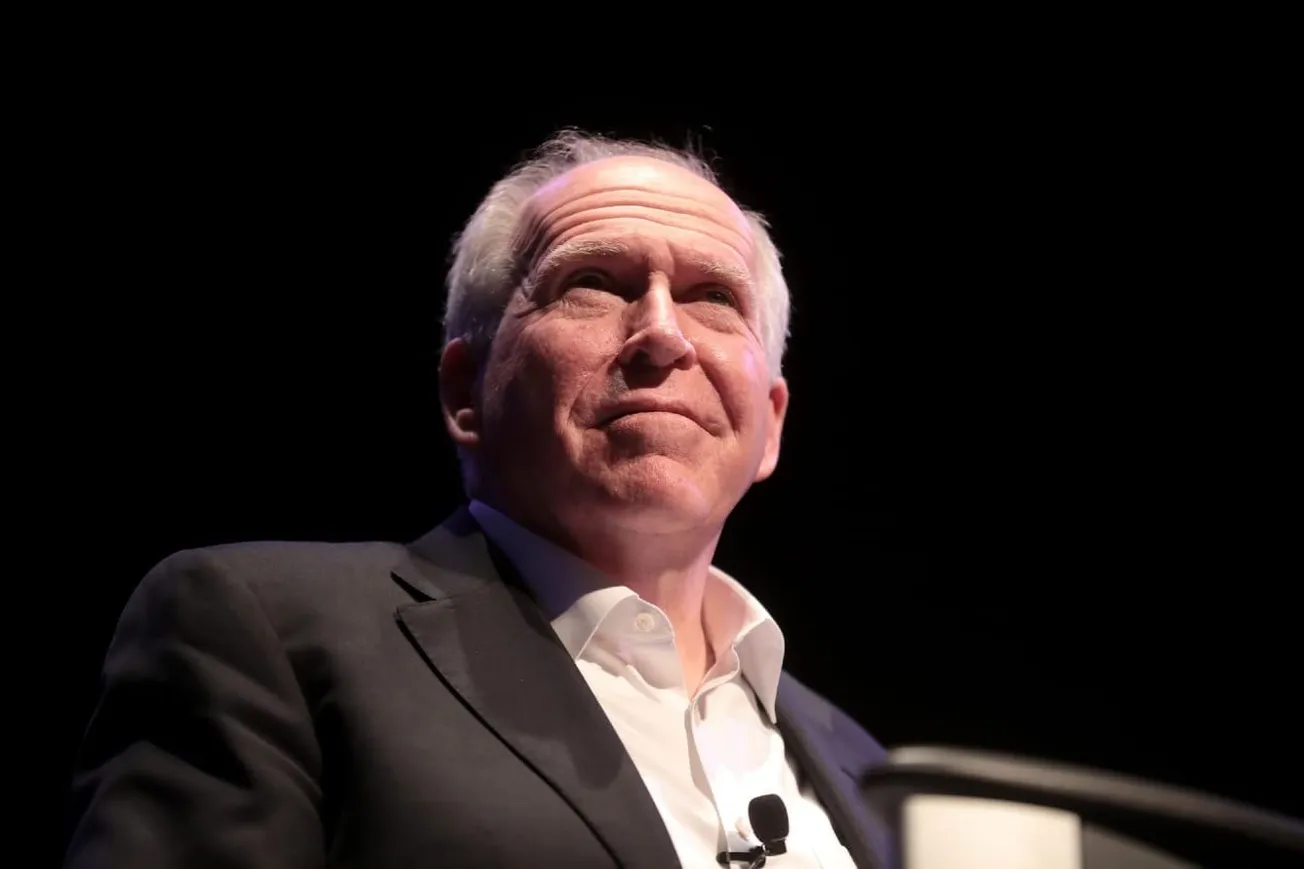
Former CIA Director John Brennan personally edited a crucial section of the intelligence report on Russian interference in the 2016 election and assigned a political ally to take a lead role in writing it after career analysts disputed Brennan's take that Russian leader Vladimir Putin intervened in the 2016 election to help Donald Trump clinch the White House, according to two senior U.S. intelligence officials who have seen classified materials detailing Brennan’s role in drafting the document.
The explosive conclusion Brennan inserted into the report was used to help justify continuing the Trump-Russia “collusion” investigation, which had been launched by the FBI in 2016. It was picked up after the election by Special Counsel Robert Mueller, who in the end found no proof that Trump or his campaign conspired with Moscow.
The Obama administration publicly released a declassified version of the report — known as the "Intelligence Community Assessment on Russian Activities and Intentions in Recent Elections (ICA)” — just two weeks before Trump took office, casting a cloud of suspicion over his presidency.
Democrats and national media have cited the report to suggest Russia influenced the 2016 outcome and warn that Putin is likely meddling again to reelect Trump.
The ICA is a key focus of U.S. Attorney John Durham’s ongoing investigation into the origins of the “collusion” probe. He wants to know if the intelligence findings were juiced for political purposes.
RealClearInvestigations has learned that one of the CIA operatives who helped Brennan draft the ICA, Andrea Kendall-Taylor, financially supported Hillary Clinton during the campaign and is a close colleague of Eric Ciaramella, identified last year by RCI as the Democratic national security “whistleblower" whose complaint led to Trump’s impeachment, ending in Senate acquittal in January.
The two officials said Brennan, who openly supported Clinton during the campaign, excluded conflicting evidence about Putin’s motives from the report, despite objections from some intelligence analysts who argued Putin counted on Clinton winning the election and viewed Trump as a “wild card.”
The dissenting analysts found that Moscow preferred Clinton because it judged she would work with its leaders, whereas it worried Trump would be too unpredictable.
As secretary of state, Clinton tried to “reset” relations with Moscow to move them to a more positive and cooperative stage, while Trump campaigned on expanding the U.S. military, which Moscow perceived as a threat.
These same analysts argued the Kremlin was generally trying to sow discord and disrupt the American democratic process during the 2016 election cycle. They also noted that Russia tried to interfere in the 2008 and 2012 races, many years before Trump threw his hat in the ring.
“They complained Brennan took a thesis [that Putin supported Trump] and decided he was going to ignore dissenting data and exaggerate the importance of that conclusion, even though they said it didn’t have any real substance behind it,” said a senior U.S intelligence official who participated in a 2018 review of the spycraft behind the assessment, which President Obama ordered after the 2016 election.
He elaborated that the analysts said they also came under political pressure to back Brennan’s judgment that Putin personally ordered "active measures” against the Clinton campaign to throw the election to Trump, even though the underlying intelligence was “weak."
The review, conducted by the House Intelligence Committee, culminated in a lengthy report that was classified and locked in a Capitol basement safe soon after Democratic Rep. Adam Schiff took control of the committee in January 2019.
The official said the committee spent more than 1,200 hours reviewing the ICA and interviewing analysts involved in crafting it, including the chief of Brennan’s so-called “fusion cell,” which was the interagency analytical group Obama's top spook stood up to look into Russian influence operations during the 2016 election.
Durham is said to be using the long-hidden report, which runs 50-plus pages, as a road map in his investigation of whether the Obama administration politicized intelligence while targeting the Trump campaign and presidential transition in an unprecedented investigation involving wiretapping and other secret surveillance.
The special prosecutor recently interviewed Brennan for several hours at CIA headquarters after obtaining his emails, call logs and other documents from the agency. Durham has also quizzed analysts and supervisors who worked on the ICA.
A spokesman for Brennan said that, according to Durham, he is not the target of a criminal investigation and “only a witness to events that are under review.” Durham’s office did not respond to requests for comment.
The senior intelligence official, who spoke on the condition of anonymity to discuss intelligence matters, said former senior CIA political analyst Kendall-Taylor was a key member of the team that worked on the ICA.
A Brennan protégé, she donated hundreds of dollars to Clinton’s 2016 campaign, federal records show. In June, she gave $250 to the Biden Victory Fund.
Kendall-Taylor and Ciaramella entered the CIA as junior analysts around the same time and worked the Russia beat together at CIA headquarters in Langley, Va.
From 2015 to 2018, Kendall-Taylor was detailed to the National Intelligence Council, where she was deputy national intelligence officer for Russia and Eurasia. Ciaramella succeeded her in that position at NIC, a unit of the Office of the Director of National Intelligence that oversees the CIA and the other intelligence agencies.
It’s not clear if Ciaramella also played a role in the drafting of the January 2017 assessment. He was working in the White House as a CIA detailee at the time. The CIA declined comment.
Kendall-Taylor did not respond to requests for comment, but she recently defended the ICA as a national security expert in a CBS “60 Minutes” interview on Russia’s election activities, arguing it was a slam-dunk case “based on a large body of evidence that demonstrated not only what Russia was doing, but also its intent. And it's based on a number of different sources, collected human intelligence, technical intelligence.”
But the secret congressional review details how the ICA, which was hastily put together over 30 days at the direction of Obama intelligence czar James Clapper, did not follow longstanding rules for crafting such assessments.
It was not farmed out to other key intelligence agencies for their input, and did not include an annex for dissent, among other extraordinary departures from past tradecraft. It did, however, include a two-page annex summarizing allegations from a dossier compiled by former British intelligence officer Christopher Steele.
His claim that Putin had personally ordered cyberattacks on the Clinton campaign to help Trump win happened to echo the key finding of the ICA that Brennan supported. Brennan had briefed Democratic senators about allegations from the dossier on Capitol Hill.
“Some of the FBI source’s [Steele’s] reporting is consistent with the judgment in the assessment,” stated the appended summary, which the two intelligence sources say was written by Brennan loyalists. “The FBI source claimed, for example, that Putin ordered the influence effort with the aim of defeating Secretary Clinton, whom Putin ‘feared and hated.’ “
Steele's reporting has since been discredited by the Justice Department’s inspector general as rumor-based opposition research on Trump paid for by the Clinton campaign. Several allegations have been debunked, even by Steele’s own primary source, who confessed to the FBI that he ginned the rumors up with some of his Russian drinking buddies to earn money from Steele.
Former FBI Director James Comey told the Justice Department’s watchdog that the Steele material, which he referred to as the “Crown material,” was incorporated with the ICA because it was “corroborative of the central thesis of the assessment “The IC analysts found it credible on its face,” Comey said.
The officials who have read the secret congressional report on the ICA dispute that. They say a number of analysts objected to including the dossier, arguing it was political innuendo and not sound intelligence.
“The staff report makes it fairly clear the assessment was politicized and skewed to discredit Trump’s election,” said the second U.S. intelligence source, who also requested anonymity.
Kendall-Taylor denied any political bias factored into the intelligence. “To suggest that there was political interference in that process is ridiculous,” she recently told NBC News.
Her boss during the ICA’s drafting was CIA officer Julia Gurganus. Clapper tasked Gurganus, then detailed to NIC as its national intelligence officer for Russia and Eurasia, with coordinating the production of the ICA with Kendall-Taylor.
They, in turn, worked closely with NIC’s cybersecurity expert Vinh Nguyen, who had been consulting with Democratic National Committee cybersecurity contractor CrowdStrike to gather intelligence on the alleged Russian hacking of the Democratic National Committee computer system. (CrowdStrike’s president has testified he couldn’t say for sure Russian intelligence stole DNC emails, according to recently declassified transcripts.)
Durham’s investigators have focused on people who worked at NIC during the drafting of the ICA, according to recent published reports.
No Input From CIA's 'Russia House'
The senior official who identified Kendall-Taylor said Brennan did not seek input from experts from CIA’s so-called Russia House, a department within Langley officially called the Center for Europe and Eurasia, before arriving at the conclusion that Putin meddled in the election to benefit Trump.
“It was not an intelligence assessment. It was not coordinated in the [intelligence] community or even with experts in Russia House,” the official said. "It was just a small group of people selected and driven by Brennan himself … and Brennan did the editing.”
The official noted that National Security Agency analysts also dissented from the conclusion that Putin personally sought to tilt the scale for Trump. One of only three agencies from the 17-agency intelligence community invited to participate in the ICA, the NSA had a lower level of confidence than the CIA and FBI, specifically on that bombshell conclusion.
The official said the NSA’s departure was significant because the agency monitors the communications of Russian officials overseas. Yet it could not corroborate Brennan’s preferred conclusion through its signals intelligence.
Former NSA Director Michael Rogers, who has testified that the conclusion about Putin and Trump “didn’t have the same level of sourcing and the same level of multiple sources,” reportedly has been cooperating with Durham’s probe.
The second senior intelligence official, who has read a draft of the still-classified House Intelligence Committee review, confirmed that career intelligence analysts complained that the ICA was tightly controlled and manipulated by Brennan, who previously worked in the Obama White House.
“It wasn’t 17 agencies and it wasn’t even a dozen analysts from the three agencies who wrote the assessment," as has been widely reported in the media, he said. "It was just five officers of the CIA who wrote it, and Brennan hand-picked all five. And the lead writer was a good friend of Brennan’s.”
Brennan's tight control over the process of drafting the ICA belies public claims the assessment reflected the “consensus of the entire intelligence community.” His unilateral role also raises doubts about the objectivity of the intelligence.
In his defense, Brennan has pointed to a recent Senate Intelligence Committee report that found "no reason to dispute the Intelligence Community’s conclusions.”
"The ICA correctly found the Russians interfered in our 2016 election to hurt Secretary Clinton and help the candidacy of Donald Trump,” argued committee Vice Chairman Mark Warner, D-Va.
“Our review of the highly classified ICA and underlying intelligence found that this and other conclusions were well-supported,” Warner added. "There is certainly no reason to doubt that the Russians’ success in 2016 is leading them to try again in 2020, and we must not be caught unprepared.”
However, the report completely blacks out a review of the underlying evidence to support the Brennan-inserted conclusion, including an entire section labeled “Putin Ordered Campaign to Influence U.S. Election.”
Still, it suggests elsewhere that conclusions are supported by intelligence with “varying substantiation” and with “differing confidence levels.” It also notes “concerns about the use of specific sources.”
Adding to doubts, the committee relied heavily on the closed-door testimony of former Obama homeland security adviser Lisa Monaco, a close Brennan ally who met with Brennan and his "fusion team" at the White House before and after the election. The extent of Monaco’s role in the ICA is unclear.
Brennan last week pledged he would cooperate with two other Senate committees investigating the origins of the Russia “collusion” investigation. The Senate judiciary and governmental affairs panels recently gained authority to subpoena Brennan and other witnesses to testify.
Several Republican lawmakers and former Trump officials are clamoring for the declassification and release of the secret House staff report on the ICA.
“It’s dynamite,” said former CIA analyst Fred Fleitz, who reviewed the staff report while serving as chief of staff to then-National Security Adviser John Bolton.
"There are things in there that people don’t know,” he told RCI. “It will change the dynamic of our understanding of Russian meddling in the election.”
However, according to the intelligence official who worked on the ICA review, Brennan ensured that it would be next to impossible to declassify his sourcing for the key judgment on Putin. He said Brennan hid all sources and references to the underlying intelligence behind a highly sensitive and compartmented wall of classification.
He explained that he and Clapper created two classified versions of the ICA – a highly restricted Top Secret/Sensitive Compartmented Information version that reveals the sourcing, and a more accessible Top Secret version that omits details about the sourcing.
Unless the classification of compartmented findings can be downgraded, access to Brennan’s questionable sourcing will remain highly restricted, leaving the underlying evidence conveniently opaque, the official said.
Paul Sperry is an investigative reporter for RealClearInvestigations. He is also a longtime media fellow at Stanford’s Hoover Institution. Sperry was previously the Washington bureau chief for Investor’s Business Daily, and his work has appeared in the New York Post, Wall Street Journal, New York Times, and Houston Chronicle, among other major publications.
Original article link | Russiagate Archive
TIPP Takes
Geopolitics, Geoeconomics, And More
1. Israel's PM Benjamin Netanyahu Says Decision Made For Full Occupation Of Gaza - Euronews
Israel's Prime Minister Benjamin Netanyahu confirmed that a decision has been made for the full occupation of the Gaza Strip, including military operations in areas where hostages are believed to be held.
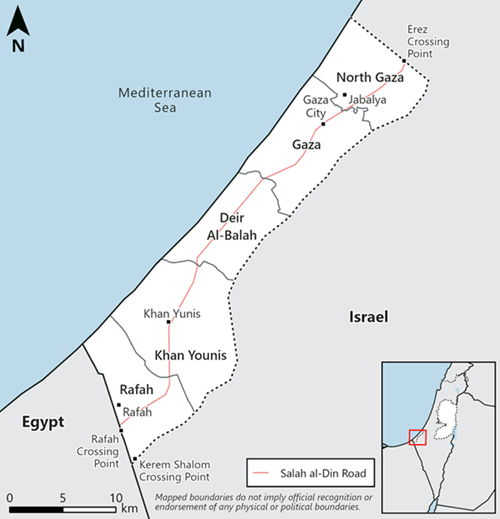
"We're committing to free Gaza from the tyranny of these terrorists," Netanyahu said in a video address posted on X. "Many Gazans come to us and they say 'Help us be free. Help us be free of Hamas.' and that's what we will do." The Prime Minister's Office also said in a message to the Chief of Staff, Lieutenant General Eyal Zamir, "If this does not suit you, then you should resign."
2. Israel's Cabinet Votes To Fire Attorney General Prosecuting Netanyahu - UPI
Israel Prime Minister's Benjamin Netanyahu's cabinet unanimously voted to fire Attorney General Gali Baharav-Miara, who is prosecuting the country's leader, prompting demonstrators to protest the decision in Jerusalem.
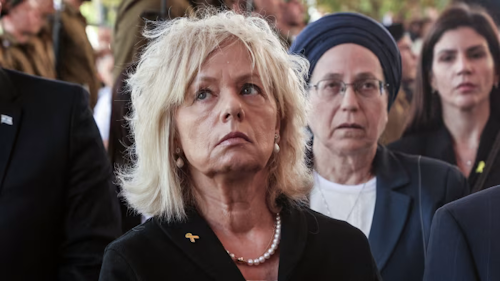
This is the first time the Israeli government fired an attorney general in the 78-year history of the Jewish state. In February 2022, the government unanimously approved her appointment, the first woman to serve in the role.
3. Steve Witkoff Expected This Week In Moscow As Kremlin Says Visit Will Be ‘important’ - Al Arabiya
The Kremlin said it was anticipating “important” talks with Donald Trump’s special envoy, Steve Witkoff, later this week, ahead of the U.S. president’s looming deadline to impose fresh sanctions on Moscow if it does not make progress towards a peace deal.
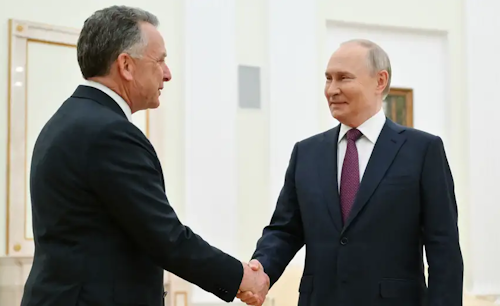
Trump confirmed Sunday that special envoy Steve Witkoff will visit Russia, likely on “Wednesday or Thursday” where he is expected to meet President Vladimir Putin. Russian President Vladimir Putin has already met Witkoff multiple times in Moscow, before Trump’s efforts to mend ties with the Kremlin came to a grinding halt.
4. Russia Warns Against 'Nuclear Rhetoric' Amid Trump Row - D.W.
The Kremlin urged a tamping down of nuclear rhetoric after U.S. President Donald Trump reacted to threats leveled by former Russian President Dmitry Medvedev on social media.
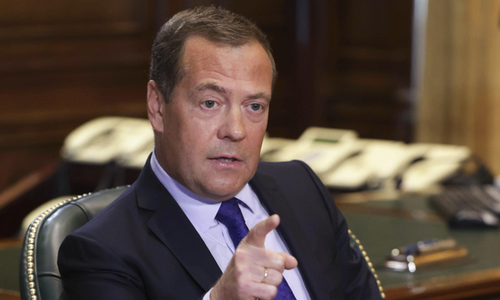
Medvedev took to social media last week, warning Trump of Russia's nuclear capabilities after the U.S. president shortened a imposed deadline for Moscow to enter ceasefire negotiations with Ukraine or face serious consequences. On Monday, Kremlin spokesman Dmitry Peskov told reporters, "Russia is very attentive to the topic of nuclear non-proliferation. And we believe that everyone should be very, very cautious with nuclear rhetoric."
5. Zelenskyy: ‘Mercenaries’ From China, Pakistan And Other Countries Fighting For Russia - Reuters
President Volodymyr Zelenskyy said that Ukrainian troops in northeastern Ukraine were fighting foreign “mercenaries” from various countries including China, Pakistan and parts of Africa, and vowed a response.
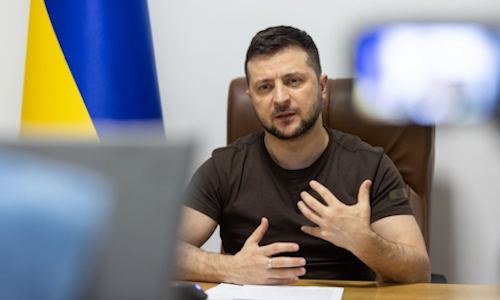
Zelenskyy has previously accused Moscow of recruiting Chinese fighters for its war effort against Ukraine, charges Beijing denied, while North Korea has also provided thousands of its own troops in Russia’s Kursk region.
6. Netherlands To Start NATO’s New Ukraine Weapons Finance Scheme With $578 Mln Payment - Reuters
The Netherlands will be the first contributor to NATO’s new “Priority Ukraine Requirements List” (PURL) financing mechanism for Ukraine weapons with a 500 million euros ($578 million) payment, the Dutch defense minister said.

In a statement posted on the Dutch defense ministry website, the ministry said that other countries have also pledged financing under the new mechanism. President Donald Trump said last month the U.S. would supply weapons to Ukraine, paid for by European allies, but did not provide details on how this would work.
7. Tsunami Damages Russian Nuclear Submarine Base- RFE/RL
A tsunami triggered by an undersea earthquake off the coast of Russia's Kamchatka Peninsula on July 30 appears to have damaged the Rybachiy naval base – Russia's main base for nuclear submarines in the Pacific.
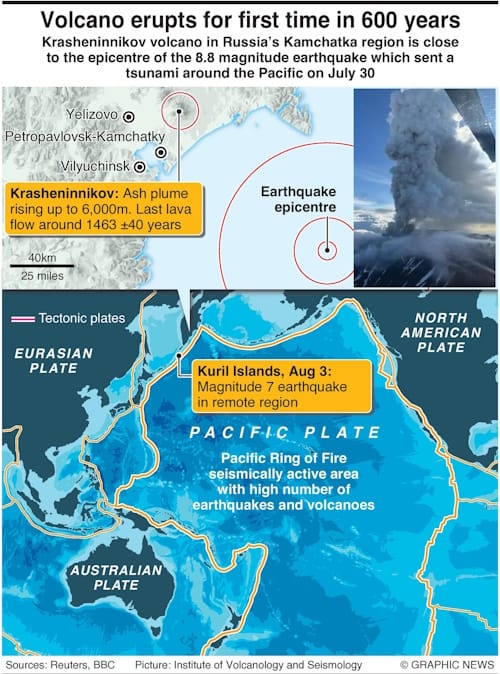
Satellite imagery showed that one of the base's floating piers had been damaged. The 8.8-magnitude earthquake occurred just 85 miles from the base.
8. Chinese University Students In UK Told To Spy On Classmates, Report Says - BBC
The UK-China Transparency (UKCT) think tank says its survey of academics in China studies also highlighted reports of Chinese government officials warning lecturers to avoid discussing certain topics in their classes.
It comes days after a new law came into force placing more responsibility on universities to uphold academic freedom and free speech. The Chinese embassy in London called the report "groundless and absurd", adding that China respects freedom of speech in the UK and elsewhere.
9. Italy Fines Chinese Retailer Shein $1m For 'Deceptive' Practices - UPI
The Italian Competition Authority issued the fine of more than $1.1 million, to Infinite Styles Services Co. Limited, which is Shein's Dublin-based European manager.

Shein claimed a goal to reduce greenhouse gas emissions by some 25% by 2030, with a 2050 goal to reach net zero. The AGCM said Shein's proposal was "vague" and "generic." It further stated it was "even contradicted by an actual increase in Shein's greenhouse gas emissions in 2023 and 2024."
10. Philippines, India Conduct Joint Exercises In South China Sea - RFA
Indian and Philippine naval crews sailed together for the first time in the South China Sea, officials said, one of several joint exercises the Philippine navy has held to counter China’s far-reaching maritime claims.
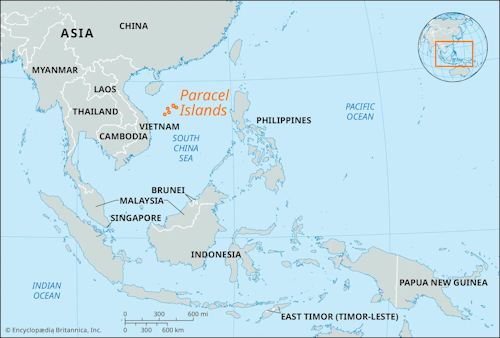
It began on Sunday, a day before Philippine Prime Minister Ferdinand Marcos left for a five-day state visit to New Delhi that will include talks with Indian Prime Minister Narendra Modi. A spokesperson for China’s military on Monday said that Chinese ships had conducted patrols in the South China Sea during the same period as the joint exercises.
11. S. Korea Begins Dismantling Loudspeakers Along Border With N. Korea - Yonhap
The South Korean military started removing loudspeakers for propaganda broadcasts installed along the border with North Korea in a move aimed at reducing inter-Korean tensions, the defense ministry said.
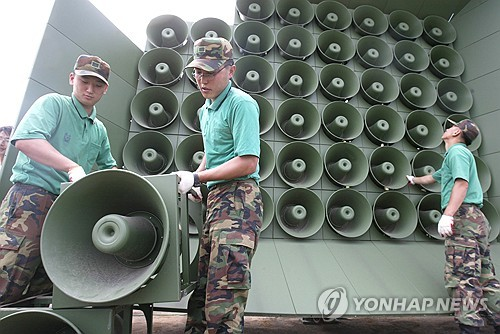
The move comes less than two months after President Lee Jae Myung ordered the suspension of loudspeaker broadcasts in front-line areas on June 11 as part of efforts to mend strained ties with the North. "It is a practical measure that can help ease inter-Korean tensions without affecting the military's readiness posture," the ministry said in a notice to reporters.
12. N. Korea Slams Japan's Reported Move To Deploy Upgraded Anti-Ship Missiles In Kumamoto - Yonhap
The Korean Central News Agency (KCNA) issued the criticism following a recent Japanese news report that the country's defense ministry is finalizing a plan to deploy locally produced anti-ship missiles in Kumamoto during the current fiscal year.
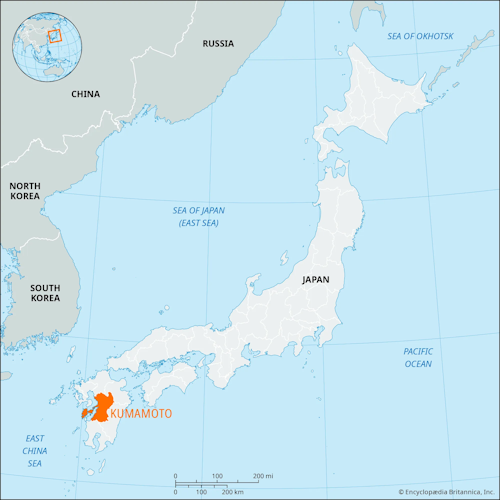
The missile has a range of 1,000 kilometers and is capable of reaching China's coastline. The planned deployment is intended as a deterrence to China, and the ministry is also considering deploying the missiles in Okinawa Prefecture, the report said.
13. Artificial Sweetener Sucralose May Disrupt Cancer Treatment - HealthDay News
Findings from a study in mice suggest that using a common artificial sweetener, sucralose, could hamper certain immunotherapy treatments in cancer patients.

However, for folks reluctant to give up the ubiquitous sweetener, the same team of scientists may have found a way around the problem: Giving mice a supplement that boosts levels of the natural amino acid arginine appeared to negate the effect.
14. Multiple Sclerosis Could Affect Health Years Before Classic Symptoms - HealthDay News
People with multiple sclerosis, or MS, begin experiencing new health issues up to 15 years before the classic signs of the illness appear, Canadian research shows.
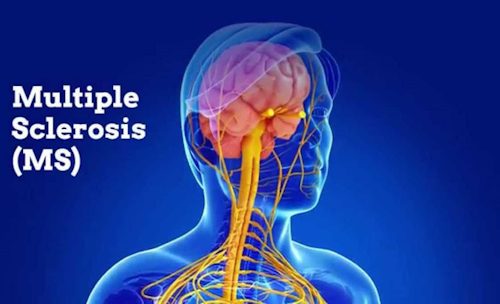
The main findings: Twelve years before symptom onset, visits to psychiatrists began to rise. Eight to nine years before, visits to neurologists and eye specialists rose, perhaps linked to issues such as blurred vision or eye pain. Three to five years before, researchers noted a rise in visits to emergency departments and/or radiology facilities.