By Ludovic Subran, Project Syndicate | Dec 1, 2025
China has built the machinery of an innovative, low-carbon industrial economy capable of leading the global net-zero transition and the unfolding AI revolution. But whether this model will be sustainable depends on China's ability to overcome several major challenges.

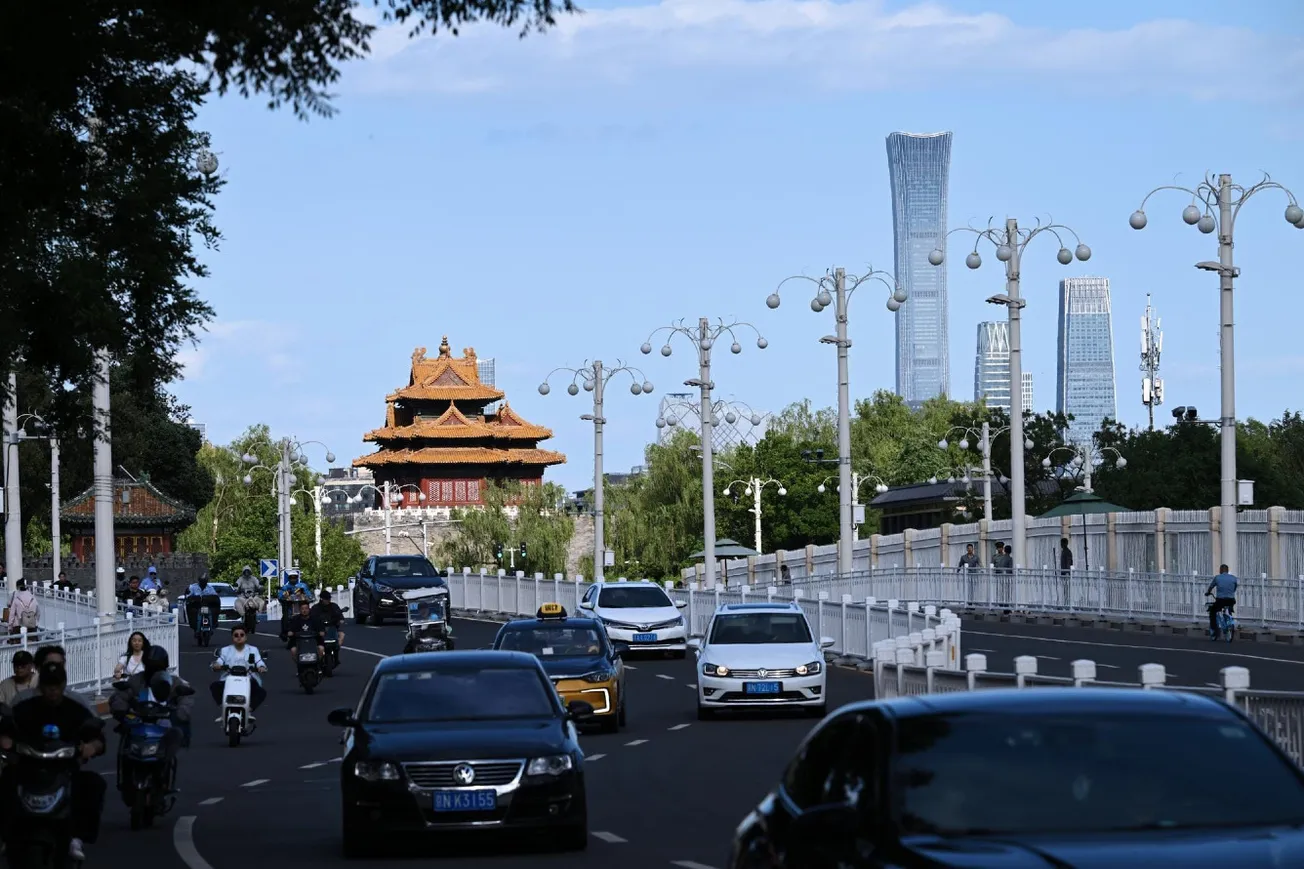
MUNICH – Another great transformation is underway in China. The world’s factory is fast becoming its first electro-state, with an economy increasingly built on clean energy, AI, advanced manufacturing, and control of key strategic materials. This new model is full of promise, though it faces major challenges.
China has established itself as the world’s undisputed leader in clean-tech manufacturing. It now controls roughly 60% of all solar, wind, and battery-equipment manufacturing capacity, and over 80% of global solar-module output. The scale of these activities has contributed to a sharp decline in costs, with solar-module prices, for example, falling by around 80% in the past decade.
Reinforcing this dominance, China has also gained a stranglehold over rare-earth minerals – vital to the manufacture of a wide range of high-tech products, such as electric vehicles, wind turbines, and AI-enabled sensors. Today, China controls over 40-50% of global rare-earth reserves and almost 70% of rare-earth production and refinement.
Meanwhile, China’s massive investments in strengthening its innovation capacity, particularly in AI, are paying off. China now boasts more than half the world’s AI researchers and some 70% of its AI patents, and has cracked the top ten in global innovation indices, such as that produced by the World Intellectual Property Organization.
All of this amounts to an astonishing feat of long-term strategic positioning. Every element of the unfolding global economic transition – from the supply of key inputs to the manufacture of high-tech goods to the design and financing of new industrial and energy systems – now depends significantly on China. Whether you are the United States seeking access to rare earths, or a developing economy in need of clean-energy infrastructure, you turn to China.
At least that is the plan. As powerful as China may seem as a leading exporter of critical minerals and technologies, its position perpetuates the dependence on external demand from which it has been trying to escape. At a time when rising protectionism and national-security concerns are reshaping global supply chains – often away from Chinese suppliers – this may turn out to be a serious vulnerability.
China’s looming demographic crisis compounds the risks. The working‐age population is shrinking, the old-age dependency ratio is rising, and the fertility rate has fallen to well below replacement levels. With fewer workers, income and consumption growth may slow, undercutting the government’s efforts to shift the economy to a consumption-led growth model.
Recent housing-sector developments do not help matters. In recent decades, real-estate prices soared in China, owing to factors like rapid urbanization, local governments’ dependence on land sales for revenue, and robust growth expectations. Housing thus became the primary engine whereby Chinese households increased their wealth.
But a combination of weak demand, overcapacity, and high leverage has caused China’s real-estate sector to tumble, destroying household wealth and eroding consumer confidence. The decline in prices may have resulted in more than CN¥3 trillion ($424 billion) in foregone household spending since 2021. Add to that slowing productivity growth and high youth unemployment (around 17.5% for people aged 16-24), and China’s middle class may struggle to serve as the consumer base and innovation engine the country needs.
China has thus reached an inflection point. It has built the machinery of an innovative, low-carbon industrial economy – one that could lead the global net-zero transition and the unfolding AI revolution. But if this electro-state is to be sustainable, China must make progress in three critical areas.
First, productivity must increase, not through more robots or factories, but through continued innovation, skills-building, effective management, and service-sector upgrading. Research-and-development intensity matters here: a 10% increase in R&D expenditure as a share of GDP could deliver a 7% boost to manufacturing productivity.
Second, China must find ways to accelerate the economy’s rebalancing toward domestic demand. To this end, efforts must be made to bolster household incomes and wealth, consumer confidence, and job creation, such as by fostering service industries – including care activities (elder-care, health) – and shifting labor from manufacturing and real estate into consumption-oriented sectors.
Lastly, China must manage external dependencies wisely. While greater self-reliance is essential, so are strategic partnerships, predictable trade relationships, and transparent frameworks for cooperation.
Whatever happens next, the implications for the rest of the world will be far-reaching. On the upside, China’s transformation is lowering the cost of renewables, expanding the supply of clean tech, and delivering new infrastructure investment across Asia and Africa. Already, China is playing a critical role in helping developing economies to leap-frog fossil fuel-based systems.
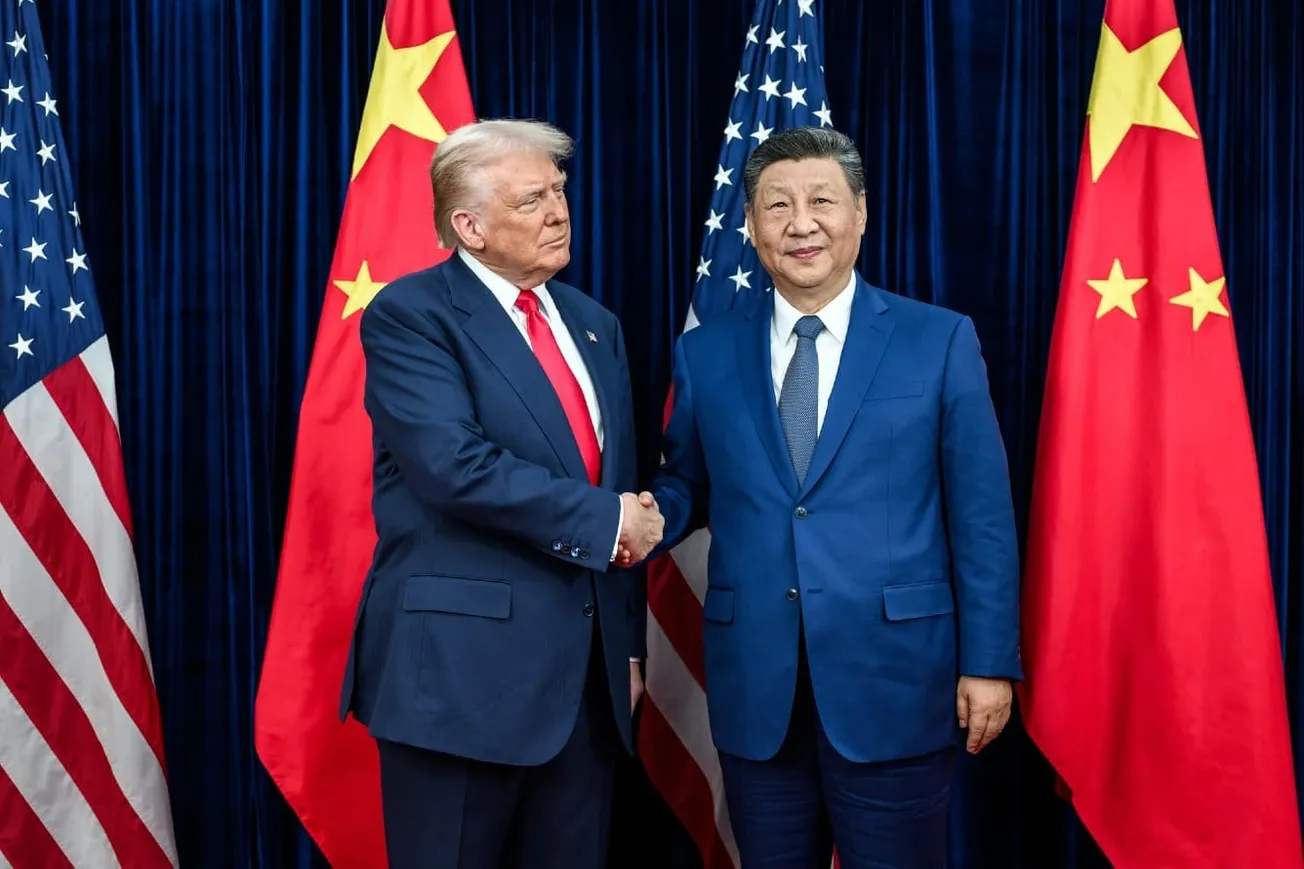
But China’s “electro-state” strategy also gives it considerable leverage over other countries, which, as its recent imposition of export restrictions on rare-earth minerals showed, it may weaponize. China’s techno-industrial advancement will always be viewed through a geostrategic lens. As the country tightens its grip on raw materials and high-tech manufacturing, others must decide whether to double down on cooperation with China, diversify their supply chains away from it, or risk being locked out altogether.
For Hong Kong and the wider Asia-Pacific, the message is clear: the era of low-cost manufacturing arbitrage is ending, and AI, green infrastructure, and digital hardware are the new frontiers of economic growth and prosperity. With China positioning itself as a supplier, designer, and powerhouse of this new economy, countries across Asia and beyond will need to adapt, engaging with China, hedging against bottlenecks, and re-working their own industrial models.
Ludovic Subran is Chief Investment Officer and Chief Economist at Allianz.
Copyright Project Syndicate
TIPP Curated
Handpicked articles from TIPP Insights & beyond
1. Trump Administration Is Letting Europe Kill Its Proposed Russia/Ukrainian Peace Plan—Larry C. Johnson, Ron Paul Institute for Peace and Prosperity
2. Netanyahu’s 2024 Diary Reveals Frequent Meetings And Calls With Sen. Lindsey Graham—Dave DeCamp, Ron Paul Institute for Peace and Prosperity
3. National Guard Shooting Suspect Radicalized In US, Noem Says—Ted Hesson & Jasper Ward, The Daily Signal
4. Grey Lady Tear-Milkers Ignore Facts— Editorial Board, TIPP Insights
From Our News Editor
5. Beijing Warns Against Protests After Hong Kong Fire Sparks Outrage
6. Chinese Envoy Reassures Japanese Manufacturers In Bid To Protect Trade
7. Herzog Weighs Netanyahu Pardon Amid Fierce Backlash
8. Trump Escalates Venezuela Pressure With High-Stakes Oval Office Meeting
9. Trump Defends Hegseth Amid Claims Of Deadly Follow-On Boat Strike
10. Lawmakers Demand Answers On Reported Follow-Up Strike In Caribbean Operation
11. ISPs Warn Supreme Court Case Could Trigger Mass Internet Cutoffs
12. Forget Your REAL ID? TSA Will Make You Pay $45 Starting Feb. 1
Record Holiday Spending Masks Deep Consumer Divide
13. Appeals Court Strikes Down Habba’s Appointment In New Jersey
14. Black Market For AI Training Accounts Explodes Online, Investigations Find
15. AI Boom Drives Surge In Data Center Power Needs, Report Finds
📈 Market Mood — Tuesday, December 2, 2025 (Pre-Market)
🟩 Futures Muted as Markets Weigh Rate-Cut Odds
U.S. futures are slightly lower as investors digest Monday’s pullback. Weak ISM manufacturing data kept expectations high for a December Fed rate cut, with markets pricing in roughly an 85% chance. Treasury yields ticked up after BOJ comments hinted at a possible rate hike, adding mild pressure to equities.
🟧 Bitcoin Stabilizes After Sharp Selloff
Bitcoin is flat after Monday’s steep slide below $84,000. Risk aversion hit crypto hard to start December, and the token is now about 30% below its recent all-time high. Sentiment remains fragile as traders reassess risk appetite.
🟨 Gold Slips as Yields Rise
Gold is lower, pressured by a rise in U.S. Treasury yields. Despite the dip, markets still broadly expect a Fed rate cut next week, keeping the medium-term outlook supportive for bullion.
🟧 Oil Wavers on Mixed Global Signals
Crude is slightly lower after Monday’s gains. Traders are weighing uncertain Ukraine peace dynamics, rising U.S.–Venezuela tensions, and OPEC+’s decision to lift output slightly for December but pause further increases in early 2026.
🟦 Marvell Earnings in Focus
Marvell Technologies reports after the bell. The chipmaker is reportedly in talks to acquire Celestial AI in a multibillion-dollar deal to strengthen its AI hardware portfolio. Investors look for clarity on data-center demand after a weak forecast earlier in the year.
📅 Key Economic Events — Tuesday, December 2, 2025
🟡 09:45 AM — S&P Global Services PMI (Nov)
Tracks business activity in the U.S. services sector — a timely read on economic momentum.
🟧 10:00 AM — ISM Non-Manufacturing PMI (Nov)
Key gauge of activity in the services economy — covering employment, orders, and business conditions.
🟧 10:00 AM — ISM Non-Manufacturing Prices (Nov)
Measures price pressures in the services sector — an important early indicator of inflation trends.
🟠 10:30 AM — Crude Oil Inventories
Weekly report showing changes in stored crude — a major driver of oil prices and energy-market sentiment.
editor-tippinsights@technometrica.com