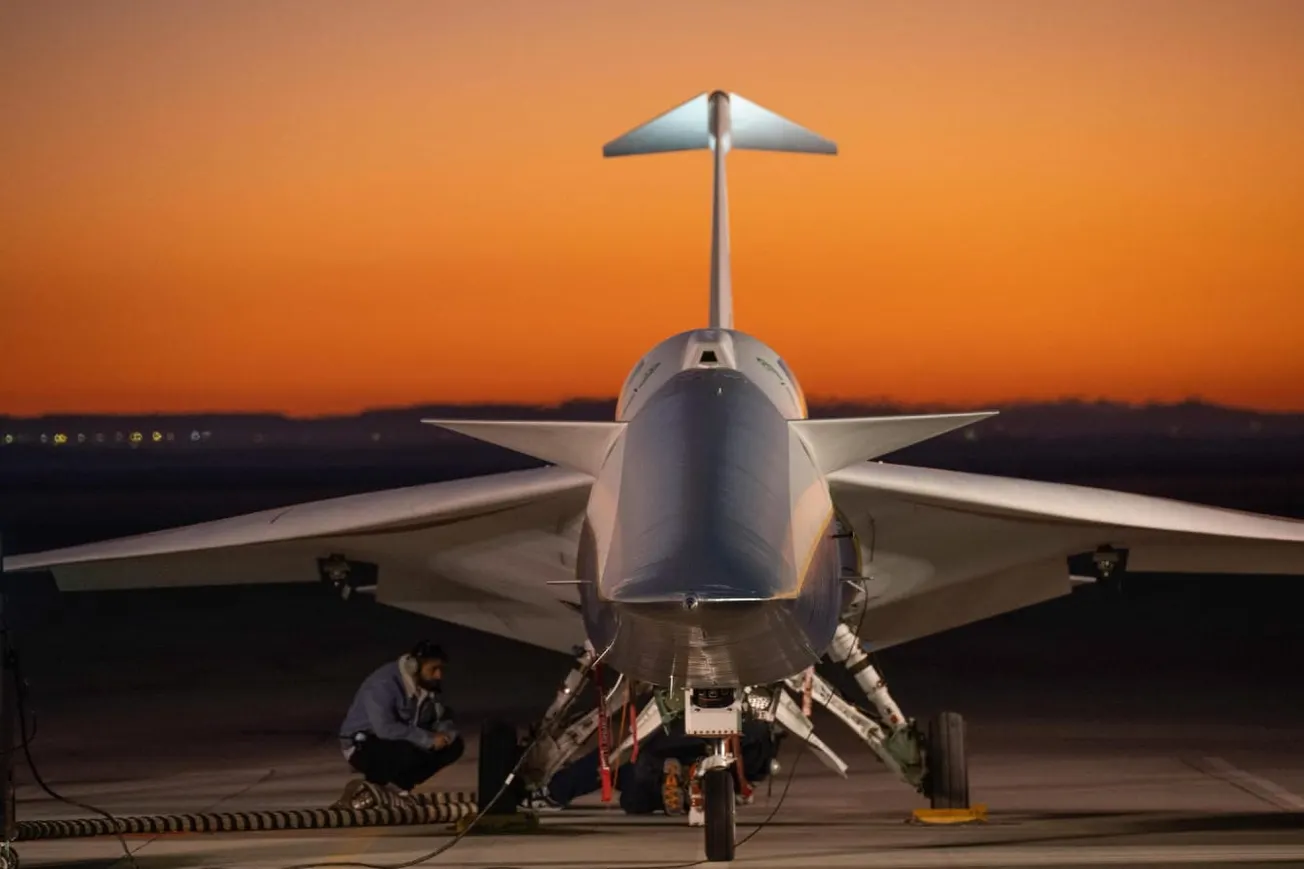
NASA is set to fly its X-59 experimental aircraft on March 19 from Edwards Air Force Base in California, marking the start of a critical testing phase. The flight begins the envelope expansion stage, where engineers gradually push the aircraft beyond its initial limits to prepare for future acoustic validation over U.S. communities.
Tests will begin at lower speeds and altitudes, before advancing to supersonic performance, eventually reaching Mach 1.4 at 55,000 feet, the report said.
NASA Prepares Second Flight of X-59 Quiet Supersonic Jet
— Washington Eye (@washington_EY) March 17, 2026
The experimental aircraft completes engine tests and readies for initial flight to expand its performance envelope at subsonic speeds #WashingtonEye pic.twitter.com/aEckTDsFfh
Built by Lockheed Martin, the aircraft completed its first flight in October and is expected to resume testing over Southern California soon, according to the report. The X-59 is designed to reduce the loud sonic boom to a softer “thump,” potentially allowing supersonic flights over land, which are currently restricted.
The project, part of NASA’s Quesst program, has been in development for over 15 years. Engineers used extensive wind tunnel testing and advanced modeling to refine the aircraft’s unusual design, which minimizes shock waves.
Future phases will involve flying over communities to gather noise response data, which will be shared with regulators like the FAA and international bodies, the report said.
Despite a 2025 executive order by President Donald Trump to lift the overland supersonic ban, global standards are still required for widespread adoption.
Also Read:
 TIPP Staff