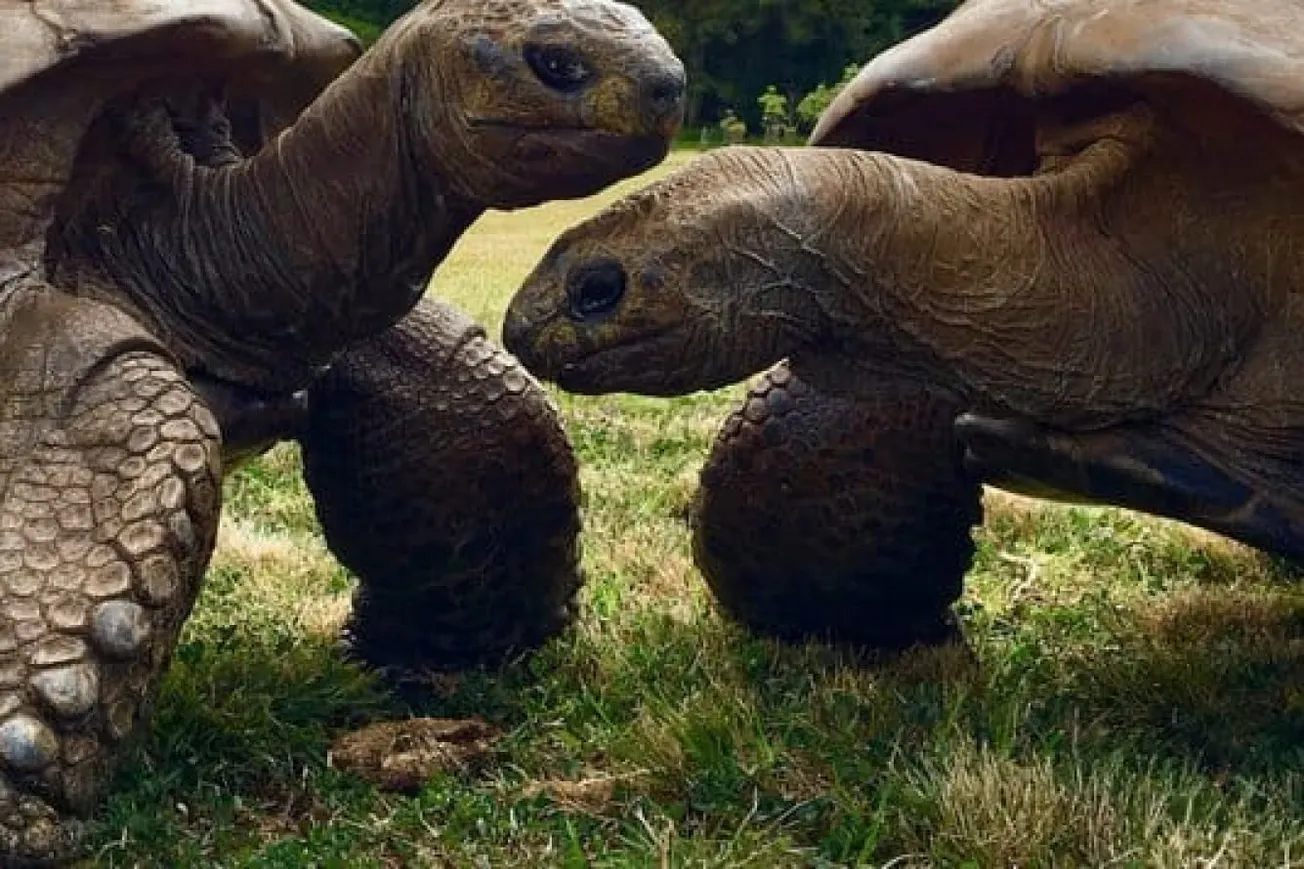
Scientists have sequenced the genome of Jonathan, a 194-year-old Aldabra giant tortoise, uncovering genetic patterns that may help explain his extraordinary longevity. The findings were published Wednesday in Science Advances.
Believed to have hatched around 1832, Jonathan has lived on the South Atlantic island of St. Helena for 144 years and is recognized as the world’s oldest known land animal.
Researchers found that chemical markers near 272 of Jonathan’s genes remained well-preserved, resembling patterns seen in much younger tortoises. These genes are associated with processes including DNA repair and mitochondrial regulation, potentially offering clues to resistance against age-related decline.
However, the study examined only five tortoises, and scientists cautioned that the findings do not prove these genetic patterns directly cause exceptional longevity. Further research will be needed to establish their role in aging.
Related Tweet:
A 194-year-old tortoise, world's oldest land animal, may hold clues to longer life https://t.co/2Gp4X65fY5 https://t.co/2Gp4X65fY5
— Reuters Science News (@ReutersScience) October 8, 2026
Also Read:
 TIPP Staff