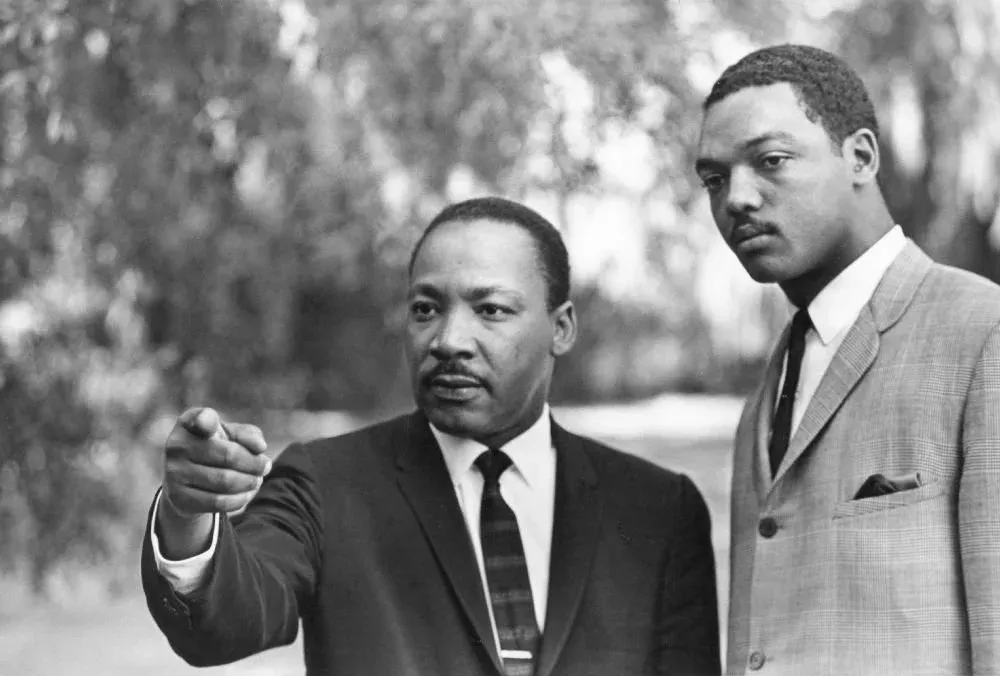
Jesse Jackson, one of the most well-known civil rights leaders of our time and a two-time candidate for the Democratic presidential nomination, died yesterday at 84.
Jackson truly came of age in 1988 when chasing the nomination for the second time. Our editor, Raghavan Mayur, still recalls the vibrancy of Jackson's 1987 campaign and the moment he shook hands with the Black leader at an event at Penn Station in Newark, NJ.
In the Super Tuesday primaries, Jackson won or placed second in 16 of the 21 primaries and caucuses, setting a precedent similar to what Joseph Biden achieved in 2020. While the Democratic Party had handpicked Biden to unite its disintegrating party with an eye on winning the presidency, the Party disowned Jackson in 1988, believing he couldn't win the general election.
The powers that be chose Massachusetts Governor Michael Dukakis as their nominee, which proved disastrous, as George H. W. Bush easily won President Reagan's third term. Jackson, who was hoping to be picked as Dukakis's VP nominee, again felt betrayed when Dukakis chose Lloyd Bentsen, a white senator from Texas who couldn't help Dukakis carry many of the states that Jackson did during Super Tuesday.
Dejected by the Democratic Party's power politics, Jackson never again sought public office. First diagnosed with Parkinson's disease in 2017, the Baptist preacher had been out of the arena since President Trump came onto the political scene. We are convinced that if he had been active on the TV circuit, Jackson would be a critic of President Trump.
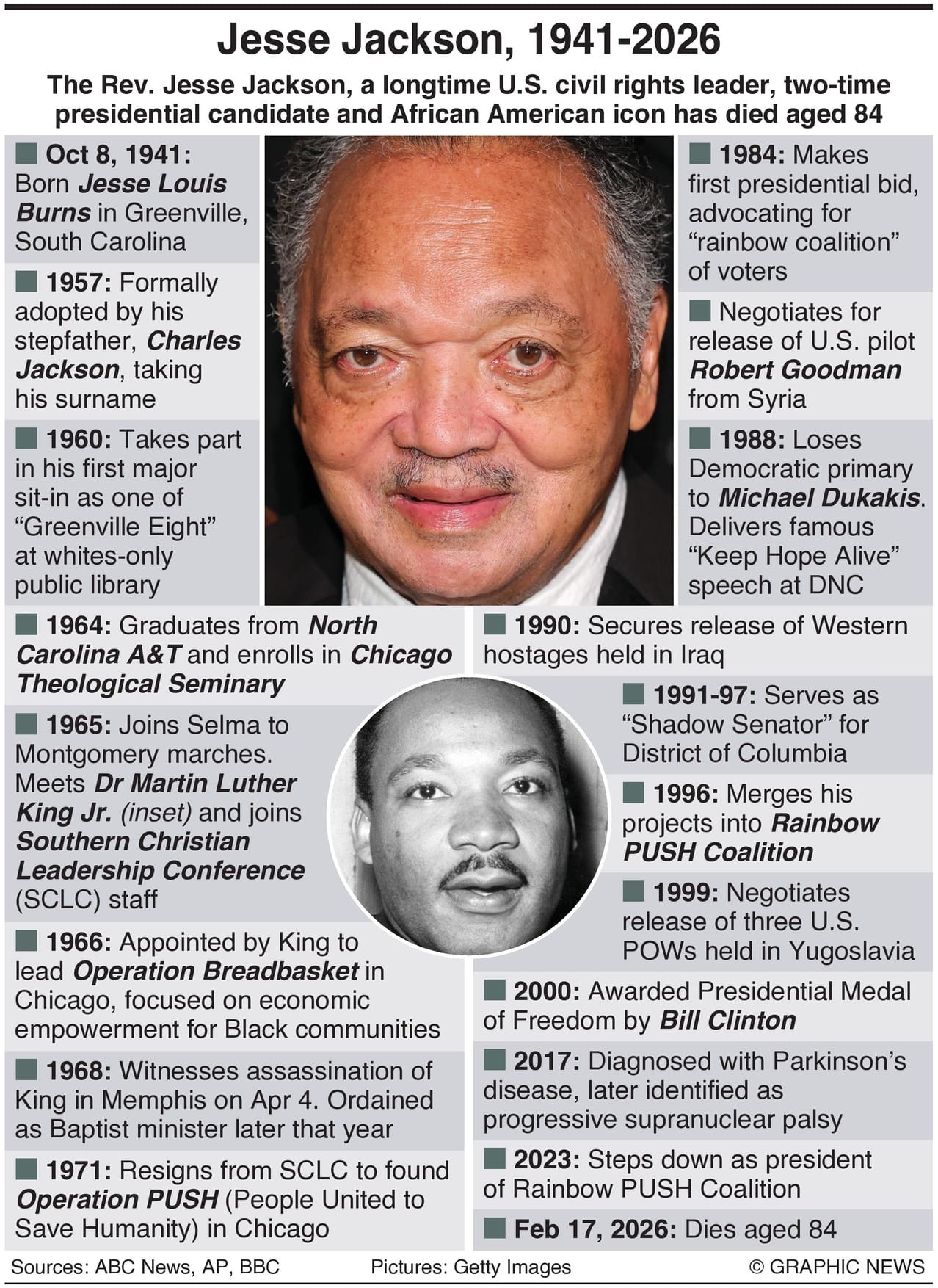
After his presidential nomination bids, he turned his focus to his Rainbow PUSH coalition. Jackson believed that he was missing nothing in not branding his group as a Black organization. Although the colors of a rainbow are Red, Orange, Yellow, Green, Blue, Indigo, and Violet, he never felt the need somehow to inject the terms Black or white into the name.
To Jackson, the idea of Black Lives Matter was anathema. He repeatedly stressed that poverty and income inequality ensnared people of all colors. In this regard, Jackson was a unique Civil Rights leader, morally far superior to former President Obama and former Vice President Kamala Harris, who embraced whatever identity best furthered their careers.
As an outstanding orator who believed in making his points with logic rather than pure emotion, Jackson may even have extended an olive branch to Trump by arguing that Trump was enacting policies that Jackson had first promoted forty years ago.
In his 1988 Democratic National Convention speech in Atlanta, Jackson painted a vivid portrait of an America struggling with inequality, moral failure, and misguided leadership. His point was that America's problems were not inevitable but chosen. America could therefore seek to have those problems ‘unchosen’ if the nation found the courage to seek common ground. (Trump has repeatedly mentioned that misguided leadership is what has caused America to underperform.)
Unlike modern Black leaders, Jackson saw no need to focus solely on Black people to exemplify what America was confronting. Jackson thundered that most poor Americans were not lazy, not predominantly Black, but overwhelmingly white, female, and young. They caught the early bus, cleaned streets, drove cabs, raised other people's children, and wiped the bodies of the sick in hospitals. Yet when they themselves fell ill, they could not afford to occupy the very beds they had made. This, Jackson said plainly, was a moral failure America could not justify.
He also questioned why America was spending $150 billion a year defending Europe and Japan more than four decades after World War II, while those same nations ran trade surpluses and the US ran deficits. Jackson argued that those resources should be redirected toward housing, education, healthcare, and the elimination of urban poverty - needs that are still visibly unmet at home.
Trump's entire America First vision is rooted in this belief. As a conservative, Trump has articulated a different vision for using those saved funds. In his view, rebuilding America's manufacturing will restore lost jobs and help build a strong, growing economy.
Jackson saw the nuclear arms race as fundamentally irrational - one which can only result in a standoff that could end in mutual annihilation. While Trump wants to make America's strong military even more powerful, he has also used the risk of nuclear war as the prime motivator to compel Russia and Ukraine to seek peace.
In that DNC speech in Atlanta, Jackson devoted a significant amount of time to America's problems with drugs. It was a time when First Lady Nancy Reagan had heavily promoted the "Just Say No" campaign to encourage America not to consume drugs. But Jackson went much further.
He identified the drug epidemic as one of the defining crises of his generation, framing it differently than most politicians of the era. Rather than focusing solely on individual moral failure, Jackson argued that drugs flowed too freely at the supply level, that weapons like AK-47s were sold openly across store counters, and that the federal government could stem the tide if it truly wanted to. He challenged the nation to fight the war on drugs at the level of suppliers and distributors, not just the young people consuming them out of pain, for pleasure, or economic desperation.
Trump has taken a lot of criticism from Democrats for his war on narco trafficking, including using the military to attempt to wipe out drug cartels at the source. Jackson would have handsomely approved of Trump's actions.
Jackson and Trump led very different lives, the former in abject poverty, the latter in sheer opulence. They didn't agree on many things, but the "common ground" Jackson often talked about is where America's problems reside today.
As we noted in a TIPP staff piece, President Trump on Tuesday paid tribute to civil rights leader Jackson, calling him a “force of nature like few others.” Trump extended condolences to Jackson’s family and praised his personality, determination, and lifelong commitment to public causes. In a Truth Social post, Trump said he had known Jackson for decades and had supported the Rainbow PUSH Coalition, which Jackson founded.
Rest in Peace, Rev. Jackson.
👉 Show & Tell 🔥 The Signals
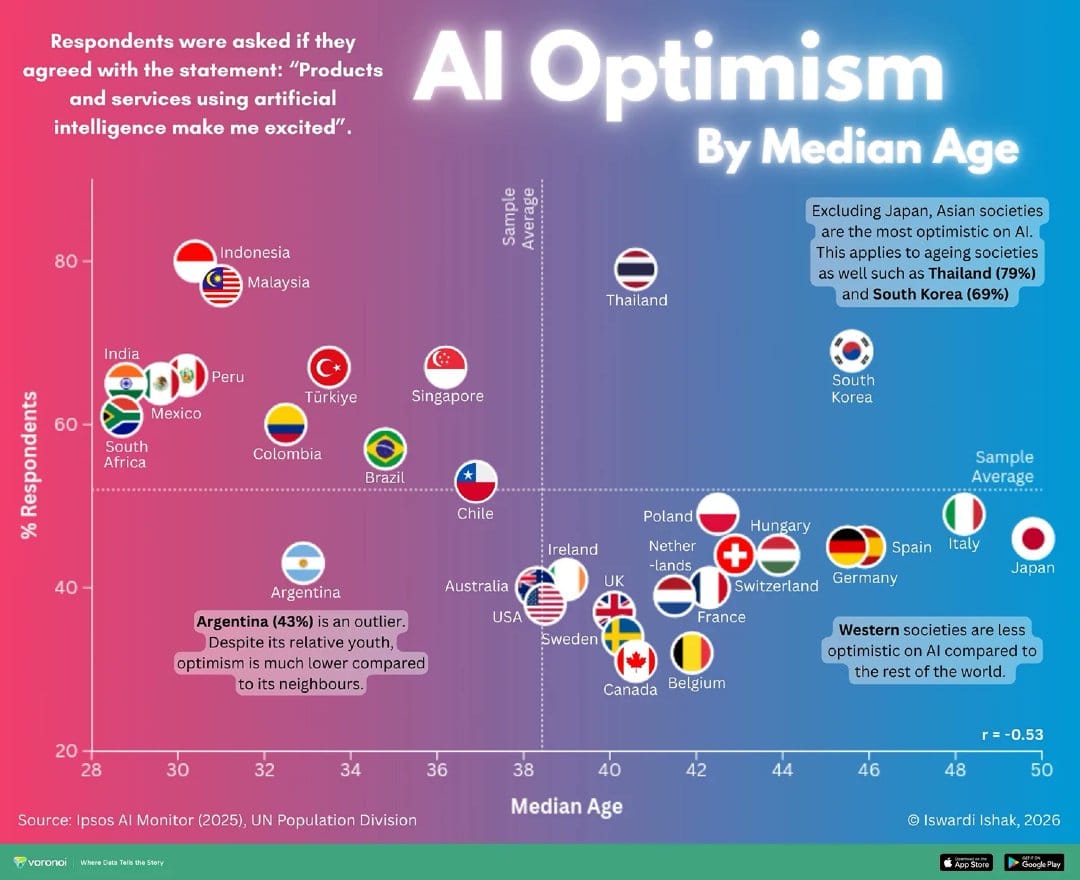
I. AI Optimism Highest In Younger Countries
Survey data show countries with younger populations tend to be more optimistic about artificial intelligence, while older societies are generally more cautious. Emerging economies across Southeast Asia, Latin America, and parts of Africa show stronger excitement about AI compared with Europe, Japan, and North America.
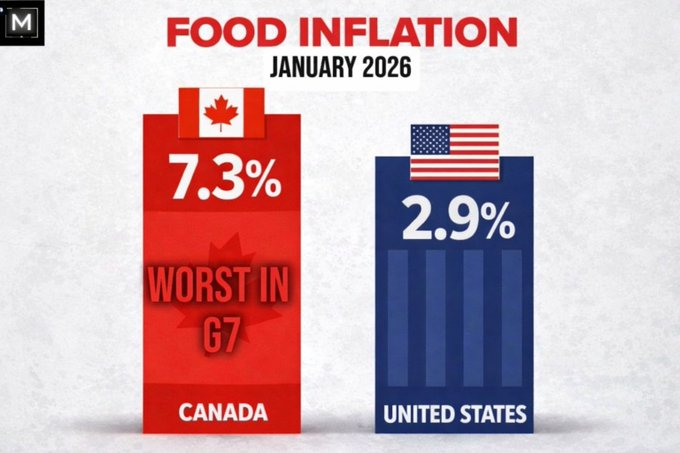
II. Canada Records Highest Food Inflation in G7
Food prices in Canada are rising at a much faster pace than in the United States and other G7 economies, with Canadian food inflation running above 7% compared with about 3% in the U.S., highlighting continued pressure on household budgets north of the border.
III. Mapping Where Auschwitz Victims Came From
A new visualization maps the European hometowns of Jewish victims murdered at Auschwitz, showing how deportations stretched across the continent. Historians have now identified roughly two-thirds of the camp’s victims, helping document the geographic scale of the Holocaust.

📊 Market Mood — Wednesday, February 18, 2026
🟩 Futures Edge Higher Ahead of Fed Minutes
Markets open cautiously higher as investors await Fed meeting minutes for clues on the timing of rate cuts.
🟧 Fed Minutes to Guide Rate Expectations
Traders look for signals on how long policymakers plan to hold rates steady amid cooling inflation and stabilizing jobs data.
🟦 Palo Alto Networks Slides on Profit Outlook Cut
Shares drop despite strong results after weaker profit guidance raises concerns about tech spending momentum.
🟨 Buffett Portfolio Shift Signals Defensive Tilt
Berkshire trims Apple and Bank of America stakes while adding media exposure, marking Buffett’s final portfolio move as CEO.
🗓️ Key Economic Events — Wednesday, February 18, 2026
🟩 8:30 AM — Durable Goods Orders (December)
Tracks new orders for long-lasting manufactured goods, offering insight into business investment and industrial demand.
🟧 2:00 PM — FOMC Meeting Minutes
Detailed record of the Fed’s latest policy meeting, closely watched for signals on future interest rate decisions.
editor-tippinsights@technometrica.com