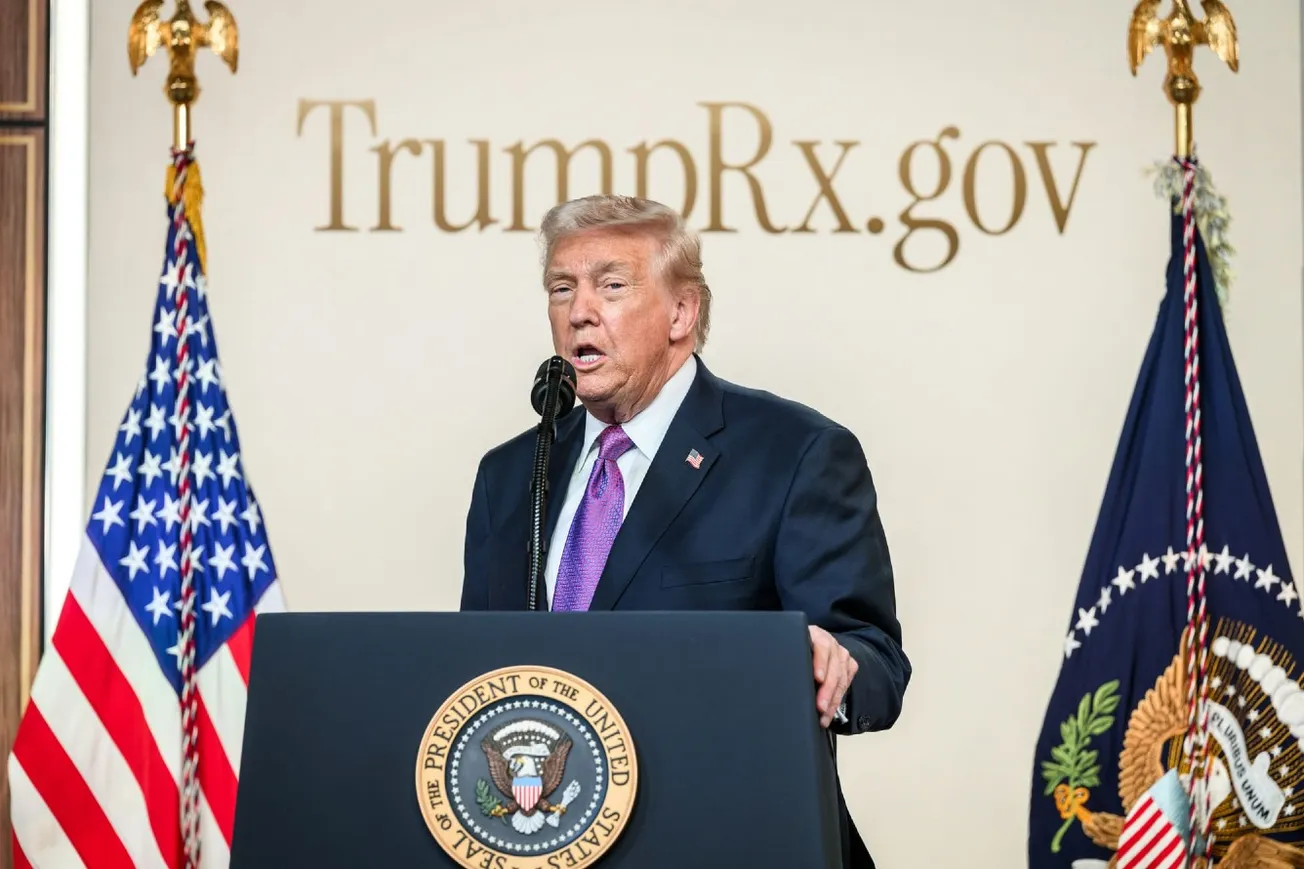

With violent crime unchecked in major American cities, President Donald Trump has moved to lower thefts, assaults and murders by providing federal help to besieged local police. How do Americans feel about this? They mostly favor local control, but don't entirely reject federal involvement in local policing, the latest I&I/TIPP Poll shows.
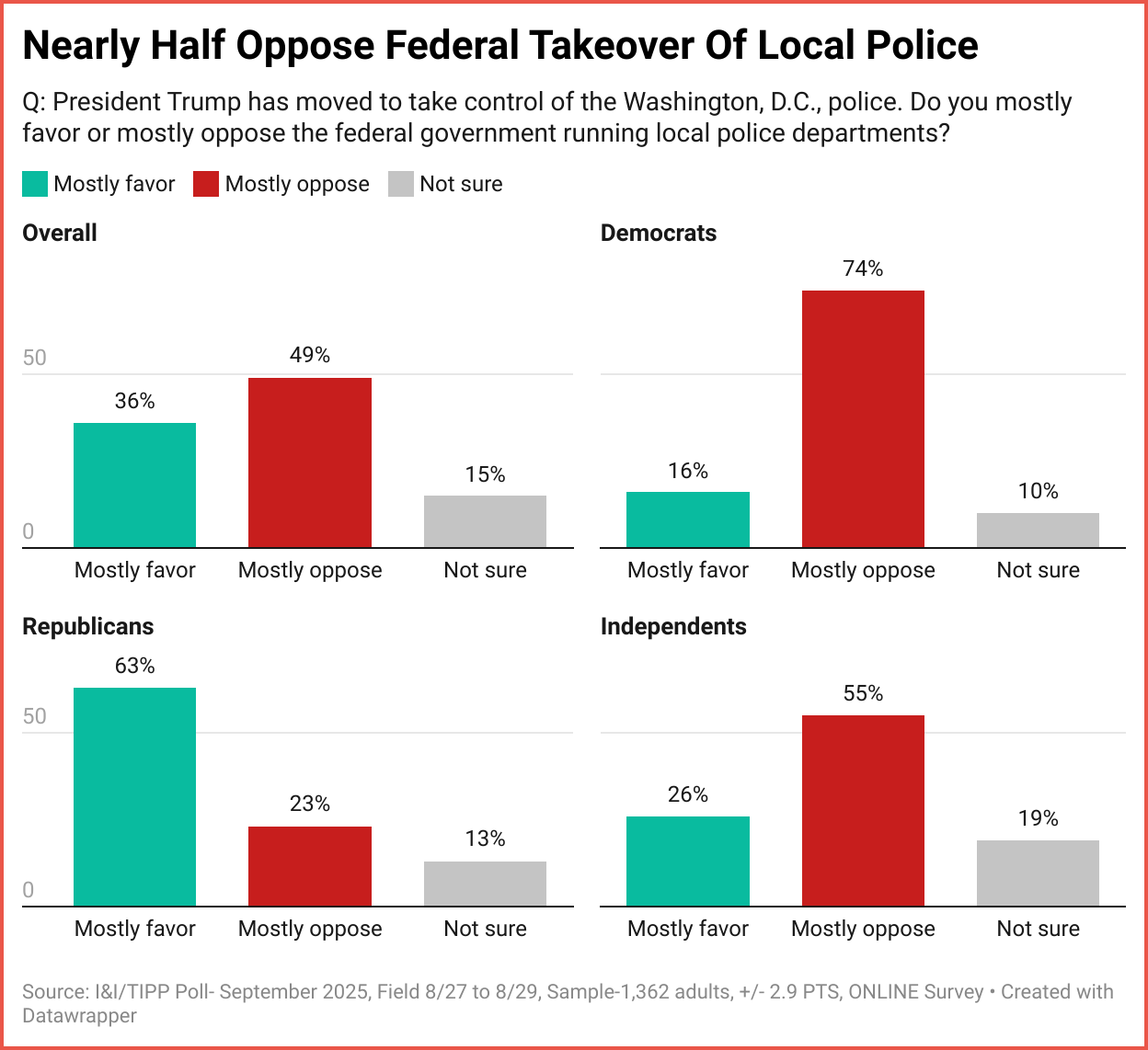
September's national online I&I/TIPP Poll asked 1,362 adults: "President Trump has moved to take control of the Washington, D.C., police. Do you mostly favor or mostly oppose the federal government running local police departments?"
Overall, among those responding, 36% say they "mostly favor" the idea, while 49% say they "mostly oppose" it, and another 15% say they're not sure. The poll, taken from Aug. 27-29, has a margin of error of +/-2.9 percentage points.
So a plurality of Americans oppose federal control of local police by a spread of 13 percentage points, a significant margin.
But something happens when you look closer at the data.
For one, partisan political affiliation again plays a major role in the responses.
Democrats, for example, strongly dislike the idea of federalizing local cops by 74% (mostly oppose) to just 16% (mostly favor), with independents not too far behind at 55% oppose, versus 26% favor.
Republicans flip that, with 23% mostly opposing and a sizeable 63% mostly favoring it.
So Red America and Blue America have very different visions of governance when it comes to local crime.
But one other interesting difference emerges between city dwellers, suburbanites, and rural inhabitants.
Those who live in cities, where most serious crime in America takes place, are more likely to favor federal involvement (41%) than either suburban Americans (32%) or rural Americans (36%). For the same groups, opposition is 46% for urban dwellers, 55% for suburbanites, and 44% for those who live in the country.
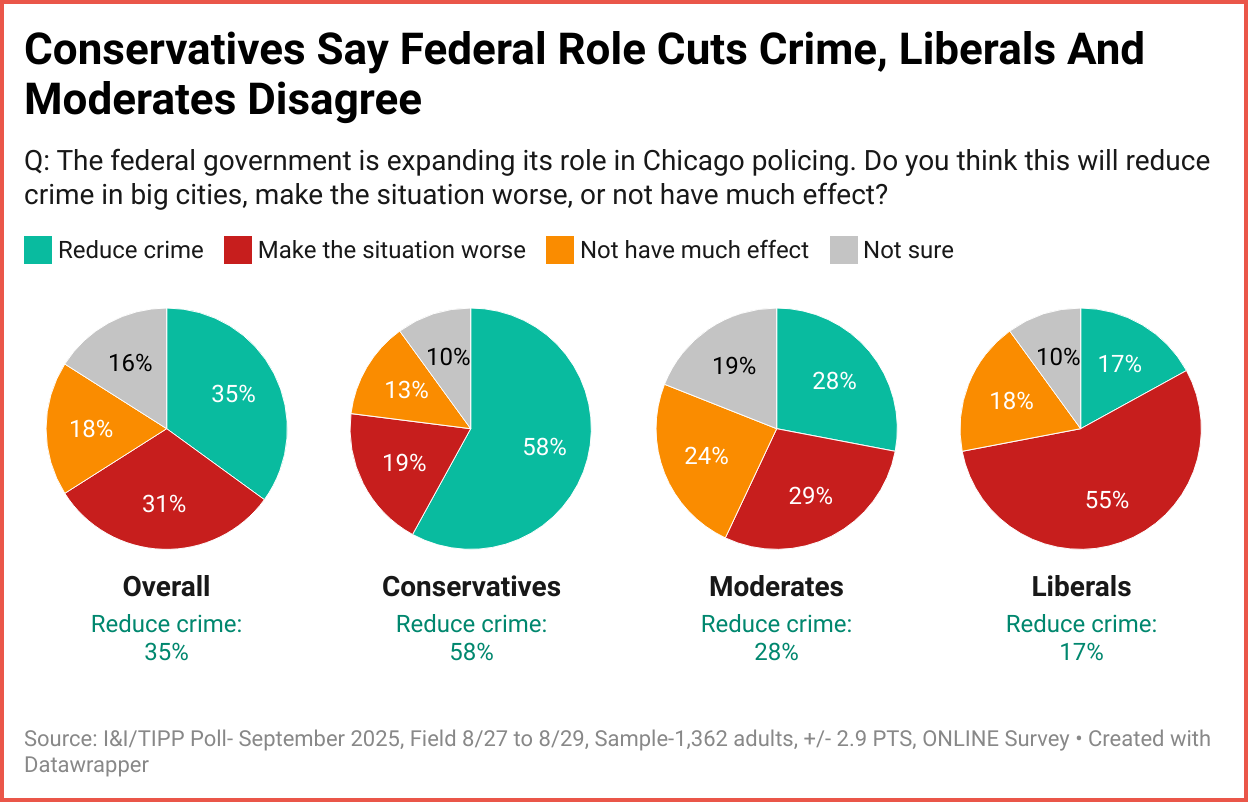
The I&I/TIPP Poll then broadened the question a bit: "The federal government is expanding its role in Chicago policing. Do you think this will reduce crime in big cities, make the situation worse, or not have much effect?"
There, the response was more positive than negative, with 35% saying the federal government expanding its role in big cities will reduce crime, 31% believing it will make the situation worse, 18% opining that it will not have much effect, and 16% not sure.
The "Red vs. Blue" split is again evident, especially when viewed through the lens of political ideology.
Among self-described conservatives, 58% believe expanding the federal role in policing cities will help reduce crime, while only 28% of self-described moderates and 17% of self-described liberals agree.
As for whether the federal role will "make the situation worse," only 19% of conservatives agreed, versus 29% for moderates and 55% for liberals. For the "not have much effect" response, the responses tightened a bit: 13% for conservatives, 18% for moderates, 24% for liberals.
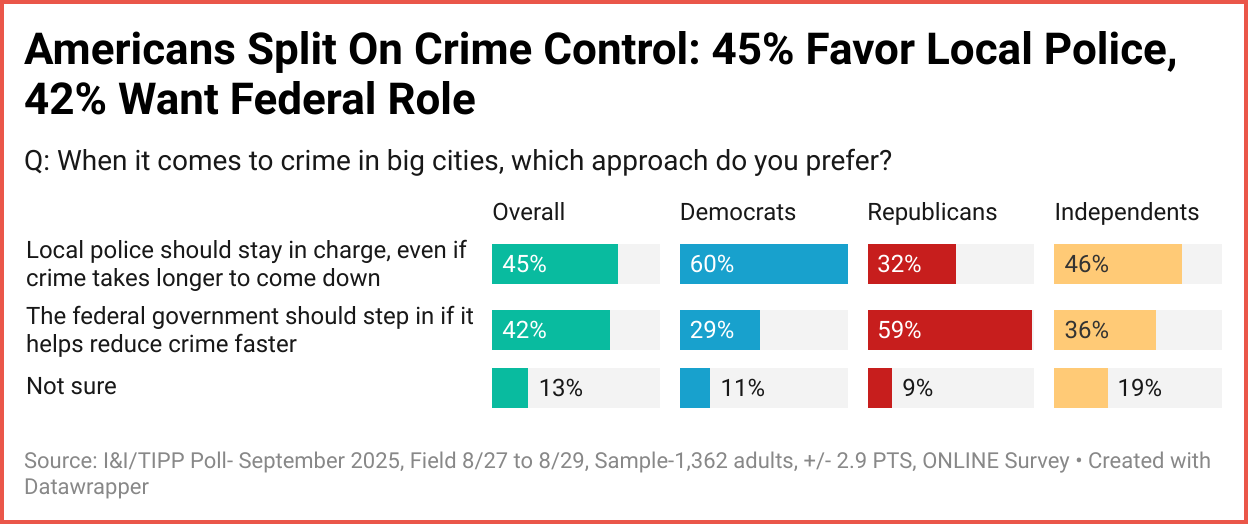
Finally, the I&I/TIPP Poll queried: "When it comes to crime in big cities, which approach do you prefer?"
On this question, an overall 45% answered "Local police should stay in charge, even if crime takes longer to come down," while 42% responded "The federal government should step in if it helps reduce crime faster," and just 13% weren't sure.
Unfortunately, the closeness of those numbers doesn't reflect the diversity among political affiliations. Democrats (60%) and independents (46%) are most favorable to leaving local police in charge, even if it takes longer to bring crime down, while Republicans (32%) agree least with that position.
Republicans are more pragmatic about bringing in the feds to cut crime more quickly, with 59% of the GOP agreeing, versus just 29% of Dems and 36% of indie voters.
Can cities go it alone in the battle against violent crime without federal help?
Not all cities need assistance. But many do. The argument made is that violent crime rates have been trending down for decades. And, indeed, the reported number of violent crimes per 100,000 people fell in the U.S. from a recent peak of 758.2 in 1991 to just 359 in 2024, according to FBI data.
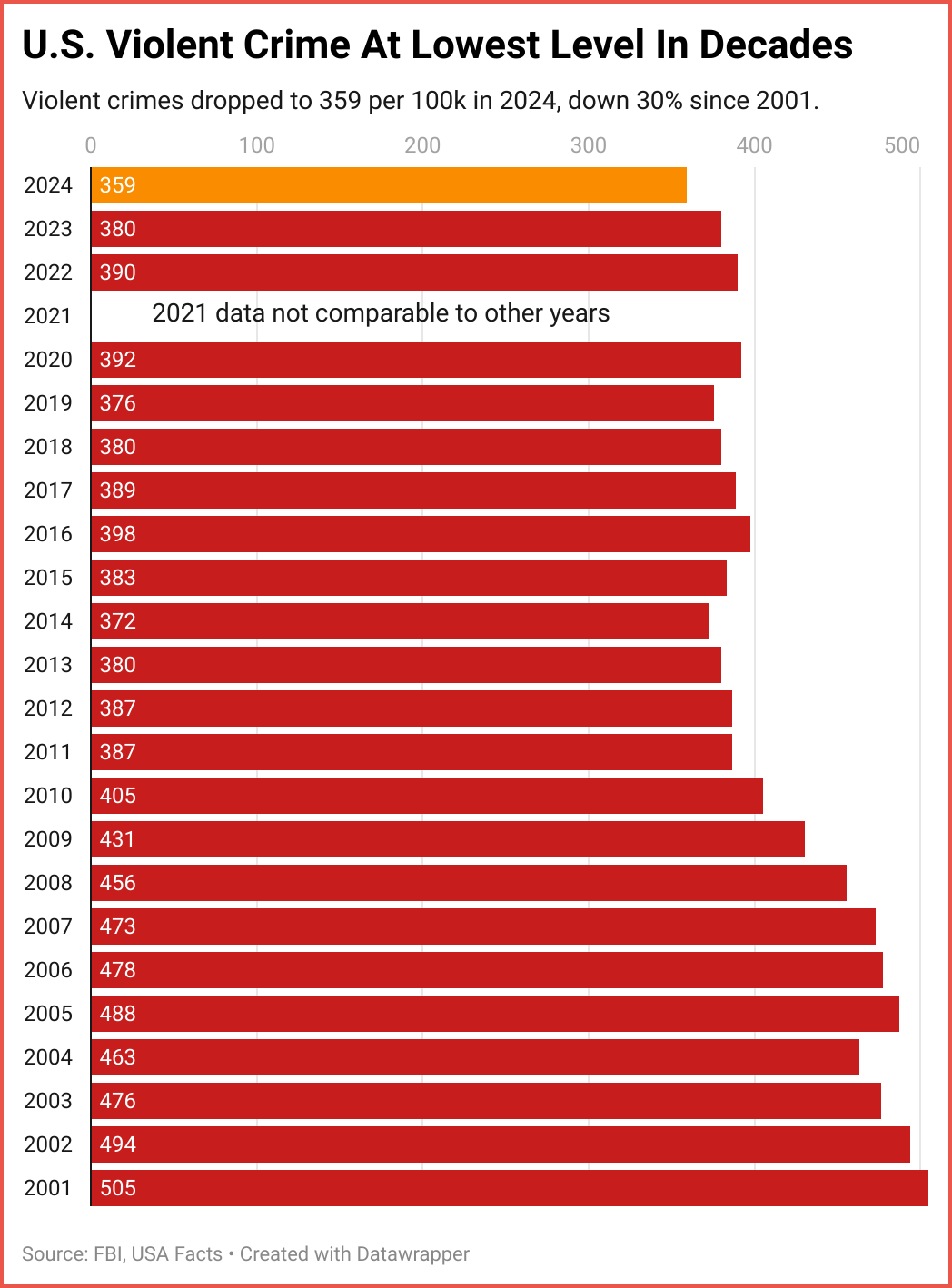
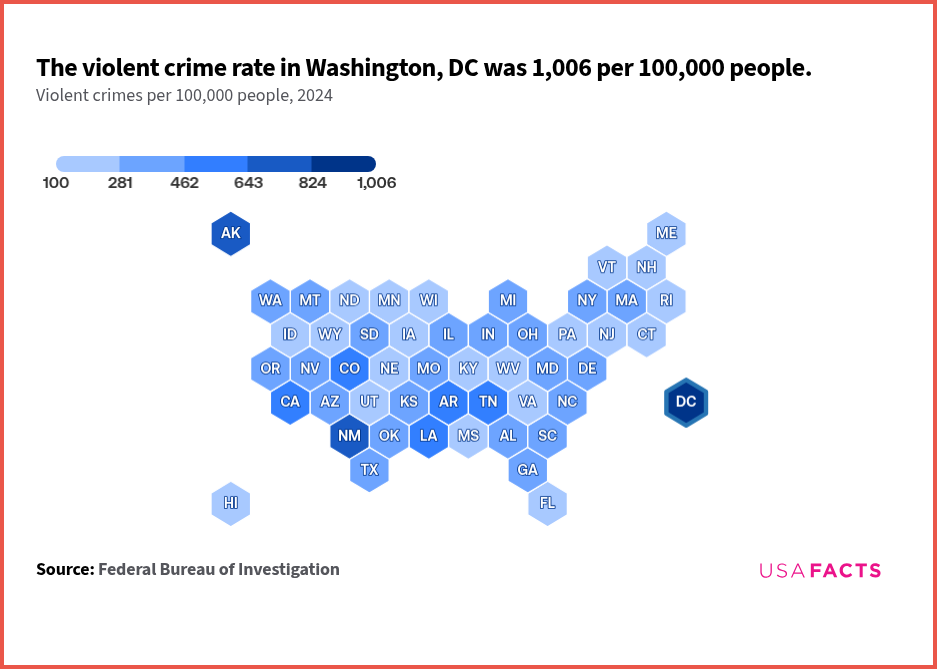
But there's a problem. According to Statista, an online data base, "due to the FBI's transition to a new crime reporting system in which law enforcement agencies voluntarily submit crime reports, data may not accurately reflect the total number of crimes committed in recent years."
So the numbers don't necessarily accurately reflect recent crime trends. There was a noticeable and much remarked-upon jump in crime during the COVID years, yet it barely shows up in official data.
This can be seen in Chicago, where the surging violent crime rate has led to headlines such as this one on Sept. 2 on ABC News: "58 shot over Labor Day weekend in Chicago as governor rejects Trump threat to send National Guard."
Don't look for action from the city, however. Chicago Mayor Brandon Johnson recently described law enforcement as a "sickness," one he hopes to "eradicate," while also calling for an end to incarceration.
🔔 Stay Ahead with TIPP Insights
Get data-driven analysis you won’t find elsewhere — polls, context, and clear charts that cut through the noise.
Trump's assistance to Washington, D.C.'s beleaguered police force, facing a wave of serious crime, helped make the streets safe again. Even D.C. Mayor Muriel Bowser at one point expressed her gratitude to Trump, not exactly a political ally, for helping quell her city's crime problem.
Indeed, streets in cities across the U.S. – from Los Angeles and San Francisco to Chicago, New York, Washington, D.C., and everywhere in between and beyond – are increasingly chaotic and violent, as criminals face shorter sentences and drug and alcohol addicts and the chronically mentally ill are allowed to live on city streets.
And it's not just big cities suffering from crime.
Last month's murder of 23-year-old Ukrainian refugee Iryna Zarutska, stabbed in the neck from behind while quietly riding a tram in Charlotte, North Carolina, is an example. Her attacker was a mentally ill man described as "homeless at the time of the stabbing … (with) a lengthy criminal history, including convictions for armed robbery, felony larceny and breaking and entering."
Even in Burlington, Vermont, the quintessential quiet, "nice" New England town, 170 small-business owners recently warned of a "crisis" of crime and delinquency, highlighted by the recent beating murder in broad daylight of a man by a group of three youths all 16 years or under in age, with one of them toting a gun.
Experts blame revolving-door court sentences, with many criminals going free or serving only light sentences for serious crimes. They also cite a refusal to deal with violent offenders who are mentally ill and often simply end up back on the street to commit more crimes.
Americans are torn about all this, as this month's I&I/TIPP Poll shows. They would prefer to have things handled locally, but a significant number would be happy to have the federal government lend a hand in curbing the post-COVID crime surge.
I&I/TIPP publishes timely, unique, and informative data each month on topics of public interest. TIPP’s reputation for polling excellence comes from being the most accurate pollster for the past six presidential elections.
Terry Jones is an editor of Issues & Insights. His four decades of journalism experience include serving as national issues editor, economics editor, and editorial page editor for Investor’s Business Daily.
📊 Market Mood — Monday, September 22, 2025
🟢 Caution Ahead of Big Tech Earnings
Futures eased after record highs last week, with investors bracing for Micron and other key tech results that could shape the AI-driven rally’s momentum.
🟡 Policy and Politics Cloud the Outlook
Trump’s $100,000 H-1B visa fee rattled Indian IT stocks and revived worries over U.S.–India tensions, while Fed speakers this week may sharpen the debate on further rate cuts.
🟣 Global Shifts and Safe-Haven Flows
Berkshire’s full exit from BYD weighed on Hong Kong markets, but gold hit fresh record highs as investors positioned for lower rates and upcoming U.S. data.
Market round-up in 5 minutes. We bring you up to speed. Subscribe to TIPP Insights for $99/year.
📅 Key Events Today
🟨 Monday, September 22
None today