
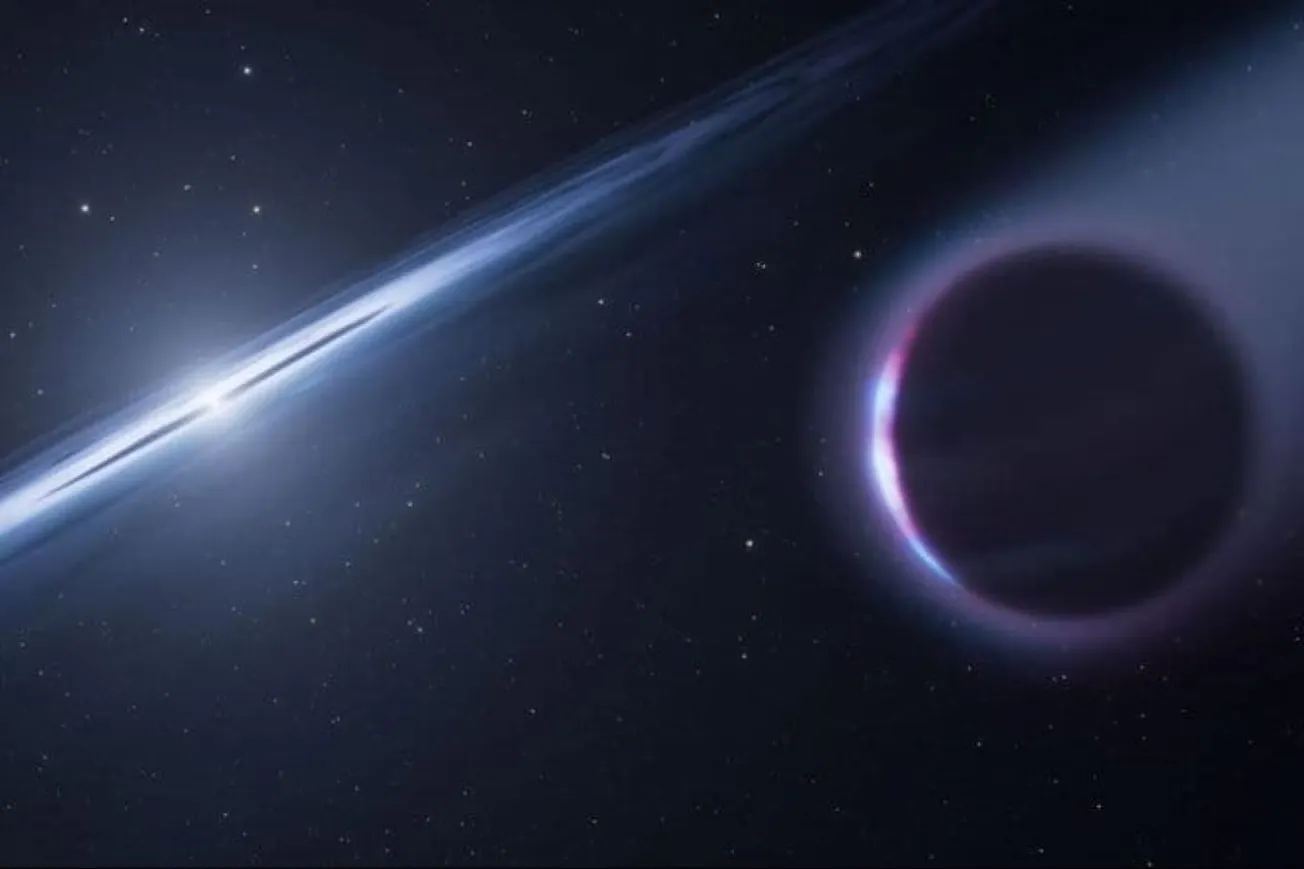
Astronomers at the University of Warwick have reported evidence of a potential “phoenix planet” orbiting the white dwarf HS 0209+0832. The candidate could represent a rare second-generation planet formed from debris released during its star’s final stages.
Unlike planets such as Earth, which form alongside young stars, second-generation worlds may emerge from material left behind after stellar evolution. Data from NASA’s TESS mission suggests the candidate is a gas giant orbiting its host every 4.4 days.
Researchers also detected unusual levels of niobium in the white dwarf’s atmosphere, potentially indicating that material from nearby debris has accumulated there.
If confirmed, the finding could expand our understanding of planetary formation and the possible fate of planetary systems after their stars die.
Related Tweet:
Astronomers discover possible second-generation planet formed from dying star junk https://t.co/NJBRYJfTl9 https://t.co/CQCaopLasE
— New York Post (@nypost) October 12, 2026
Also Read:
 TIPP Staff