

The UN-brokered Black Sea Initiative has enabled the export of more than 32 million tonnes of food from three Ukrainian ports. Now, Russian demands threaten to shut down the agreement.
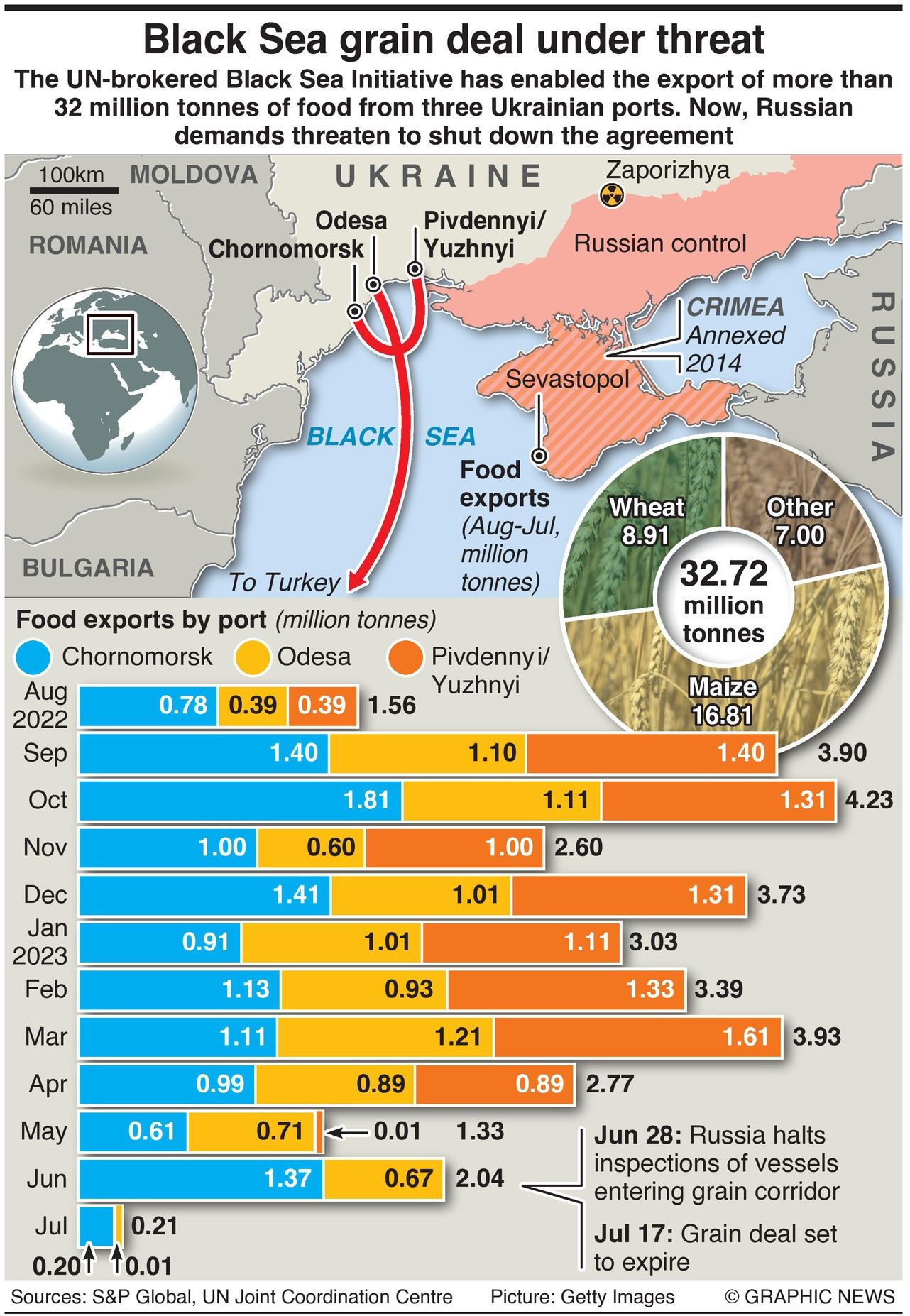
Russia, in effect, sabotaged the Black Sea “grain corridor” by halting inspections of vessels on June 28, news agency Interfax-Ukraine has reported.
Average daily inspections of ships -- meant to ensure they carry only food and not weapons -- have fallen from a peak of 11 in October to just two so far in July. Bulk carrier Agapi S departed the port of Chornomorsk on July 2 with 50,690 tonnes of corn for the Netherlands. Akdeniz M left Odessa with 27,215 tonnes of wheat destined for Turkey on July 4.
Russian officials repeatedly say there are no grounds for extending the deal, which is up for renewal Monday (July 17). Moscow last agreed to extend the agreement for 60 days on May 18.
Russia’s demands include reconnection of the Russian Agricultural Bank to the SWIFT payments system, resumption of the Tolyatti-Odessa ammonia pipeline, and unblocking the frozen assets of Russian companies,
According to the Joint Coordination Center, the Black Sea Initiative has allowed Ukraine to ship 32.7 million tonnes of grain, more than half of it to African countries, the Middle East, and parts of Asia.
On the Telegram messaging app, Olha Trofimtseva, Ukraine’s foreign ministry ambassador, said on June 21: “The grain corridor – 99.9% sure that Russia will leave it in July.”