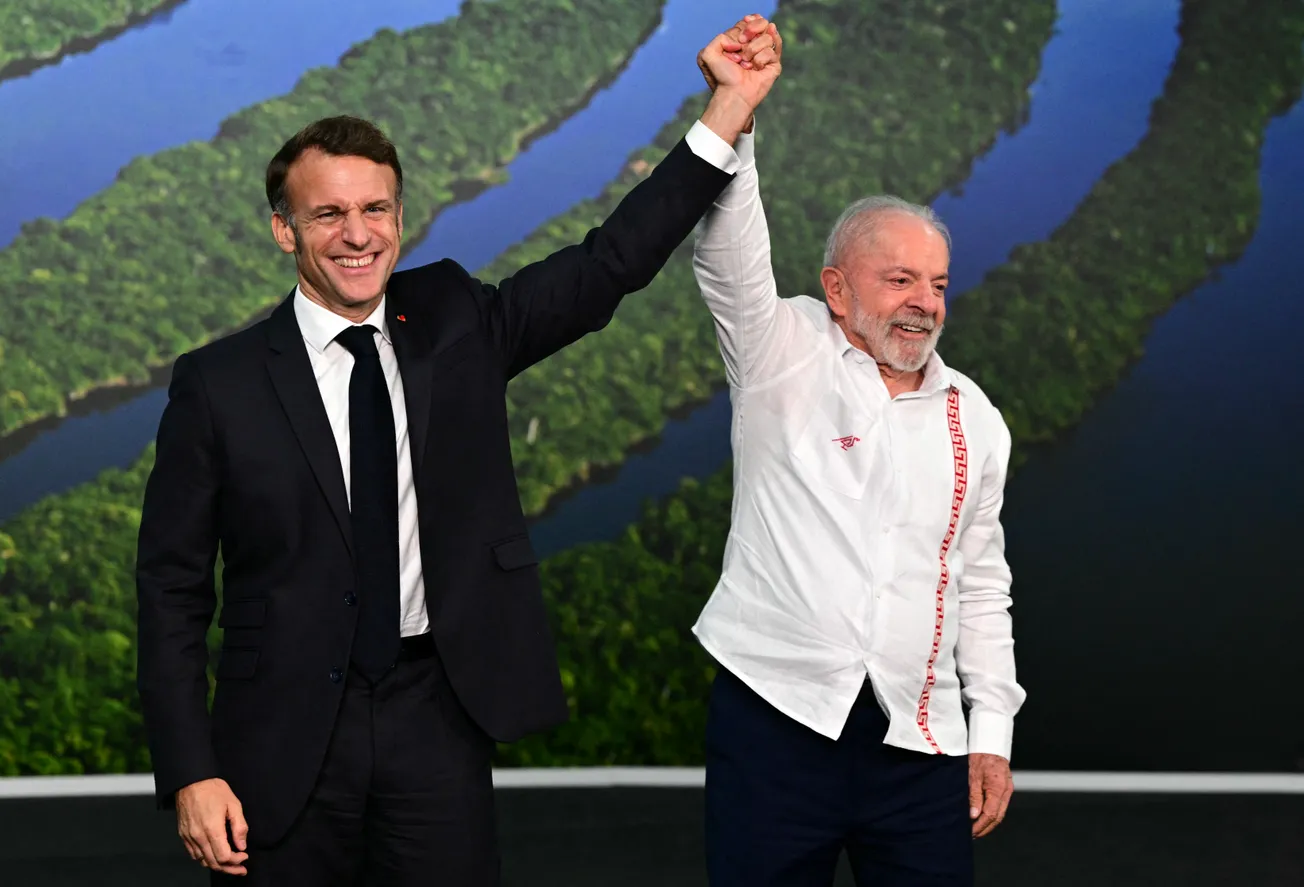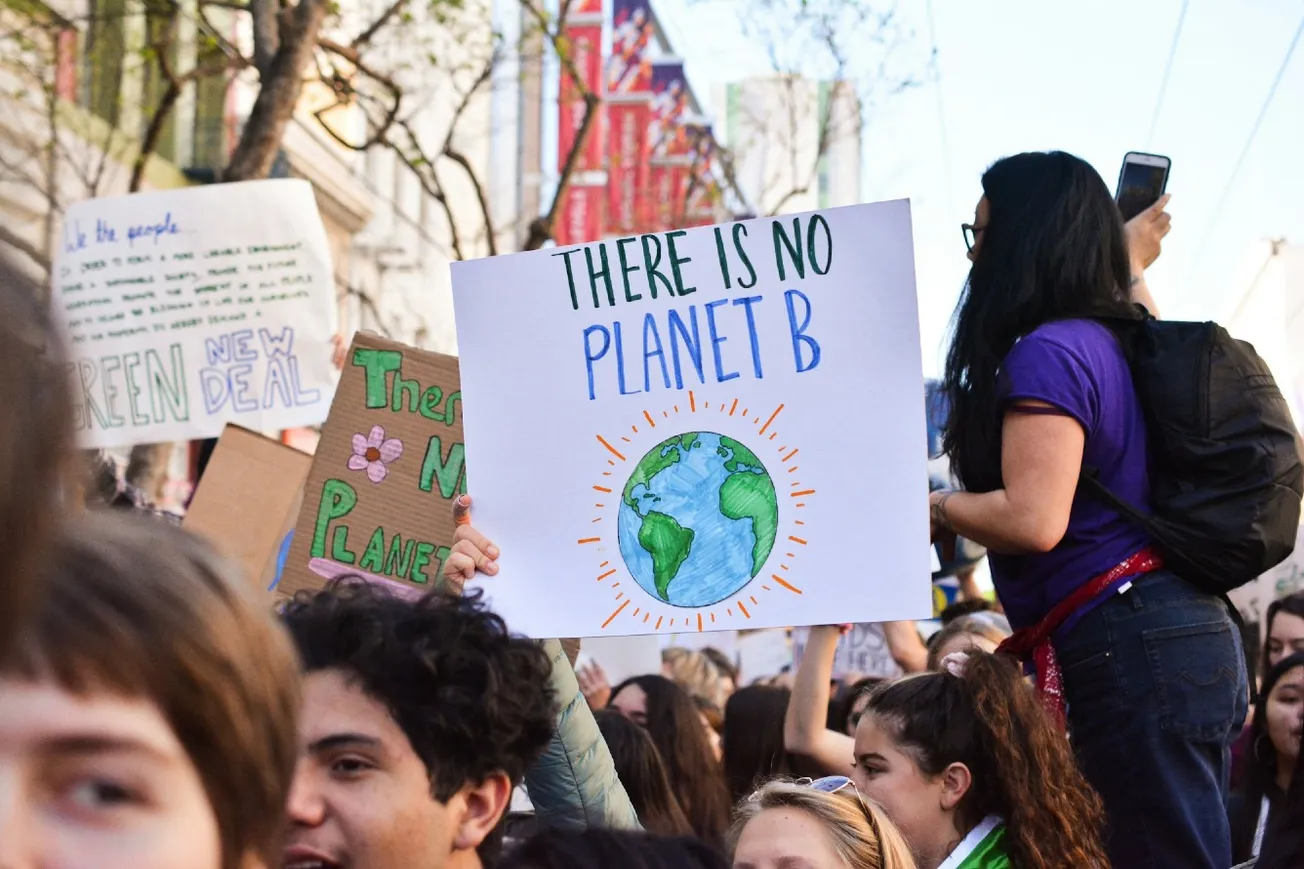
Voters have little confidence that anything significant will emerge from this month's global climate talks that begin in Brazil this week, but they are also split on what the best course forward would be, the latest I&I/TIPP Poll shows.
The latest I&I/TIPP Poll, taken from Oct. 28 to Oct. 31, asked 1,418 adults the following question: "How confident are you that the upcoming United Nations climate talks (COP30) in Brazil, with a goal of raising $1.3 trillion in climate finance, will succeed in curbing global warming?"
Overall, just 34% said they were either "very confident" (11%) or "somewhat confident" (23%), while 49% said they were "not very confident" (27%) and 22% said they were "not at all confident." Another 18% said they weren't sure.

Looking across responses by demographic groups, two stand out: Responses by age, and responses by political affiliation.
Start with age. Among those 18 to 24 years old, 46% were "confident," while 38% were "not confident. For 25 to 44 years, the comparable numbers were nearly identical: 47% confident, 37% not confident. But for those 45 to 64, the confident share fell to 26% while the not confident jumped to 52%. For 65 and above, the confident number dips further to 20%, while the not confident surges to 65%.
Clearly, there's a major generation gap on the climate change issue.
Political affiliation is another difference, but in a surprising way.
Democrats (41% confident, 43% not confident) aren't really too far from Republicans (35% confident, 51% not confident) when it comes to confidence, but as the numbers show GOP members are less confident overall.
It's not the Republicans who take the prize for least confident overall, but rather the independents who come in at 26% confident, to 54% not confident. That's a 28 percentage-point confidence gap, compared to a 16 percentage-point deficit for the GOP and just 2 percentage points for the Dems.
Race is another point of departure. Among white poll respondents, just 29% said they were confident, while 54% said they weren't. That's a minus-25 point gap. But when blacks and Hispanics were asked, the response was flipped: 48% confident, 34% not confident, a plus-14 point difference.
Taken together, the whites and blacks/Hispanics are 39 points apart in their responses.
But now comes the question for those who are not confident: What should be done? Specifically, I&I/TIPP asked: "If you are not confident in the UN’s ability to curb global warming, which of the following approaches do you think is best for the future?"
Overall, 21% selected "continue using conventional carbon-based fuels and rely on technology to find better, cheaper replacements"; 25% picked "keep using alternative energy sources, even if they cost more and have limited effect on CO2 emissions"; just 14% opted for "force companies and consumers to use less fuel through taxes and higher prices to reduce global temperatures"; and 21% went for "none of the above — global population decline will naturally reduce the carbon footprint."

So there really is no solid consensus in how to address a problem as diffuse and ill-defined as "climate change" or "global warming."
That shouldn't be a surprise. Some formerly ardent advocates for aggressive global action against climate change have left the fold and now suggest far less draconian measures.
In early November, Microsoft billionaire Bill Gates stunned and disappointed many zealous global climate change activists by asserting in a long blog post that climate change "will not lead to humanity’s demise. People will be able to live and thrive in most places on Earth for the foreseeable future.”
The New York Post called this a "stunning reversal" after "years of doomerism." And indeed it was. So was the reversal on climate change by Ted Nordhaus, director of the Breakthrough Institute, who recently noted that "the climate movement has effectively conflated consensus science about the reality and anthropogenic origins of climate change with catastrophist claims about climate risk for which there is no consensus whatsoever."
Gates, whose immense wealth remains tied up in Microsoft, understands that the move to an artificial intelligence-based economy will require massive increase in electrical output. There's no way that can happen in a world where, as in much of the European Union, nations are actually deindustrializing by dismantling nuclear power plants and forcing up prices of fossil fuels in order to display their climate-change virtue.
Now, some researchers are making a different case entirely: University of California scientists report because of a "fatal flaw" in the carbon cycle, "global warming could eventually swing in the opposite direction, tipping the planet into an ice age."
Yes, the so-called "global consensus" has been crumbling of late, as countries struggle with dwindling energy supplies leading to rising prices.
Global freezing? Global warming? Which is it? In addition to rising energy costs, the mixed messages, ideological bias and lack of scientific rigor in the climate change field might be big reasons why voters in the I&I/TIPP Poll are cynical about the COP-30 global climate change talks.
Even as Americans see their energy costs rise due to "green" taxes, they see little change in the climate but lots of energy-related inflation. As the American Institute for Economic Research recently noted, "As AI data centers, clean-energy mandates, and regulations collide, the power grid is becoming a battlefield."
The growing skepticism is also fueled by what many see as the hypocrisy of an estimated 50,000 global climate bureaucrats flying to Brazil for COP-30 in CO2-spewing planes (Brazil added 221 international flights to its schedule to accommodate the crowd) and, once there, will be ferried around by fleets of gasoline-powered vehicles to meetings, lavish dinners and self-congratulatory sessions.
Brazil's government, eager to host the COP 30, even cut a wide swath of virgin Amazon rain forest to build a four-lane highway for the meeting, which takes place in out-of-the-way Belem.
Despite all this, global media give uncritical backing for the COP 30 climate-change message. The Associated Press, for instance, stated in its curtain-opener for the meeting that "Climate change is already escalating disasters that mean life or death for billions of people around the world, and delaying action will only worsen the problem."
Perhaps it's no surprise then that average Americans lack confidence in the U.N.'s climate change policies.
They know that the U.S., China and India, which account for more than half of the world's GDP and the bulk of the world's output of greenhouse gases, aren't even taking part. That's why U.S. voters expect little to nothing from COP 30, apart from more rhetoric and an enormous bureaucratic expense tab, as the I&I/TIPP Poll shows,
I&I/TIPP publishes timely, unique, and informative data each month on topics of public interest. TIPP’s reputation for polling excellence comes from being the most accurate pollster for the past six presidential elections.
Terry Jones is an editor of Issues & Insights. His four decades of journalism experience include serving as national issues editor, economics editor, and editorial page editor for Investor’s Business Daily.
📊 Market Mood — Monday, November 10, 2025 (Pre-Market)
🟩 Futures Rise On Shutdown Breakthrough
U.S. stock futures climbed ahead of the open after the Senate voted to advance a bill to end the 40-day federal shutdown — the longest in U.S. history. The Dow rose 0.2%, S&P 500 +0.7%, Nasdaq +1.3%.
🟨 Relief Rally Builds Amid Data Gaps
Investors welcomed progress in Washington after weeks of lost output and weak sentiment data. Economists warn the shutdown likely shaved billions off GDP.
🟩 Pfizer Clinches Metsera Deal
Pfizer sealed a $10 billion takeover of obesity-drug developer Metsera, defeating Novo Nordisk and expanding its foothold in a $150 billion obesity-treatment market.
🟧 COP30 Opens In Brazil
Global leaders meet in Belem to mark 30 years of climate talks. The U.S. sent no senior delegation, drawing criticism amid rising emissions disputes.
🟩 Gold And Oil Rebound
Gold surged 1.9% above $4,000 an ounce on a weaker dollar and Fed rate-cut expectations. Crude gained ~0.9% as optimism over the shutdown’s end lifted demand hopes.
🟨 Overall Tone:
Cautious optimism — markets eye a relief bounce, but durability depends on final congressional passage of the funding bill.
Market round-up in 5 minutes. We bring you up to speed. Subscribe to TIPP Insights for $99/year.
📅 Key Events Today
🟧 Monday, November 10
No major economic releases scheduled.

Access our Featured Stocks and TIPP Top-20 archives — exclusive to paid subscribers. Subscribe now → $99/year.