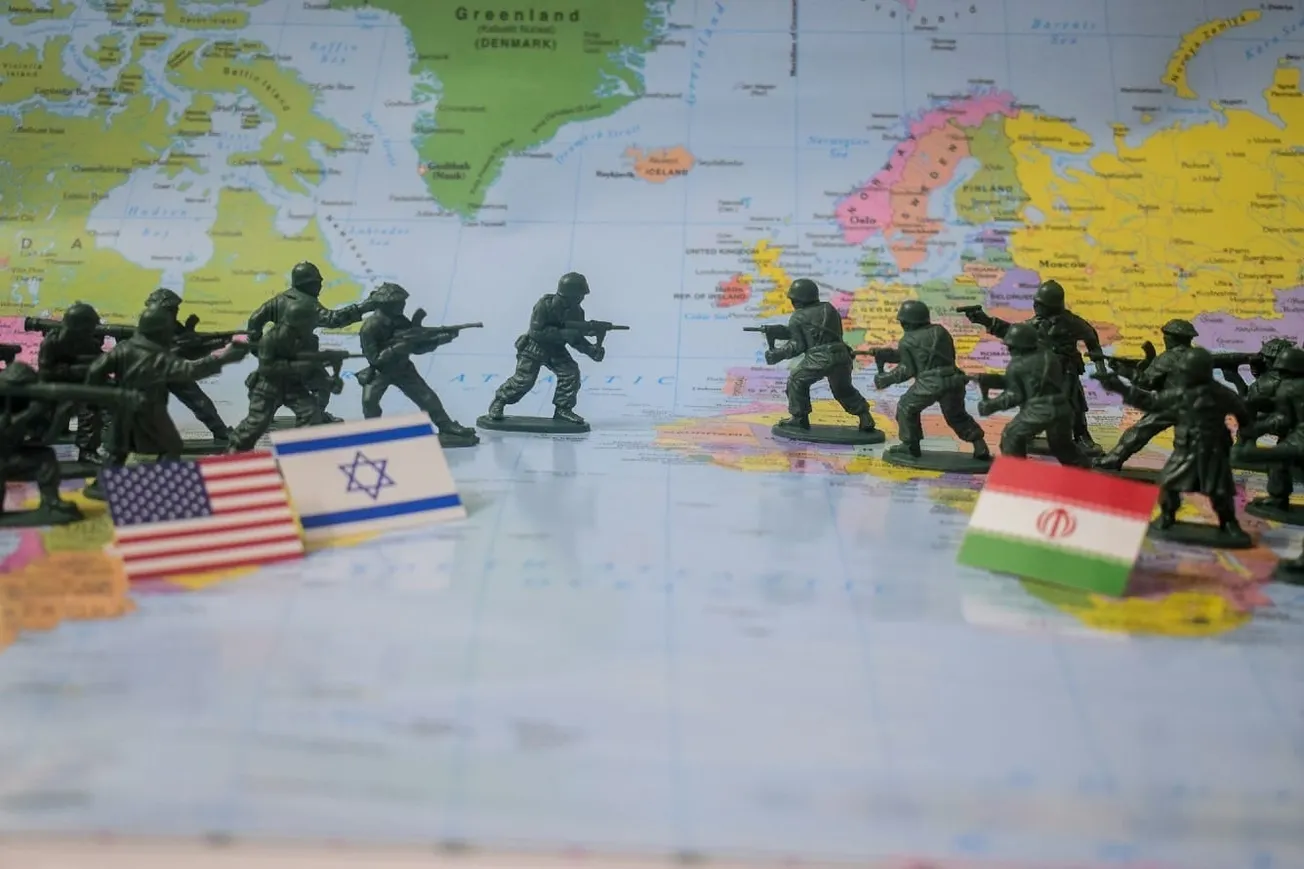

President Donald Trump said Monday that he would hold off on new military strikes against Iran for now, after meeting at the White House with Qatar’s prime minister, Sheikh Mohammed bin Abdulrahman Al Thani. Sheikh Mohammed, whose government has served as a key intermediary with Iran, visited Tehran last week. The U.S. naval blockade in the Strait of Hormuz remains in place. On Sunday, the president said new strikes were highly unlikely if negotiations made progress, though he noted that additional targets had been identified.
Trump also called off planned strikes in May and in August at the request of Gulf governments, and fighting resumed after earlier halts. Secretary of State Marco Rubio told reporters before leaving for a G7 meeting in Paris that he did not believe a breakthrough was imminent.
Diplomatic efforts have picked up since last week’s midterm elections. The TIPP Poll, conducted October 27–30 among 1,480 U.S. adults, measured opinion in the closing days of the campaign. Americans were evenly divided over the war but showed more agreement about how it should end.
An Even Split
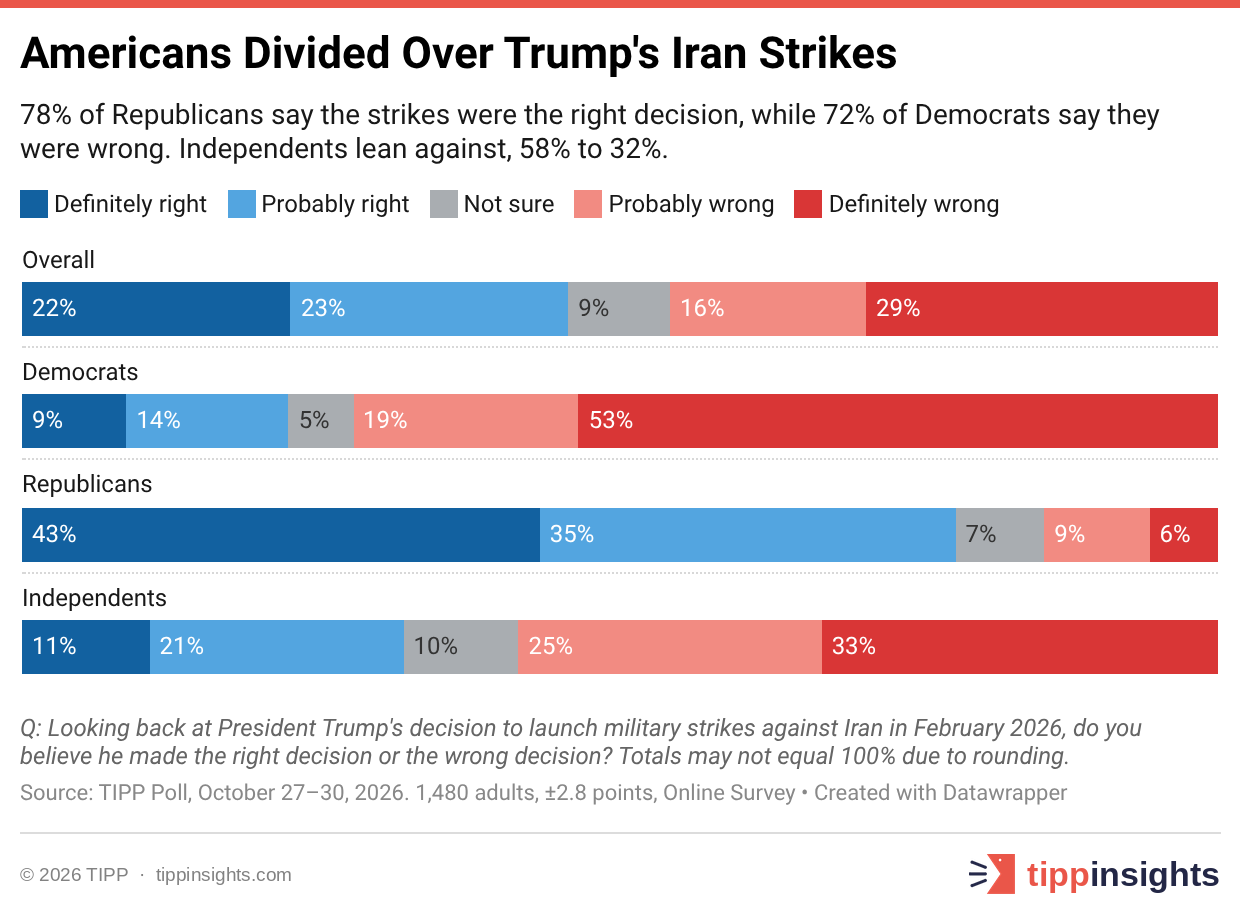
Asked whether they support or oppose U.S. military action against Iran, 45% of Americans said they support it, 45% said they oppose it, and 10% were unsure. The results were the same when respondents were asked whether President Trump made the right decision in launching strikes in February: 45% said right, 45% said wrong, and 9% were unsure.
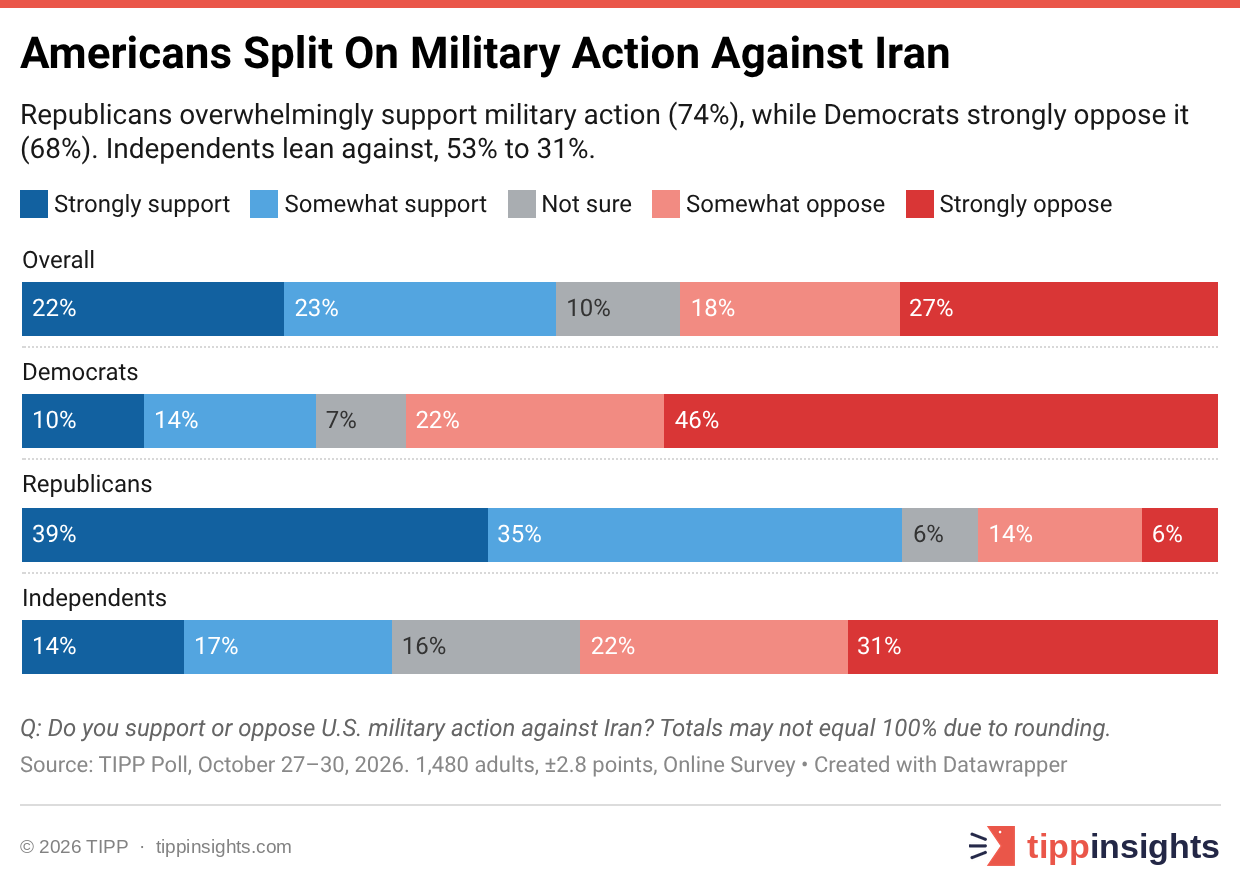
Opponents were somewhat more likely to hold their view strongly. Twenty-seven percent strongly oppose military action, while 22% strongly support it. On the February decision, 29% said it was definitely wrong, and 22% said it was definitely right.
Republicans support military action 74% to 20%, and 78% say the strikes were the right decision. Democrats oppose military action 68% to 24%, and 72% say the strikes were wrong. Independents oppose military action 53% to 31% and say the strikes were the wrong decision by 58% to 32%.
Priorities for the Next Phase
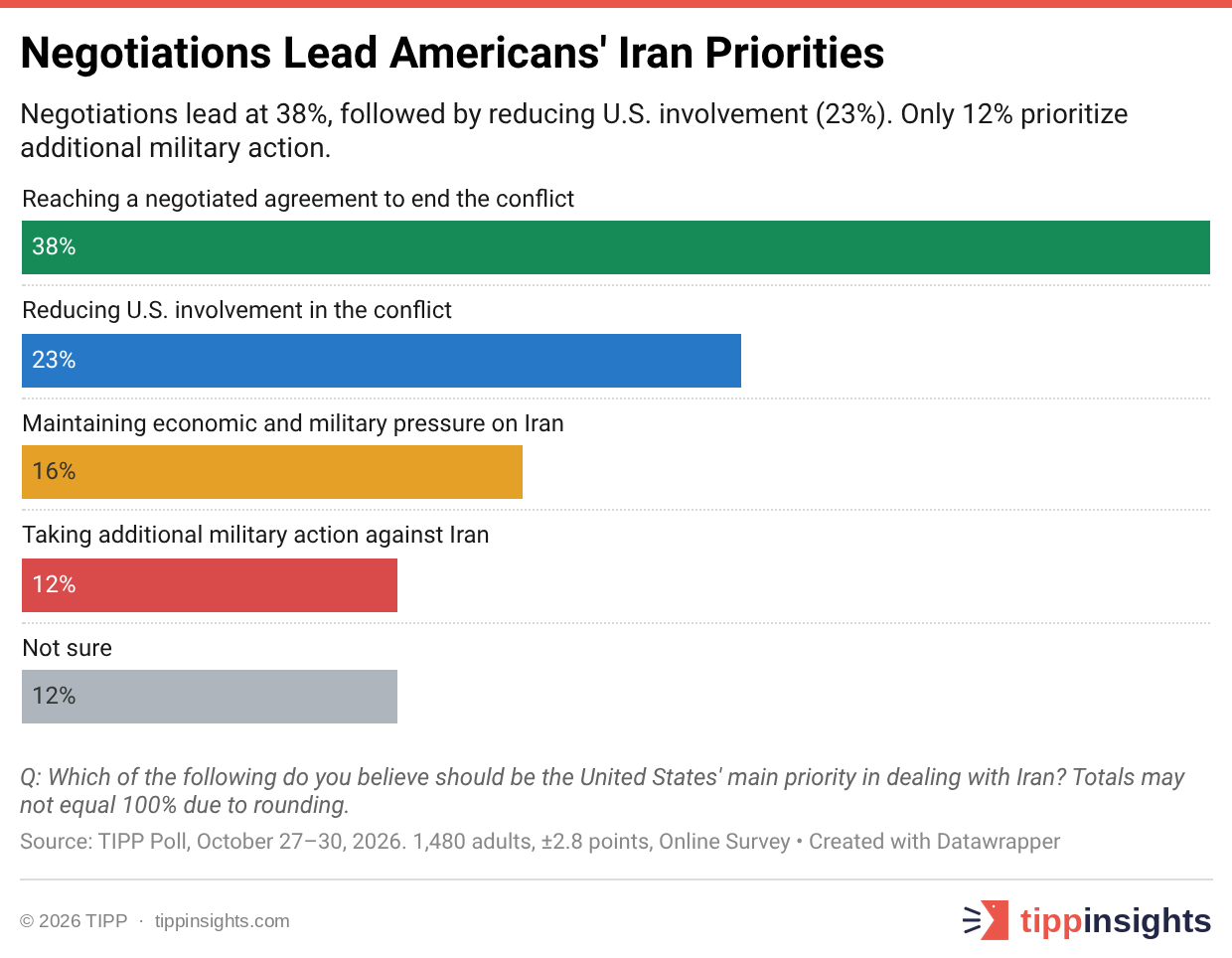
Asked to name the main U.S. priority in dealing with Iran, 38% chose reaching a negotiated agreement to end the conflict, and 23% chose reducing U.S. involvement. Sixteen percent favored maintaining economic and military pressure, 12% favored additional military action, and 12% were unsure. In all, 61% picked an option that would wind down the conflict, and 28% picked one that would sustain or increase pressure.
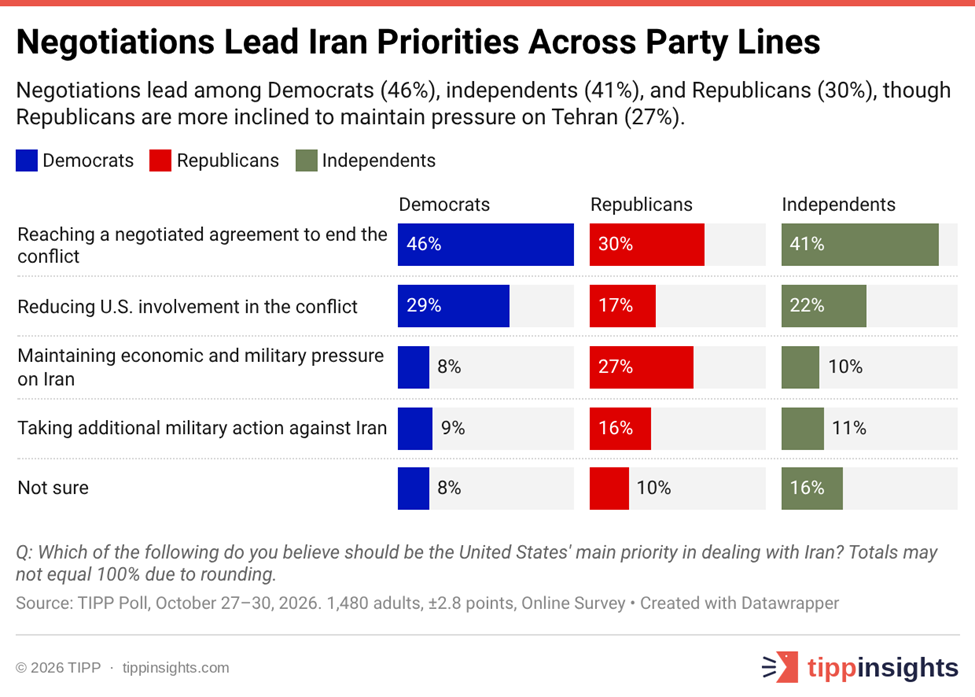
A negotiated agreement was the most common choice across all three partisan groups, at 46% among Democrats, 41% among independents, and 30% among Republicans, though its lead among Republicans was narrow. 27% of Republicans chose to maintain economic and military pressure, and 16% chose additional military action. Combining the options, Republicans divided 47% for negotiations or reduced involvement and 43% for sustained or increased pressure. Democrats were the most likely to favor reducing U.S. involvement, at 29%, compared with 22% of independents and 17% of Republicans.
Among Americans who support the military action, 31% named a negotiated agreement as the top priority, 28% chose maintaining pressure, and 20% chose further strikes. Four in five supporters of the campaign named something other than additional military action as their first priority.
The question asked about priorities and was not a vote on a specific policy, so it does not indicate how Americans would respond to renewed strikes under different circumstances.
Room for a Settlement
The issues dividing the two sides are substantial. Washington insists that Iran must not acquire a nuclear weapon, and Tehran is seeking relief from sanctions. The reopening of the Strait of Hormuz to normal shipping is tied to both. Gulf governments have pressed for a negotiated outcome several times this year.
Any agreement will draw objections from several quarters, but the poll suggests it would not lack public support. A negotiated settlement was the leading priority among Democrats and independents, and it ran even with or ahead of other options among Republicans and the war’s supporters.
Monday’s pause gives the talks more time. Opinion on the war itself remains divided, but on how it should end, the public has given negotiators room to work.
Methodology: The TIPP Poll surveyed 1,480 U.S. adults online from October 27–30, 2026. The credibility interval is approximately ±2.8 percentage points for the full sample and larger for subgroups. Percentages may not total 100 due to rounding. TIPP’s reputation for polling excellence comes from being the most accurate pollster for the past six presidential elections.
Loved it, hated it, or somewhere in between — tell us. Grade this article here and help shape what lands in your inbox next.
🧭 Power & Capital · November 11, 2026
Where state power meets the boardroom.
🔷 Nvidia Hires Wachtell Lipton To Investigate Jensen Huang Allegations – Power & Capital Desk, TIPP Insights
🔷 Watch: Trump Rallying Behind Nvidia CEO Amid China Tie Scrutiny – TIPP Video
🌍 Global Affairs
The world's flashpoints, in motion.
🟥 US Evacuates Aircraft From Second UK Airbase Amid Iran Threat – TIPP News
🟥 British Police Arrest US Soldier In National Security Investigation – TIPP News
🟥 UK Launches Probe Into Autumn Budget Tax Leak – TIPP News
🟥 Watch: Iran Conflict ‘Effectively Over,’ But U.S. Still ‘Locked And Loaded’, Says Trump – TIPP Video
🟥 Iran Threat Prompts US To Move Aircraft From British Military Base – TIPP News
🟥 Trump’s Board Of Peace Criticises Israel Over Gaza Flood Response – TIPP News
🟥 China Records $1 Trillion Trade Surplus Amid Global AI Infrastructure Boom – TIPP News
🟥 Watch: EU Naval Fleet Mobilizes In Gulf Of Aden Anti-Piracy Push – TIPP Video
🟥 Watch: Russell Brand Faces Possible U.S. Ban Following 10-Year UK Prison Sentence – TIPP Video
🏛️ National Affairs
The fights shaping America right now.
🟫 Kennedy Family Members Seek To Block Trump's Arlington Memorial Arch – TIPP News
🟫 Macrons File New Defamation Lawsuit Against Candace Owens In Tennessee – TIPP News
🟫 Three Dead After SUV Crashes Into Food Stand In North Hollywood – TIPP News
🟫 Thomas Markle Cuts Off Ankle Monitor While Facing Federal Charges – TIPP News
🟫 Supreme Court Weighs Federal Authority In H-2A Worker Cases – TIPP News
🟫 Nor’easter Could Bring Season’s First Snow To Northeast – TIPP News
🟫 Pete Hegseth Slams Impeachment Push, Defends Handling Of Iran War – TIPP News
🟫 Democrats Face Trump's Veto Threats Despite Congressional Gains – TIPP News
🟫 House Committee Urges DOJ To Reinterview Key Epstein Witnesses – TIPP News
📈 Economy
Prices, policy, and the pressure on your wallet.
🟩 US Consumers Face Fresh Cost Pressures As Inflation Beats Expectations – TIPP News
🟩 US Drivers Get Relief As Gas Prices Fall Below $4 – TIPP News
🟩 Can Bond Vigilantes Prevent The Next Debt Crisis? – Nouriel Roubini, Project Syndicate
🟩 A Tale Of Two Chinas – Kenneth Rogoff, Project Syndicate
💼 Markets & Business
The deals and tickers making moves.
🟧 Anthropic Sets IPO Price Range, Eyes $1.4 Trillion Valuation – TIPP News
📊 Market Mood · November 11, 2026
How the trading day is setting up.
🟩 Global stocks are rebounding on renewed AI optimism. Taiwan's benchmark jumped 3.6% and South Korea's Kospi gained 2.4%, as strong chip demand and reassuring CoreWeave results helped restore confidence in technology stocks.
🟧 Hotter inflation is raising fears of a larger Fed rate hike. October's unexpectedly strong CPI report sent Treasury yields higher, while Fed Governor Christopher Waller suggested a half-point increase could be warranted in December.
🟦 Nvidia remains a major drag on technology stocks. Shares fell another 5.5% Tuesday amid an investigation involving CEO Jensen Huang, leaving the stock roughly 31% below its October peak.
🟨 Oil prices are stabilizing after a sharp retreat. Crude edged higher Wednesday following a decline to two-month lows, offering some inflation relief even as Middle East supply risks persist.
🗓️ Key Economic Events
On today's U.S. data calendar.
No major U.S. economic reports are scheduled today.
U.S. bond markets and federal offices are closed for Veterans Day, although stock markets remain open.
Coming Friday: October's Producer Price Index will provide another important reading on inflation following Tuesday's hotter-than-expected CPI report.
Letters to the editor email: editor-tippinsights@technometrica.com
Subscribe Today And Make A Difference. Consider supporting Independent Journalism by upgrading to a paid subscription or making a donation. Your support helps tippinsights thrive as a reader-supported publication. Contact us to discuss your research or polling needs.
Reach our audience. For sponsorship and advertising opportunities, visit our Partner With Us page.