The New York Times is no stranger to sharp language. In 2024, its editorial board published the shocking headline “Donald Trump, Felon,” showing that forceful framing is acceptable in mainstream opinion writing. It cuts both ways. “Grey Lady Tear-Milkers Ignore Facts” is not an overreach. It is a critique of misleading journalism that leans on emotion and leaves essential legal details in the shadows, stirring sympathy while obscuring the law. The dynamic would be familiar to any Journalism 101 student.
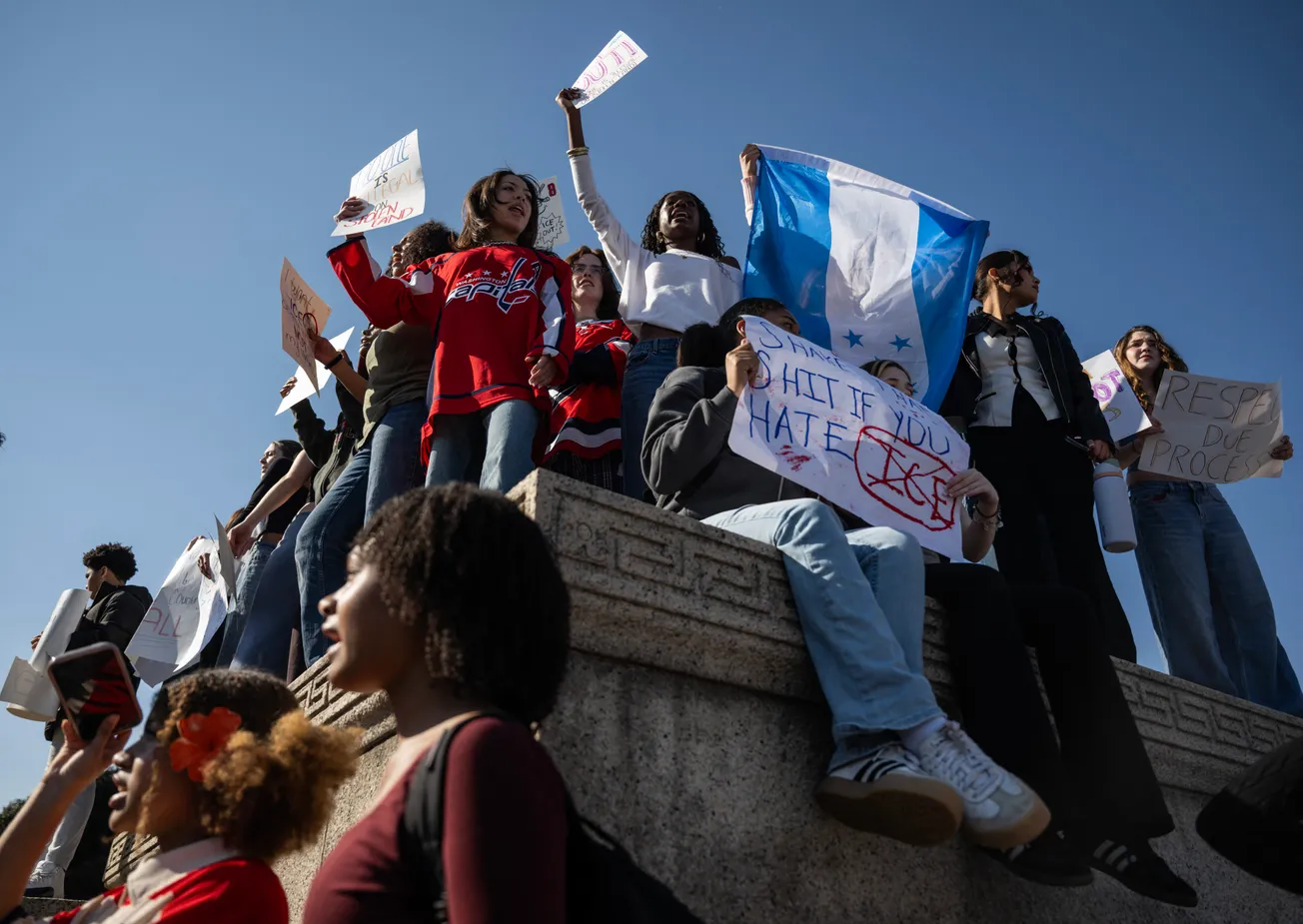
Last week, The New York Times ran a heartbreaking story profiling three couples disrupted at green card interviews by ICE agents. In each case, one spouse was a U.S. citizen. The other was from Germany, Mexico, or the United Kingdom. They were legally married. One couple already had a son together. They had completed all the required paperwork and showed up for their interviews in good faith.
The framing was clear: the Trump administration's immigration enforcement has become cruel and excessive, separating loving families at the very moment they sought to follow the law. It's powerful storytelling. It's also misleading journalism that obscures a fundamental principle of governance.
Here's what The Times buried deep in these narratives or omitted entirely: in each case, the foreign spouse had overstayed their visa. That single fact changes everything about how we should understand these stories—and reveals a troubling pattern in how immigration enforcement is being covered.
The United States, like virtually every country, operates on a visa system built entirely on trust. When a foreign national enters at a port of entry, they receive documentation—historically the I-94 form—indicating when they must depart. The government has no practical way to enforce these departure dates through daily monitoring. We don't operate Nazi-style internal checkpoints where papers are routinely checked. We can't. Once someone is admitted to the country, the system depends fundamentally on their promptness to leave when required.
The administrative mechanism is elegantly simple, similar to a library checkout system. When a foreign visitor departs, they submit their I-94 to the airline, which forwards it to the government, closing the loop. The database updates. The next time that person applies for a visa or seeks entry, the government knows whether they honored their previous commitment. The system only works if there are consequences when it becomes evident that someone hasn't complied.
And here's the crucial point that The Times' framing obscures: for visa overstayers, that evidence only surfaces when they voluntarily present themselves to the government. A Green Card interview is precisely such a moment.
The U.S. immigration system offers generous pathways for couples who fall in love. No one disputes that people fall in love across borders, that these relationships are genuine, that the emotions are real. The government recognizes this with the K-1 visa process. If a couple wants to marry, the foreign partner returns to their home country and files for a K-1 visa. Once granted, they can remain in America for extended periods until marriage. After marriage, the Green Card is initially granted provisional status—typically for 2 years—to prevent fraud. If the marriage endures, the couple appears before the government again, and the provisional restriction is lifted.
It's a process. Perhaps it feels inconvenient or cumbersome, especially when you're in love. But it exists for reasons that matter.
The three couples profiled by The Times chose not to follow this process. Their love is genuine. Their marriages are authentic. But they also violated their visa terms, and when they appeared before the government seeking immigration benefits, that violation became evident. At that moment, what should the government do?
Of the approximately 20 million undocumented people in the United States, estimates suggest 30 percent or more are visa overstayers. The government doesn't even have reliable data on the total number. This should concern everyone, regardless of their views on immigration, because it represents a complete breakdown of a system that millions of people actually honor.
Consider the alternative perspective The Times never explored: the millions of foreign nationals who comply with their visa terms and submit their I-94 forms upon departure. People who want to marry Americans and meticulously follow the K-1 visa process, enduring separation and bureaucratic delays. People who believe that following the rules matters. What signal does selective enforcement send to them?
We are, as the saying goes, a nation of laws. That principle sounds abstract until you consider what happens when it erodes. We're all required to file taxes by April 15. Not everyone does. Those who can't meet the deadline can file simple paperwork for an automatic extension to October 15. But if you ignore both the deadline and the extension process and file late, the IRS assesses penalties. This isn't cruelty—it's the basic requirement of a functioning system. Without such enforcement, compliance becomes optional, and the entire structure collapses into arbitrariness.
The Times' coverage never seriously grapples with this administrative reality. It presents enforcement at Green Card interviews as if it represents new harshness, when it actually represents the government responding to violations that have become evident through the applicants' own appearance. The emotional power of the individual stories—and they genuinely deserve sympathy—obscures the policy question: should the government enforce its laws when violations surface, or should sympathy override legal requirements?
Reasonable people can disagree about what our immigration levels should be, how the system should work, or whether current laws need reform. But the media’s framing of these stories suggests that enforcing existing law against some violators is in itself a form of cruelty. That's not journalism that illuminates difficult tradeoffs—it's advocacy that uses human interest to avoid them.
If the administration's approach seems harsh, we might ask how many of these situations would exist if visa overstays had been consistently addressed all along. The real story here isn't about cruelty at Green Card interviews. It's about what happens when a system built on trust imposes no meaningful consequences for breaking that trust—until, suddenly, it does.
The couples in these stories deserve our sympathy as human beings facing difficult circumstances. But sympathy for individuals cannot be the sole basis for immigration policy. The government has an obligation to everyone who follows the rules, and to the integrity of a system that only functions if violations have consequences when they come to light.
That's not a story about Trump. It's a story about governance itself.
📈 Market Mood — Monday, December 1, 2025 (Pre-Market)
🟩 Futures Soft as AI Valuation Jitters Linger
U.S. futures eased to start December, with investors cautious after recent concerns over inflated AI-driven tech valuations. Even so, the S&P 500 enters the month with strong year-to-date gains, and December is historically a favorable period for equities.
🟨 Black Friday Spending Surges Despite Consumer Caution
Online Black Friday purchases hit record highs, driven by aggressive deal-hunting and AI-assisted price comparison tools. Consumer confidence remains fragile, but retail data suggests shoppers are still willing to spend — particularly online.
🟧 Oil Rises as OPEC+ Holds Production Steady
Crude prices climbed after OPEC+ voted to keep output unchanged into early 2026. Additional tailwinds came from disruptions to Russian export infrastructure, reinforcing supply-risk premium and supporting energy markets.
🟦 BOJ Hints at Possible Rate Increase
The yen strengthened as Bank of Japan Governor Ueda signaled openness to raising rates later this month — a shift from the policy stance seen under the new administration. Markets read the message as a hawkish turn.
🟪 Asia Factory Data Flags Ongoing Weakness
Manufacturing indicators across China, Japan, and South Korea showed continued contraction — highlighting soft demand, sluggish exports, and pressure from U.S. tariffs. Regional factory momentum remains fragile.
📅 Key Economic Events — Monday, December 1, 2025
🟩 09:45 AM — S&P Global Manufacturing PMI (Nov)
Tracks manufacturing output and business conditions across U.S. factories — an early read on production momentum.
🟧 10:00 AM — ISM Manufacturing PMI (Nov)
A broader snapshot of manufacturing activity — readings above 50 indicate expansion in the sector.
🟨 10:00 AM — ISM Manufacturing Prices (Nov)
Measures price changes paid by manufacturers — a market-watched indicator of cost pressures and input inflation.
🟦 08:00 PM — Fed Chair Powell Speaks
Remarks from the Fed Chair may guide expectations for policy direction, growth, and rate decisions ahead.
editor-tippinsights@technometrica.com