
David Gross, Daniel Holz, Juan Manuel Santos, Brian Schmidt - Project Syndicate | September 16, 2025
The US was the first country to unleash the destructive power of the atom, and with that power came a solemn responsibility. US President Donald Trump's recent meeting with Vladimir Putin did not end the war in Ukraine, but it could still serve as a first step toward restoring common-sense nuclear arms control.
SANTA BARBARA – US President Donald Trump’s recent meeting with Russian President Vladimir Putin in Alaska was the first encounter between the leaders of the world’s two largest nuclear powers since 2021. Now, if Trump truly wants to put America first and establish a legacy as a peacemaker, he should put nuclear-arms control high on his agenda.
Trump himself has already hinted at what needs to be done. One month into his second term, he sought to persuade Putin and Chinese President Xi Jinping to scale back their nuclear spending. “There’s no reason for us to be building brand-new nuclear weapons,” he argued. “We already have so many.” Yet in July, he approved a sharp increase in the US Defense Department’s funding for its nuclear forces; and just a few weeks later, in response to Russian nuclear saber-rattling, he announced that he was sending US nuclear submarines to the “appropriate regions.”
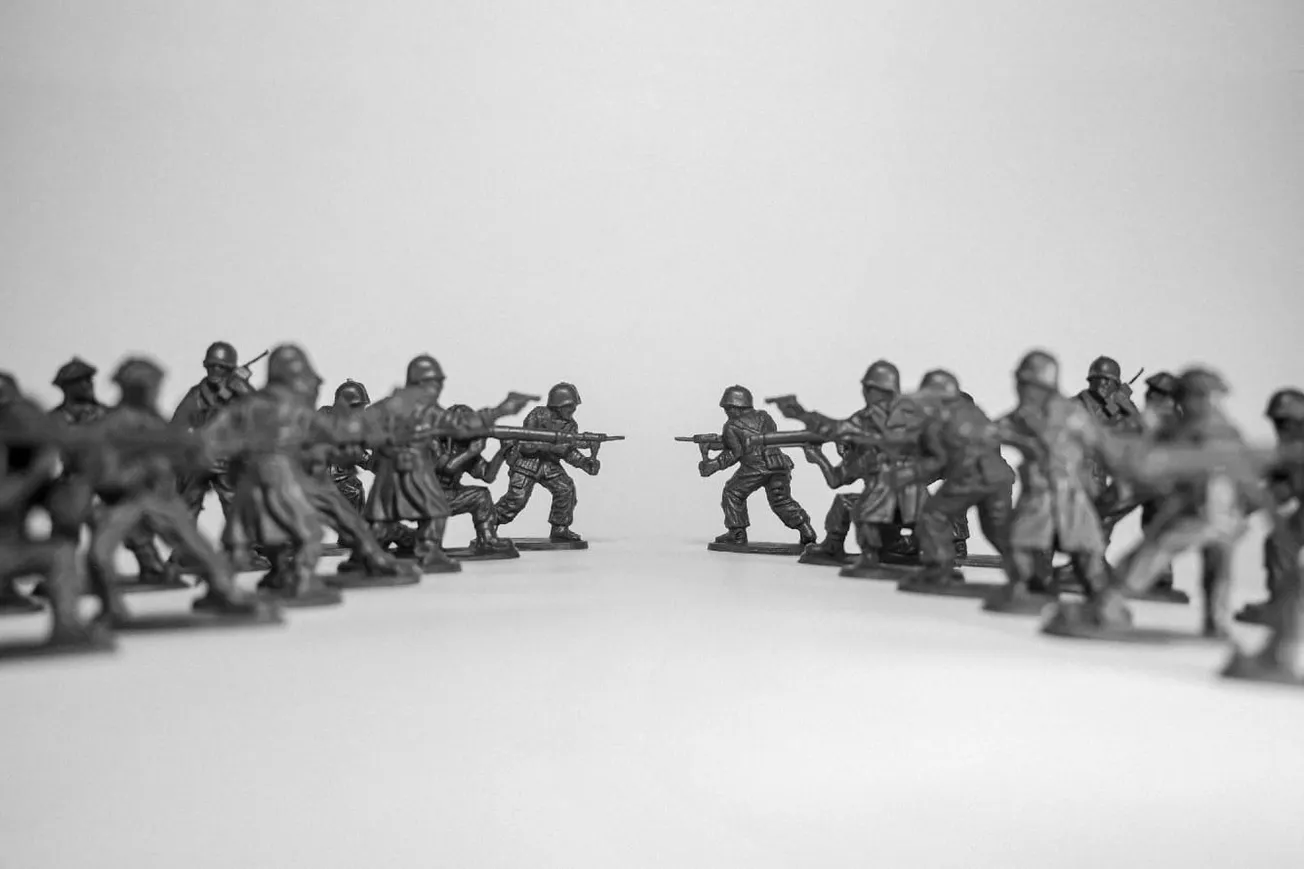
Trump is right to fear a new arms race. As he himself noted, building more warheads will not secure America’s future. Of course, conflicts can always reignite, and arsenals can always be rebuilt. But we cannot bomb our way to peace. We need to chart a course that does not stake humanity’s survival on the knife’s edge of chance. Whoever can do that will have secured his place in history.
There are pragmatic, achievable steps that Trump can take right now to begin building such a legacy. In July, dozens of Nobel laureates and nuclear experts convened in Chicago to identify measures to reduce the risk of nuclear conflict while preserving national security. The resulting declaration, endorsed by 129 Nobel laureates, calls for immediate action to strengthen safeguards, prevent miscalculation, and halt the slide toward a new arms race. On the anniversary of the bombings of Hiroshima and Nagasaki, the declaration was presented to the Pope along with a symbolic gift of pencil leads crafted from graphite bricks used in the world’s first controlled nuclear chain reaction. However, implementing our recommendations requires not just American involvement, but American leadership.
Among our recommendations is the two-person rule. The current decision-making process implies too many scenarios in which the US president would have ten minutes or less to make the most consequential decision in the history of civilization. But such situations are avoidable. We need safeguards to slow down launch decisions and prevent a rash nuclear exchange.
For example, if Trump were to issue an executive order requiring another US government official to be present when the decision is made, he would create a safeguard that his successors would find nearly impossible to undo. And if he started the process, China and Russia might soon follow, because all have an interest in slowing the rush toward nuclear launch.
Another recommendation is to restart formal arms-control talks with Russia and China. With nuclear proliferation rising while arms-control treaties expire, there are more players and fewer rules – a dangerous combination. Trump has already affirmed that he wants to restart nuclear arms-control talks with Russia and China, and that the United States has better uses for the immense sum (close to a trillion dollars over the coming decade) being spent on its nuclear arsenal. But to succeed, he must lead by example and bring both Xi and Putin to the negotiating table. He also must do it fast, because New START, the last treaty governing US and Russia’s nuclear arsenals, expires in February 2026.
A third recommendation is to affirm human oversight of nuclear systems. Since AI makes mistakes, it would be utterly reckless to give the technology anything like a central role in nuclear decision-making. The US has already taken the lead in advocating human control, and China affirmed the same principle last year. Trump can leverage his relationship with Putin to encourage similar commitments from Russia. All nuclear-armed states must guarantee that no critical decision, particularly one involving the use of nuclear weapons, is made without meaningful human involvement.
Finally, all nuclear powers should abandon the fantasy of missile defense. While the idea of a system that can fully protect the US from incoming nuclear missiles has undeniable appeal, such projects have repeatedly proved to be technically infeasible.
Worse, this staggeringly costly pursuit increases the chance of nuclear war. Rather than simply sitting still, our adversaries will respond by increasing the size of their own arsenals, in order to overwhelm the new defenses. In the process, they will decrease their decision-making time to offset the risk of a US first strike. The US would end up spending hundreds of billions of dollars on an ineffectual system that ultimately increases the likelihood of a catastrophe.
Editor’s summary of key recommendations from the authors’ piece:
📌 Steps to a Peacemaker’s Legacy
- Adopt the two-person rule to prevent rash nuclear launch decisions
- Restart arms-control talks with Russia and China before New START expires in 2026
- Guarantee human oversight in all nuclear command systems, never AI alone
- Abandon missile defense fantasies that fuel arms races and escalate tensions
— Editor, TIPP Insights
The US was the first country to unleash the destructive power of the atom, and with that power came a solemn responsibility – one that America has upheld time and again. Today, the US is the strongest military force on Earth and the backbone of the global economy. It leads the world in scientific and technological innovation, with more Nobel prizes than the next five countries combined. Since no one else will, it must lead the way in preventing nuclear war – for the sake of its own citizens, and for everyone else.
As we enter what is starting to look like a second Cold War, we must heed the lessons of the first one. It is through diplomacy, not war, that we assure our long-term future. Trump’s meeting with Putin in Alaska certainly did not resolve the war in Ukraine, but it can be used to open the door to creating the ultimate legacy of peace, one with the potential for a Nobel Peace Prize.
David Gross received the 2004 Nobel Prize in Physics.
Daniel Holz is Professor of Physics and Astrophysics at the University of Chicago and Chair of the Science and Security Board of the Bulletin of the Atomic Scientists.
Juan Manuel Santos, a former president of Colombia, received the 2016 Nobel Peace Prize.
Brian Schmidt received the 2011 Nobel Prize in Physics.
TIPP Takes
Geopolitics, Geoeconomics, And More
1. EU Delays New Sanctions on Russia – Politico
The European Union has indefinitely postponed the adoption of its 19th sanctions package against Russia, Politico reported on Tuesday, citing officials familiar with the decision.

European capitals were informed of the delay on Monday afternoon, though it remains unclear when the package might be finalized or what prompted the holdup. EU foreign policy chief Kaja Kallas had said earlier that the bloc’s latest measures “should be ready” by the end of the month.
2. Russia Conducts War Games In Belarus - UPI
The Russian military put on a show of force Monday in a training exercise intended to prepare for a future war with Western countries.

The exercises included about 7,000 troops in locations in Belarus, a neighboring country aligned with the Kremlin, as well as in Russia's Kaliningrad enclave, which is sandwiched between NATO-members Poland and Lithuania, according to reports from western media invited to witness the event.
3. Threat Of Cheap Russian Drones - TIPP Insights
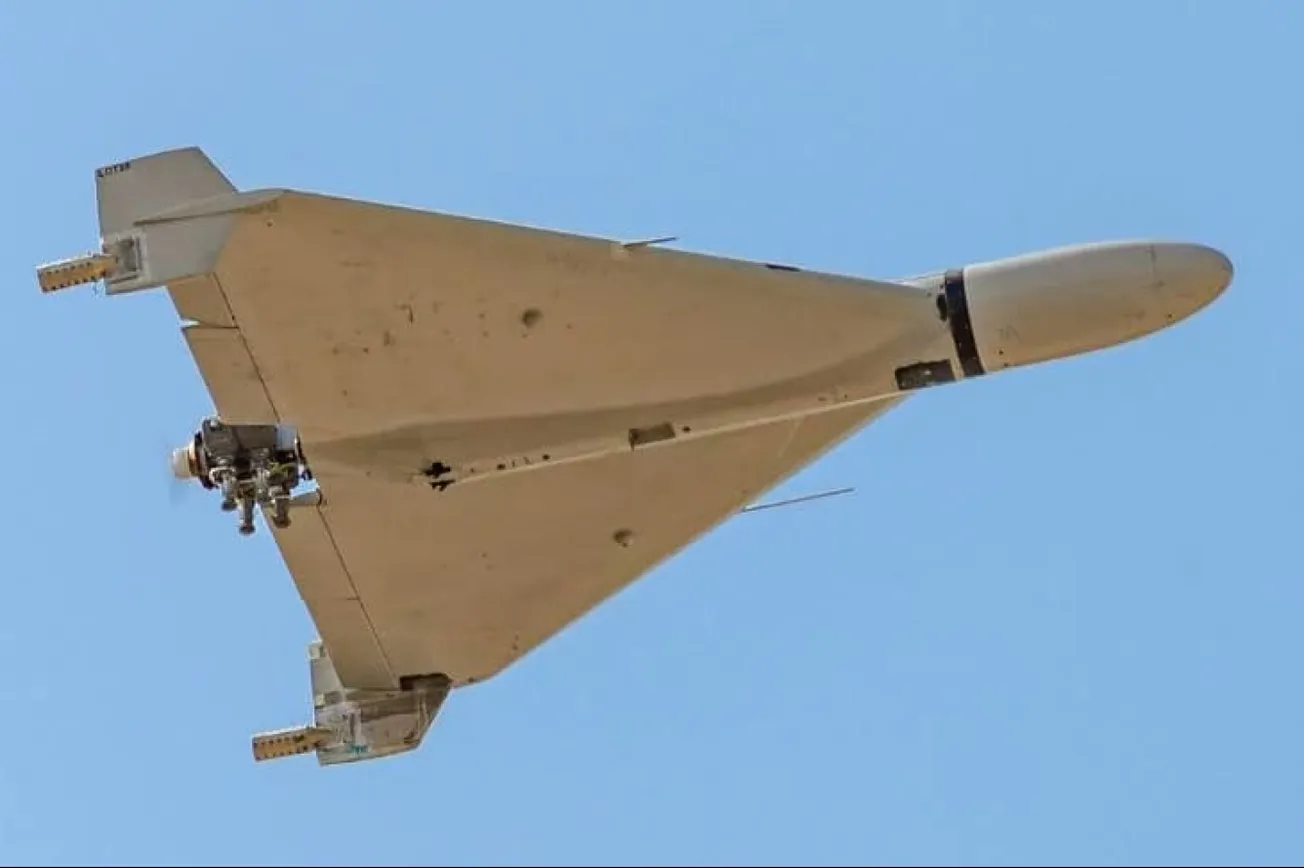
Incursions by cheap Russian drones over NATO territory – shot down by Dutch F-35 fighter jets in Poland using expensive AIM-9X missiles –show the bloc must learn from Ukraine’s drone combat experience.

4. UN Commission Says Israel Is Committing Genocide In Gaza - TIPP Insights
A team of independent experts commissioned by the United Nations’ Human Rights Council has concluded that Israel is committing genocide against Palestinians in Gaza.

5. Israel Launches Ground Offensive On Gaza City - BBC
Israel has launched its long-planned major ground offensive on Gaza City, conducting heavy air strikes overnight as troops pushed into the edges of the city.

Thousands of Palestinians have been forced to flee down a single coastal road to the centre of the Strip, joining hundreds of thousands who have already fled.
Israeli Prime Minister Benjamin Netanyahu said a "powerful operation" had been launched against Hamas's "last major stronghold" amid sharp criticism from the UK and other countries.
6. US Designates Colombia As Country 'Failing To Cooperate In Drug War' - BBC
The United States has officially named Colombia as a country which has "demonstrably failed" to uphold its obligations to control drug trafficking, but stopped short of cutting off the flow of US aid to Colombia.

Each year, the US government formally certifies whether several countries are fully co-operating with US-led counternarcotic efforts, and those which are found to be wanting risk having their US funding cut.
On Monday, the Trump administration said that cocaine production in Colombia had surged to all-time high records under its left-wing president, Gustavo Petro, which the Colombian leader denied.
7. Pope Tells New US Ambassador He Is Praying For Charlie Kirk And His Family - Washington Post
Pope Leo XIV has told the new U.S. ambassador to the Vatican that he was praying for Charlie Kirk, the conservative activist assassinated in Utah last week, as well as his wife and children.

Leo also “expressed concern about political violence and spoke of the need to refrain from rhetoric and exploitation that lead to polarization rather than dialogue,” spokesman Matteo Bruni said in comments reported by Vatican News.
8. Credit Scores Plunge At Fastest Pace Since 2008 Crisis - TIPP Insights
Americans’ credit scores are falling at the fastest pace since the 2008 financial crisis, according to new data from FICO. The national average dropped by two points in 2025, the steepest decline since the Great Recession.

Rising delinquencies on auto loans, credit cards, and personal loans signal mounting financial stress, even as Wall Street continues to post record highs.
9. Survey: Half Of U.S. Healthcare Workers Plan To Quit By 2026 - TIPP Insights
A new survey reveals that America’s healthcare system is facing a deepening workforce crisis. More than half of frontline healthcare workers plan to switch jobs by 2026, highlighting widespread burnout and frustration.

The Harris Poll, commissioned by Strategic Education, surveyed over 1,500 healthcare workers and 300 employers between June and July. It found 55% intend to leave their current jobs, while 84% feel underappreciated. Only 20% believe their employers invest in long-term career growth.
📊 Market Pulse — September 16, 2025
📈 S&P 500 — 6,606.76 ▼ -0.13%
Stocks paused after recent gains as traders held back ahead of Wednesday’s Fed decision, keeping volumes subdued.
📉 10Y Treasury Yield — 4.026% ▼ -0.008 bp
Yields edged down, extending their decline as markets priced in a likely rate cut from the Fed this week.
🛢️ Crude Oil — $64.52 ▲ +1.92%
Oil rose on renewed supply concerns from Ukraine’s strikes on Russian energy assets, outweighing demand worries.
🪙 Bitcoin — $116,926.91 ▲
Bitcoin climbed above $116K, supported by stronger risk sentiment and a softer U.S. dollar.
💵 U.S. Dollar Index — 96.65 ▼ -0.65
The dollar slid to a two-month low, with traders rotating out ahead of the expected policy easing.
💰 Gold — $3,692.92 ▲ +0.37%
Gold hit another record high as the weaker dollar and looming Fed cut fueled safe-haven demand.