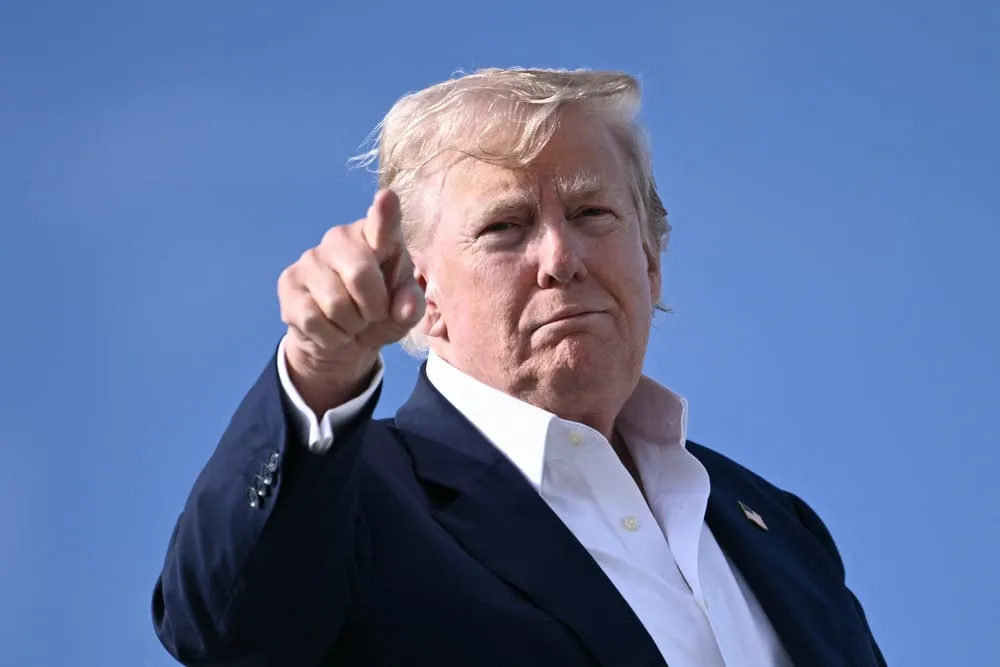
India may flirt for the cameras, but when the music stops, Trump still leads the dance. The Shanghai Cooperation Organization conference, featuring Russia, India, and China, along with leaders of 24 other nations, in Beijing, marked a defining moment in world geopolitics. President Putin made references to a new, vibrant global South, which he promised to establish as a rival international order that does not include the United States and the colonial European powers. The catalyst who put these leaders on the same stage was President Trump. Yet even within this show of unity, cracks are evident: despite Russia’s economic dependence on China, Beijing is not dictating outcomes, and Moscow is not behaving like a junior partner. Political, historical, and geographical factors make their “equal partnership” anything but simple or straightforward.
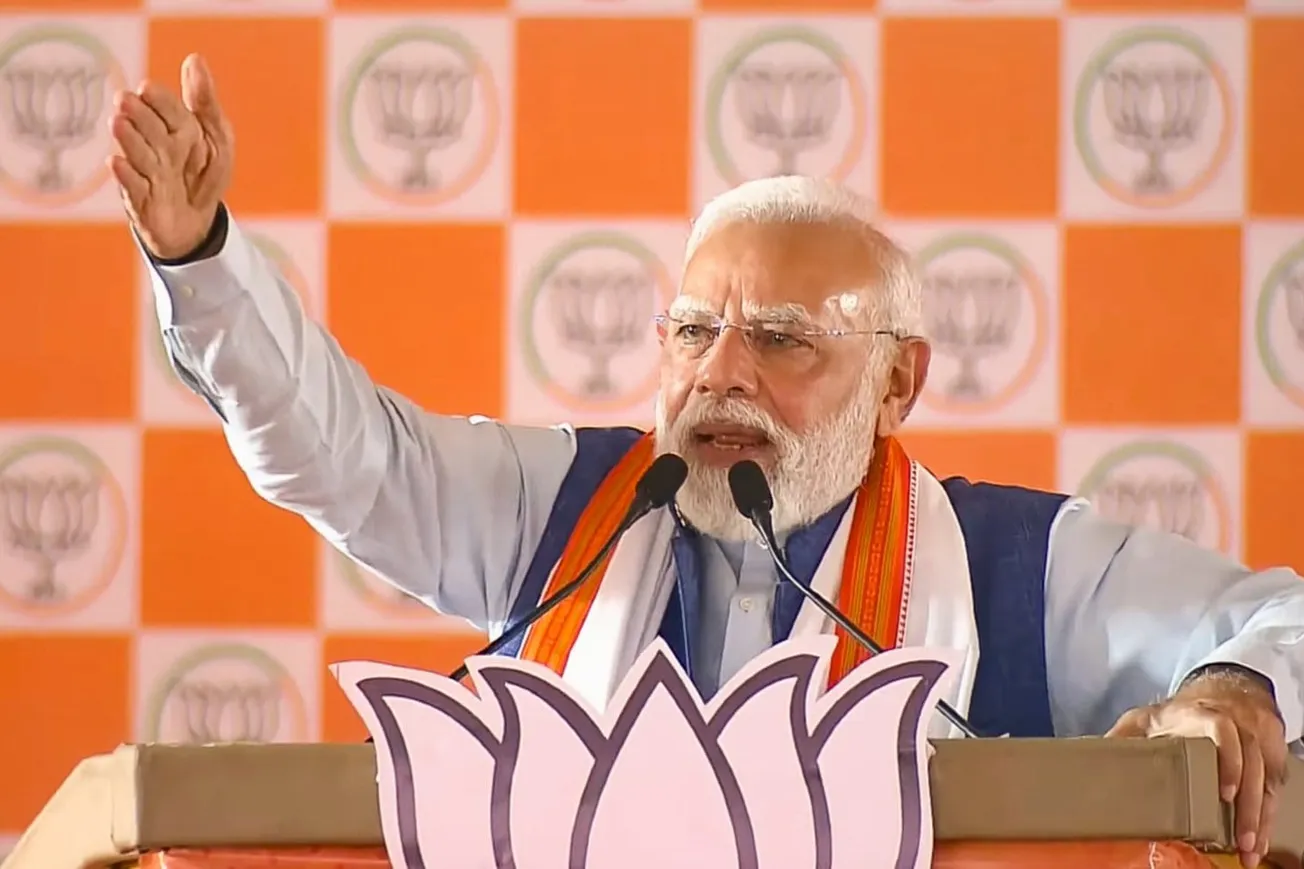
However, the relationship between the BRICS countries is also complicated. Under Prime Minister Modi, India has emerged as a rising power, boasting capabilities in space, defense, oil refining, engineering, and software exports. His supporters view Modi as a once-in-a-lifetime transformative leader, capable of reshaping India's destiny. A strict disciplinarian when it comes to food, fitness, and yoga, Modi has cultivated a meticulous public image by moderating what he says. Modi plays to his supporters in India, just like President Trump does to his supporters in the United States. On the issue of trade, India continues to enjoy a significant surplus in goods such as pharmaceuticals, electronics, and jewelry, with an imbalance so pronounced that the surplus exceeds two to one. In services exports, including software, India has a significantly larger trade surplus, amounting to multiple times the goods advantage. More than two-thirds of American Fortune 500 companies have established global development centers in India, employing over 1.5 million Indian youth. India's software exports to the United States exceed $200 billion.
On the H-1B visa front, Indians dominate to such an extent that nearly 80% of specialty visas are claimed by Indian nationals. Indian students are also the largest group of international students coming into the United States, contributing billions of dollars to America's education exports. However, unlike students from most other countries, most Indian students prefer to remain in the U.S. and immigrate permanently, leading to intense competition with American undergraduates in the labor market. The Indian diaspora also sends billions of dollars back to India through remittances, which totaled more than $135 billion last year, with the majority of the money originating from the United States. Clearly, in bilateral relations, India benefits significantly more than America does.
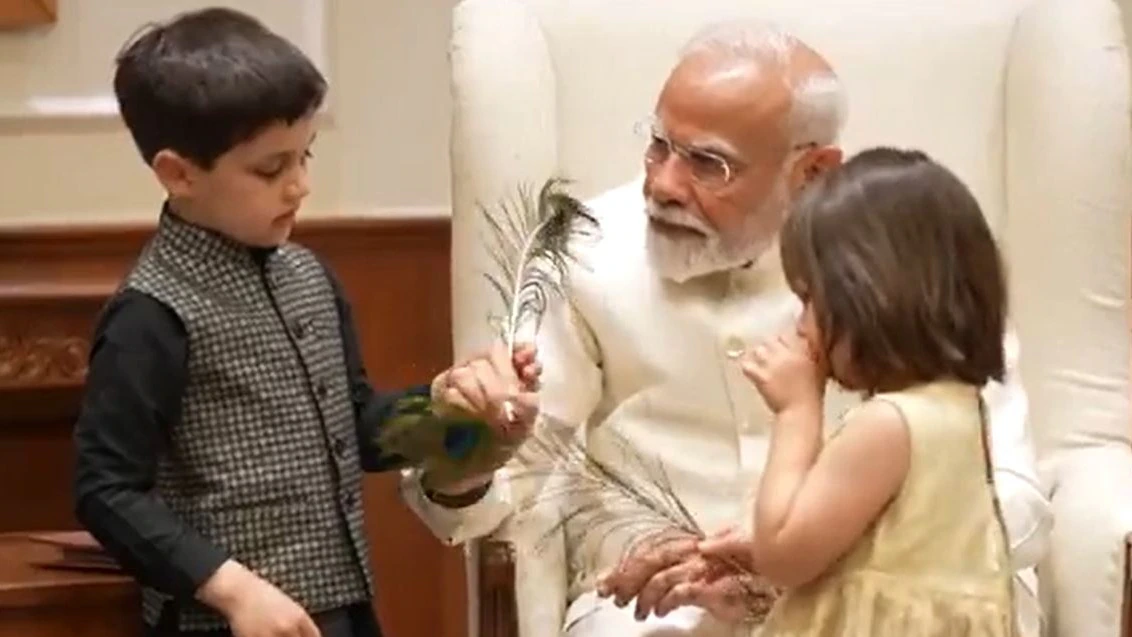
Yet, Prime Minister Modi repeatedly insists that many Indian sectors cannot be open to American exports, including agriculture and products that are made by India's small and medium-scale industries. Suddenly, India is no longer the world power it is, but rather a relatively poor economy that needs trade concessions to support its vast hinterland.
"Oh wait," most pro-India analysts say. India plays a crucial role in maintaining regional security. As a vibrant democracy, India can act as a bulwark against failed states like Pakistan and Afghanistan, help fight the war on terror by joining hands with the West, and be a counterbalance to rising Chinese influence.
Indeed, the security situation is of utmost importance to the United States. America has consistently faced multiple threats in the region, aligning itself with any country that can assist Washington in neutralizing those threats as they arise. The transactional nature of America's foreign policy in the area, however, vanishes when it comes to nuclear conflict. Both India and Pakistan are nuclear powers. Both have access to medium- and long-range missiles that can carry nuclear weapons. Both countries share a long land border and have fought five wars since their founding, with India emerging victorious in each of these conflicts.
Yet, during a military conflict with Pakistan, India expects America to buzz off. In such moments, India treats even its closest partner as no partner at all. The standard excuse is Nehruvian: India will never accept third-party interference in its negotiations with Pakistan.
Had India's stubborn position yielded impressive results on the peace front, that would be one thing. India and Pakistan have made little progress toward bilateral peace since at least 2014, when Prime Minister Modi assumed office. Contrast this with the Israeli-Palestinian situation. Until the horror of October 7, 2023, numerous countries were involved on both sides of the debate, providing diplomatic, political, military, and humanitarian support as incentives to encourage the two parties to negotiate. Even in Iran, the most intractable geopolitical issue of our times, multiple countries have been involved in preventing Tehran from obtaining a nuclear weapon. The P5+1 nations have made concerted efforts to bring Iran into the fold of nations committed to peaceful pursuits.
India's stance on Pakistan once again came to the fore in May. A Pakistani militant group that had infiltrated across the border brutally attacked Indian Hindus in Kashmir on April 22, killing twenty-six civilians. Even as Modi's supporters urged him to hit Pakistan hard, an uneasy calm prevailed for nearly two weeks. Then, the Indian government launched careful, targeted attacks at terror camps, insisting that it was just destroying the terror infrastructure, something that Pakistan had refused to do. Escalation, New Delhi repeated, was not in the cards.
What Pakistan did in response would determine the fate of the conflict. Given that Islamabad has never been a functioning democracy ever since its founding, and the most powerful figure in the country is the head of the Pakistani armed forces, it was entirely plausible that a rogue unit, sympathetic with the terror camps, could deploy a tactical nuclear weapon to hit India. Or, what would happen if one of India's missiles accidentally hit a nuclear facility in Pakistan?
It was this horrible situation that prompted President Trump to engage with both sides to help bring about a ceasefire after four and a half days of escalating conflict. Even India acknowledges that the Americans were involved, but the extent of their involvement is not known. New Delhi insists that India decided to stop firing based on a request from Pakistan’s director of military operations. However, Islamabad insists that it was President Trump who brought about an end to the conflict using offers of trade. This is the position that the Trump administration also holds.
Unless India releases the full text of the ceasefire discussions, the details will remain uncertain. But Trump maintains that his leverage ended the fighting.
At TIPP Insights, we go beyond headlines to decode the power plays shaping America, India, and the world. Don’t settle for the surface story.
👉 Join today for just $99/year — and never miss the sharp analysis behind the spin.
But what has happened in public is that the Indians believe their leader, with commentators constantly disputing Trump’s account. With the Indian government waging a covert public relations war through media proxies, portraying him in a negative light, it appears that India, too, suffers from what Trump’s supporters call Trump Derangement Syndrome. The country’s media have become so reflexively anti-Trump that even his fiercest critics at home seem mild in comparison. When a leader of Prime Minister Modi's stature refuses Trump's invitation to visit Washington on the way back from the Canadian G8 Summit, while continuing to insist that America played no role in the India-Pakistan conflict, it undercuts America’s image of leadership and, by extension, Trump’s. Trump knows that India has a lot more to lose than the United States with the trade impasse. Beating Trump down has never worked for any Trump antagonist since 2015, with the lone exception of former President Biden, who eked out a victory in 2020.
India can twirl with Moscow and Beijing all it wants, but when the lights come on, it knows only Washington holds the keys to the floor. Because the average Indian prefers improved relations with the United States over those with China or Russia. India aspires to ascend and be respected as a true global power. Yet decades of close alliance with Russia have delivered little real progress toward that goal. By contrast, deeper partnership with the United States can open doors: from economic opportunity to global influence, and even India’s rightful claim to a permanent seat on the United Nations Security Council.
The commentariat class may rabble-rouse and cheer Moscow’s cheap oil, but Prime Minister Modi and his ever-eloquent foreign minister, S. Jaishankar, must ruminate on what truly serves India’s best interest. Hindu philosophy, as taught in the Bhagavad Gita through Krishna’s counsel to Arjuna, urges the shedding of ego in favor of righteous duty. Modi, too, must shed his ego and act with clarity. And that clarity points to one truth: India’s future does not lie in trading discounted Russian barrels at the cost of strong, enduring relations with the United States.
📊 Market Mood — Thursday, September 4, 2025
🟢 Futures Steady: U.S. futures edge higher as bond markets calm, with rate-cut hopes reinforced by Fed officials’ dovish remarks.
⚖️ Tariffs at the Supreme Court: Trump appeals a lower court ruling that deemed his emergency tariff powers illegal, betting the high court will back his trade agenda.
📘 Fed Beige Book: Report shows little change in economic activity, but flags inflation concerns, cautious consumer spending, and softening hiring trends.
🟣 Figma Fades: Shares slump over 15% after the design software firm’s first earnings since its blockbuster IPO fall short of lofty investor expectations.
🟡 Gold Cools: After record highs, bullion slips to $3,540/oz on profit-taking and a steadier dollar, though safe-haven demand remains firm.
Market round-up in 5 minutes. We bring you up to speed. Subscribe to TIPP Insights for $99/year.
📅 Key Events Today
🟧 Thursday, September 4
08:15 – ADP Nonfarm Employment Change (Aug)
Private payrolls estimate ahead of official jobs data.
08:30 – Initial Jobless Claims
Gauge of new unemployment filings.
09:45 – S&P Global Services PMI (Aug)
Snapshot of U.S. services sector activity.
10:00 – ISM Non-Manufacturing PMI (Aug)
Comprehensive services sector index.
10:00 – ISM Non-Manufacturing Prices (Aug)
Services sector input costs.
12:00 – Crude Oil Inventories
Weekly change in U.S. crude stockpiles.