By Pegah Banihashemi | Project Syndicate, January 21, 2026
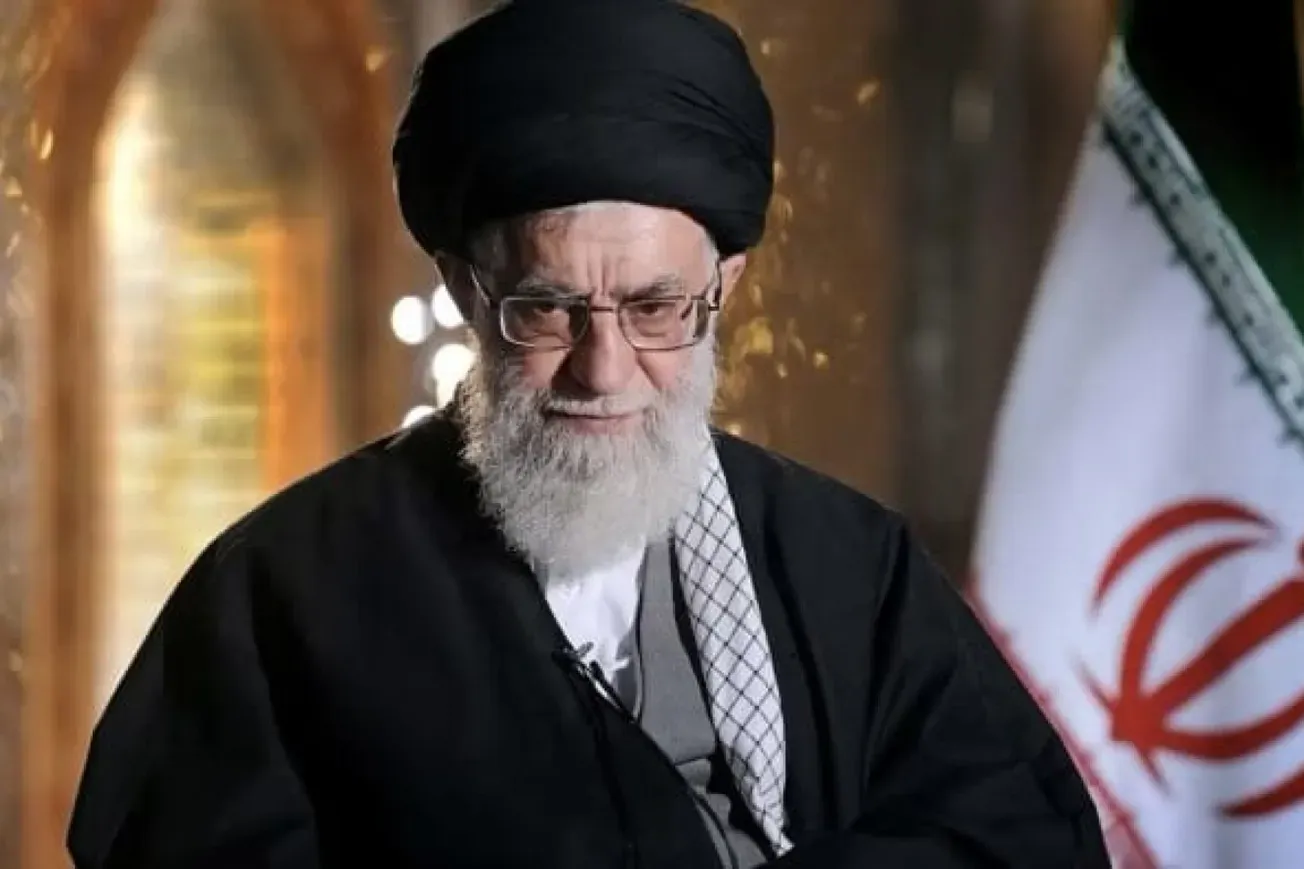
Iran’s supreme leader, Ayatollah Ali Khamenei, has built a system that survives only through repression. Yet now, a man who has never been willing to retreat confronts a dilemma from which there is no clean exit: continued internal war against his own people, or an external war that exposes his regime's fragility.
CHICAGO – Three weeks into Iran’s latest wave of protests, the country has now spent more than ten days cut off from the outside world. Not only has internet access been shut down nationwide, but even basic landline and mobile phone connections are disabled. Nonetheless, the few images that have emerged – transmitted sporadically through Starlink connections – depict what appears to be a widespread military-style crackdown against civilians, with blood-soaked bodies lining the streets and mothers wailing in grief.
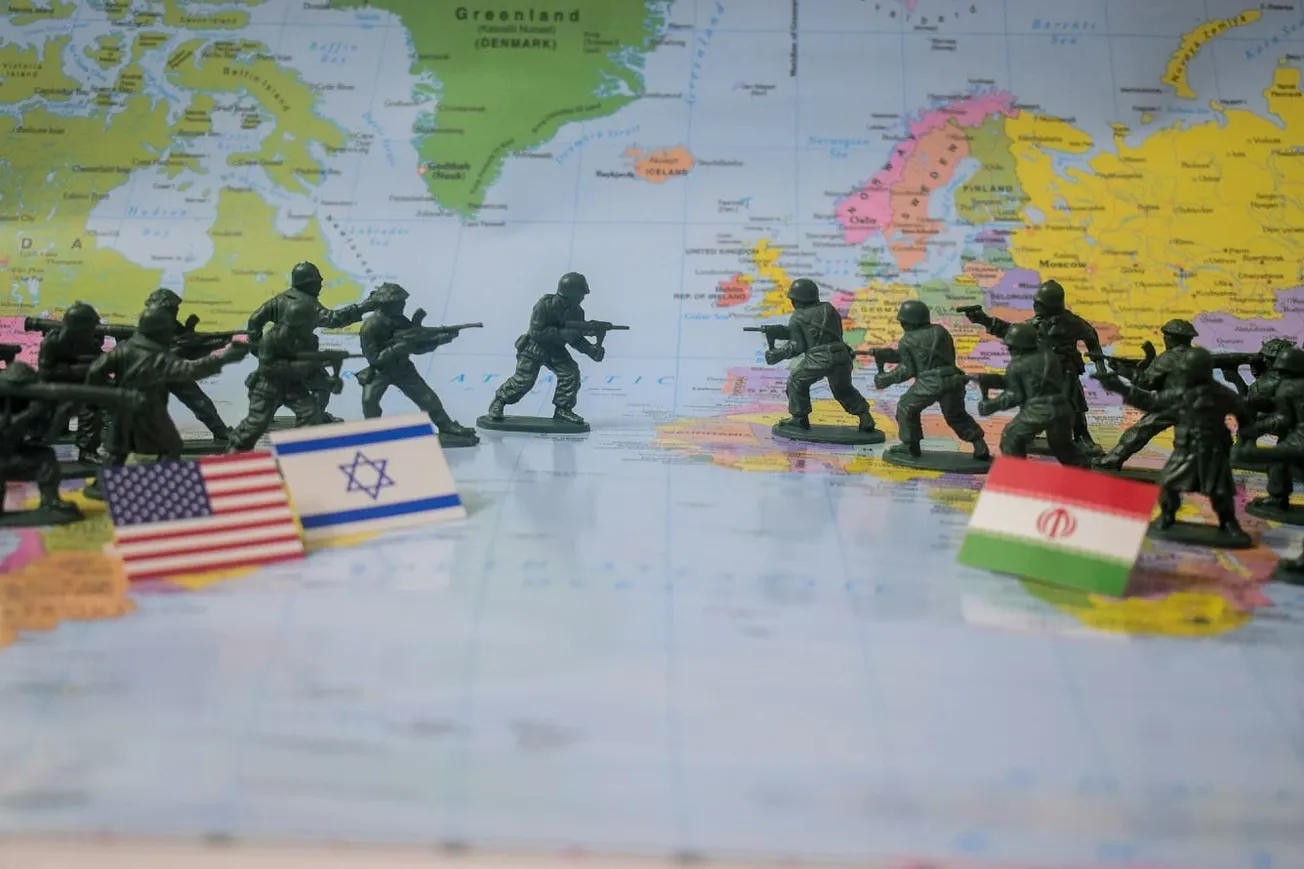
The central question confronting the country is how the supreme leader, Ayatollah Ali Khamenei, and his inner circle will respond, and whether a broader war is becoming unavoidable. In two speeches delivered since the protests began, Khamenei’s determination to preserve the regime seemed resolute. He explicitly accused the United States and Israel of orchestrating the unrest and warned them about the consequences of their actions. At the same time, he dismissed protesters as “rioters” and “naive individuals” who had been deceived by foreign powers.
For Iranians, this rhetoric is painfully familiar. Khamenei has responded similarly during every major protest movement, from the July 1999 student protests to the 2009 Green Movement and the 2022 Woman, Life, Freedom uprising. Although such speeches rarely deter protesters, their core purpose is to reassure the regime’s security forces that the supreme leader remains steadfast.
Under Iran’s constitution, Khamenei is the commander-in-chief of the armed forces, including the Islamic Revolutionary Guard Corps, the regular army, and the Basij (a paramilitary militia). His absolute control over the security apparatus has long been a central pillar of his power. Over decades, he has systematically purged unreliable elements and cultivated an intensely loyal military elite. Even the families of these forces live under strict oversight, often residing in segregated housing complexes designed both for protection and surveillance.
In parallel, Khamenei maintains constitutional control over Iran’s state broadcaster. While a few nominally non-state television channels have emerged in recent years, they operate under heavy censorship. True, social media and digital platforms have eroded traditional media monopolies and made information flows harder to contain: As access to the internet has expanded, protest movements around the world have been transformed. But Iran is an exception: most social media platforms remain blocked, accessible only through VPNs (virtual private networks).
Moreover, the regime has repeatedly resorted to complete internet shutdowns during crises, most notably during the November 2019 protests. This time, the blackout has been longer than ever, with no certainty about when connectivity will be restored. By severing communication at the height of unrest, the regime not only controls the narrative but also prevents protests from gaining momentum through closer coordination. Only a handful of citizens with satellite access have been able to convey the scale and brutality of the crackdown to the outside world.
One of Khamenei’s enduring priorities has been the systematic weakening of independent political and civic forces. Prominent figures are either imprisoned or live under constant surveillance, including electronic ankle monitors. Some, like the prominent human-rights lawyer Nasrin Sotoudeh, have suffered severe health consequences after years of incarceration. Others, such as Nobel Peace Prize laureate Narges Mohammadi, have been rearrested and returned to prison.
What remains is a grieving nation, one that has once again witnessed young people, joined by their parents, take to the streets, only to be killed, wounded, or incarcerated. Lawyers are barred from representing detainees. Prison doctors are reportedly prevented from treating injured protesters, allowing them to die from their wounds. Families seeking to retrieve the bodies of their loved ones are forced to pay for the bullets used to kill them, and then to conduct burials under strict supervision.
This time may be different, though. During last year’s Twelve-Day War with Israel, many Iranians – despite opposing the regime – criticized Israel’s actions and called for an end to the conflict. A powerful surge of patriotism swept the country. Although Israel emphasized that its strikes had targeted only military sites and regime-linked figures, the public did not mobilize against the state. But that fragile sentiment has now been shattered. The unprecedented repression and reported killing of nearly 12,000 people have radically altered public attitudes. Many Iranians have concluded that unarmed resistance alone cannot end the dictatorship, and that external intervention may now be the only way forward.
Ironically, it is the scale of repression that has ensnared Khamenei. Should another war with the US or Israel erupt, Iranians both inside and outside the country now appear far more willing to support it. Many argue that if 12,000 people can be killed by domestic forces, the cost of targeted military strikes may not be higher. The regime’s brutality has not only hardened international public opinion against the regime by highlighting Iran’s human-rights catastrophe but has also shifted Iranian public opinion away from reflexive patriotism.
So, Khamenei is caught in a trap of his own making. Domestically, he has reasserted control through overwhelming force, pulling the system back from the brink of collapse, at least for now. But this strategy has narrowed his options. If a war erupts, the regime will face a society far less inclined to rally behind it, and far more resigned to the costs of external confrontation.
Khamenei has built a system that survives only through repression, yet his bloody crackdowns have stripped the regime of its final source of legitimacy, namely Iranian patriotism. A leader who has never been willing to retreat now confronts a dilemma from which there is no clean exit: continued internal war against his own people, or an external war that exposes the rot and fragility beneath decades of enforced control.
Pegah Banihashemi is a constitutional law scholar at the University of Chicago Law School and a human rights law instructor whose work focuses on power structures and political change in the Middle East.
Copyright Project Syndicate
👉 Quick Reads
I. Trump’s Stranglehold Over Europe’s Gas Supplies
Russia’s invasion of Ukraine and ensuing punishment by sanctions saw much of Europe switch dependency for energy imports away from Russia and towards the U.S. – a now uncomfortable reality.
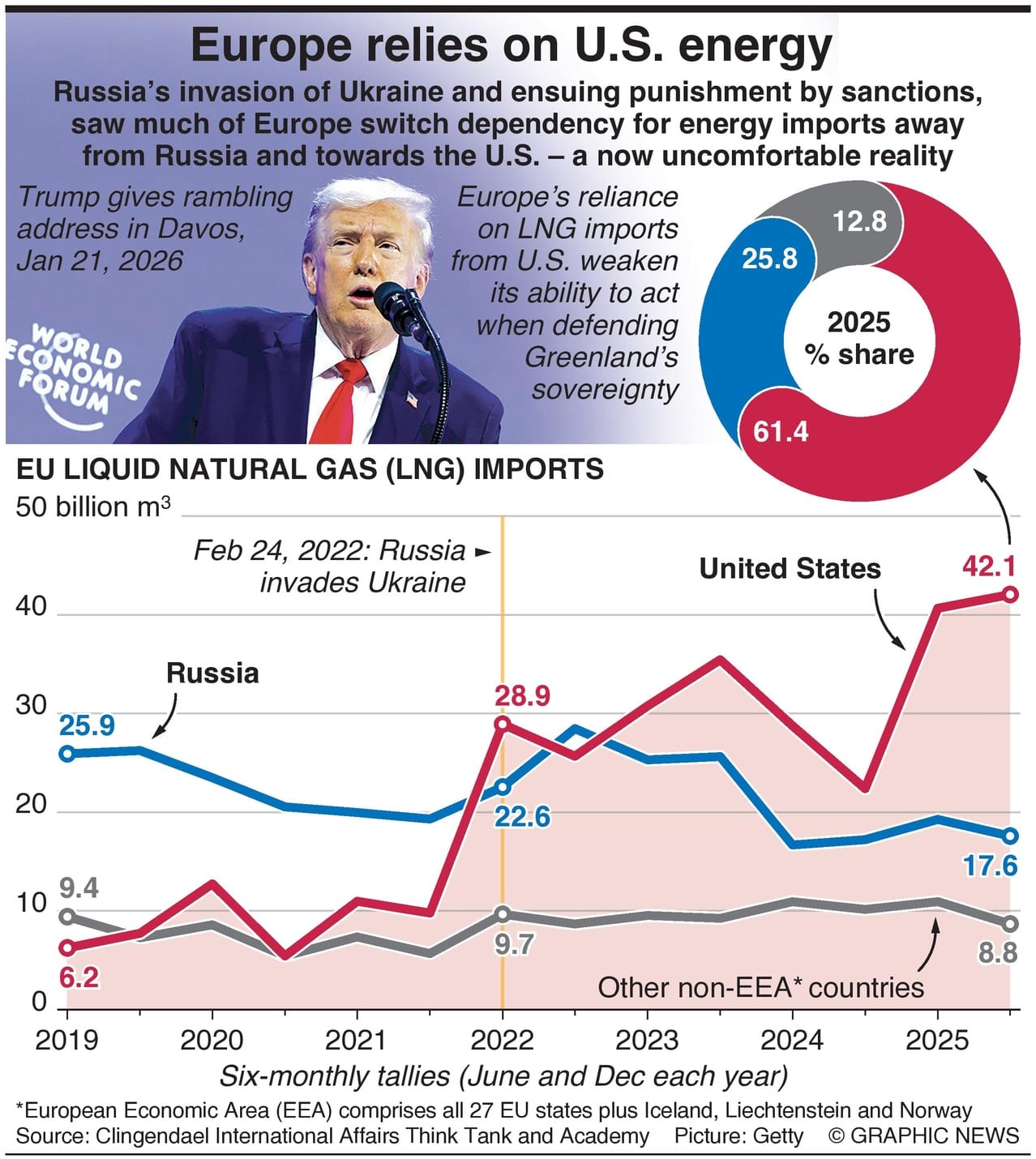
A new report, “Europe’s Selective Blindness on Gas,” posits that this reliance is fraught with danger at a time when Trump has shifted to a more interest-driven, protectionist, and ideologically charged approach.
Data shows that U.S. liquified natural gas (LNG) now accounts for 61% of all European LNG imports.
II. Israel Moves Yellow Line Deeper Into Gaza
Israel has moved the blocks, which are supposed to mark its post-ceasefire line of control, deeper into Gaza in several places, sowing confusion among Palestinians.
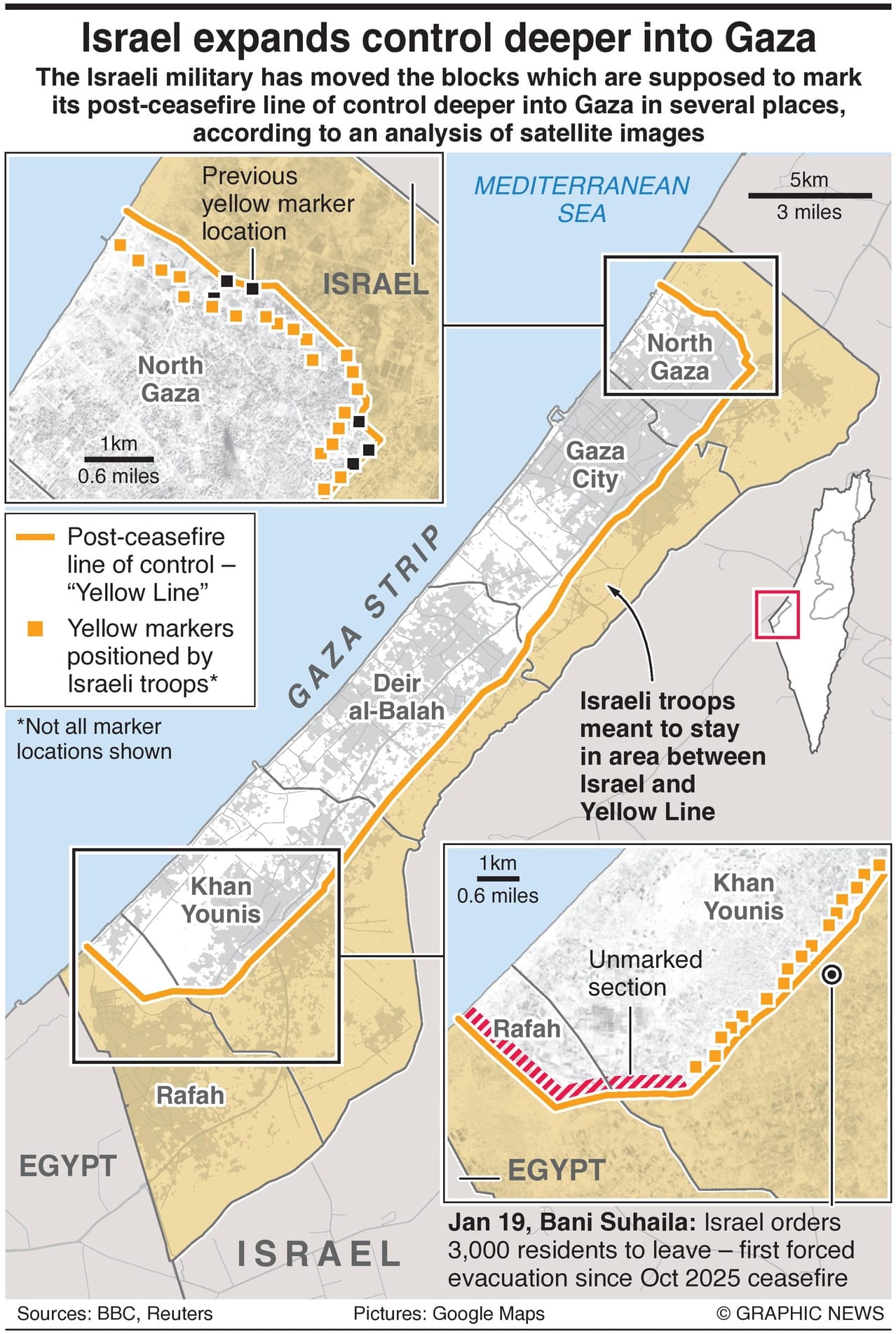
Satellite images reviewed by BBC Verify show that the Israel Defense Forces (IDF) placed blocks, before returning later and moving the positions further into the Gaza Strip.
Under the terms of the U.S.-brokered deal with Hamas, Israel agreed to withdraw troops beyond a line marked in yellow on Israeli military maps, which it has illustrated on the ground with concrete yellow blocks.
Defense Minister Israel Katz warned in October that anyone crossing the Yellow Line would be “met with fire”.
Since these comments were made, there have been a series of deadly incidents around the line, the BBC said.
III. EVs Are Quietly Becoming A Major Driver Of Silver Demand
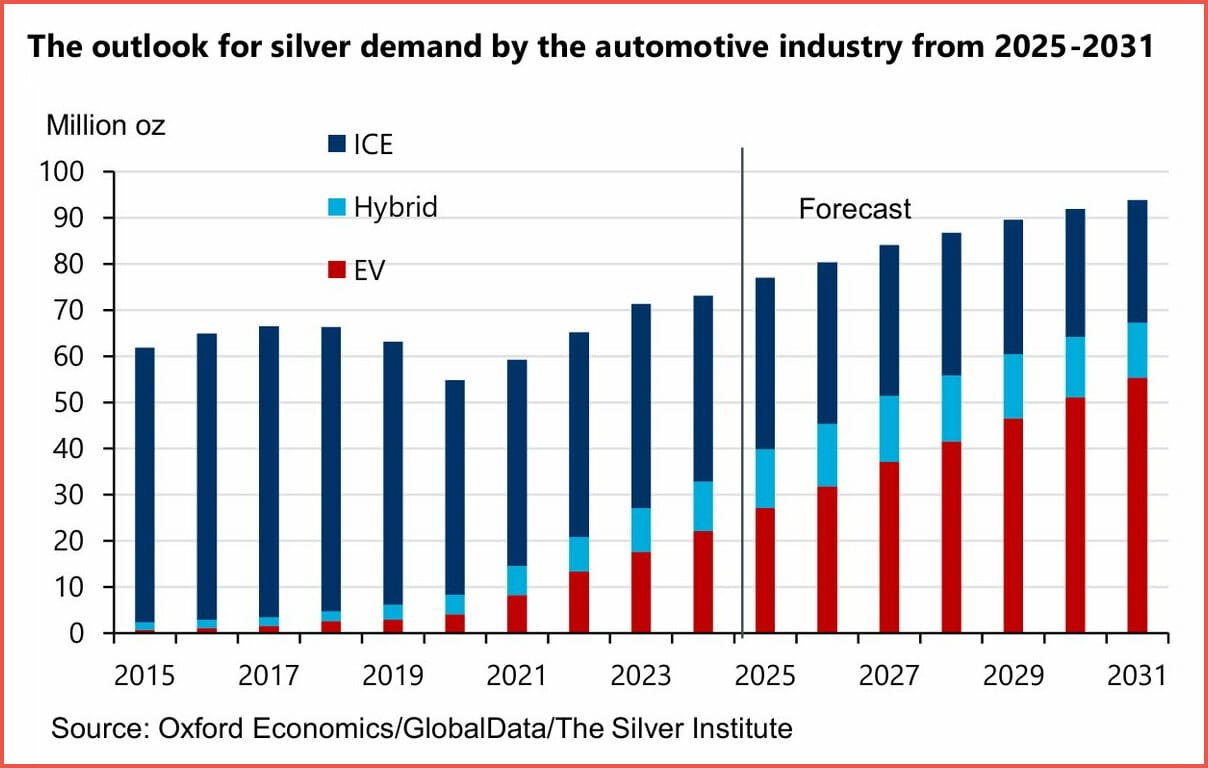
The chart shows that silver demand from autos rises steadily through 2031—not because more cars are sold, but because each car uses more silver. EVs account for most of the growth after 2025, hybrids add additional pressure, and even gas-powered cars keep a baseline level of demand. Bottom line: silver demand keeps climbing even if vehicle sales don’t.
editor-tippinsights@technometrica.com