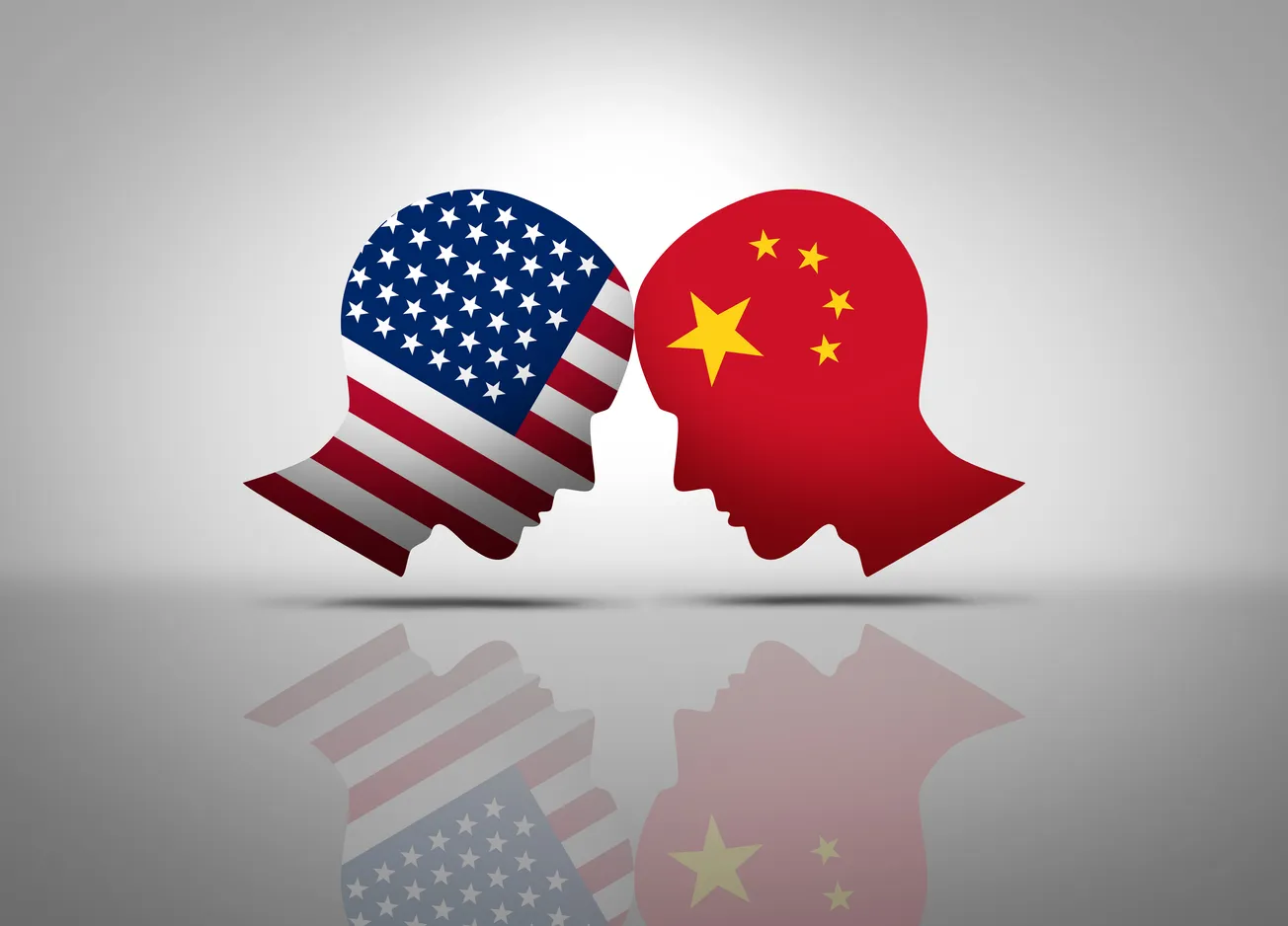

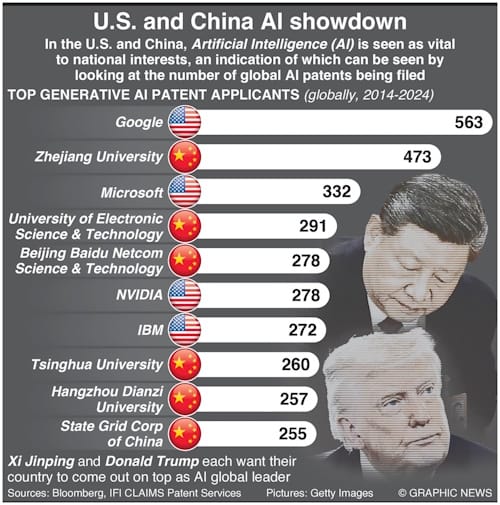
In the U.S. and China, Artificial Intelligence (AI) is seen as vital to national interests, an indication of which can be seen by looking at the number of global AI patents being filed.
In both the United States and China, Artificial Intelligence (AI) is seen as vital to the economy, political landscape and national defence – and as a way of exerting soft power abroad.
To that end, China, faced with a ban on access to advanced U.S. microprocessors, has been forced to adapt and use less computing power to achieve the same goals as its rival.
But perhaps most importantly, China has embraced open-source standards, making its AI models available for free to anybody in the world to use as they see fit – a far cry from America’s hugely expensive enterprises from the likes of OpenAI, that can charge hundreds of dollars a month to access its models.
An indication of the U.S. and China’s leadership and rivalry can be found by looking at the number of patents filed globally over the past 10 years in the field of generative AI – the top 10 applicants of which are all American or Chinese.