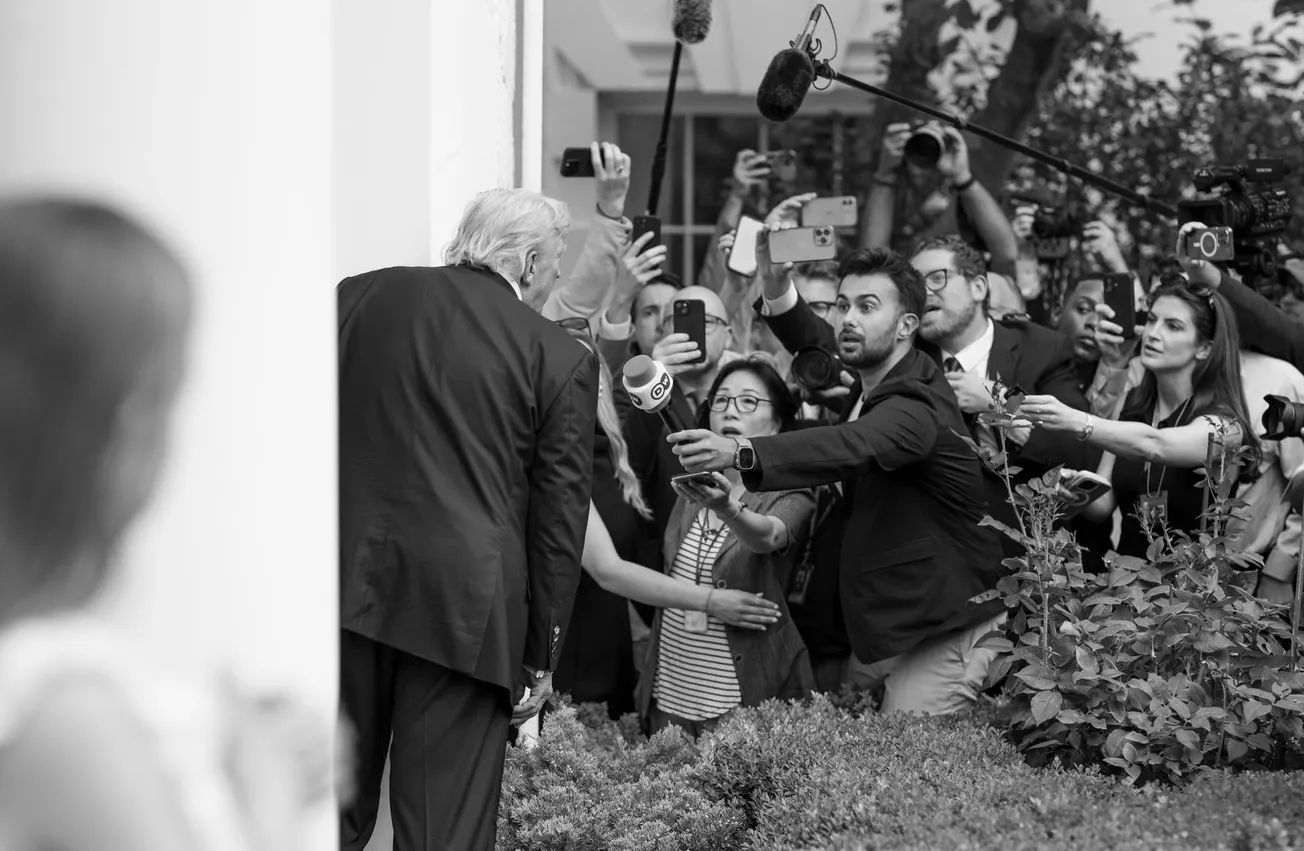
Last year may have been good for most Americans, but not so much for big media groups. Confidence in the media hit a recent low in November, and bounced back only slightly in December, as the final I&I/TIPP Poll of 2025 indicates. Can the media ever regain their lost luster?
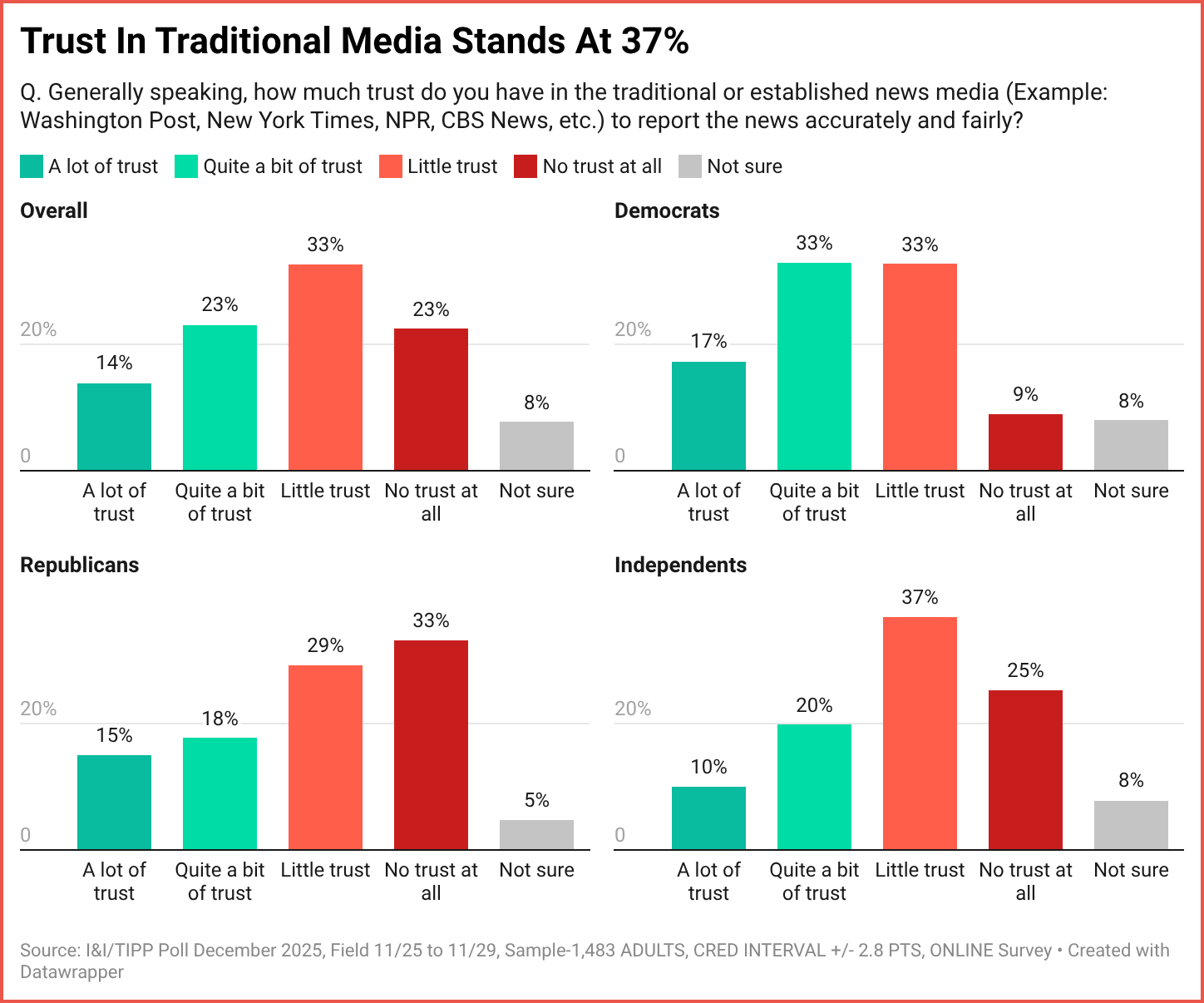
I&I/TIPP asks Americans each month two questions about the media. The first: "Generally speaking, how much trust do you have in the traditional or established news media (Example: Washington Post, New York Times, NPR, CBS News, etc.) to report the news accurately and fairly?"
For December's online national I&I/TIPP Poll, taken from Nov. 25 to Nov. 29 by 1,483 adults, the answer to the above question remains a solid "no."
Among those responding, just 37% said they had either "a lot of trust" (14%) or "quite a lot of trust" (18%) in the traditional media's ability to report fairly and accurately. By contrast, 56% had "little trust" (33%) or "no trust at all" (23%) in the big media, while 8% weren't sure. The poll's margin of error is +/-2.8 percentage points.
As always, there were differences among key demographic groups.
Democrats, for instance, broke 50% trust to traditional media, 42% no trust. That compares to independents (30% trust, 62% no trust) and Republicans (33% trust, 62% no trust). If the big media wants a shoulder to cry on, Dems are it.
Race and gender also showed gaps.
Among white Americans, only 34% had trust, while 62% didn't. But among black Americans and Hispanics, media trust was much higher: 46% trust, versus 43% no trust.
As noted, gender was also a dividing point. Men (45% trust, 51% no trust) were more comfortable with trusting big media than women (30% trust, 59% no trust).
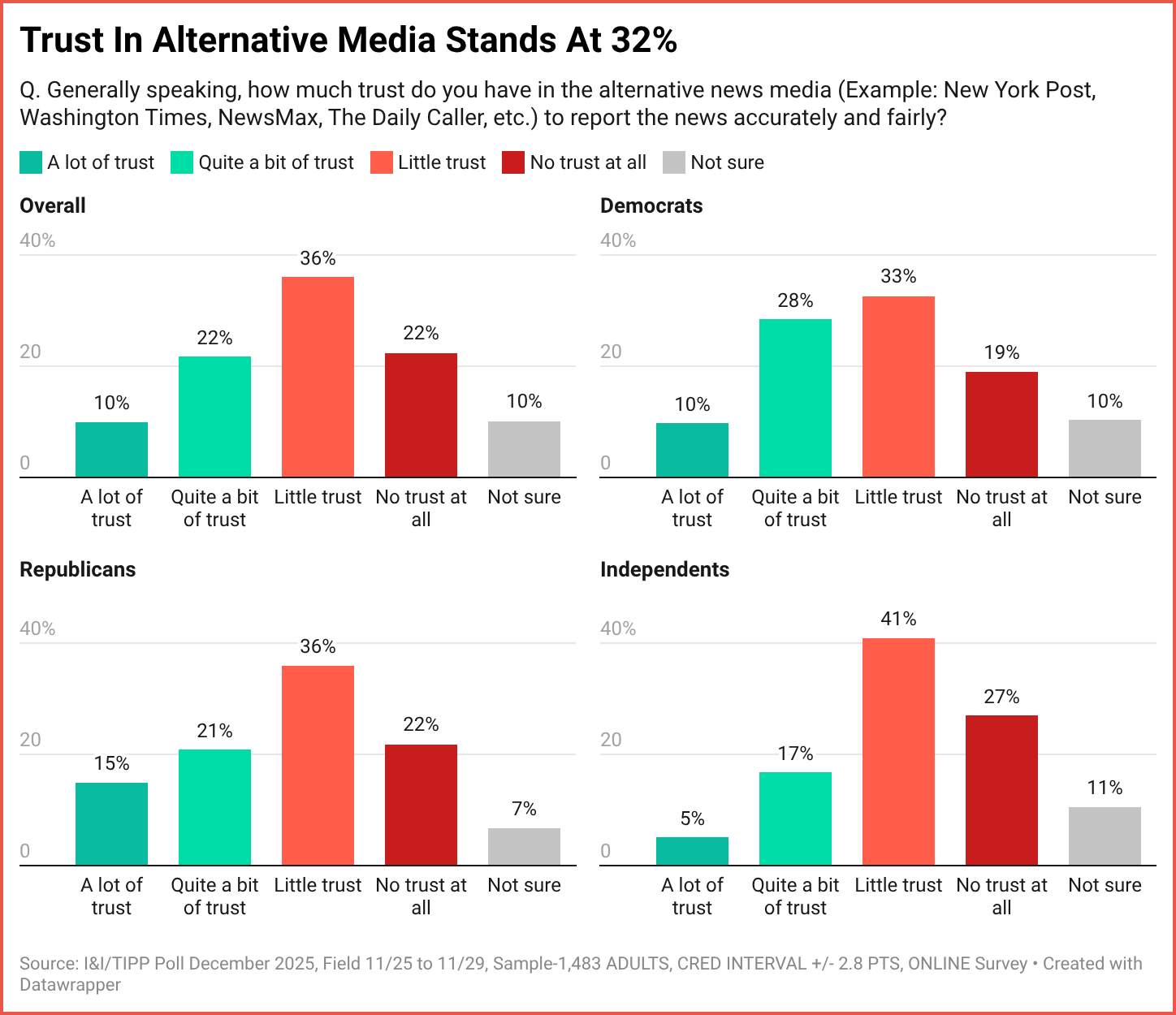
For its second question each month, I&I/TIPP asks: "Generally speaking, how much trust do you have in the alternative news media (Example: New York Post, Washington Times, NewsMax, The Daily Caller, etc.) to report the news accurately and fairly?"
Most months, alternative news sources get lower trust ratings in the I&I/TIPP Poll. This month is no exception.
Overall, 32% said they either trusted the media "a lot" (12%) or "quite a bit" (20%), while 58% said they trusted the media "little" (36%) or not "at all" (22%).
On this question, political affiliation of those who answered the poll seemed to influence how they responded, but not by much.
Among Democrats, 38% said they trusted the alternative news outlets, versus 52% who said they had no trust. Republicans were not very different, with 36% expressing trust, and 58% expressing no trust. Independents were at the bottom: Just 22% said they had trust, versus a big majority of 68% expressing no trust.
While readings edged up for both the traditional media and the alternative media, the long-term picture has improved somewhat this year. In December the Traditional Media Trust Index (42.7) edged above its long-term average of 41.4, while the Alternate Media Trust Index (39.1) also exceeded its long-term average of 37.4.
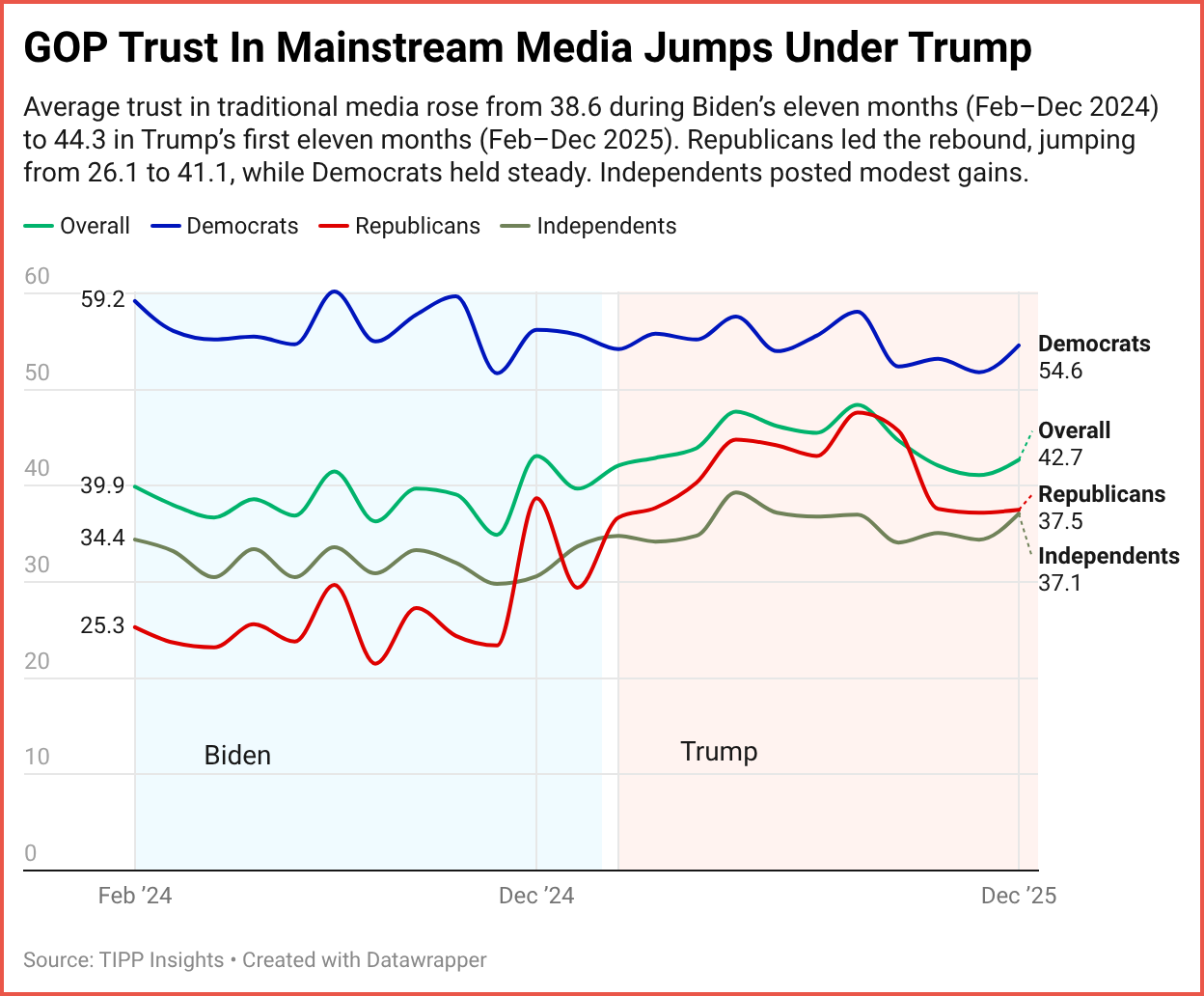
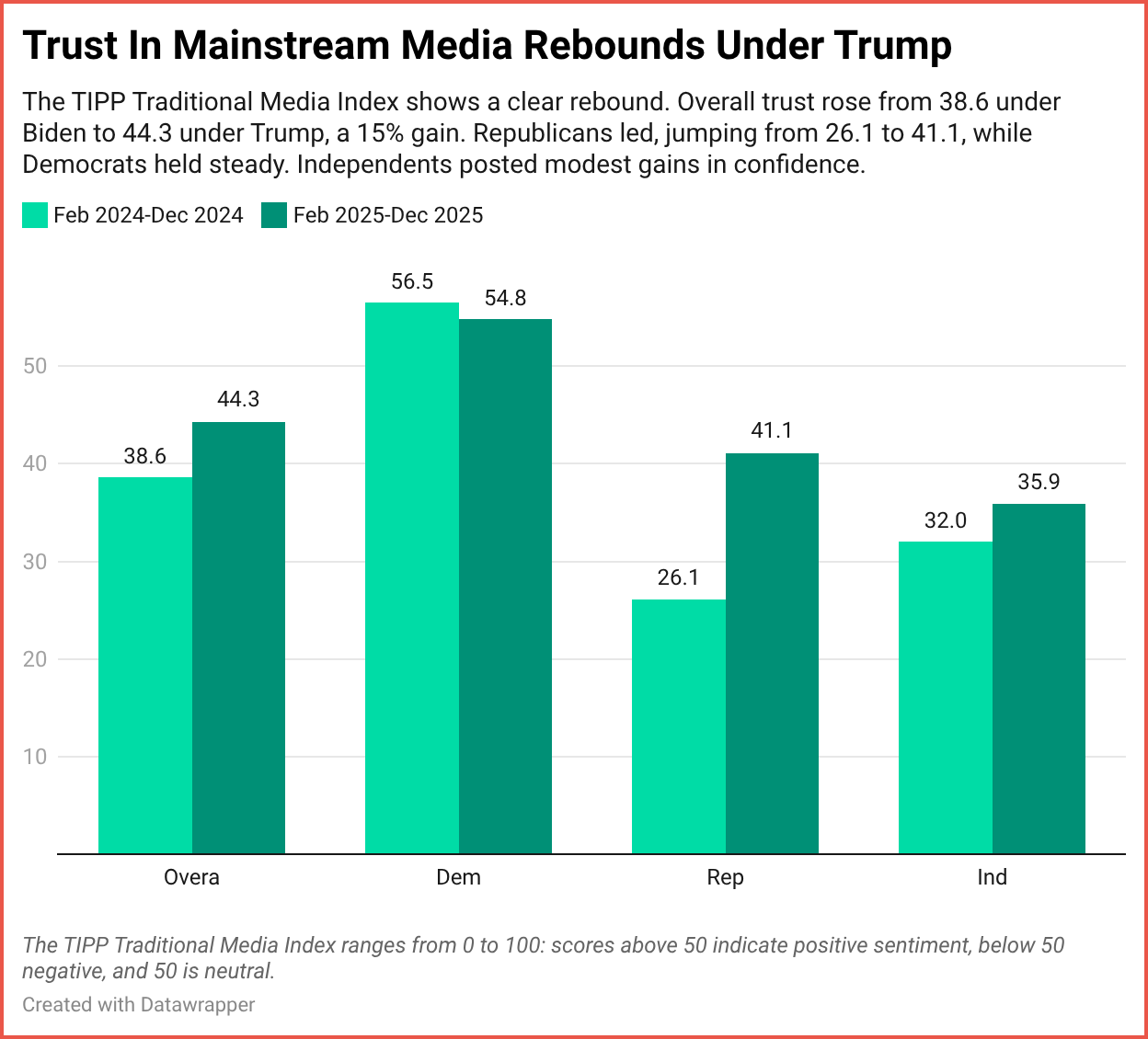
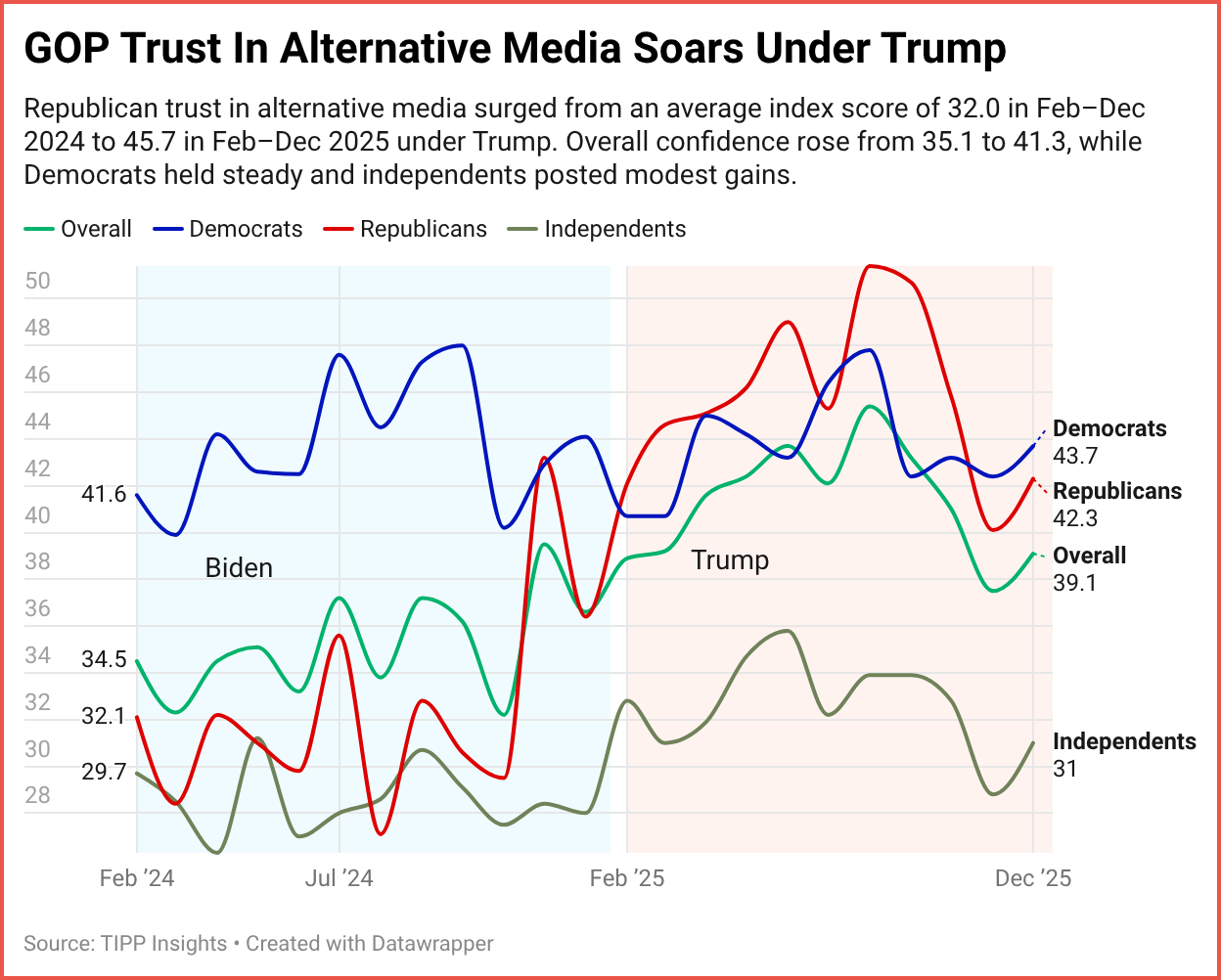
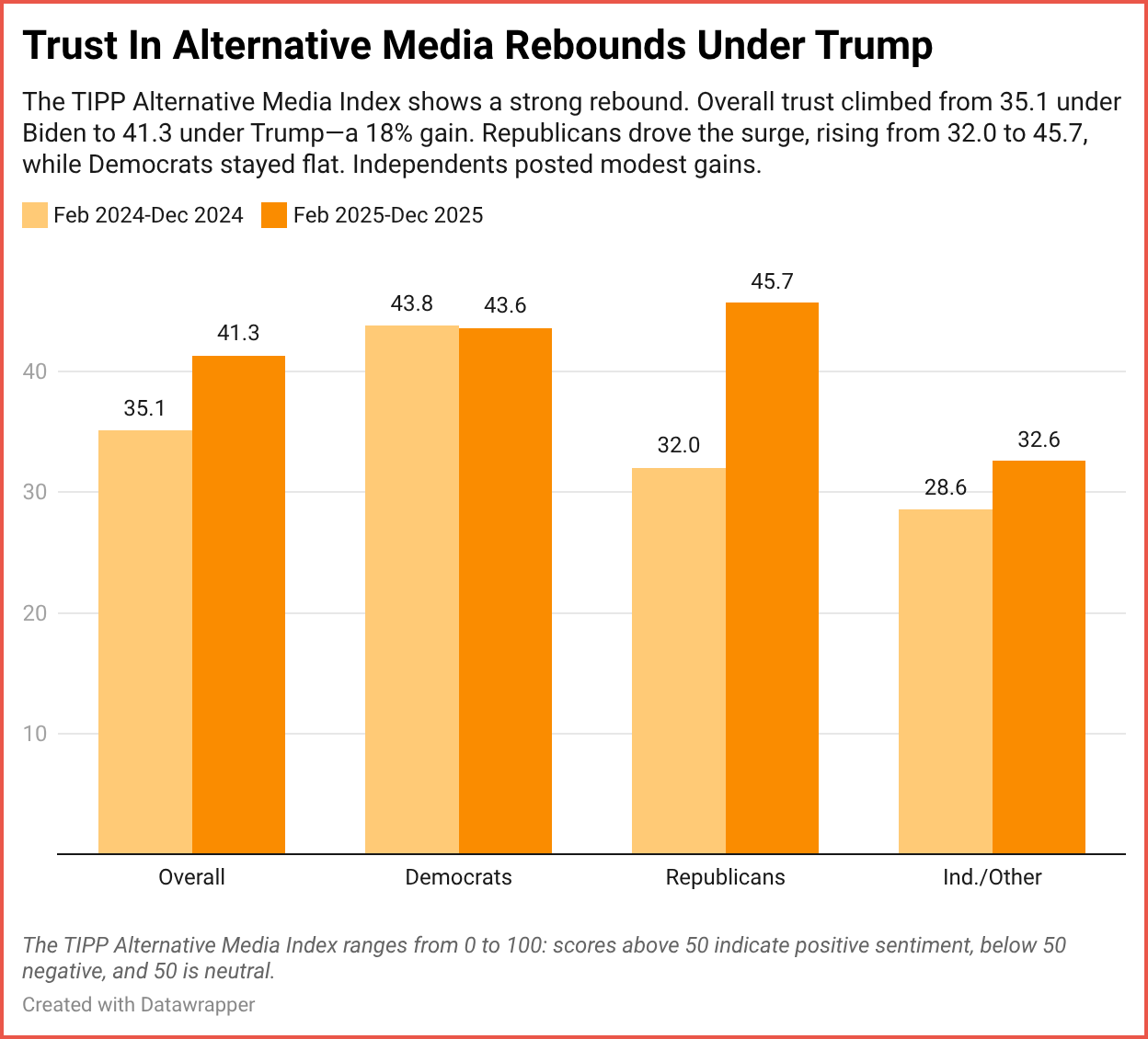
While the numbers continue to show an overall low level of trust in major media, the numbers have in fact improved under President Donald Trump. Measures of trust hit their nadir under President Joe Biden in October of 2023, with the economy still suffering from the COVID lockdown, inflation surging and uncontrolled illegal immigration becoming a concern for many.
Americans in poll after poll express a lack of trust in the media's veracity and what was seen by many as its political bias in reporting.
Can the media turn its poor image around? Or is this a semi-permanent state of affairs, with the media on life support, as average people tune them out and use social media instead?
Bias is real. As a recent study of 1.8 million headlines from 2014 to 2022 by the University of Rochester found: "News stories about domestic politics and social issues are becoming increasingly polarized along ideological lines."
As the I&I/TIPP data clearly indicate, Americans feel U.S. media coverage can't be trusted, not even enough to meet two journalistic requirements: accuracy and fairness.
Worse, the political polarization of the U.S. news-reading public has led to a kind of news tribalism that hinders Americans from muddling through serious questions over how we live and how we are governed. The result: Americans of all political persuasions get their information from a handful of ideologically congenial news sources, but tune out the other side.
A recent Pew Research report found that just 14% of Republicans trust left-leaning MSNBC, while 49% distrust it. For Dems, 45% trust MSNBC, and just 11% distrust it. It's the opposite story for right-leaning Fox: 56% of Republicans trust it, vs. 21% who distrust it. Democrats? 19% trust and 64% distrust Fox News.
"In many cases, supporters of the two main U.S. political parties are relying largely on different sources of news and information," Pew concluded.
It's not healthy for the news business. Major outlets have seen weekday circulation, both online and print, plunge from roughly 60 million in 2000 to below 20 million today, a loss of two-thirds. Increasingly, Americans turn to local, less-politicized sources for their news.
As I&I/TIPP data also show, Americans' trust in the media often depends on who occupies the Oval Office. Since 2024, Biden's final year, there has been a decided uptick in overall media trust, though it's still not in positive territory. Can three more years of Trump change that?
I&I/TIPP publishes timely, unique, and informative data each month on topics of public interest. TIPP’s reputation for polling excellence comes from being the most accurate pollster for the past six presidential elections.
Terry Jones is an editor of Issues & Insights. His four decades of journalism experience include serving as national issues editor, economics editor, and editorial page editor for Investor’s Business Daily.
📊 Market Mood — Monday, January 5, 2026
🟩 Futures Edge Higher Into First Full Week
U.S. futures open mostly firmer as markets test whether 2026 can extend last year’s winning streak.
🟧 Venezuela Shock Hits Oil
Crude slips after the U.S. captures Venezuela’s leader, raising prospects of a smoother transition and higher future supply.
🟦 Dollar Firms on Geopolitical Risk
The greenback catches a bid as investors seek safety following the Venezuela incursion.
🟪 Bitcoin Bounces, Still Cautious
Bitcoin rises with tech stocks, but gains are muted as traders digest geopolitical fallout.
🟫 Auto Sales Up, Clouds Remain
U.S. vehicle sales rose about 2% in 2025, though tariffs and fading EV incentives threaten demand this year.
🗓️ Key Economic Events — Monday, January 5, 2026
🟩 10:00 AM ET — ISM Manufacturing PMI (Dec)
A key read on U.S. factory activity, tracking new orders, output, and employment conditions.
🟧 10:00 AM ET — ISM Manufacturing Prices Paid (Dec)
Measures input-cost pressures for manufacturers, offering insight into inflation trends at the production level.
editor-tippinsights@technometrica.com