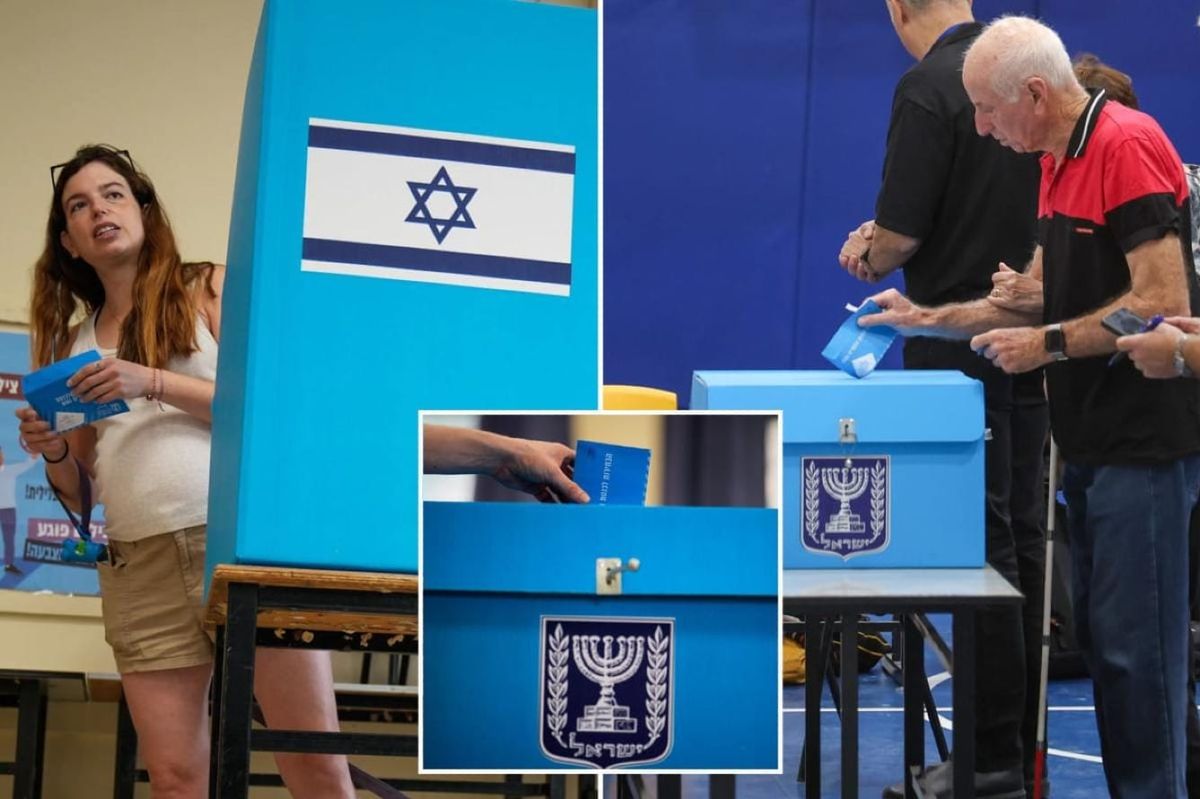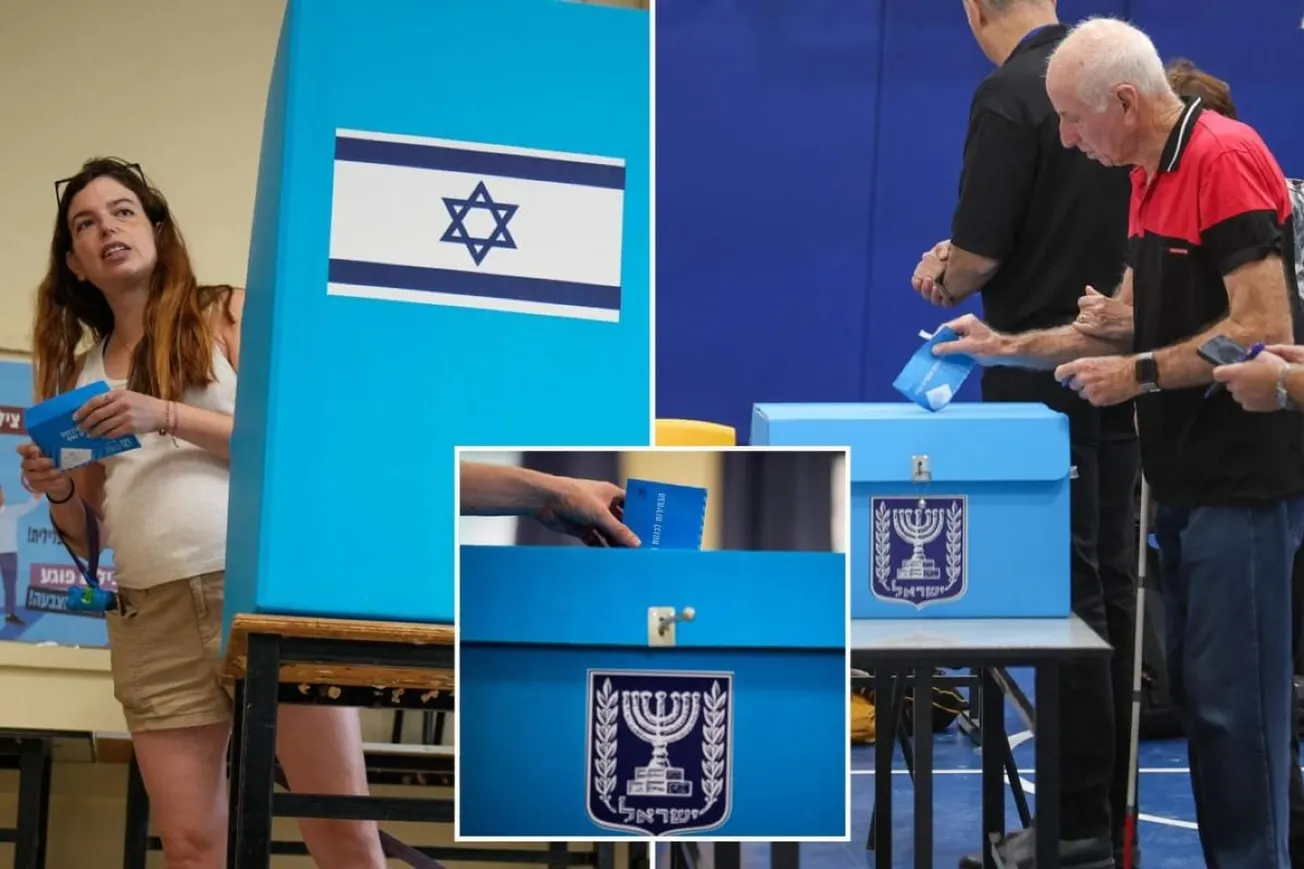

Israeli financial markets fell Wednesday after preliminary election results left Prime Minister Benjamin Netanyahu and challenger Gadi Eisenkot without a clear path to a parliamentary majority.
With more than 66% of ballots counted, Netanyahu’s bloc was projected to secure 56 seats, compared with 48 for Eisenkot’s alliance in the 120-seat Knesset. Arab-led parties were projected to win 16 seats, potentially giving them influence over coalition negotiations. Official results are expected on November 4.
Turnout reached 77.7%, the highest for a Knesset election in 27 years, according to the Central Elections Committee.
Eisenkot declared victory based on preliminary figures, but forming a government may prove difficult. Analysts expect prolonged negotiations, with Netanyahu potentially seeking to remain in power despite his bloc’s shortfall.
Related Tweet:
NETANYAHU BLOC LEADS ISRAEL COUNT, STILL SHORT OF MAJORITY With 72.4% of ballot boxes counted, Israeli Prime Minister Benjamin Netanyahu's right-wing bloc is on track for 54 of the Knesset's 120 seats, seven short of the 61 needed to govern, according to partial results from Israel's Central Elections Committee on Wednesday. Netanyahu claimed a "clear, decisive majority" among Jewish and Zionist voters anyway and told cheering Likud supporters in Jerusalem, "We must establish a strong national right-wing government." Exit polls had shown a near tie Tuesday night. Likud remains the largest party, ahead of former military chief Gadi Eisenkot's Yashar. The opposition bloc led by Eisenkot, which also includes Naftali Bennett and Yair Lapid's B'Yachad, Yair Golan's Democrats and Avigdor Liberman's Yisrael Beytenu, stands at 48. The kingmaker problem is the Arab parties. The Joint List and Ra'am are at a record 18 seats, but Netanyahu ruled out any government that "relies on anti-Zionist Arab parties," and most opposition leaders, except Golan, have also refused to govern with them. A unity deal looks unlikely, too. Eisenkot has refused to serve under Netanyahu, even in a rotation, and other opposition leaders have ruled out joining a Netanyahu government. That leaves a minority government or tough horse-trading as the options, and failing those, another election. Netanyahu also tied the outcome to Iran, saying Israel faces a "historic, once-in-a-lifetime opportunity, together with our partner President Trump, to remove the existential threat from Iran once and for all." Turnout hit 77.7%, up 7.1 points from 2022, in Israel's first national election since the Oct. 7, 2023, Hamas attack. Ballots from soldiers and other absentee voters are counted last. https://t.co/w5F0VeLh78
— AmericaToday.com (@ATNewsChannel) October 28, 2026
Also Read:
 TIPP Staff
 TIPP Staff