Scientists have detected spikes of hydrogen chloride gas near volcanic fissures on Mars, raising new questions about the planet's geological activity.
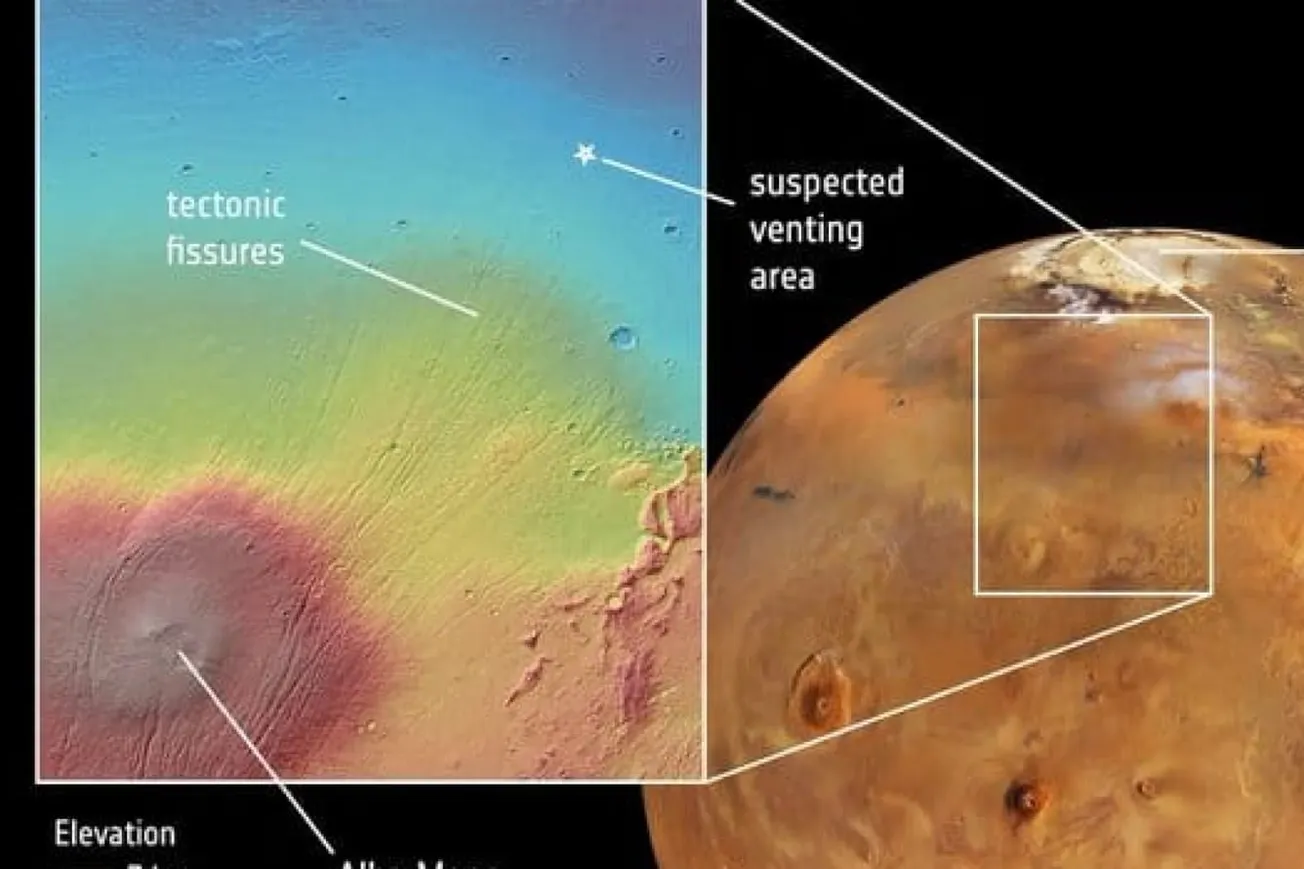
Research published in Science Advances revealed that the European Space Agency's orbiter identified the emissions near the northern slopes of Alba Mons.
Researchers believe underground magma releases gases through fissures that remain blocked by ice during the Martian winter. As temperatures rise in early summer, the ice sublimates, allowing chloride gases to escape.
Although no active eruptions have been observed, Alba Mons could offer important clues about Mars' internal heat and potential habitability.
Related Tweet:
Pungent gas above Martian fissures hints at ongoing volcanism https://t.co/zLBmMEpSs2
— Reuters (@Reuters) November 5, 2026
Also Read:
 TIPP Staff