One of the most tear-jerking stories during America’s longest federal shutdown is the battle over food stamps.
Nearly 42 million benefit each month from this federal program at a cost to taxpayers of about $100 billion annually. Officially called SNAP (Supplemental Nutrition Assistance Program), this long-standing federal initiative helps low-income U.S. households afford food by issuing cash on electronic EBT cards, with eligibility based on income, family size, and allowable deductions.
Given how crucial such cash support can be, a federal judge ordered the Trump administration to resume SNAP benefits without Congressional authorization. An Appeals Court agreed with the district court. For the Left, which just concluded nationwide demonstrations that America does not need a King, it was perfectly acceptable for Trump to act as King.
The Trump administration appealed to the U.S. Supreme Court, arguing that it had no legal authority to act. Justice Ketanji Brown Jackson temporarily agreed with the Trump administration and stayed the lower court rulings. A full ruling is expected shortly.
According to the Center on Budget and Policy Priorities, families qualify for SNAP benefits if they earn below 130 percent of the federal poverty line. For 2026, this amount for a three-person family is $2,888 per month, or about $34,656 per year.
The program is structured in the typical Washington fashion, with the feds paying the states by large-scale transfers of dollars. The individual state treasury offices manage and maintain beneficiary lists and make monthly payments to beneficiaries’ debit cards.
Because states tightly control beneficiary lists, the federal government has no insight into the degree of fraud, waste, and abuse that can be expected in any cash disbursement program. Worse, the federal government has little control over how efficiently the states spend the money, beyond the usual audit authority to review performance after the fact.
According to Keith Hall, a researcher at the Mercatus Center at George Mason University, a May 2025 study found that SNAP has an extremely high payment error rate, including overpayments, underpayments, and fraud. Recovery rates for overpayments are pathetic, averaging about 4%, leaving 96% of erroneous payments unrecovered.
A significant source of fraudulent payments can be traced to illegal immigration. America’s Birthright Citizenship laws allow undocumented immigrants to stay long enough to bear a child in the United States. Armed with a U.S. birth certificate, the undocumented immigrants can obtain a Social Security number for their child.
Undocumented immigrants are not eligible for SNAP benefits, but parents of U.S. citizens can enroll their children in SNAP. In a family of four, with three undocumented migrants and one U.S. citizen, the benefits are cut by 75% to only pay for the U.S. citizen child.
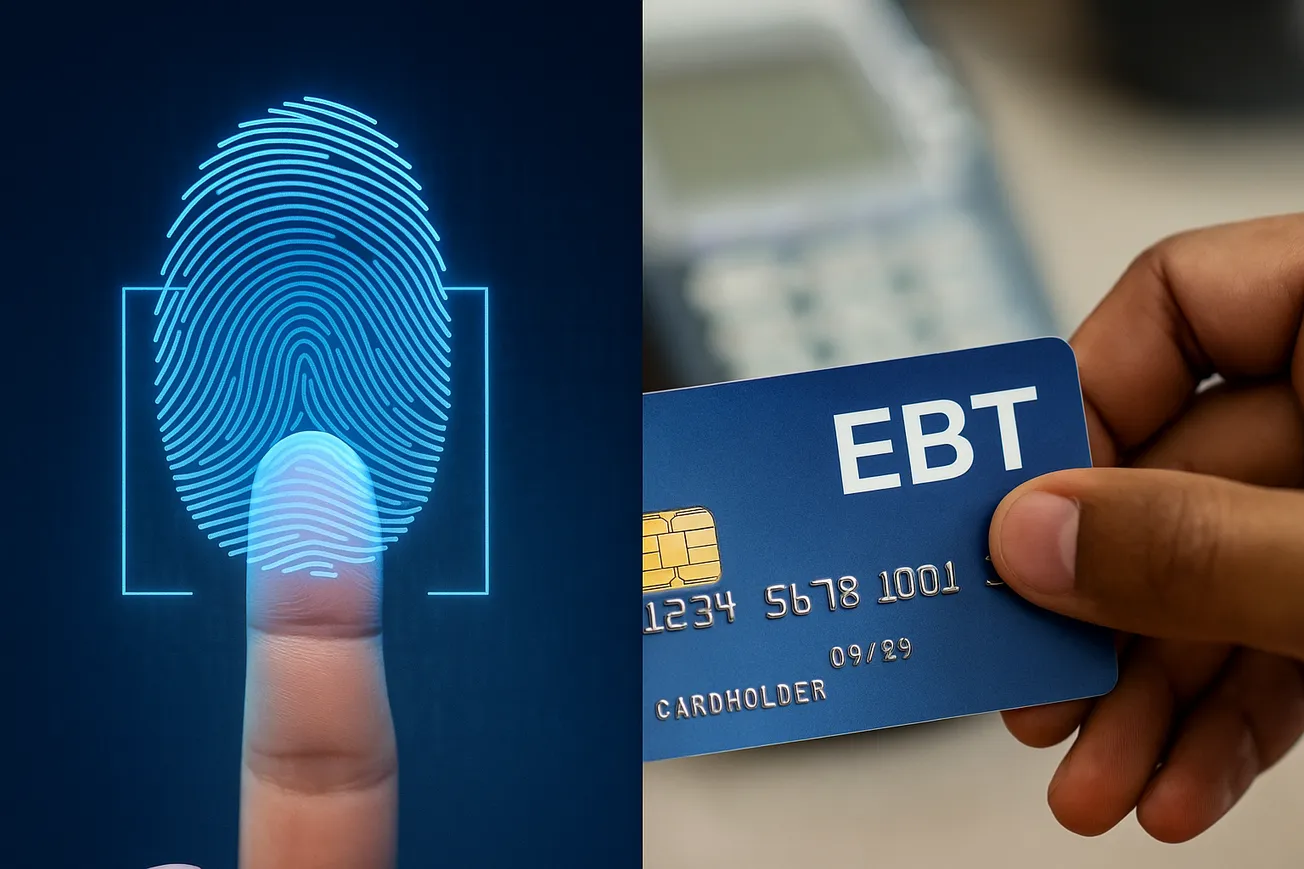
Such a system incentivizes what the government calls Intentional Program Violation (IPV) fraud, specifically, recipient application fraud or eligibility misrepresentation (e.g., falsifying residency or identity to obtain multiple allotments). America does not employ mandatory biometric identification (e.g., fingerprint, facial recognition, or iris scan tied to the EBT card or application) for its SNAP beneficiaries.
Consider four types of IPVs that can arise from a lack of biometric matches.
First, households can create ghost members using fake Social Security Numbers and stolen IDs available on the Dark Web. Or households can file applications for deceased/relocated people.
Second, households can lie about the composition of their families. Adding more family members, such as a non-resident adult or child, means more benefits.
Third, a household can be receiving benefits in one state, move to another state, apply for benefits there, become qualified, and not cancel registration in the first state. State databases don’t talk to each other, and although some information sharing does exist, this kind of IPV can go on for years before detection.
Fourth, the current use of traditional debit cards promotes the use of stolen or sold EBT cards.
Each of these fraudulent ways can be stopped 100% by using biometric identification at all phases of the benefit cycle.
If every listed person must appear in person (or via secure app) for biometric enrollment, fraud can drop significantly. No biometric matches result in instant denial. Dead or absent people can’t undergo fingerprint or iris scanning. Biometric EBT cards (e.g., fingerprint at the point of sale) prevent buyers from using stolen/sold cards. Trafficking shifts to cash-under-the-table, but benefit redemption fraud drops to near zero.
Liberals may counter by saying that these examples of fraud are overblown and don’t occur in practice. However, no one knows the extent of fraud because states haven’t built integrated systems to track and end fraud. It is not the state’s dollars that are being distributed, so states have little incentive to prevent fraud.
India, with the world’s largest population and a massive welfare bureaucracy, provides clues about the promise of using biometric identification to detect fraud and abuse. The country has successfully deployed a complex biometric identification system called Aadhaar.
The 12-digit biometric ID requires citizens to enroll using fingerprints, iris scans, and demographic information. A government agency, UIDAI, stores data centrally, authenticates identity via biometric/PIN match at service points (banks, PDS food subsidy shops), and enables real-time verification to cut fraud and ghost accounts.
In one of its annual reports just before 2020, UIDAI said that Aadhaar biometric systems had identified nearly 2.3–3.6 billion de-duplications across all government welfare schemes over seven years. Separately, the Ministry of Consumer Affairs, Food & Public Distribution, the closest agency to the U.S. Department of Agriculture, reported that 23.9 million bogus ration (PDS) cards were deleted in 2019 alone.
India says that its Aadhaar-linked PDS has cut ghost beneficiaries by ~50 million (30%) after the introduction of mandatory biometrics. India has shown that biometrics can excel at catching and practically eliminating fraud.
To be sure, there have been privacy concerns. Aadhaar’s centralized biometric database risks mass surveillance, data breaches (1.4 billion records were leaked in 2025), and profiling. However, these breaches are not significantly different from the hacks we read about every day.
In 2025, Qantas reported that hackers accessed the Salesforce-hosted customer service platform, exposing names, emails, phone numbers, addresses, dates of birth, genders, frequent flyer numbers, status tiers, and points balances for millions of Australian airline customers. The breach stemmed from unauthorized third-party access and was disclosed in October.
In February, Episource said that a cyberattack allowed unauthorized access to systems, exfiltrating sensitive health data of over 5.4 million individuals, including personal identifiers and medical information. Around the same time, PowerSchool EdTech said attackers stole student records from its education software databases, affecting millions globally.
America should follow India’s lead and implement SNAP EBT cards with biometric authentication, with adequate safeguards to prevent harm to vulnerable users. The money saved from fraud can either be returned to the Treasury, or Congress could pass a law to redirect it to increase beneficiary payments to eligible households.
The world’s most advanced country can do better.
Rajkamal Rao has been a TIPP Insights columnist and member of the Editorial Board for over four years. He also publishes on Substack, with all of his work available for free. Readers may subscribe to get new articles sent straight to their inbox.
TIPP Curated
Handpicked articles from TIPP Insights & beyond
1. America Fought A Civil War So Trump Could Enforce Federal Law—Victor Davis Hanson, The Daily Signal
2. Does The Democrats’ Chaos Strategy Work?—Victor Davis Hanson, The Daily Signal
3. Bad News For Republicans, Warnings For Both Parties—Michael Barone, The Daily Signal
4. Where Is The Outrage Over Ethnic Cleansing Of Christians?—David Harsanyi, The Daily Signal
5. The Age Of Brazen Madness—And The Collapse Of Fear—Armstrong Williams, The Daily Signal
6. Don’t Call Mamdani A Commie Or Jihadi—Tim Graham, The Daily Signal
7. Kyrgyzstan’s Forgotten Colour Revolution—Kit Klarenberg, Ron Paul Institute for Peace and Prosperity
8. Onward Christian Soldiers—Eric Margolis, Ron Paul Institute for Peace and Prosperity
9. Crumbling Consensus On Climate? Americans Vote 'No Confidence' In Latest U.N. Talks: I&I/TIPP Poll—Terry Jones, TIPP Insights
10. Sec. Duffy Warns That More Traffic Controllers Are Not Coming To Work As ‘Democrats Refuse To Pay Them’—Lorenzo Prieto, The Daily Signal
11. Trump Announces $2,000 Stimulus ‘Dividend’ Funded By Tariff Revenues, Excluding High-Income Earners—Olivia Pero, The Daily Signal
12. The Faith Of Resurgent NFL Quarterback Baker Mayfield—Tom Griffin, The Daily Signal
13. Virginia Governor Vows A Smooth Transition Of Power—Virginia Grace McKinnon, The Daily Signal
14. Major Republican Enters New York Governor Race—George Caldwell, The Daily Signal
15. Former Press Secretary Karine Jean-Pierre Left The Democrat Party To Become An Independent. Cue The Sound Of One Hand Clapping.—Debra Saunders, The Daily Signal
16. How Virginia GOP Can Rebuild After Dramatic Off-Year Election Losses—Elizabeth Troutman Mitchell, The Daily Signal
17. Elizabeth Warren’s Forked Tongue: Leftism For Thee, But Not For Me—Paul Sperry, The Daily Signal
18. ABOUT-FACE: 6 Key Youngkin Policies Spanberger Will Likely Reverse In Virginia—Tyler O'Neil, The Daily Signal
19. A Vast, Divergent Land—Erick Erickson, The Daily Signal
20. California Republicans In Hot Water Thanks To Newsom Redistricting Effort—Jacob Adams, The Daily Signal
21. Trump’s Economic ‘Miracle’ Depends On His Foreign Policy Reset—Jarrett Stepman, The Daily Signal
22. Just How Anti-Israel Is The Professor Teaching Course On Gaza, Gender, And ‘Genocide’ At Princeton?—Tyler O'Neil, The Daily Signal
23. Stablecoins: The US Dollar’s Unexpected Lifeline—Rowan Parchi, Mises Wire
24. Obama Judge Who Greenlit Secret Subpoenas Targeting GOP Hit With Ethics Complaint—Katelynn Richardson, Daily Caller News Foundation
25. America’s ‘Ceausescu Moment’—Daniel McAdams, Ron Paul Institute for Peace and Prosperity
26. The Campaign To Censor Social Media Across The West—Mike Gonzalez, The Daily Signal
27. Hobbes’s Accidental Case Against The State—Joshua Mawhorter, Mises Wire
28. Gunning For Kagan—David Gordon, Mises Wire
29. Seizures By Feds Of Little-Known Drug Spike—Virginia Allen, The Daily Signal
30. Lessons From Mises On Resolving The History Wars—Wanjiru Njoya, Mises Wire
31. ‘Hot Girls’ For Socialism: The Voters Who Backed Mamdani In NYC—Virginia Allen, The Daily Signal
32. Court Delivers Win In Ohio For Free Speech Rights On Pronouns—Rebecca Downs, The Daily Signal
33. What Jonathan Karl’s Behind-The-Scenes Reporting Reveals About Trump—Rob Bluey, The Daily Signal
34. Transgender Activists Use Far-Left Smear Factory To Cancel Doctor Education Courses That Raise Doubts About ‘Gender-Affirming Care’—Tyler O'Neil, The Daily Signal
35. Moving At A High Speed Toward An Economic Abyss—George Ford Smith, Mises Wire
36. Sen. Ed Markey Blocks Bill That Would Ensure Lawmakers Don’t Cash Paychecks During Shutdown—Adam Pack, Daily Caller News Foundation
37. Hope And Principles After Defeat: Virginia Students Stand For Freedom—Joe Thomas, The Daily Signal
From our News Editor at TIPP Insights
38. Ukrainian War Memorial Channel Removed From YouTube Amid Outcry
39. Trump Meets Syrian President After U.S. Lifts Terrorist Designation
40. U.S. Military Strikes 'Drug Boats' In Pacific, Killing Six
41. Beijing Slams Japan’s PM For “Blatant Interference” Over Taiwan Remarks
42. Trump Targets BBC With Legal Threat Over Edited Footage
43. Deadly Blast Near Red Fort Sparks Panic In India’s Capital
44. Senate Advances Bipartisan Deal To End Historic Government Shutdown
46. House Democrats: Ghislaine Maxwell Gets ‘Concierge Treatment,’ Plans To Ask Trump For Pardon
47. Shutdown Impact: What Travelers Are Doing To Cope As Canceled Flights Mount Nationwide
48. Trump Orders Air Traffic Controllers Back To Work Amid Shutdown
49. Brutal Cold Grips Nation Before Midweek Rebound
50. Trump-Era Supreme Court Leaves Same-Sex Marriage Rights Unchanged
51. Visa And Mastercard Agree To Lower Fees For U.S. Retailers
52. How Google Is Quietly Regaining The Lead In Artificial Intelligence
📊 Market Mood — Tuesday, November 11, 2025 (Pre-Market)
🟩 Futures Steady As Shutdown Nears End
U.S. stock futures were little changed after Monday’s rebound, as optimism grew that Congress would pass the bill to end the 41-day federal shutdown — the longest in U.S. history. The Dow inched up 0.1%, S&P 500 -0.2%, Nasdaq -0.3% in futures trade.
🟨 Optimism Builds On Reopening Hopes
Wall Street’s rally continued on expectations that federal operations would soon resume. Analysts said the resolution could unlock a long-delayed year-end rally, though the shutdown likely shaved growth from Q4 GDP.
🟩 UBS Eyes 2026 Earnings Lift
UBS forecast the S&P 500 to reach 7,500 next year, driven by 14% earnings growth—half from tech. The bank expects a “soft patch” near-term as tariffs filter through prices before growth accelerates in 2026.
🟨 CoreWeave Slips On Partner Delay
AI-cloud provider CoreWeave fell pre-market after reporting a delay at a third-party data-center partner, overshadowing otherwise strong results tied to deals with OpenAI and Meta.
🟩 Crude Edges Higher
Oil prices rose modestly as shutdown relief lifted sentiment. Brent traded at $64.27 a barrel and WTI at $60.31, though traders remained cautious about 2026 oversupply.
Market round-up in 5 minutes. We bring you up to speed. Subscribe to TIPP Insights for $99/year.
📅 Key Events Today
🟧 Tuesday, November 11
No major economic releases scheduled.
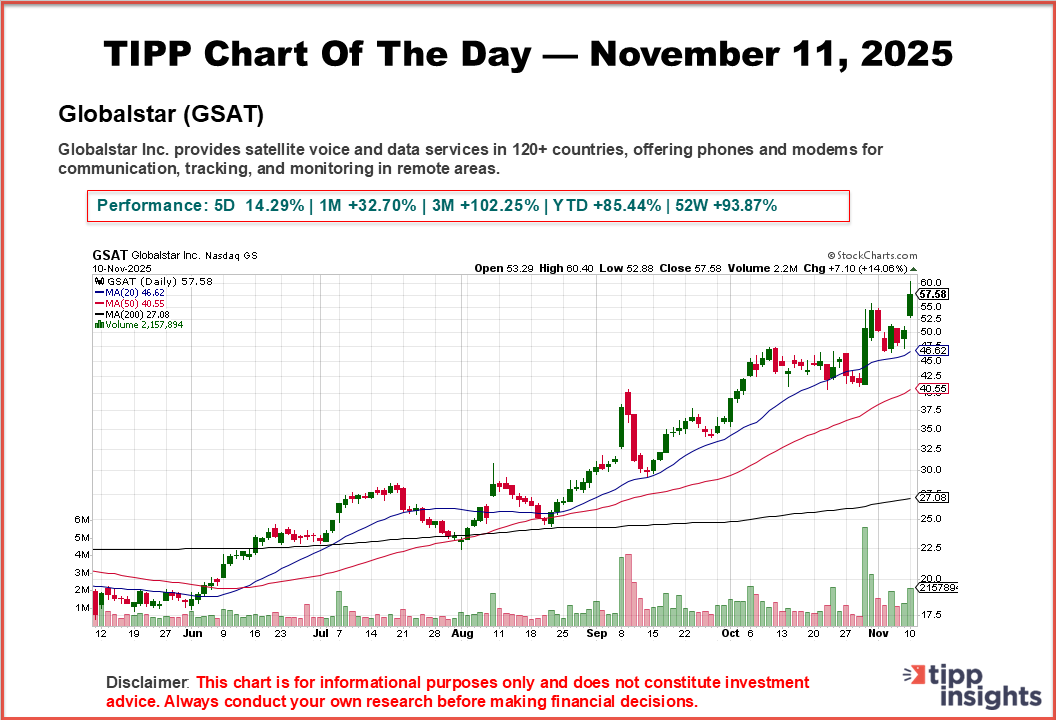
Access our Featured Stocks and TIPP Top-20 archives — exclusive to paid subscribers. Subscribe now → $99/year.