
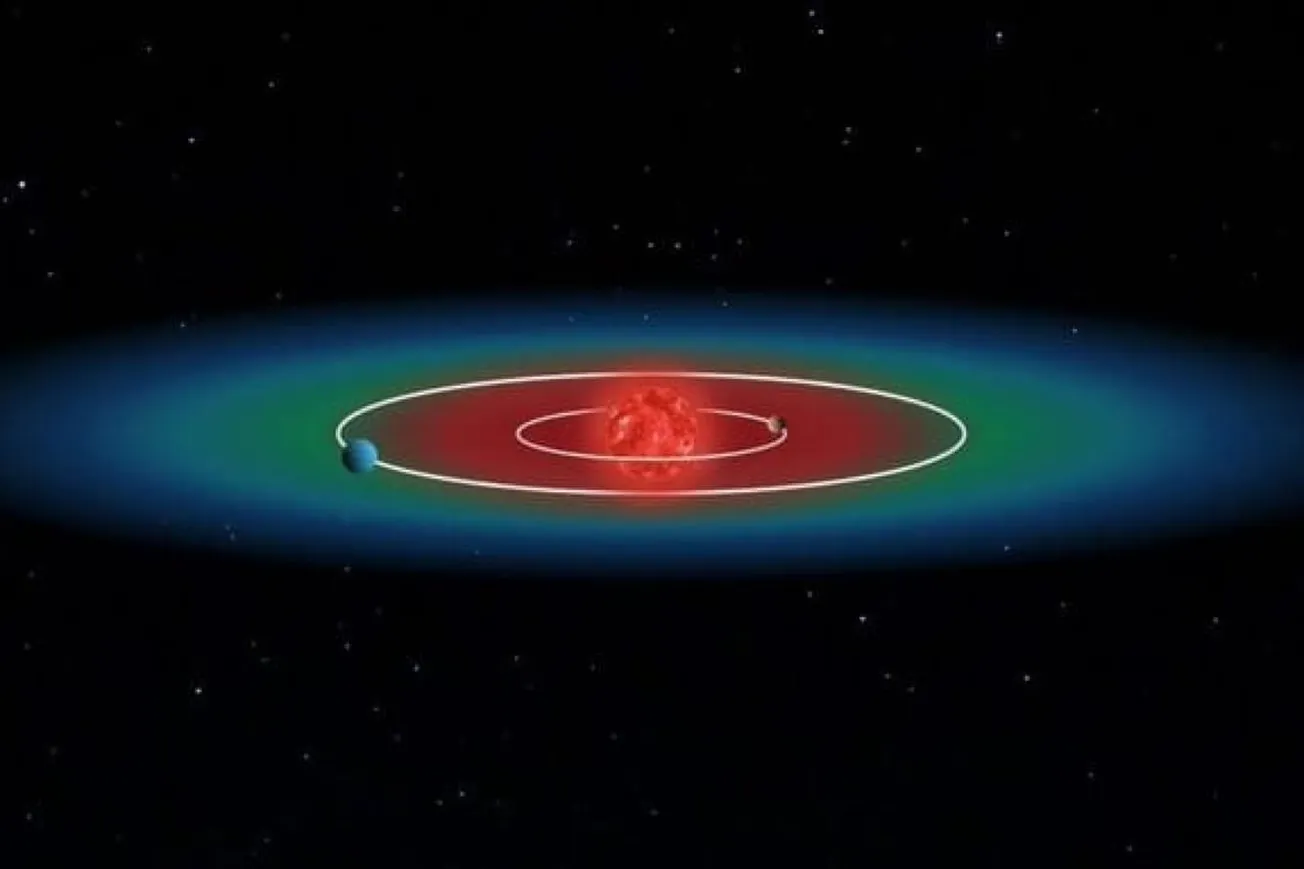
A Spanish-led team of astronomers has confirmed a new exoplanet that orbits within the potentially habitable zone of a red dwarf star about 337 light-years from Earth.
The planet, TOI-1752 c, is larger than Mars but smaller than Neptune and is estimated to be roughly twice the size of Earth. Researchers place it within the “optimistic habitable zone,” where conditions could potentially allow liquid water to exist on the planet's surface.
TOI-1752 c has an estimated temperature of about 18°C and completes an orbit around its star every 32 days. Scientists also believe it may have retained a substantial atmosphere dominated by gases.
Researchers say TOI-1752 c shares several characteristics with K2-18 b, another exoplanet considered an important target in the search for potentially habitable worlds. Both orbit dwarf stars, have orbital periods of slightly more than 30 days and lie within their stars' habitable zones.
Related Tweet:
Astrónomos españoles descubren un nuevo sistema planetario con un mundo potencialmente habitable y otro de lava https://t.co/w2eLOPiuAd
— Informativos Telecinco (@informativost5) August 31, 2026
Also Read:
 TIPP Staff