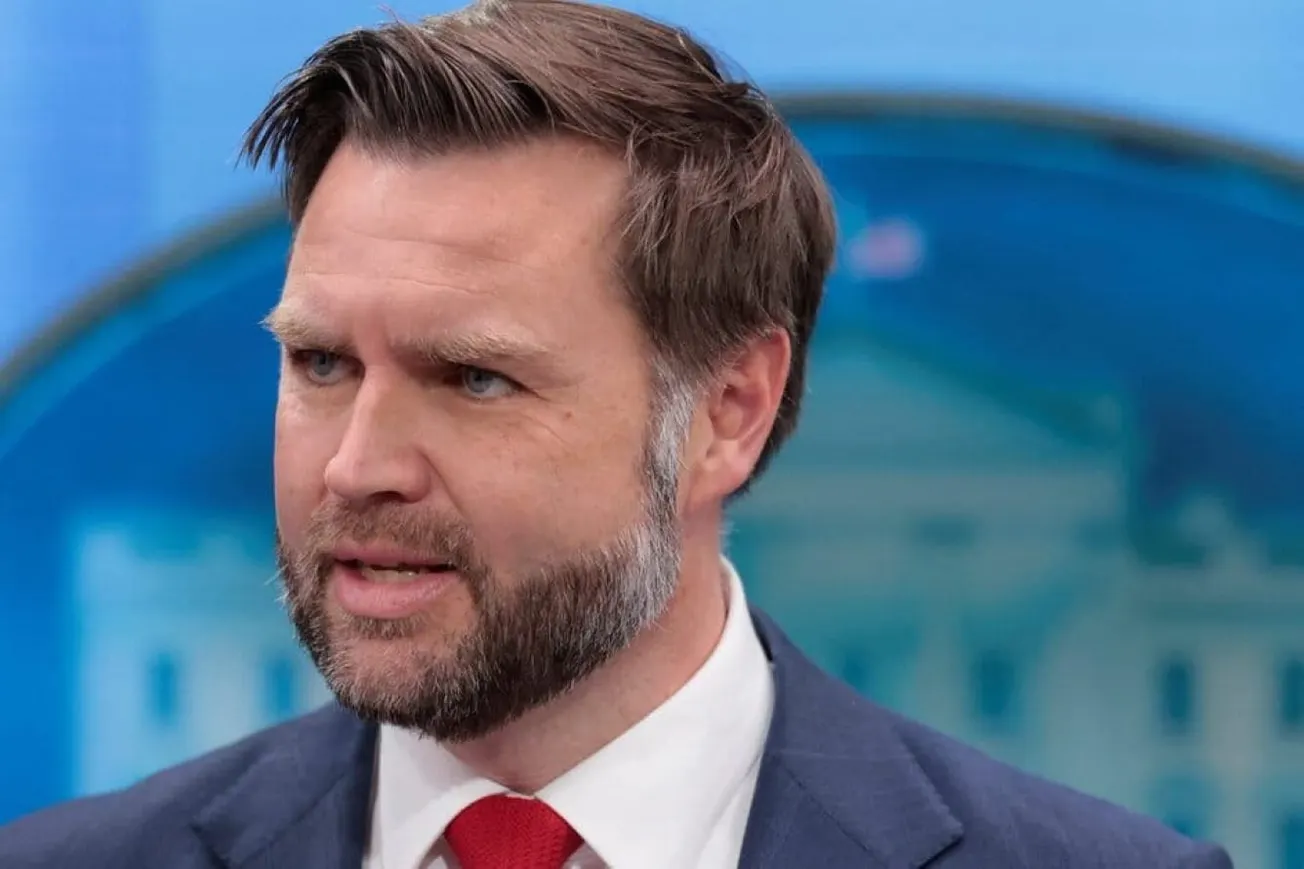

President Trump offered Democrats a glimpse of the political reality awaiting them in January. Speaking at the White House on Friday, he warned that he would veto legislation he opposed, but also held out the possibility of deals on healthcare and immigration.
It was a reminder that, despite their sweeping midterm victory, Democrats will not have Washington to themselves. They may control both chambers of Congress, but Trump still holds the veto pen.
And that could make governing considerably harder than winning.
Those of us who have supported President Trump's vision for a better America reeled at the results. The Democrats' 56-seat Senate majority could take Republicans several election cycles to overcome.
Whether or not Chuck Schumer survives Chris Van Hollen's challenge, whoever leads the caucus will command the largest Democratic Senate majority in 16 years. With Hakeem Jeffries having already sewn up the Speaker's gavel in the House, Trump's and the GOP's deep wounds are just beginning to show.
Everything the Left has hoped for over the past few years is no longer impossible. If just four moderate Republican senators align with the Democrats on specific legislation, the 60-vote filibuster threshold is met. The Democrats don't even have to get rid of the filibuster.
In the House, everything Jeffries dreams about can pass. As of November 19, Democrats had won 257 seats to Republicans' 172, according to the AP, with six races still uncalled. That is an 85-seat advantage and a 39-seat cushion above the 218 needed for a majority. The last time the margin was larger was in 1990, when Democrats enjoyed a 100-seat edge. Jeffries is so powerful that he can risk losing the support of the Democratic Socialists and still send bills over to the Senate, an unimaginable scenario just a few weeks ago.
Trump's political standing has undoubtedly been weakened, and Democrats are acting like it. Texas's Democratic Governor-elect Gina Hinojosa has already had a one-on-one conversation with the President on border security. Michigan Senator-elect Abdul El-Sayed went on TV to offer the President naming rights to Medicare for All, saying he wouldn't mind calling it “Trumpcare” if it passed.
The economic picture is more complicated than the election results suggest. The stock market is strong, and consumer confidence is improving. The November RCM/TIPP Economic Optimism Index hit a nine-month high of 48.5, with 17 of 21 demographic groups showing improvement. Yet optimism remains below the neutral 50 mark, and financial stress is still elevated. The divide is particularly striking between investors, whose optimism stands at 64.2, and non-investors, at just 38.9. The economy is improving, but many Americans are not yet feeling it. Democrats ran on closing that gap, and a veto stands in their way. In our pre-election TIPP Poll, 48% of likely voters identified cost of living and inflation as a top national concern, while food prices, gasoline, and inflation dominated their economic worries.
The media amplified the Democrats' “affordability crisis” tagline and helped them win. As the wine glasses stop clinking, the Left believes it has been handed a mandate on taxes, healthcare, and immigration.
It won't be a cakewalk. In California, voters rejected Proposition 40, the state's extraordinarily divisive billionaire wealth tax. Two years earlier, they had already turned down a labor-backed measure to raise the statewide minimum wage to $18 an hour.
In deep-blue Colorado, voters approved Prop 134 (requiring school and college sports teams to be based on biological sex, barring transgender athletes from female sports) and Prop 135 (banning surgeries on minors aimed at altering sex characteristics, along with public funding and insurance coverage for them). Washington voters required biological-sex verification for participation in girls' school sports.
In Iowa, which flipped a GOP Senate seat to the Democrats, voters approved a constitutional amendment requiring a two-thirds majority in both legislative chambers to raise individual or corporate income tax rates (while keeping a simple majority for cuts).
The message that voters sent is clear, if contradictory. They elected Democrats but voted like conservatives on the ballot, even in blue states. They don't want taxes or wages to rise through legislation, yet they want the affordability crisis solved. They don't want services curtailed; they want more of them. That is the minefield Democrats now have to cross.
The same tension is already showing up in city halls. In Los Angeles, Mayor-elect Nithya Raman campaigned on sweeping promises and will now inherit nearly $322 million in projected overspending when she takes office next month. We saw this earlier in the year with NYC Mayor Mamdani, who had to walk back campaign promises, including free buses, or seek new funding from the state.
A decade of anti-Trump fervor, paired with an affordability message that finally stuck, delivered the Left its victory. But Trump still wields the veto pen. The Democrats fall far short of the two-thirds threshold (290 votes in the House, and 67 in the Senate) to override his veto.
Trump may be willing to sign a few deals to restore his legacy as a dealmaker. But his loyalty to the MAGA base, which gave him his power, may make deals with the Democrats significantly more difficult. A single poison-pill provision could scuttle promising talks forever.
Campaigning is a lot easier than governing. With gridlock of historic proportions about to descend on Washington, the Democrats may find it hard to return to voters in 2028 and answer why they didn't get much done.
🔗 Further Reading
Winning the majority was the easy part.
📊 Gas And Groceries: What's On Midterm Voters' Minds – tippinsights Editorial Board. 48% of likely voters named cost of living a top issue. Now Democrats own the affordability problem.
🟧 Democrats Face Trump's Veto Threats Despite Congressional Gains – TIPP Staff. Big majorities, but not big enough. Here's the math that keeps Trump in control of what becomes law.
🟧 Big Night for Democrats Hides Conservatives' Victories on Ballot Measures – Fred Lucas, The Daily Signal. Voters elected Democrats, then voted like conservatives on the issues they could decide for themselves.
🟧 Senate GOP Quietly Roots For Van Hollen In Democrat Leadership Fight – Reagan Reese, The Daily Signal. Why Republicans are cheering for the man trying to topple Chuck Schumer.
Loved it, hated it, or somewhere in between — tell us. Grade this article here and help shape what lands in your inbox next.
🧭 Power & Capital · November 21, 2026
Where state power meets the boardroom.
🔷 Nippon Dynawave Faces 75 Safety Violations After 11 Workers Die – TIPP Staff
🔷 Elon Musk Didn’t Cause The Recent FAA Meltdown. Government Did – William L. Anderson, Mises Wire
🌍 Global Affairs
The world's flashpoints, in motion.
🟥 Watch: Poland Triggers Air Raid Warning Following Russian Strikes In Ukraine – TIPP Staff
🟥 Putin Is Partly Right On NATO – Carlos Boix, Mises Wire
🟥 Watch: Thousands Protest Across Colombia Over Proposed Tax Reform – TIPP Staff
🟥 France Should Have Listened To Cantillon, Turgot, And Bastiat – Jabulani Chibaya, Mises Wire
🏛️ National Affairs
The fights shaping America right now.
🟫 JD Vance Refuses To Endorse Trump’s Decision To Strike Iran – TIPP Staff
🟫 California Man Convicted Of Starting Deadly Pacific Palisades Fire – TIPP Staff
🟫 Pentagon Releases Eighth Batch Of Declassified UFO Files – TIPP Staff
🟫 US Forest Service Releases Historical Bigfoot Records, Renewing Public Interest – TIPP Staff
🟫 The Case For Impeaching Pete Hegseth – Andrew P. Napolitano, Ron Paul Institute for Peace and Prosperity
🟫 Trump Seems On The Verge Of His Last Fatal Mistake – Paul Craig Roberts, Ron Paul Institute for Peace and Prosperity
🟫 Migration And The State – Jacob G. Hornberger, Ron Paul Institute for Peace and Prosperity
🟫 A Surveillance State Twenty-Five Years In The Making – Stefan Bartl, Mises Wire
🟫 Awakening To Revolution: The Grand Design – Joshua Mawhorter, Mises Wire
🟫 Scientists Successfully Grow Potatoes In Simulated Moon Soil – TIPP Staff
🟫 Ancient Teeth Reveal Homo Erectus Survived In China Until 184,000 Years Ago – TIPP Staff
🟫 Former MLB Pitcher And Actor Lance Broadway Found Dead In Texas – TIPP Staff
📈 Economy
Prices, policy, and the pressure on your wallet.
🟩 Sunstein On Hayek – David Gordon, Mises Wire
💼 Markets & Business
The deals and tickers making moves.
🟧 GTA VI Generates $3.79 Billion On Launch Day – TIPP Staff
🟧 Meta Reconsiders 2030 Net Zero Target As AI Expansion Drives Emissions – TIPP Staff
🌙 Last Evening
The best of last night’s edition, in case you missed it
🟦 Ukraine Hit By Massive Russian Assault After Trilateral Talks In China – TIPP Staff
🟦 US-China Talks Leave Nvidia Chip Export Policy Intact, Treasury Secretary Says – TIPP Staff
🟦 Democrats Prepare Fresh Push To Restrict Trump’s Iran War Funding – TIPP Staff
🟦 Republicans Struggle To Pass Bills As Defeated Members Skip House Sessions – TIPP Staff
🟦 Why Did The White House Replace National Cyber Director Sean Cairncross – TIPP Staff
🟦 The Silver Lining Of A Data-Center Slowdown – Raghuram Rajan, Project Syndicate
🟦 Wall Street’s AI Fears Persist As Nasdaq Falls And Anthropic Shares Drop – TIPP Staff
Letters to the editor email: editor-tippinsights@technometrica.com
Subscribe Today And Make A Difference. Consider supporting Independent Journalism by upgrading to a paid subscription or making a donation. Your support helps tippinsights thrive as a reader-supported publication. Contact us to discuss your research or polling needs.
Reach our audience. For sponsorship and advertising opportunities, visit our Partner With Us page.