

By Moha Ennaji, Project Syndicate | Aug 7, 2026
When tens of thousands of people recently entered the Spanish enclave of Ceuta from neighboring Morocco, European leaders lapsed into recriminations, reigniting the debate on migration. But the bigger challenge is to address a long-simmering territorial dispute between Spain and Morocco.
FEZ—The sight of 72,000 people rushing into the Spanish enclave of Ceuta from neighboring Morocco was a blunt reminder that one of the European Union’s most sensitive land borders is in North Africa.
The status of Ceuta and Melilla, another Spanish enclave within Morocco, has been a simmering political dispute between the Moroccan and Spanish governments for many decades. Morocco claims sovereignty over these cities, whereas Spain maintains that they are as much a part of its national territory as Madrid. For centuries, the Muslim dynasties that ruled the western Maghreb and al-Andalus controlled Ceuta, until King John I of Portugal captured it in 1415—a precursor to European expansion overseas. When the Portuguese monarchy came under the control of the Spanish Habsburgs in 1580, so, too, did Ceuta. Following the restoration of Portuguese independence in 1640, the city remained loyal to the Spanish monarchy.
As the great French historian Fernand Braudel observed, the Mediterranean should be understood as a historically interconnected theater, shaped by migratory, commercial, cultural, and political exchanges that long predate the modern nation-state. From this perspective, the Strait of Gibraltar is not merely a border but a liminal zone between two shores of the same sea that have long been in close, if often conflictual, contact.
To support its sovereignty claim, Morocco points to precolonial history and the continuity of the Moroccan Sultan’s authority over extensive territories in the western Maghreb. Moroccan historians, notably Abdallah Laroui, have also emphasized the need to avoid mechanically applying the territorial categories of the contemporary nation-state to precolonial societies.
The modern European conception of the border as a precisely demarcated, legally recognized line does not always correspond to the forms of sovereignty that prevailed in the Maghreb before colonization. The Sultan’s authority was exercised to varying degrees through relations of allegiance, taxation, religion, and political affiliation, without necessarily taking the form of uniform administrative control. It is within this context that Morocco’s claims concerning Ceuta, Melilla, and other Spanish territories on the North African coast should be examined.
Following Moroccan independence in 1956, the question of colonial-era borders became a topic of national debate. Moroccan nationalists, particularly Sultan Mohamed V, advocated the recovery of territories considered to have been detached from Morocco during the colonial period. This policy unfolded amid a broader push for decolonization, resulting in Spain relinquishing Tarfaya in 1958 and Sidi Ifni in 1969.
Yet Ceuta and Melilla remained under Spanish control, with these former colonial territories eventually becoming part of the EU’s external border. EU efforts to clamp down on migration in recent years have thus transformed these cities, imbuing them with a strategic importance comparable to their historical and military significance.
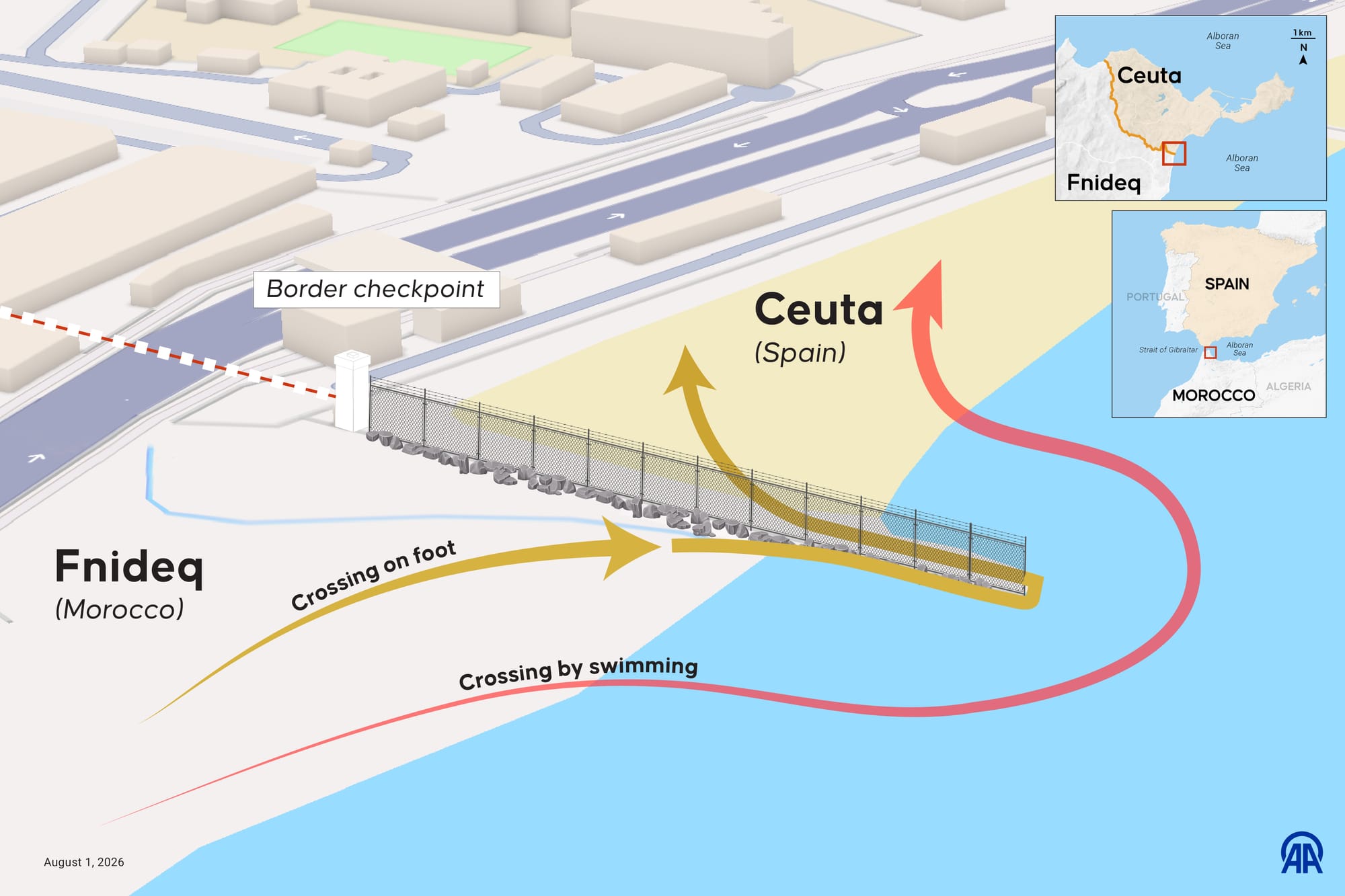
This change helps explain the paradoxical nature of the Morocco-Spain relationship. Despite strong economic and trade relations and close cooperation on security and migration, the territorial dispute remains a source of conflict. In a study of Morocco’s claims to Spanish territories in Africa, the University of Cambridge’s Jamie Trinidad emphasizes that the legal arguments vary for each territory, meaning that Ceuta, Melilla, the Chafarinas Islands, and the islet of Perejil are not analogous cases.
But that does not mean a resolution is out of reach. Consider Gibraltar, which is frequently invoked in Moroccan political discourse. The process of determining Gibraltar’s status after Brexit, which required close cooperation between the United Kingdom, the EU, and Spain, demonstrates that a longstanding territorial dispute can end in joint management, even when fundamental positions on sovereignty remain divergent.
This experience offers a lesson for Morocco: even longstanding territorial disputes can invite cooperation. They can be eased through gradual negotiations, confidence-building measures, and other mechanisms that divorce, at least temporarily, questions of sovereignty from the practical necessities of everyday life.
To take such an approach in Ceuta and Melilla would require Europe to recognize that the militarization of borders alone cannot solve the migration issue. They can still be used to exert diplomatic pressure, as recent events have shown. Migration cooperation between Morocco and Spain should therefore be part of a broader strategy focused on economic development, legal mobility, the fight against criminal networks, and the protection of fundamental rights.
The future of Ceuta and Melilla should be viewed through the lens of Euro-Mediterranean relations—as sites of dialogue, exchange, and cooperation between Africa and Europe, not just fortified borders. Morocco and Spain are fated to coexist. Their geographical proximity, economic and human relations, and shared security interests require a relationship built on trust and mutual respect.
Resolving this territorial dispute won’t be easy, as each country has longstanding claims to the two cities. But the time has come to seek a new path based on negotiation, not confrontation. This would not only mark a new chapter in bilateral relations, but also benefit the wider Mediterranean region.
Moha Ennaji is Professor of Linguistics and Gender Studies at the University of Fès, Morocco. He is the editor, most recently, of Minorities, Women, and the State in North Africa and Moroccan Feminisms.
Loved it, hated it, or somewhere in between — tell us. Grade this article here and help shape what lands in your inbox next.
Copyright Project Syndicate
📊 Market Mood · August 10, 2026
How the trading day is setting up.
🟩 Markets begin the week near record highs after Friday’s softer U.S. jobs report eased fears of another Fed rate hike. Strong corporate earnings remain an important support, with S&P 500 profit growth continuing to exceed expectations.
🟧 Investors are nevertheless cautious as uncertainty returns over the Strait of Hormuz. Iran has indicated that progress on new shipping lanes does not guarantee a full reopening, putting renewed upward pressure on oil and reviving inflation concerns.
🟦 The AI trade remains a major pillar of the market rally, but after extraordinary gains investors are increasingly focused on earnings delivery and whether massive AI capital spending can generate sufficient returns.
🟨 Attention is already turning toward this week’s U.S. inflation data, which could determine whether the softer labor market meaningfully changes expectations for the Fed’s next move.
🗓️ Key Economic Events
On today's U.S. data calendar.
🟧 No major U.S. economic reports are scheduled. The week's major inflation releases begin with CPI on Wednesday and PPI on Thursday.
Letters to the editor email: editor-tippinsights@technometrica.com
Subscribe Today And Make A Difference. Consider supporting Independent Journalism by upgrading to a paid subscription or making a donation. Your support helps tippinsights thrive as a reader-supported publication. Contact us to discuss your research or polling needs.
Reach our audience. For sponsorship and advertising opportunities, visit our Partner With Us page.