
What is actually happening?
Anti-regime protests erupted in Tehran on December 28 and quickly spread throughout Iran, with participants in the millions.
While the media focused on Iran’s recent economic collapse, the underlying cause was actually decades of brutal, often deadly repression and religious autocracy in a country that used to be one of the most open and flourishing in the Middle East.
Iran has seen other protests over the years, but something is different this time:
The “Green” protest movement in 2009 asked, “Where’s my vote?” after an apparently stolen election. The 2022 “Hijab” protests declared “Women, Life, Freedom” after Iran's morality police arrested Jina Mahsa Amini for not wearing a hijab: she died in custody after severe beatings.
Yet today the slogans include cries of “Death to the dictator” (Supreme Leader Khamenei) and “Long live the Shah” (referring to the prior monarchy, before the 1979 Islamic Revolution). This is new: it's an unambiguous call for regime change.
In the past, protests were quickly and brutally crushed by the regime, as the world looked on.
Yet this time something different happened. On December 29, a short but stunning tweet surfaced from the Mossad’s Farsi language X account:
We are with you. Not just from afar and verbally. We are with you in the field as well.
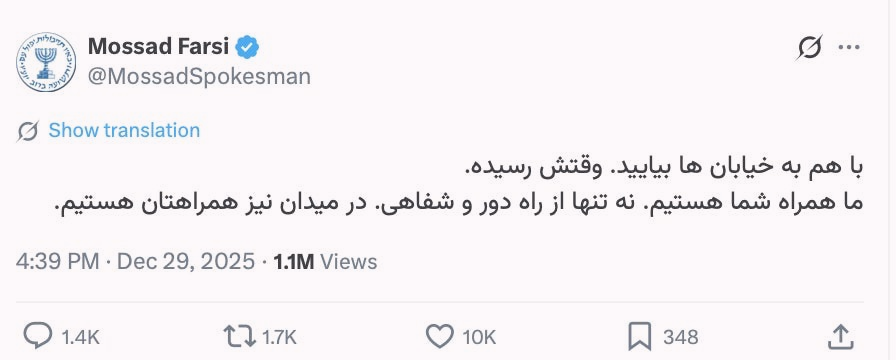
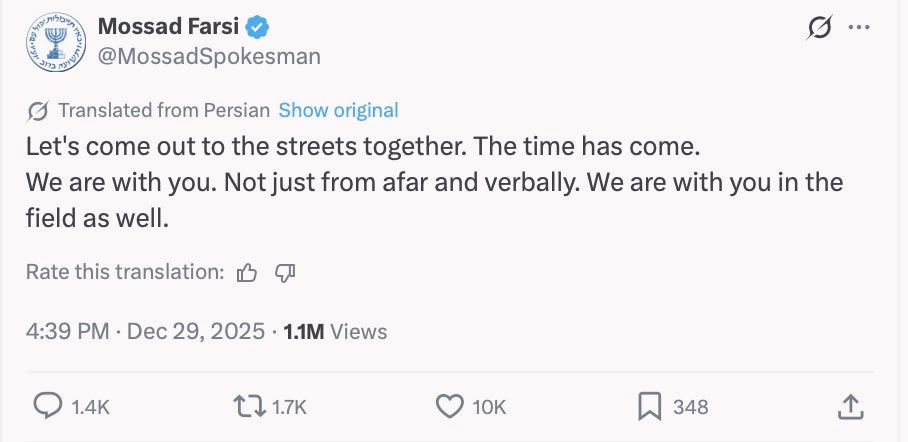
For the first time, a major power had just promised on-the-ground support to the Iranian people.*
*While Israel’s “Mossad” intelligence agency has never officially taken credit for the “MossadSpokesman” X account, relevant experts believe it is genuine.
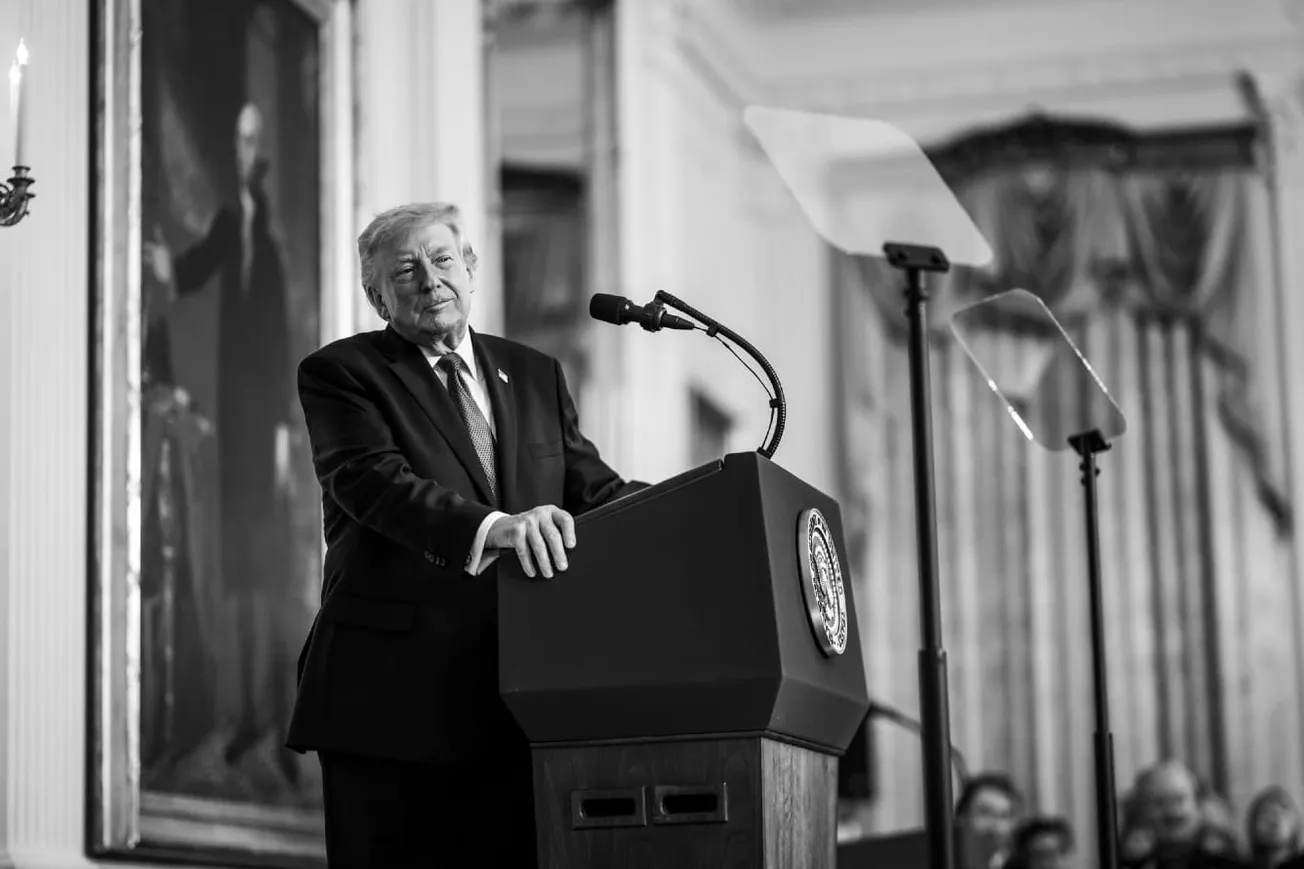
Four days later, U.S. President Donald Trump warned the Iranian regime against shooting protesters, in his usual, unambiguous style:
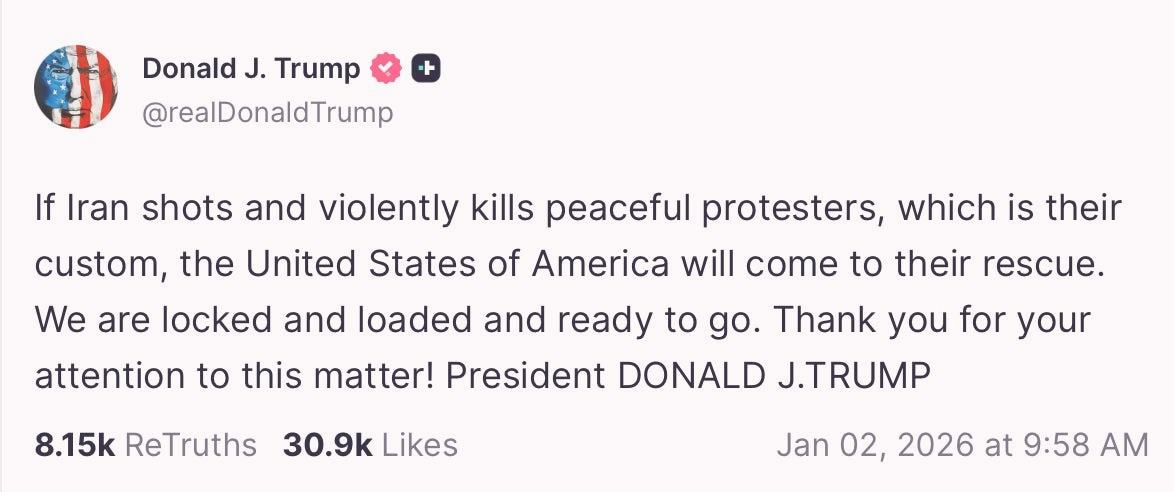
Not only is protecting Iran’s protesters an obvious moral priority, but it is a critical U.S. security interest: Iran is closely allied with U.S. adversaries Russia and China, as well as being the driving force behind a large percentage of global terrorism, including against Americans.
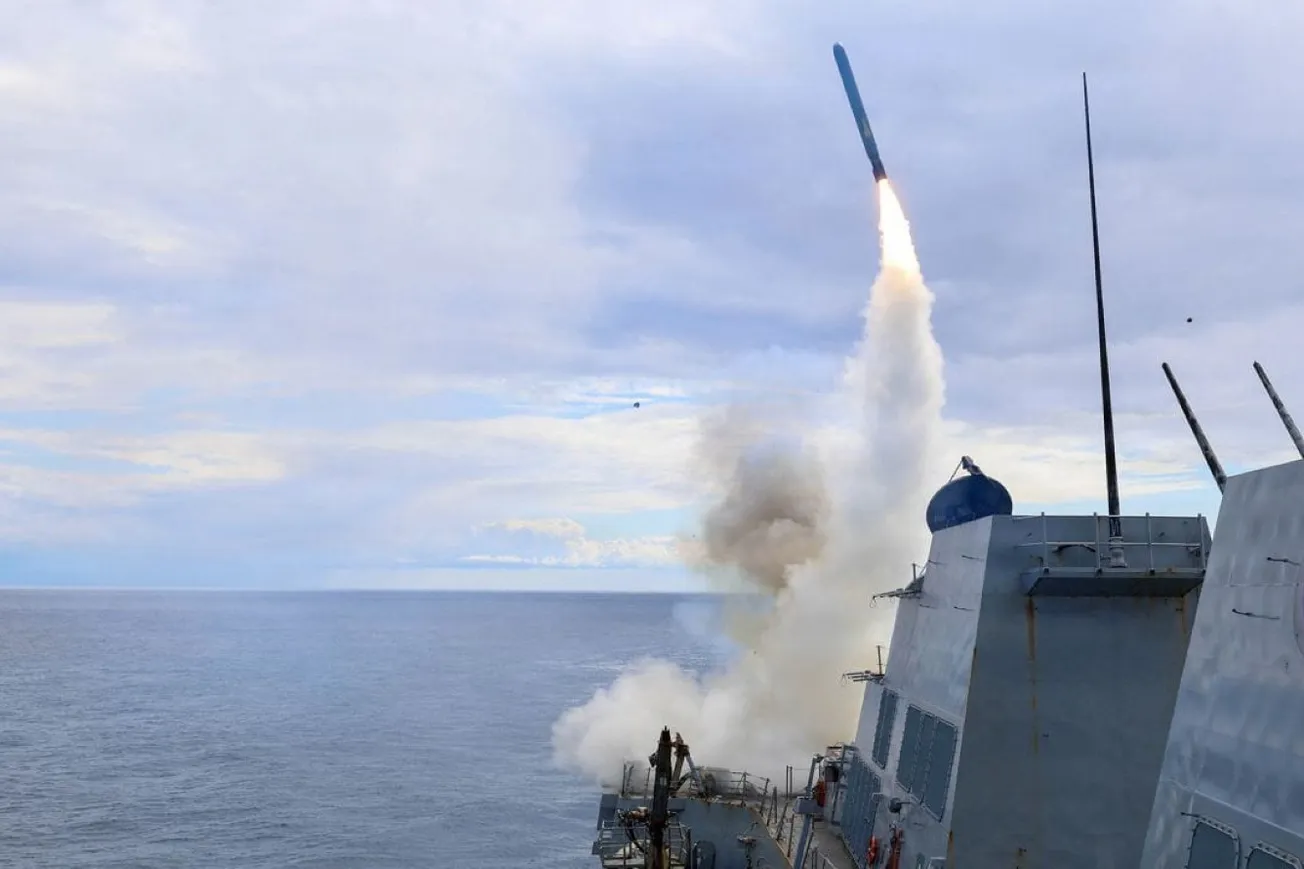
Less than 24 hours later, U.S. forces entered Venezuela and captured disputed president Nicolas Maduro (another Iranian ally) in a display of staggering military capabilities and, even more importantly, a newfound willingness to use them.
Beginning on January 8, the regime took several ominous steps:
- Shutting down the internet and even much of the regular telephone network, including jamming Elon Musk’s satellite-based Starlink system;
- Activating the IRGC, an especially loyal and violent armed force that is designated as a terror organization by much of the world;
- Launching a highly aggressive crackdown on protesters.
Information is limited and difficult to confirm without internet access (apparently by design); however fatalities are believed to be approaching 20,000 and injuries approaching half a million, all in under ten days, with numbers growing by the hour.
Will the regime fall?
Noted American sociologist and political scientist Jack Goldstone suggests five factors that must be achieved for a successful revolution and regime collapse:
- National Economic or Fiscal Strain: This is definitely the case in Iran, where the currency dropped by well over 99% since 1979, and basic necessities, such as food, water, and electricity, are in short supply.
- Alienation and Opposition Among the Elites: As far as we know publicly, this has not yet occurred, yet the regime has already begun to fear defections by the regular army. Such defections will be a significant turning point, if and when they occur.
- Widespread Popular Anger at Injustice: This is clearly the case, as demonstrated by nearly every paragraph of this article.
- A Persuasive Shared Narrative of Resistance: This is also the case, with widespread focus on ending the current regime. Crown Prince (in exile) Reza Pahlavi, son of the last ruling “Shah” before the Islamic Revolution, has become a unifying figure and an image of hope for a better future.
- Favorable International Relations: This is the key differentiator: without outside assistance, unarmed protesters simply cannot prevail against a loyal, armed, and well-trained military.
For example, during the Green Protests in 2009, (then) U.S. President Barack Obama failed to provide support, admitting over a decade later that this was a mistake. Yet Obama’s administration did more than merely neglect the protesters: the United States effectively propped up the Iranian regime through billions of dollars in sanctions relief and other measures, even before the disastrous 2015 nuclear deal.
Yet times have changed.
Israel’s “Twelve Day War” last June decimated not only Iran’s nuclear program, but also the illusion that the Iranian regime was somehow invincible. The collapse of Iran’s Middle East proxy network, including Hezbollah in Lebanon, Hamas in Gaza, and the Assad regime in Syria, was followed by the collapse of yet another Iranian ally this month: Nicolas Maduro in Venezuela.
Will the U.S. strike?
Forget everything you’ve heard.
When a sports announcer is no good, you turn off the sound and let the action tell the story.
This moment is no different: official statements are filled with misdirection, and the news is filled with typical journalistic incompetence. The same was true before America’s strikes against Iran’s nuclear program last June, and against Venezuela this month: in both cases, misdirection provided U.S. troops with a much-needed time to “set the force” and to create an element of surprise.
So if we “turn off the sound,” here’s what we actually see: the United States is sending significant military power into the region, including the USS Abraham Lincoln carrier strike group, missile defense systems, significant air power, ground assets, drones, naval support, and more.
If the United States strikes Iran, then Iran will likely respond by striking us, here in Israel. There’s precedent: after Iraq invaded Kuwait in 1991, Saddam Hussein fired massive Scud missiles on Israel, an absurd response given that Israel was one of the only countries in the Western world that had NOT joined the international strikes on Iraq.

The Israeli government has yet to issue specific alerts to the civilian “Home Front,” but in a small country, where most of the population does compulsory military service, we frequently “just know” when something’s coming. Indeed, Israelis have been making sure our bomb shelters are ready, our phones are charged, and our kitchens stocked: behaviors that double as a strong leading indicator of global events.
Will U.S. involvement backfire?
“Rally around the flag” is the theory that outside threats cause even fierce opponents to join forces out of a sense of shared nationalism. Republican Senator Rand Paul raised this critique last week, echoing President Obama’s faulty reasoning in 2009. Yet in Iran, history begs to differ: Iranians felt overwhelmingly betrayed by President Obama’s previous neglect, and are now pleading for President Trump to take strong action, including cries of "Help, we need HELP" and “Trump, a symbol of peace. Don't let them kill us."
The Day After
It is relatively rare that an aggressive dictatorship transforms into a safe and prosperous neighbor, but there are at least two historical examples: Germany and Japan after World War II. In both cases, the Allied powers occupied the respective countries for years, while building entirely new societies from the ground up.
Such an investment seems unlikely in this case, so is Iran doomed to long-term failure?
Perhaps not. Iran already has something that post-war Germany and Japan lacked, and that Iraq and Afghanistan hadn’t dreamed of: a unifying vision of a liberal, secular democracy, a unifying figure in Crown Prince Pahlavi, and a widespread desire to become a free and prosperous member of the international community. Of course, if Iran’s Islamic regime falls, that will be only the first step in a sensitive, complex, and extremely high-stakes path toward stability. Yet if the regime remains, it will continue to not only brutally oppress the Iranian people but also pose an ongoing danger to the Middle East, the United States, and all of Western civilization.
Daniel Pomerantz is the CEO of RealityCheck, a non-profit charitable organization dedicated to restoring public trust in information. An expert on the Middle East and international law, Daniel also serves as an adjunct professor at Israel’s Reichman University (the “IDC” in Herzliya). Daniel and RealityCheck can be found at www.realitycheckresearch.org or at contact@realitycheckresearch.org.
👉 Quick Reads
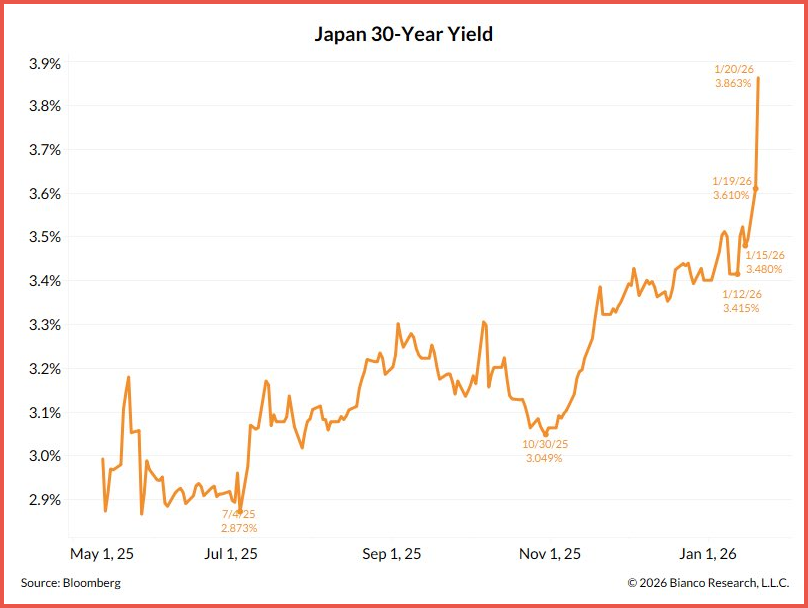
I. Japan’s Long-Term Borrowing Costs Are Rising Fast
Japan’s 30-year government bond yield jumped to nearly 3.9 percent, one of the sharpest moves in years. For a country long defined by ultra-low rates, the rise signals growing pressure from inflation, debt servicing costs, and shifting global interest-rate conditions. Moves like this matter because Japan sits at the extreme end of government borrowing worldwide.
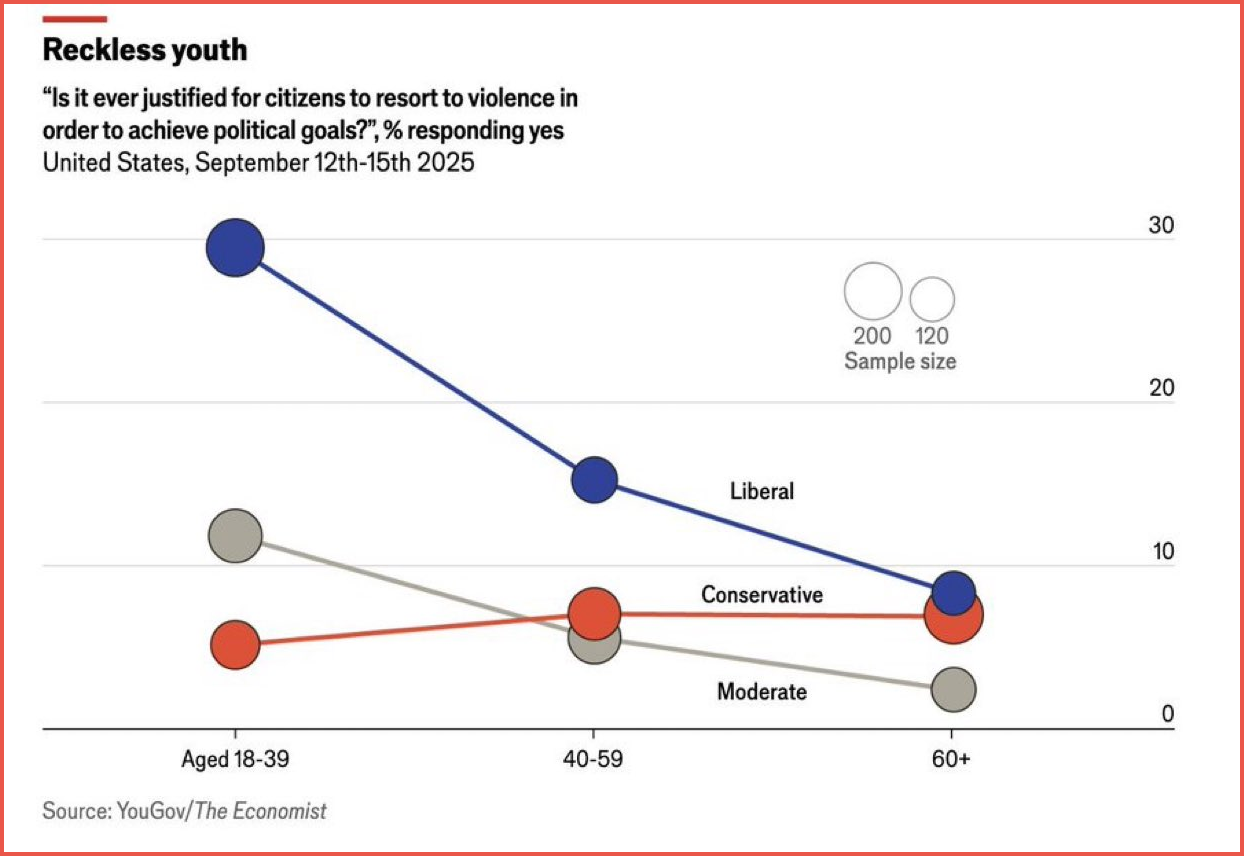
II. Political Violence Support Peaks Among Young Liberals
The survey shows that young adults who identify as liberal are more likely than their conservative or moderate peers to say political violence can be justified. Support falls sharply with age across all political groups, indicating this view is not widespread, but concentrated within a specific younger ideological cohort rather than society as a whole.
📊 Market Mood — Tuesday, January 20, 2026
🟩 Futures Sink on Tariff Jitters
U.S. futures slide sharply as markets reopen after the holiday, rattled by Trump’s threat to impose tariffs on Europe over Greenland.
🟧 Greenland Standoff Escalates
Trump signals talks at Davos while European leaders weigh retaliation, raising fears of a broader transatlantic trade clash.
🟦 Supreme Court Ruling Looms
Markets brace for a possible Supreme Court decision on the legality of Trump’s tariffs, with uncertainty lingering even if they are struck down.
🟨 Gold Hits Fresh Records
Safe-haven demand pushes gold to new all-time highs as investors hedge against geopolitical and trade risks.
🟥 Netflix in the Spotlight
Netflix reports after the bell, with focus not just on earnings but on its high-stakes bid for Warner Bros. Discovery.
🗓️ Key Economic Events — Tuesday, January 20, 2026
No Events Scheduled
editor-tippinsights@technometrica.com