Editor’s note: We wrote this for middle schoolers, because even they should know what the grown-ups are really fighting about.
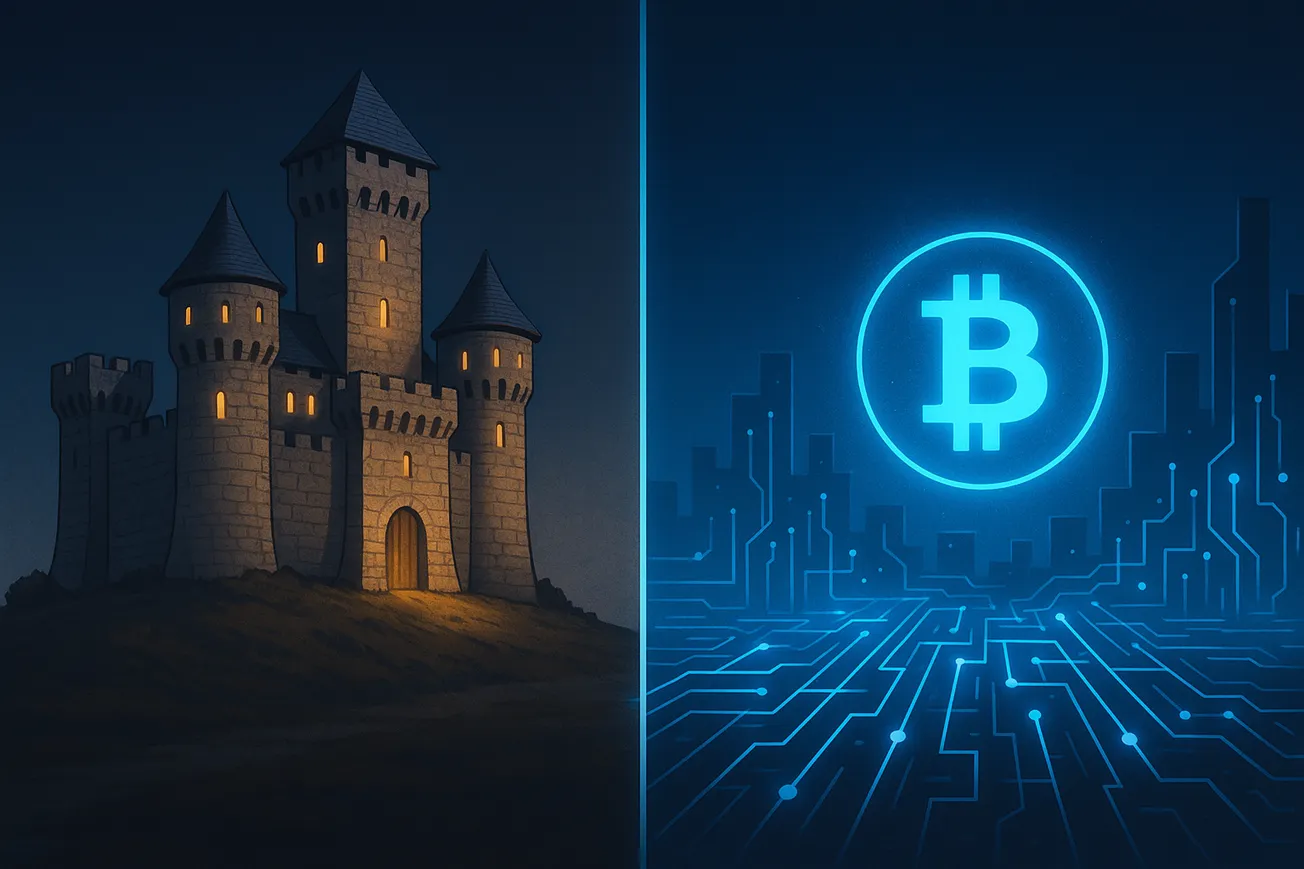
The old banks are the castle kings. For hundreds of years, they’ve been the only place you could keep money safe, pay bills, save up, or borrow. They stand in the middle of every money move you make, like a toll booth on the only road in town. Cross them or say the wrong thing, and they can “debank” you. One click and your account is frozen. Good luck buying lunch.
They also get to use your savings. You park $100 in your account and earn almost nothing. The bank lends that same $100 to someone else and charges them high interest. When the banks gamble with that money and blow up (as they did in 2008), their friends in government rush in with taxpayer money to rescue them. No jail; no problem.
Meanwhile, central banks keep printing more dollars. Your money quietly loses value every year. The $100 you saved for a new game suddenly won’t even buy the old one.
Then, in 2009, some computer wizards invented magic Internet money: crypto. Turn your dollars into a stablecoin (a perfect digital copy of a dollar) or into Bitcoin, and the castle kings can’t touch you anymore. Your money now lives in an app on your phone or on a tiny drive smaller than a Lego brick. Need to send $50 to your cousin in another country? Ten minutes, a few pennies, done. No permission. No middleman. No waiting. Every month, more money moves around the world on these new digital dollars than through some of the biggest old banks. That’s why the castle kings are sweating.
Just this week, JP Morgan (the biggest castle of them all) warned that MicroStrategy (the company that turned itself into a giant Bitcoin treasure chest) could get booted from major indexes. If that happens, billions of dollars in MSTR shares could be dumped in forced selling, dragging Bitcoin down with it. Bitcoin fans are now yelling “Boycott JP Morgan!” all over the Internet. The castle kings are fighting back hard.
And guess who’s helping the wizards? President Trump. In 2025, he launched a national Bitcoin stockpile and signed new laws to accelerate crypto growth in America. Even his family launched their own coins. For the first time, the wizards have a powerful friend inside the government. But the castles are still begging lawmakers to slow everything down again.

The banking kings are also scared because crypto cuts out the middleman. If money flows on open networks, banks lose fees and governments lose control. But being your own bank also means you must guard your passwords. No one can help you if you lose them.
That’s the war.
The old banks want to stay the only kings in charge. Crypto says anyone can walk out of the castle and be their own bank. That idea scares the kings more than anything, because if enough people leave, the castles start to look empty.
Right now, the fight is louder than ever. Kids in Argentina and Nigeria are already using the magic money because their local castles keep falling down. Behind the scenes, the biggest castles are begging lawmakers to make new rules that would slow the magic down or even let only banks use it.
This war will decide one simple thing: when you get your first paycheck in a few years, will you have to beg the castle for every dollar you spend, or will you open your phone and truly own your money?
The battle is on right now. And when you get your first paycheck, you will walk into a world where your money is either truly yours or still belongs to the castle. It all depends on who wins this war.
Glossary
Stablecoin
A digital version of a dollar. It always tries to stay worth $1. Think of it like a perfect photocopy of a dollar that moves on the Internet.
Bitcoin
A digital coin that no one controls. It lives on a global computer network. You can send it anywhere in the world in minutes.
Blockchain
A public list of transactions that everyone can see but no one can change. It keeps crypto honest.
Wallet
The app or small device you use to store your crypto. It holds your passwords, called “keys.”
Private Key
Your master password. Lose it and your crypto is gone forever. Guard it like treasure!
Debanking
When a bank closes your account or freezes your money because they don’t like what you said or did.
What Exactly Is a Stablecoin
Stablecoins are the bridge between old money and new money. They look like dollars, act like dollars, and stay worth one dollar. But they live on fast digital rails instead of slow bank rails.
You can send a stablecoin to someone in another country the same way you send a text message. No delays. No bank hours. No permission. That’s why more money moves on stablecoins every month than through some major banks.
There are a few big stablecoins most people use:
USDC
USDT
PayPal USD (PYUSD)
These are backed by real dollars sitting in regular banks. Stablecoins are becoming the Internet’s version of cash — and a big part of this money war.
📊 Market Mood — Monday, November 24, 2025
🟩 Futures Inch Higher as Markets Weigh Fed Outlook
U.S. futures ticked up early Monday, with investors reassessing the chances of a December Fed rate cut. Policymakers remain divided: some see a need to support a cooling labor market, while others warn the shutdown has left the Fed flying partially blind. Markets still lean toward a cut, helping stabilize sentiment after last week’s tech-led pullback.
🟨 Oil Slips Amid Ukraine Peace Talks
Crude eased as the U.S. and Ukraine continue negotiations on a potential peace framework with Russia. Any deal that softens sanctions or relaxes enforcement would shift expectations for global supply — keeping energy traders cautious as headlines evolve.
🟧 Gold Under Pressure as Risk Appetite Improves
Gold edged lower as confidence returned to equities and risk assets. Optimism around Fed policy, along with talks of a Russia-Ukraine ceasefire, reduced safe-haven demand. Even so, concerns over global fiscal strains and China–Japan tensions kept a floor under prices.
🟨 Lenovo Stockpiles Memory Amid AI Chip Squeeze
Lenovo is reportedly stockpiling memory chips as AI-driven demand tightens global supply chains. The buildup could raise electronics prices in coming months, even as the company seeks to avoid passing costs to consumers. Strong PC sales remain a bright spot, though rising AI spending has squeezed margins.
🗓️ Key Economic Events — Monday, November 24, 2025
None today

editor-tippinsights@technometrica.com