
By Ryan McMaken, Mises Wire | August 31, 2026
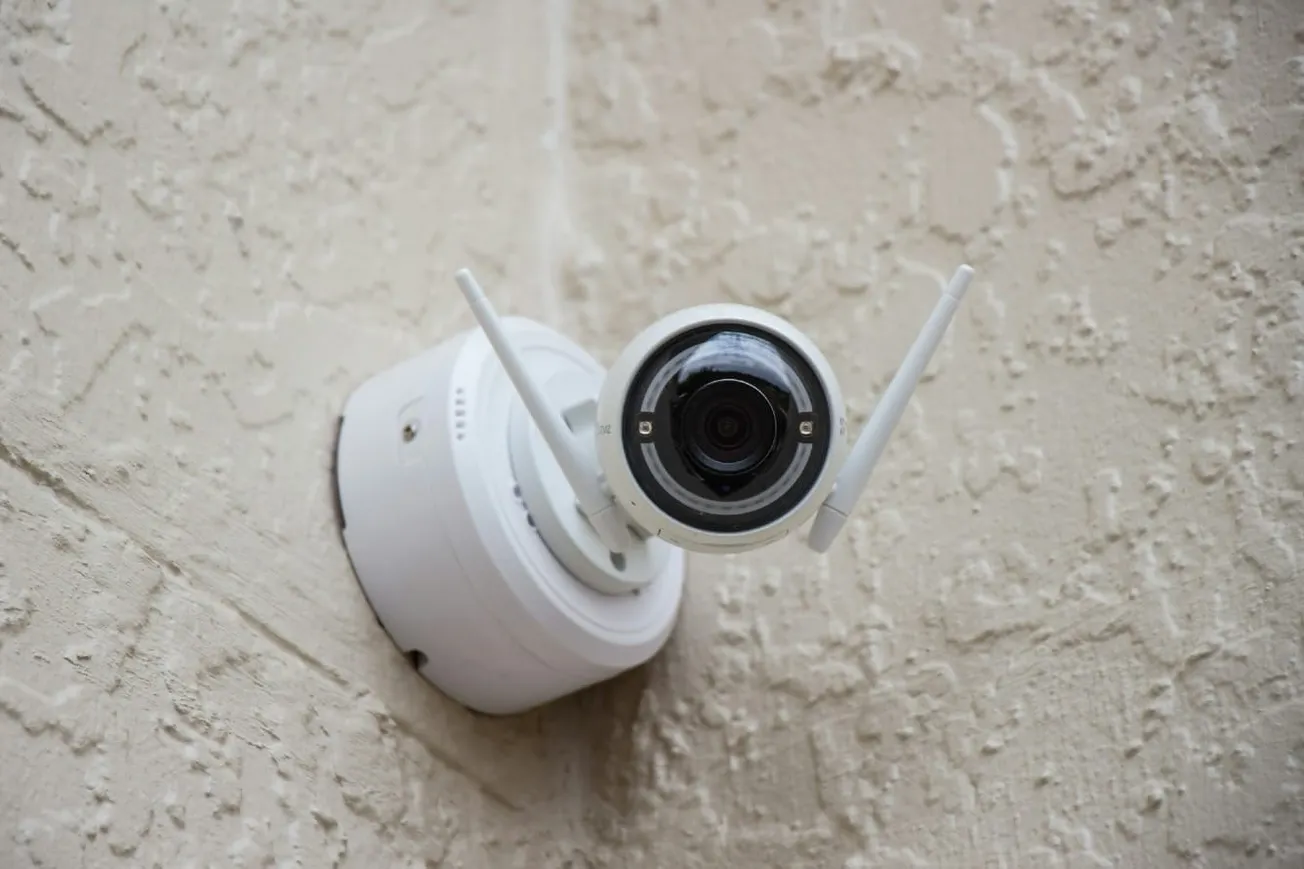
Flock cameras, and the online surveillance network behind them, offer many ways for law enforcement officials, and other government bureaucrats, to abuse their access to information about the personal lives of the taxpayers.
For example, a Kentucky police officer has been caught using the surveillance network to stalk women. Another officer in Massachusetts has been accused of using Flock cameras to track her ex-girlfriend. A police officer in Indianapolis was using Flock camera data to track his own wife and friends, checking up on them“3,759 times over a 10-month period - an average of about 12 lookups per day.”
These are just some of the ones who have been caught or accused of abusing Automated License Plate Readers (ALPRs), the most well known of which operate under the “Flock” brand. It’s impossible to say how many other taxpayer-funded offenders are out there using the surveillance state to serve their particular personal grudges, perversions, and agendas.
In other cases, Kansas police used the surveillance system to pursue a man who wrote a critical op-ed about the department, while a Colorado police officer wrongfully accused a woman of theft based on a Flock hit and then refused to look at evidence proving her innocence. A mother and her children were held at gunpoint because ALPR cameras wrongly flagged their car as stolen. The cases in which police use incorrect Flock data to abuse the innocent are myriad, and researchers are just now starting to document the known cases.
There are very few controls on how police can use the surveillance databases that underlie the data collection. Records have shown that police can put out a “Flock alert” to track a private vehicle without the vehicle owner or operator being the target of any legitimate investigation.
Not surprisingly, government agencies appear highly motivated to set up these cameras and use them prolifically. As of this week, there are more than 110,000 confirmed Flock cameras installed in the United States. The company itself states a plan for more than 120,000 cameras. That’s just the flock-branded cameras. At least 135,000 ALPR cameras, overall, have been independently documented in the US. All of these are funded by the taxpayers of course, and are installed with the enthusiastic support of government law enforcement agencies. This has all happened in just a few years.
Naturally, much of it being funded by federal dollars. These spy camera programs receive funds from a variety of federal grant programs via the FBI, the Department of Justice, the Department of Homeland Security, and FEMA. None of this is surprising. Since 9/11 “local” police has relied heavily on federal dollars for equipment and other types of spending. “Support your local police” rarely has any meaning anymore. Most police agencies are adjuncts of the federal government, and most willingly share their surveillance data with federal agencies. The potential for abuse is immense since the license-plate data is open to countless users who have access to the network nationwide. The Governor of Utah, for instance, recently noted that 10 Flock cameras in a single county of Utah were searched more than 5 million times “between February 2022 and July 2026, with the vast majority of those searches (nearly 97%) coming from police agencies outside of Utah, from 45 states.”
Many people wrongly think that these are just ordinary surveillance cameras that can be accessed piecemeal by actual humans. In reality, these are AI-assisted automated systems designed to provide easily-accessed tracking data on the movements of any American who drives a car on America’s streets.
Tax-funded uniformed bureaucrats—i.e., “police officers”—have been “all in” on spying on Americans using their own hard-earned cash. Knowing that many citizens might object, police agencies have attempted to keep it all as secret as possible. This is how tens of thousands of cameras just suddenly seemed to appear in many American communities without a public vote or announcement. In at least some cases, police have used obviously deceptive methods to get their cameras. All at taxpayer expense. In Tennessee, the Mayor of Knox County, Mises Institute supporter Glenn Jacobs, found that police carefully staggered payments to ALPR corporations so that each payment fell under totals that would trigger review from elected officials. The police don’t just lie to the public. They lie to their own bosses in the elected government
It’s all just a reminder that if government bureaucrats are given new tools for surveilling the public, those bureaucrats will certainly abuse those tools.
Even the legal uses of these tools will surely expand over time. Right now, government apologists claim that they are using Flock only to catch dangerous criminals. It is only a matter of time until ALPR cameras are used for the following:
- Automated Speeding Tickets
- Automated Tag Expired Tickets
- Automated Seatbelt Tickets
- Per Mile Traveled Tax
ALPRs will make all of this easy.
Moreover, the next time there is a “pandemic” in which the regime imposes “stay-at-home orders,” Flock cameras will greatly enhance the regime’s ability to enforce its “lockdowns.” Recall, for instance, that during the covid lockdowns, some police agencies proudly announced that they were recording the license plates of people who flouted local law and attended church services. In the age of Flock cameras, the next “pandemic” could bring automatic tickets for those who engage in “non-essential” travel, such as visiting family or simply going for a drive.
And it’s the ease of it all that makes it so attractive to governments.
Since the earliest days of government despotism—dating back to the empires of antiquity and up to the modern states of today—state agents have sought ways to collect more information on their subjects. The better the information on their subjects, the easier they are to tax, to monitor, to regulate, and to generally repress.
But surveillance has always been expensive. It requires bureaucrats to keep records, to ask questions, and to report back to their bosses. From census takers to the secret police, states have employed a variety of methods to keep tabs on “the people.”
In more recent decades, however, the cost of spying on the public has been greatly reduced. In America, this has especially been true since 9/11 and the burst of new powers granted to the surveillance state with the Patriot Act and similar legislation. What once required a warrant from an actual judge, became “warrantless” data collection through the American regime’s immense network of intelligence programs.
Now, new forms of automation have taken things even further. For the price of a subscription to an ALPR company’s services, a government agency—and its personnel—have access to the movements of every automobile driver in the country. The federal government, of course, is more than happy to access the information as well.
Flock cameras are, in a sense, a dream come true for governments. They allow for greatly expanded surveillance power on the cheap, and cheaper surveillance greatly reduces the cost of enforcement. Historically, states have been greatly limited by the costliness of surveillance which, in turn, increases the cost of enforcement. Without access to reliable data on the public, states must engage in costly investigations. It was the costliness of enforcement during covid—in the face of a disagreeable public—which made it virtually impossible for the regime to enforce its lockdown orders.
After all, in many cases throughout history, the general public has even been unwilling to assist the state in catching “criminals” when public opinion is against what the state’s definitions of criminal behavior. In the age of Flock cameras, data on the whereabouts of the state’s potential targets is right at the state’s fingertips at all times. This makes it much easier for the regime to prosecute its victims without the cost of going out into the field to find willing witnesses.
Anyone who believes that state power is a threat to freedom should be concerned by this. There is no pro-freedom argument for this new automated surveillance state because the whole point of it is to reduce the cost of enforcement and to thus make it easier for the regime to enforce its laws on the hapless taxpayers, even as the regime criminalizes a new array of peaceful activities without public support.
Exceeding your “carbon footprint” by driving too much? Expect a ticket in the mail. Attended church when you weren’t supposed to? Expect a visit from the cops. Attended a political rally at the US capitol—a rally later deemed by the regime to be an “insurrection”? The FBI already knows where you’ve been. Forget about the First Amendment.
This, of course, assumes the cameras are even accurately recording information. As has already happened in many cases, many innocent people will find themselves on the receiving end of the legal harassment and injustice that happens when a Flock camera malfunctions.
This is the future of the “automated” surveillance state—if we allow the ALPR takeover. It brings low-cost enforcement for the regime, but brings a very high cost for most everyone else.
Ryan McMaken is editor in chief at the Mises Institute, a former economist for the State of Colorado, and the author of two books: Breaking Away: The Case of Secession, Radical Decentralization, and Smaller Polities and Commie Cowboys: The Bourgeoisie and the Nation-State in the Western Genre.
Original article link