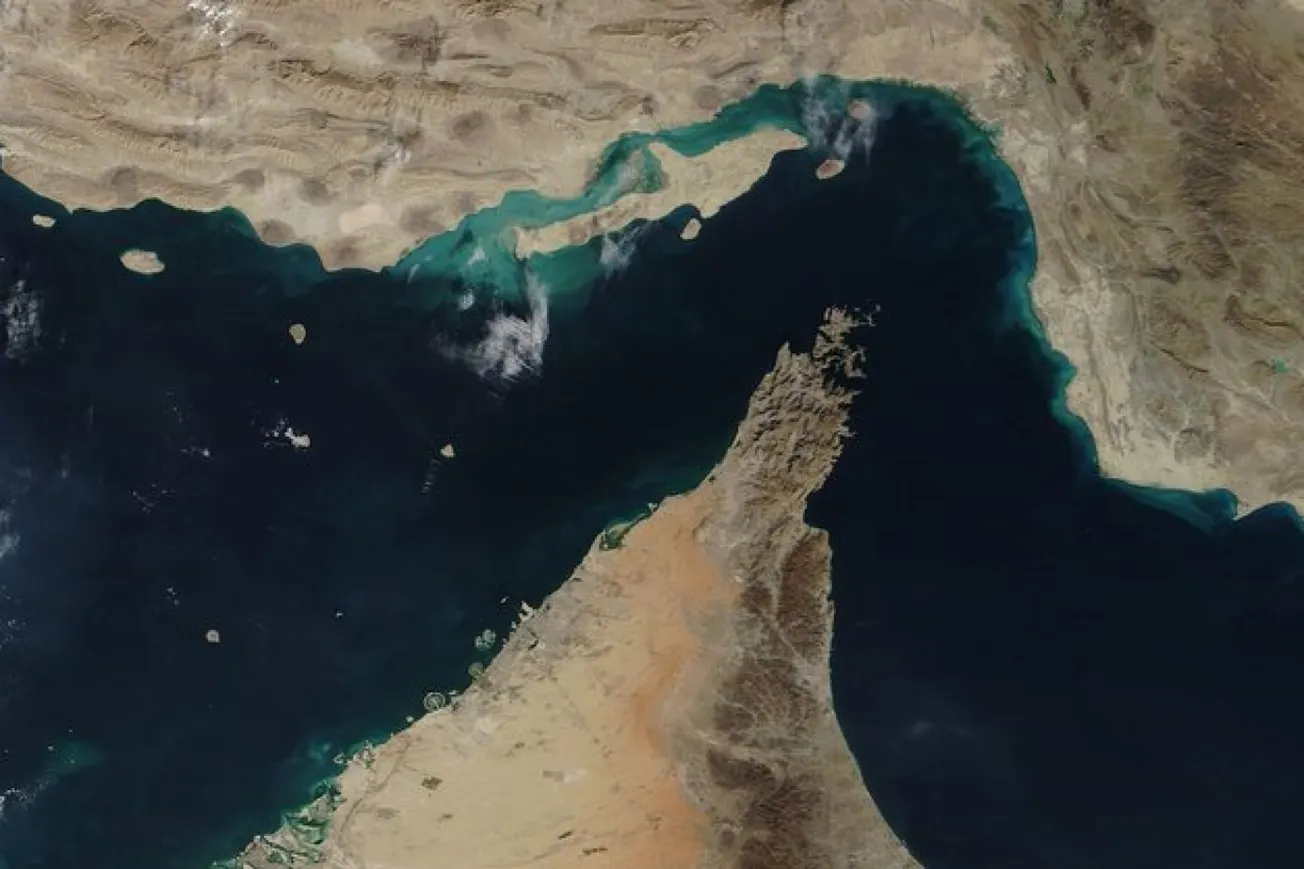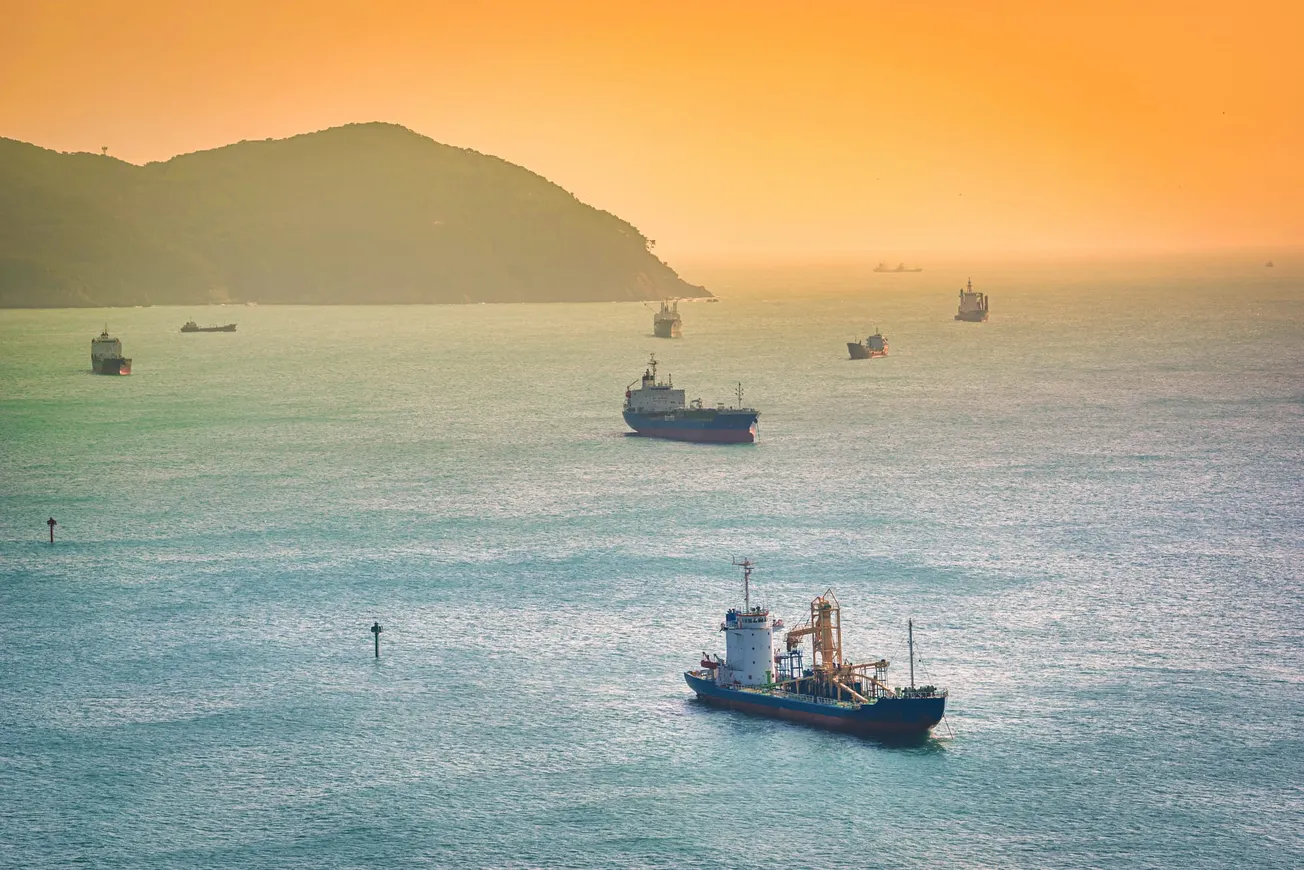
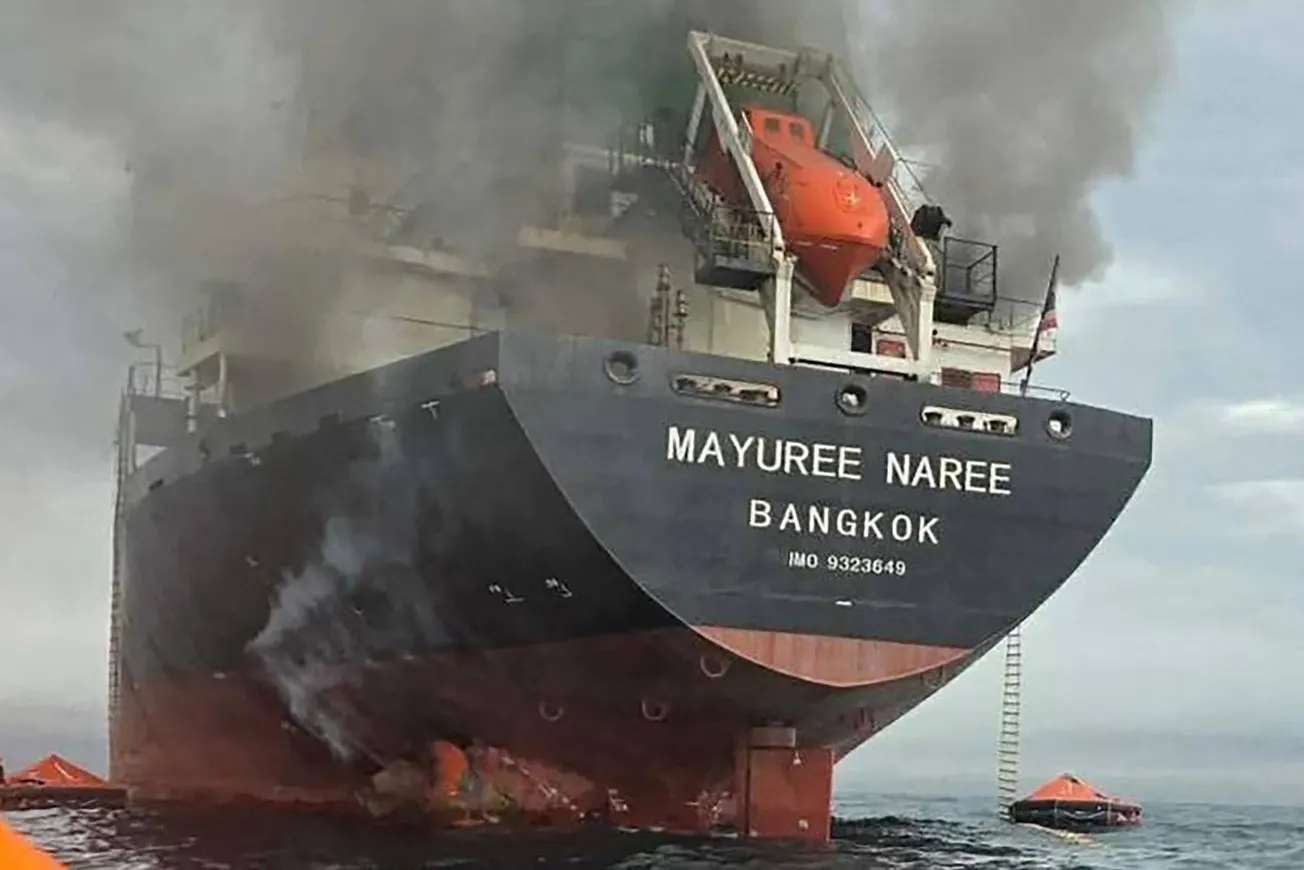
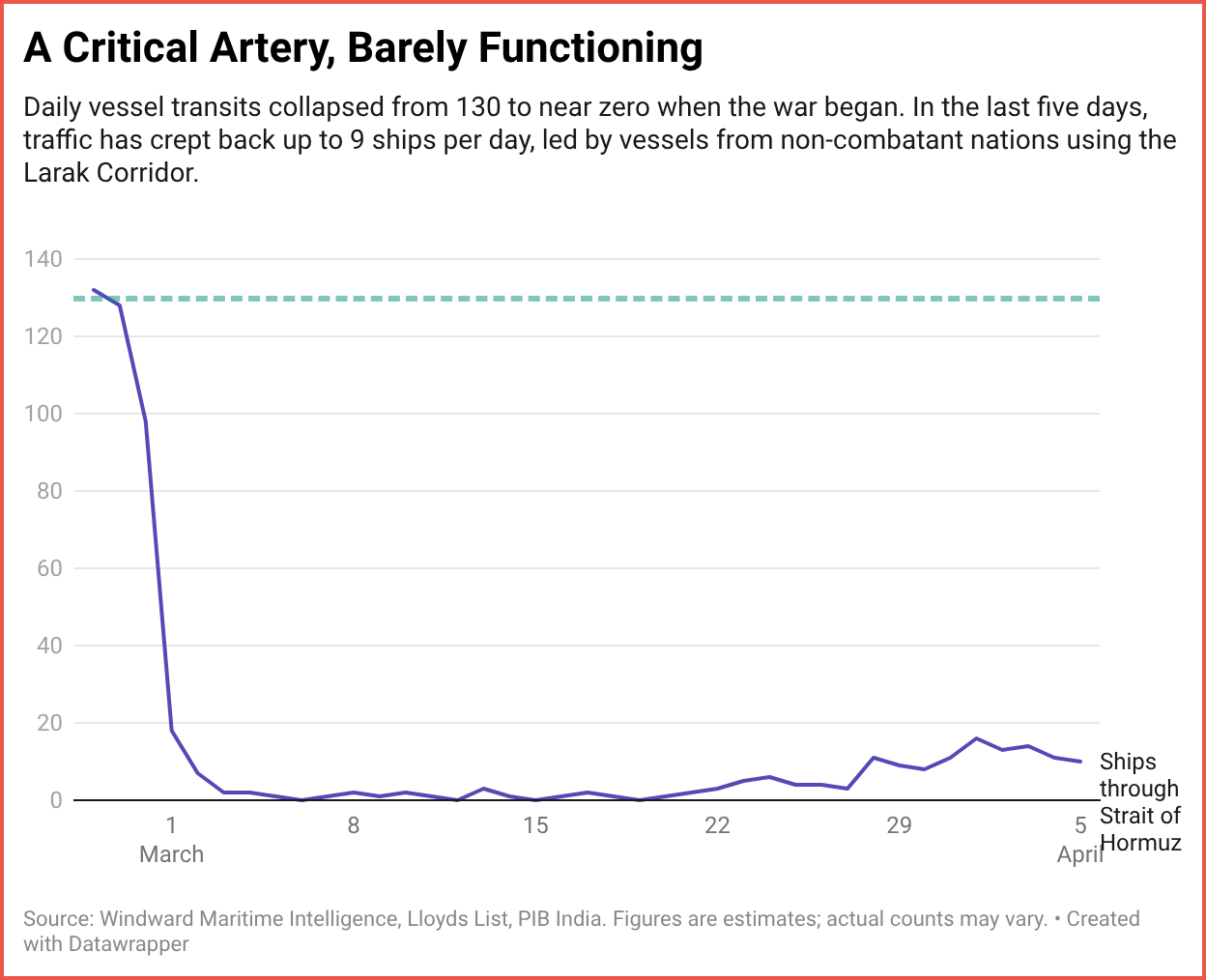
The Strait of Hormuz, a waterway that carries roughly one-fifth of global oil and LNG, is no longer operating freely. Daily traffic has collapsed from nearly 130 vessels before the Israel-US attack on Iran to just a fraction. These days, just a handful of transits occur each day, many of them selective or Iranian-linked. Insurance costs have surged. War-risk premiums have climbed to several percent of a vessel’s value, making commercial shipping nearly unaffordable for many.
What did not happen is just as important.
There was no immediate multinational armada moving to restore passage. There was no automatic mechanism, no UN Security Council consensus, to force the waterway open. Allies have voiced concern but held back from taking concrete steps. Even direct appeals from Washington for help have gone largely unanswered.
The Strait has not reopened after days or even weeks of threats and offers of negotiations.
For decades, the assumption has been that global shipping lanes are protected by default; that the powers who built the post-Cold War system would move quickly to protect it. What Hormuz has shown is that this protection is not automatic.
What countries will and will not do to keep the shipping routes open and operational depends on political will, domestic priorities, and whether major powers are willing to risk escalation.
Iran has not completely closed the Strait. They just made it dangerous enough to cause a complete traffic disruption, creating a chokepoint. And, by deciding who passes and who does not, Tehran has turned a chokepoint into a weapon.
And it has done this cheaply. Relatively low-cost systems - mines, drones, and anti-ship missiles - have been enough to complicate operations for even the most capable naval forces. Geography plus cheap weapons lets a smaller power punch far above its weight.
Others will be watching closely.
China depends heavily on oil that passes through the Hormuz Strait. Beijing sits astride the Taiwan Strait, through which most of the world’s advanced chips move. If disruption can be imposed in Hormuz, even briefly, someone will try it somewhere else. The Taiwan Strait is the obvious candidate.
The question is not whether the Strait reopens. It is how long it takes and what it costs to get shipping passing through without risk. The longer the crisis lasts, the more the world sees how exposed these routes really are, and how little stands between open commerce and chaos.
By the time this situation is resolved, a precedent will have been set. Not in speeches or statements, but in what unfolded and powerful nations watched. Chokepoints work. And in a world of tight supply chains and great power rivalry, that lesson will not be forgotten.
The Strait will reopen eventually, hopefully much sooner than many expect. It must. The real question is what the world will have learned by the time it does, and whether anyone will act on it before the next chokepoint is seized. Hormuz was the lesson. What comes next is the test.
👉 Show & Tell 🔥 The Signals
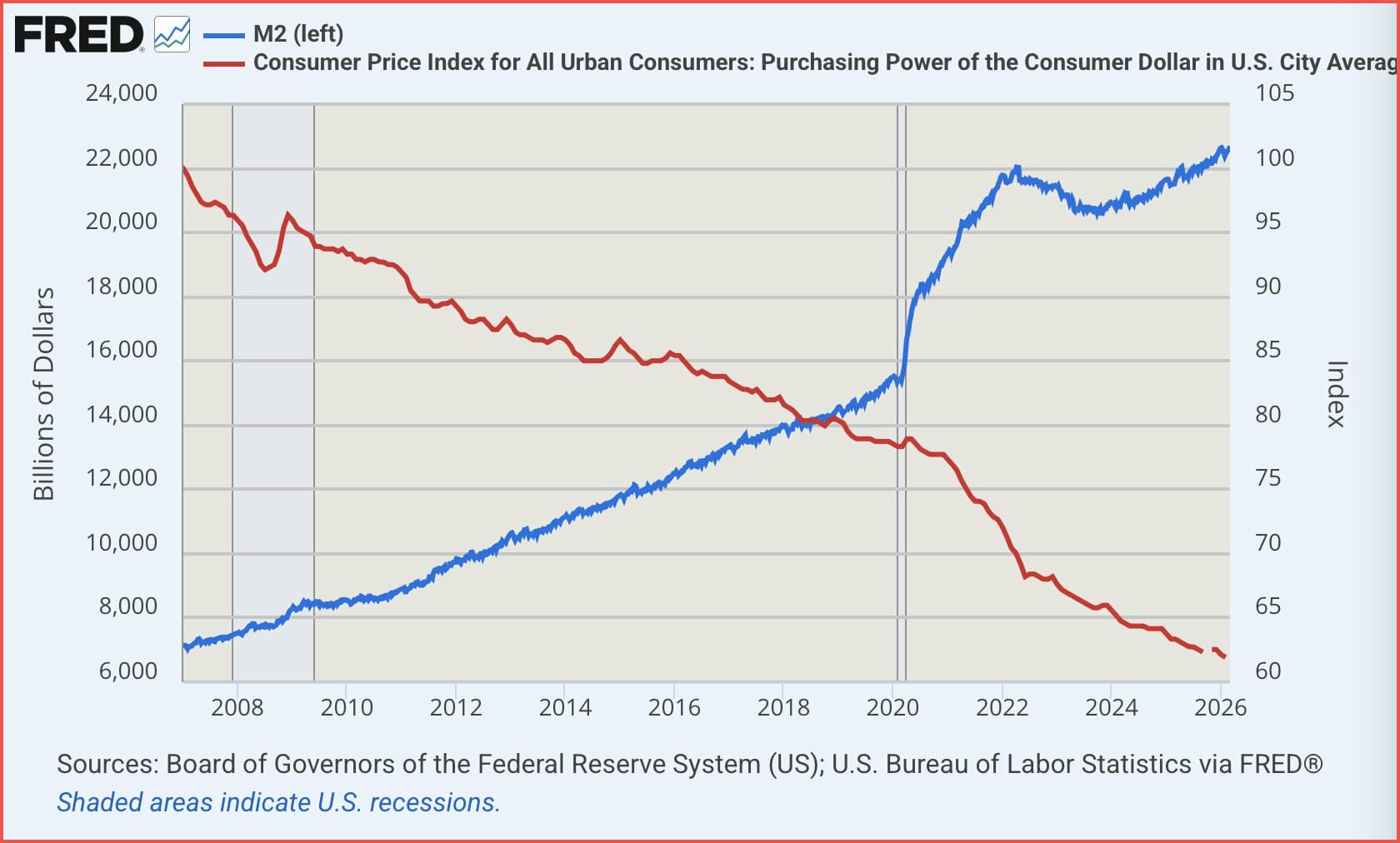
I. The Dollar Shrinks as Money Supply Surges
Since 2008, U.S. M2 money supply has roughly tripled, while the purchasing power of the dollar has fallen about 38%. (M2 includes cash, checking and savings deposits, and other easily accessible money.)
The relationship is hard to miss. As more money enters the system, each dollar buys less. The post-2020 surge makes the trend unmistakable.
📊 Market Mood — Tuesday, April 7, 2026
🟩 Markets Turn Cautious Ahead of Iran Deadline
U.S. futures slipped as investors braced for a critical deadline on a potential ceasefire deal.
🟧 Oil Surges as Hormuz Remains Effectively Closed
Crude prices climbed further above $110 amid persistent supply disruptions and rising escalation risks.
🟦 Inflation Pressures Build in Services Sector
Rising input costs and slowing activity signaled mounting economic strain from the energy shock.
🟨 AI Momentum Offsets Some Market Weakness
Strong chip demand and major deals in AI infrastructure provided a counterweight to geopolitical uncertainty.
🗓️ Key Economic Events — Tuesday, April 7, 2026
🟧 08:30 ET — Durable Goods Orders (Feb)
Measures new orders for long-lasting manufactured goods, a key indicator of business investment and economic momentum.
editor-tippinsights@technometrica.com