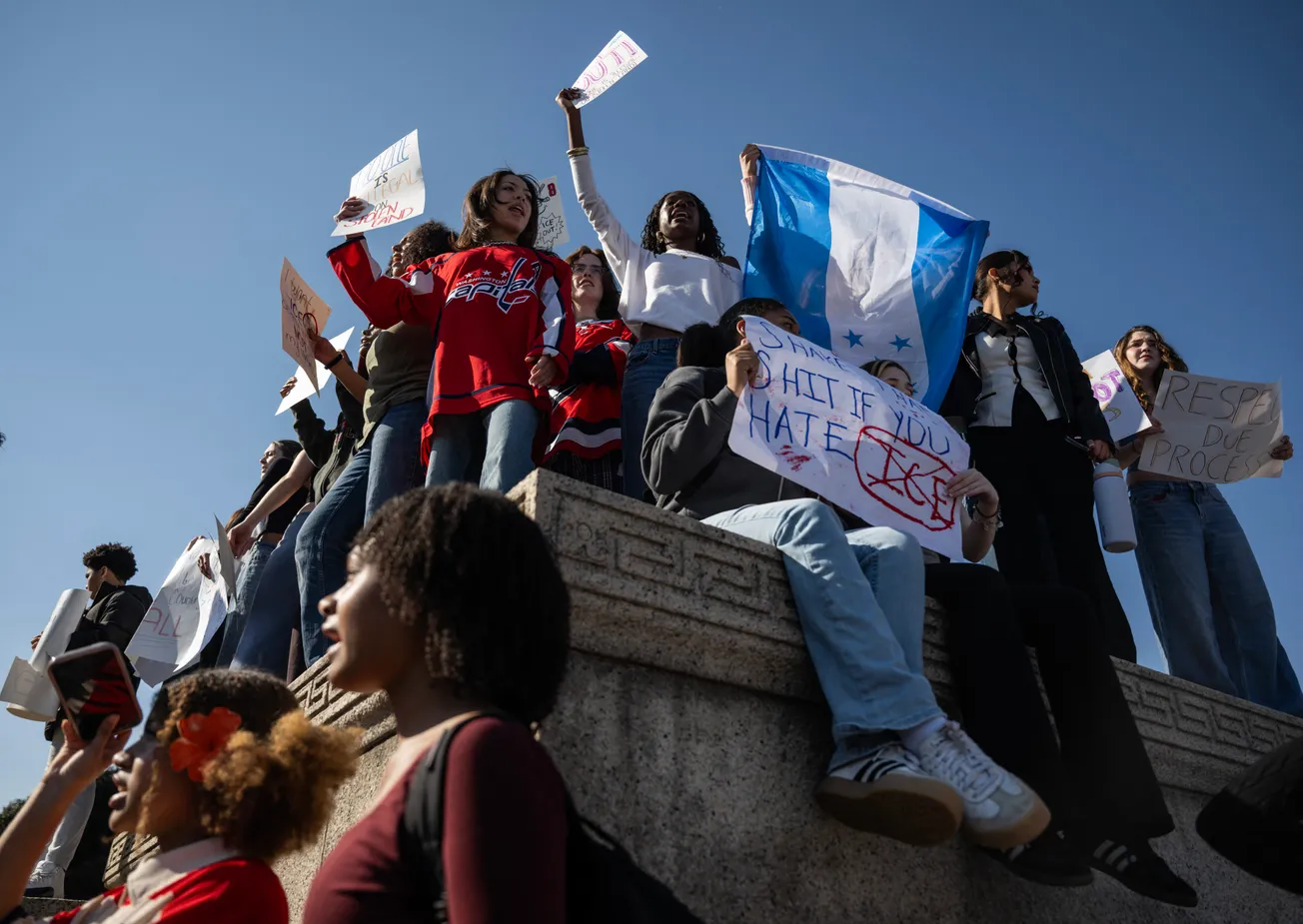
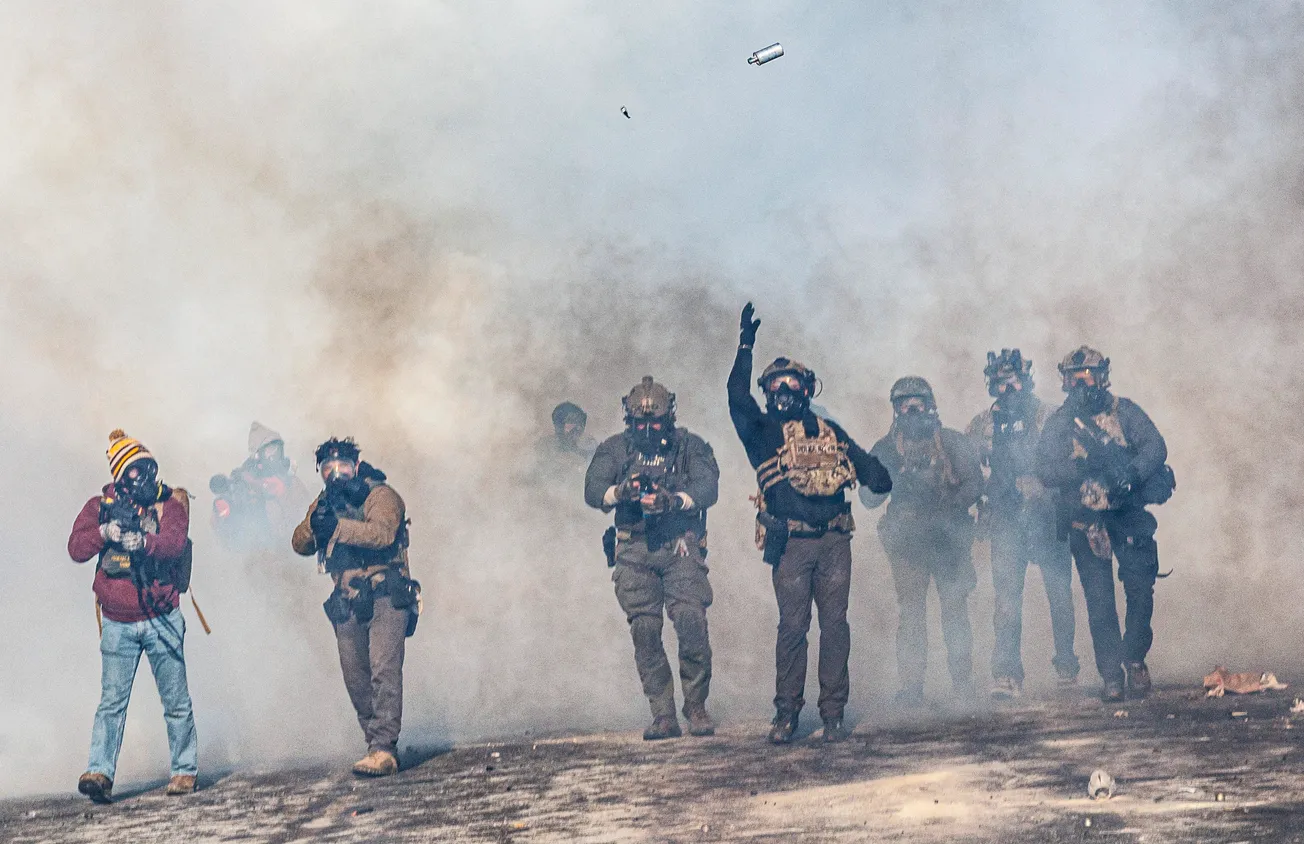
Judging by the nonstop media coverage of what is going on in Minnesota, one would think that the federal government’s role in state matters is cruel, un-American, and unprecedented.
At a hearing before U.S. District Judge Katherine Menendez of the District of Minnesota, state and local officials requested a temporary restraining order to curb the Trump administration’s “Operation Metro Surge.”
The judge openly mused that both sides were putting her in a “difficult position”. In effect, she wondered how she could reconcile conflicting Constitutional issues of balancing the federal government’s unquestioned authority to implement immigration enforcement against Minnesota’s Tenth Amendment rights to protect “state values”.
However, the conflict is clearly not quite as stark as the judge wondered. All she had to do was study federal enforcement during the Civil Rights era when another state beginning with the letter M, Mississippi, was at the forefront of a human-rights controversy.
In one specific instance in 1964, Mississippi witnessed the murders of three civil rights activists—James Chaney (Black), Andrew Goodman, and Michael Schwerner (both white)—in Neshoba County, during Freedom Summer. Their disappearance prompted a major FBI investigation, code-named “Mississippi Burning,” which morphed into a Hollywood blockbuster of the same name.
The movie earned seven Academy Award nominations at the 61st Oscars (1989), including Best Picture, Best Director (Alan Parker), Best Actor (Gene Hackman), Best Supporting Actress (Frances McDormand), Best Cinematography, Best Film Editing, and Best Sound. It won one Oscar: Best Cinematography (Peter Biziou). It also picked up other honors, including the National Board of Review awards for Best Film, Best Actor (Hackman), Best Supporting Actress (McDormand), and Best Director, plus wins in editing and cinematography from groups like the British Academy of Film and Television Arts (BAFTA).
In the movie, the FBI assigns two agents with contrasting styles to the case. Alan Ward, played by Willem Dafoe, is a young, idealistic, by-the-book Northerner. Rupert Anderson, played by Gene Hackman, is an older, street-smart former Mississippi sheriff.
When they arrive, they face fierce resistance from the white community, including from Sheriff Ray Stuckey, Deputy Clinton Pell (Brad Dourif), and the local Ku Klux Klan chapter led by Clayton Townley. The town is steeped in segregation and terror. Black churches burn. Homes are firebombed. Witnesses face brutal retaliation.
The agents struggle to gather evidence amid a wall of silence from locals who are either apathetic or complicit. Anderson uses his Southern roots to connect with people, including Pell’s wife (Frances McDormand), who becomes a reluctant source of truth. Ward initially insists on strict protocol.
As violence escalates, including attacks on Black residents and the discovery of the activists’ burned car, the FBI pair clash over methods. Frustrated by local corruption and the inability to secure state-level justice, the FBI turns to aggressive, unorthodox tactics, including intimidation, coercion, and psychological pressure on Klan members to extract confessions. Key breakthroughs come from breaking alibis and turning nervous participants.
The bodies are eventually found buried in an earthen dam, confirming the murders. The investigation culminates in federal civil rights violation charges, since murder prosecution seemed impossible locally. The movie vividly portrays 1960s Southern racism, Klan involvement, and local corruption.
What is happening in Minnesota today is a play-by-play replay of the movie. The liberal elite today, who are so intensely organized against federal officers doing their jobs in Minnesota under authority given to them by Congress and at the express direction of President Trump, need to be reminded that their forefathers and mothers were perfectly fine with federal intervention from JFK and LBJ to enforce Civil Rights Laws in the Deep South.
The crucial point here is that the State of Minnesota does not have the right to argue for relief under the Tenth Amendment, just like Mississippi didn’t in the 1960s.
The U.S. Supreme Court has established, through several landmark rulings, that the federal government holds supremacy (often described as “plenary” or exclusive) over immigration matters. These powers stem from the power to establish uniform rules of naturalization (Article I, Section 8), foreign commerce, foreign affairs, and inherent sovereign authority over borders and national security.
The Supremacy Clause (Article VI) ensures that federal law preempts conflicting state actions in this field.
All immigration actions, including entry, exclusion, removal, naturalization, and alien status, fall under the federal domain. States may cooperate in limited ways (e.g., some enforcement under federal direction), but they cannot independently regulate or enforce immigration policy in ways that conflict with or supplement federal law without preemption. The plenary power doctrine limits judicial scrutiny of federal immigration decisions, underscoring the federal government’s exclusive authority.
There have been several cases where the Supreme Court has affirmed the above broad principles.
- Chy Lung v. Freeman (1875): The Court struck down a California law allowing state officials to exclude or detain immigrants deemed likely to become public charges. It held that immigration regulation, especially involving foreign relations, is exclusively federal, not a state power, as states cannot interfere with national foreign policy or uniform immigration rules.
- Chae Chan Ping v. United States (1889), also known as the Chinese Exclusion Case: The Court upheld the Scott Act (barring reentry of Chinese laborers) and articulated the plenary power doctrine. It ruled that Congress has broad, inherent authority to exclude or admit foreigners, as an incident of national sovereignty. This power is largely unreviewable by courts and belongs exclusively to the federal government.
- Nishimura Ekiu v. United States (1892): Reinforcing plenary power, the Court upheld the federal government’s exclusion of an immigrant and held that the power to exclude aliens is inherent in sovereignty and vested in the federal government (citing naturalization, war powers, and foreign affairs authorities).
- Arizona v. United States (2012): In a significant modern reaffirmation, the Court struck down key parts of Arizona’s SB 1070 law (e.g., criminalizing failure to carry federal registration, making it a state crime for unauthorized aliens to work, and authorizing state arrests for removability). Justice Kennedy’s majority opinion emphasized that the federal government has occupied the field of immigration regulation. States cannot create parallel or conflicting enforcement schemes, as this would undermine uniform federal policy and foreign relations. The Court invoked the Supremacy Clause to preempt state intrusion into alien registration and status determination.
Because of intense media pressure and the potential for Midterm election losses, President Trump appears to be waning a bit in Minnesota by withdrawing a senior Border Patrol official and making phone calls with state and local leaders to compromise.
From a legal perspective, Trump has nothing to fear. He is on rock-solid ground, and he should proceed with his actions unhindered by reporting in the liberal media.
Political compromise is, however, another matter.
Rajkamal Rao has been a TIPP Insights columnist and member of the Editorial Board for over four years. He also publishes on Substack, with all of his work available for free. Readers may subscribe to get new articles sent straight to their inbox.
Catch up on today’s highlights, handpicked by our News Editor at TIPP Insights.
1. Trump Pushes Temporary Pause In Russian Bombardment
2. Trump-Iran Confrontation Fuels Fear And Uncertainty In Region
3. Trump Picks Kevin Warsh To Replace Jerome Powell As Fed Chair
4. Apple Posts Record iPhone Sales In China As Revenue Jumps 38 Percent
5. Why President Trump Is Suing The IRS And Treasury For $10 Billion
6. Toyota Defies Trump Tariff Pressure With Stellar Global Vehicle Sales
7. Gold Investment Demand Jumps 80 Percent As Investors Seek Safety
8. AI Firms Fund $125 Million Campaign For Federal Regulation
9. Why A Partial Government Shutdown Could Begin Saturday
10. FBI Takes Over Probe Into Fatal Minneapolis Shooting
11. Justice Department Releases Millions More Pages From Epstein Files
editor-tippinsights@technometrica.com