By Raghuram G. Rajan, Project Syndicate
When it comes to managing new technologies and financial innovations, the United States tends to regulate too little, too late, whereas the European Union does too much, too soon. Neither gets the balance quite right, which is why the world may be best served if US and European regulators keep pulling in different directions.
CHICAGO – The problem with European regulators, a German businessman recently told me, is that they are too scared of downside risks. “In any innovative new business sector, they overregulate and stifle any upside potential.” In contrast, he argued, Americans care more about the upside potential, and thus hold off on regulation until they know much more about the consequences. “Not surprisingly, the United States has much more of a presence in innovative industries.”
AI is a case in point. The European Union enacted the world’s first comprehensive AI regulation in August 2024, establishing safeguards against risks such as discrimination, disinformation, privacy violations, and AI systems that could endanger human life or threaten social stability. The law also assigns AI systems different risk levels, with different treatments for each. While AI-driven social scoring systems are banned outright, higher-risk systems are heavily regulated and supervised, with a list of fines for non-compliance.
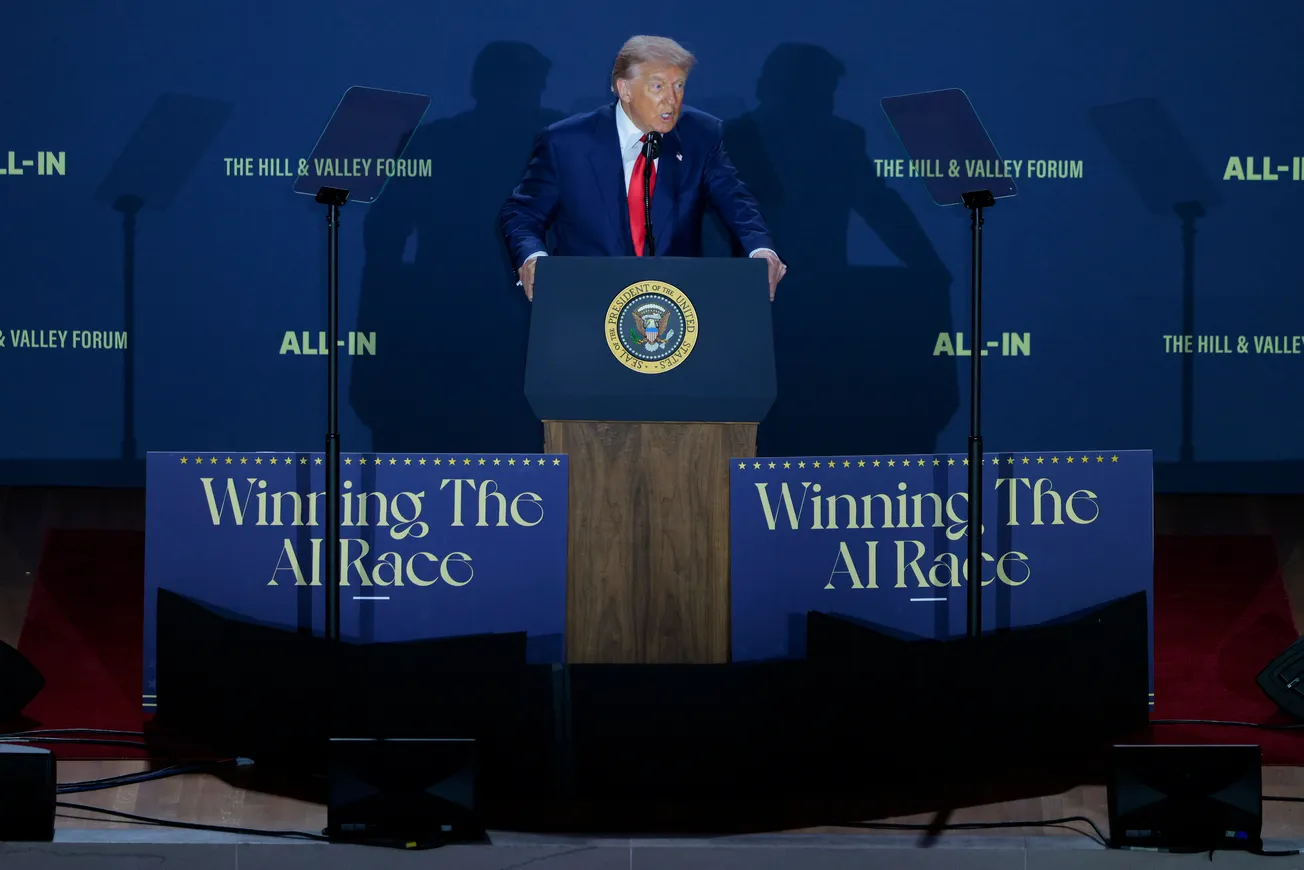
But Europe has little presence in the burgeoning AI industry, especially relative to the US or China. Those leading the charge in generative AI are US-based firms such as OpenAI, Anthropic, and Google; no European firm meets the mark. Such a glaring gap seems to speak for itself. For now, the Trump administration’s AI Action Plan, which seeks to limit red tape and regulation in AI, looks like the better approach.
The problem with the European way is that it burdens fledgling firms with the costs of regulatory compliance before the technology’s potential has become clear. A chatbot that spreads falsehoods or discriminates against certain ethnic groups is certainly not desirable, but there must be some tolerance for such errors in the early stages of a system’s development.
Don’t just follow AI. Understand it.
Subscribe now for the best AI coverage, $99/year.
Moreover, when developers can explore a system’s positive possibilities more freely, they also have time (and possibly resources generated from successful but error-prone launches) to figure out cost-effective ways to address issues that undermine the system’s reliability. Demanding near-perfection from the outset does not safeguard society so much as it stifles the trial-and-error process through which breakthroughs emerge.
Of course, errors such as racial discrimination can be extremely costly, especially if made by chatbots that interact with millions of people. Recognizing this risk, some regulators allow new products to be tested only in tightly controlled settings. Innovators can experiment with a limited group of users, and always under the regulator’s watchful eye. This “sandbox” approach helps to contain any harms from spilling over to the broader public – Europe’s main concern.
But sandboxes might also limit what can go right. Trials with small, restricted groups cannot capture the benefits of network effects, whereby products become more valuable as more people use them. Nor can they reveal unexpected breakthroughs that come when the “wrong” people adopt a product (for example, online pornography drove early innovations in web technology). In short, sandbox trials may keep disasters at bay, but they also risk stifling discovery. They are better than outright bans, but they may still cause innovators to bury too many promising ideas before they can scale.
What then are the costs of the laissez-faire American approach? Most obviously, the system can blow up because of rogue products, as happened with subprime mortgage-backed securities before the 2008 global financial crisis. Today, one hears similar fears about generative AI and the crypto industry (with FTX’s implosion cited as an early warning signal).
Historically, the US, with its deep fiscal pockets, may have been more willing to take such risks, while the fragmented EU may have been more cautious. But with fiscal space shrinking in the US, a rethink may be in the offing.
Even if the US wants to regulate more, though, can the authorities really pull it off? The American way is to wait until an industry is large enough to matter. But by that point, the industry will have grown powerful enough to shape any rules meant to rein it in. Consider crypto: flush with cash, armed with lobbyists, and laser-focused on its interests, it has proven adept at swaying politicians – and public opinion – in its favor. The consequence invariably is under-regulation, even when the risks to the public are glaring.
Risk-averse Europe, by contrast, steps in early, when an innovative sector is still small and its voice barely audible. At this stage, it is the incumbents – the banks threatened by crypto, for example – who dominate the debate. Their influence pushes the needle toward excessive caution and heavy-handed rules. The US tends to regulate too little, too late, whereas Europe does too much, too soon. Neither gets the balance quite right.
Even though there is a case for each side moving toward the other, it is worth emphasizing that regulation does not stop at national borders. In fact, the world may benefit from having somewhat different approaches. US chatbots can thrive in a relatively unregulated environment, experimenting and scaling quickly. But once they seek a global presence, they will run into Europe’s stricter standards. With sufficient resources and strong incentives, they will find creative, low-cost ways to comply, and those risk-reduction strategies may eventually flow back into the US, leaving the world with more, safer innovation.
That is the ideal scenario, anyway. Reality is likely to be messier. American firms could cause global harm before European regulators catch up. Europe may continue discouraging innovation before it starts, leaving the world with too little. But perhaps the greatest danger is if regulators on either side of the Atlantic export their own rulebook, forcing the other to fall in line. The world may be best served if US and European regulators keep seeing regulations differently.
Raghuram G. Rajan, a former governor of the Reserve Bank of India and chief economist of the International Monetary Fund, is Professor of Finance at the University of Chicago Booth School of Business and the co-author (with Rohit Lamba) of Breaking the Mold: India’s Untraveled Path to Prosperity (Princeton University Press, 2024).
Copyright Project Syndicate
TIPP Takes
Geopolitics, Geoeconomics, And More
1. Putin Wants NATO Expansion To End For Ukraine Peace - TIPP Insights
Founded in 1949 by 12 nations as a safeguard against the Soviet Union, the North Atlantic Treaty Organization (NATO) has expanded 11 times, most recently in 2024 when Sweden was accepted into the alliance.

Russia’s invasion of Ukraine in February 2022 has shaken Europe’s security architecture, prompting longtime NATO partners Finland and Sweden to seek full membership – Finland in 2023, and Sweden in 2024.
Russian President Vladimir Putin, after talks with China’s Xi Jinping and India’s Narendra Modi at the Shanghai Cooperation Organisation meeting in Tianjin, says the issue of NATO’s eastward enlargement will have to be addressed for there to be a sustainable peace in Ukraine.
2. Russia Clinches Major New Gas Pipeline Deal With China As West Shuns Supplies - CNBC
Russia and China on Tuesday signed a major deal to build the long-delayed Power of Siberia 2 gas pipeline.

The pipeline, which is set to transit gas reserves in Russia’s West Siberia to northern China via eastern Mongolia, will make it possible to supply 50 billion cubic meters (bcm) of gas per year, Miller said, according to Russia’s Interfax news agency.
3. U.S. ERAM Cruise Missiles To Ukraine - TIPP Insights
The Pentagon has approved the potential sale of 3,350 Extended Range Attack Munition (ERAM) cruise missiles to Ukraine at a cost of $825m, which will mainly be funded by Denmark, Norway, and the Netherlands.

4. Israeli Military Reservists Brace For Gaza City Offensive - UPI
Thousands of Israeli military reservists are preparing to join Israel Defense Forces that have begun a ground offensive against Gaza City in the northern Gaza Strip.

Israel has called up to active duty tens of thousands of reservists to support the offensive, but many have delayed responding to the move, The Times of Israel reported on Tuesday.
5. North Korea's Kim Arrives In Beijing With Daughter To Attend Massive Military Parade - BBC
North Korean leader Kim Jong Un has arrived in the Chinese capital Beijing along with his daughter, Kim Ju Ae, to attend China's largest-ever military parade.

The "Victory Day" parade on Wednesday will see him rub shoulders with China's Xi Jinping, Russia's Vladimir Putin and other world leaders.
Xi is hosting the parade to mark the 80th anniversary of the formal surrender of the Japanese at the end of World War Two.
6. Trump Says US Strike On Vessel In Caribbean Targeted Venezuela's Tren De Aragua Gang, Killed 1 - AP
President Donald Trump said Tuesday that the U.S. has carried out a strike in the southern Caribbean against a drug-carrying vessel that departed from Venezuela and was operated by the Tren de Aragua gang.

“The strike occurred while the terrorists were at sea in International waters transporting illegal narcotics, heading to the United States,” Trump said in a social media posting. “No U.S. Forces were harmed in this strike. Please let this serve as notice to anybody even thinking about bringing drugs into the United States of America.”
7. More Than 800 Killed In Afghanistan Quake - TIPP Insights
More than 800 people are feared dead after a powerful earthquake hits eastern Afghanistan. Officials warn that the death toll is expected to rise.

The epicentre was located about 27 kilometres from Jalalabad, Afghanistan’s fifth-largest city in Nangarhar province, and tremors were felt as far as 140 kilometres away in the capital, Kabul.
The disaster adds to Afghanistan’s mounting challenges, further straining a nation already facing deep humanitarian crises, including a sharp decline in international aid and the forced return of thousands of Afghan citizens from neighbouring countries.
8. Google Dodges A $2.5T Breakup - Politico
A federal judge rejected the DOJ's request to force the tech giant to spin off its Chrome and Android products.

District Judge Amit Mehta in Washington rejected the Justice Department’s request to force the $2.5 trillion company to spin off its Chrome browser and Android products. While Google dodged the most severe possible outcome, the judge ordered that the company must share some of its search data with competitors, a penalty that was still narrowed in scope from what the government asked for.
9. Diabetes-Detecting Breath Test Shows Early Promise In Trial - Health News
An experimental breath test sorted out type 2 diabetes patients from healthy people, based on their exhalations, researchers report in the September issue of the Chemical Engineering Journal.

"This sensor only requires that you exhale into a bag, dip the sensor in and wait a few minutes for results," senior researcher Huanyu "Larry" Cheng, an associate professor of engineering science and mechanics at Penn State, said in a news release.
📊 Market Pulse — September 2, 2025
🟢 S&P 500: 6,415.54 (−0.69%)
Stocks slipped as traders took profits ahead of key economic data.
🔴 10Y Treasury Yield: 4.277% (+5 basis points)
Yields climbed, signaling stronger skepticism on near-term rate cuts.
🟠 Crude Oil: $65.62 (+2.52%)
Oil jumped on supply concerns and resilient demand.
💠 Bitcoin: $111,105 (+0.52%)
Crypto stabilized after recent volatility.
💵 Dollar Index: 98.31 (+0.54)
The dollar firmed on risk aversion and Fed uncertainty.
🥇 Gold: $3,533 (+2.43%)
Gold surged to new highs on safe-haven demand and rate-cut bets.