By Sylvain Duranton, Nikolaus S. Lang, Project Syndicate | September 24, 2025
While global power once rested on armies, natural resources, and control of sea and air, it now also depends on the data, talent, and digital infrastructure needed to develop and deploy cutting-edge AI models. The US is currently in the lead, but China, Europe, and other rising powers are moving quickly to close the gap.
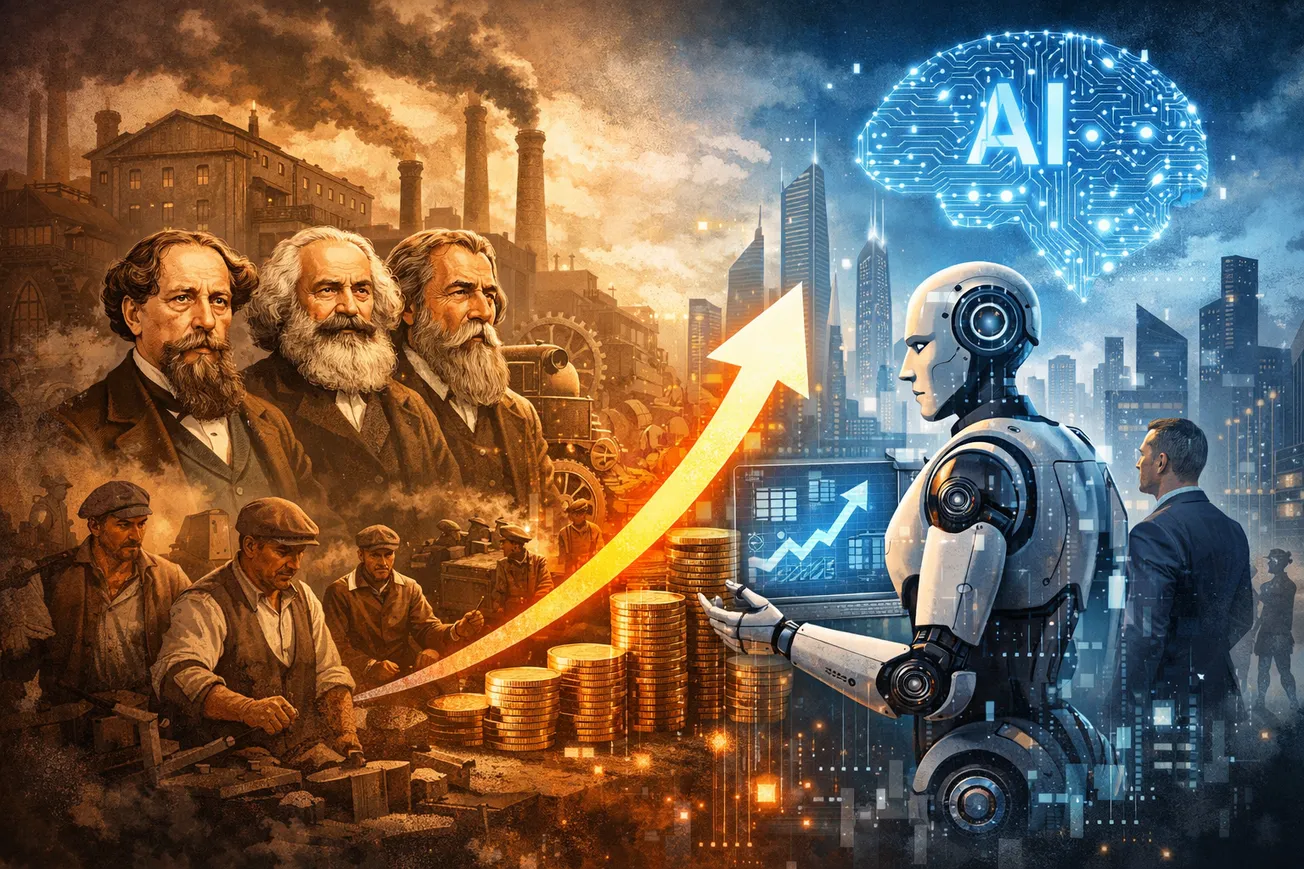
PARIS/MUNICH – It is tempting to view AI as merely another technological advance, but that is like saying the steam engine was just a faster way to pull a cart. In reality, AI is rapidly transforming the geopolitical order. While global power once rested on armies, oil, and control of sea and air, it now also depends on the data, talent, computational infrastructure, and legal frameworks needed to build and deploy cutting-edge models.
The United States currently has a clear lead. Since 2019, American tech companies have produced more than half of the leading AI models. Between 2023 and 2024, six major companies invested $212 billion in research and development, while generative AI startups raised nearly $90 billion in 2024. The US also has the largest pool of AI specialists – roughly 500,000– and the world’s largest data-center capacity, at 45 gigawatts (GW).
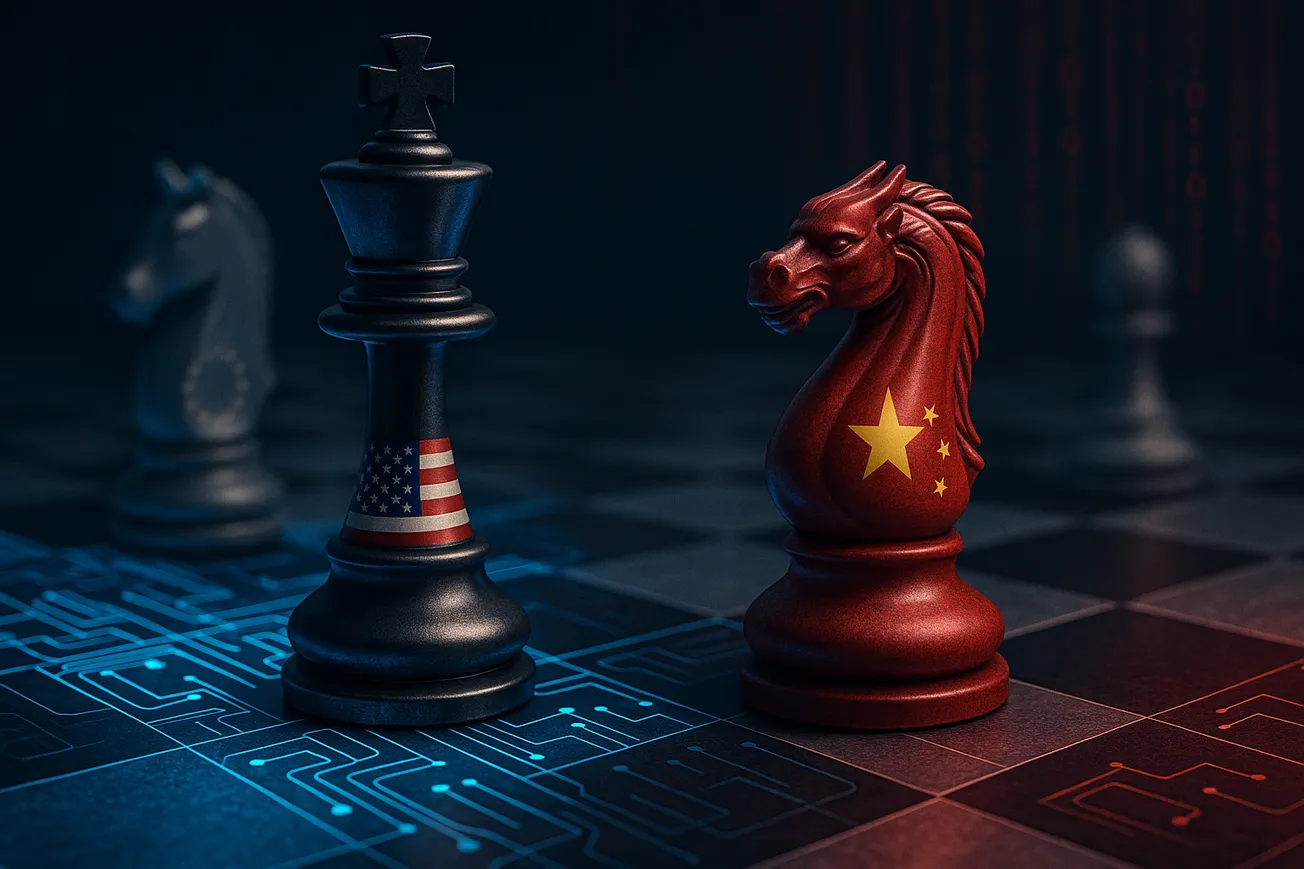
But with other countries moving quickly to close the gap, America’s lead is not guaranteed. At first glance, the race may resemble the Cold War, with two major powers – the US and China – competing for technological dominance while the rest of the world looks on. In fact, the rest of the world is very much in the game. And in a game without established rules, much less trusted referees, that is a problem.
Don’t just follow AI. Understand it.
Subscribe now for the best AI coverage, $99/year.
The US and China take very different approaches to AI. The US relies on its dynamic private sector, powered by a vibrant startup ecosystem and tech giants like Google, Microsoft, and OpenAI. China, by contrast, relies on central planning – massive state funding, military-industrial integration, and global trade initiatives – to bolster its thriving AI startup scene.
China’s strategy is already bearing fruit. The government has poured around $132 billion into the AI sector since 2019 and invests $60 billion annually in corporate research and development. As a result, China accounts for 15 of the 40 leading AI models, employs 18% of the top researchers in the field, and produces more STEM graduates than any other country. Its data-center capacity, at 20 GW, is the world’s second largest.
Despite US export controls limiting China’s access to advanced semiconductors, Chinese engineers have managed to squeeze more from “good enough” hardware through efficiency breakthroughs. This enabled DeepSeek, a relatively unknown startup, to shock the world by matching the performance of top US models using only a fraction of the computing power.
The European Union finds itself in a tricky position. It has neither the computing power of the US nor the vast data resources of China, ranking third in AI development with roughly 275,000 specialists, €381.4 billion ($449 billion) in annual R&D spending, and about eight GW of data-center capacity.
This is not to suggest that Europe lacks strategic advantages. While just three of 40 notable AI models originated on the continent, the EU accounts for 19% of the most cited academic papers in the field. It is also home to ASML, the Dutch firm that supplies most of the world’s high-end lithography machines used in semiconductor manufacturing.
Recognizing that it cannot compete with the US and China on innovation or scale, the EU has focused on shaping the rules of the game. Its AI Act – the most comprehensive cross-border AI regulatory framework to date – is more than just a set of rules; it’s a soft-power move dressed as regulation.
The EU has also committed more than €200 billion to meeting its Digital Decade targets, investing in infrastructure, training, and digitalization in an effort to carve out strategic space for its AI industry. With adequate resources, momentum, and political resolve, Europe could very well become an AI powerhouse in its own right.
Meanwhile, the Sino-American rivalry is heating up. On January 20, DeepSeek unveiled its hyper-efficient R1 model, making it clear that US sanctions would not hold back China’s AI ambitions. The very next day, US President Donald Trump launched the Stargate Initiative – a $500 billion plan to build next-generation data centers and secure America’s chip supply. The timing of these announcements was no coincidence, marking the opening salvos in a war for technological self-sufficiency.
Crucially, this race is not just about hardware and software – it is also about values. Who decides what is fair when it comes to emerging technologies? Whose morals will be embedded in the algorithms that increasingly govern essential services like health care and education? The answers to these questions could determine how AI is used and whose interests it serves, making the export of AI ethics just as consequential as the export of the models themselves.
Moreover, the struggle over AI’s future is no longer confined to China, the US, and Europe. So far, the Global South has been a passive recipient of systems it did not design, trained on data it did not produce, and governed by rules it had no part in shaping. But that is beginning to change. Across Africa, Latin America, and Asia, national and regional initiatives are developing models tailored to local priorities and needs, advancing both linguistic and digital sovereignty.
The Middle East is a prime example. Seeking to claim a place in the emerging technological order, Saudi Arabia, Qatar, and the United Arab Emirates are pouring their oil wealth into world-class data centers and homegrown AI models.
All this underscores the urgent need for accountability mechanisms that match the scale and speed of technological innovation, underpinned by a shared global vision of AI governance. But while the OECD and the G7 have made gestures toward regulatory coordination, enforcement is virtually nonexistent. Likewise, the United Nations’ proposal for a global AI advisory body, though promising, has yet to translate into action.
The stakes are enormous. Without coordinated international action, AI could concentrate control over knowledge, deepen digital divides, and reshape cultures and societies in ways that escape public scrutiny.
Such an outcome may seem inevitable, but it is not. We have a narrow – and rapidly closing – window of opportunity to choose a different path. That choice is the defining challenge of our time.
Sylvain Duranton is Global Leader of BCG X.
Nikolaus S. Lang is Global Leader of the BCG Henderson Institute.
Copyright Project Syndicate
TIPP Takes
Geopolitics, Geoeconomics, And More
1. Rubio Urges Russia's Lavrov to Stop 'Killing' in Ukraine - AFP
Rubio "reiterated President [Donald] Trump's call for the killing to stop and the need for Moscow to take meaningful steps toward a durable resolution of the Russia-Ukraine war," State Department spokesman Tommy Pigott said.

President Volodymyr Zelensky had earlier praised Trump following the U.S. president's unexpected turn against Russia on Tuesday, in which he suggested that Kyiv could not only win the war and retake its territory but also expand it.
2. Russia Will Expand Aggression Beyond Ukraine If Not Stopped, Zelensky Warns - BBC
Vladimir Putin "will keep driving the war forward wider and deeper" if he is not stopped, Ukraine's President Zelensky has warned.

Speaking at the UN's General Assembly in New York, Zelensky said more countries would be met with Russian aggression unless allies displayed a united front and ramped up support.
He said all nations were threatened by a global arms race, as military technology advances, adding that "weapons decide who survives" and calling for global rules on AI.
3. Moldova Detains 74 Over Alleged Russian Plot Around Election - TIPP Insights
Moldova holds a parliamentary election that could have sweeping consequences for its bid to join the European Union, while it confronts alleged Russian interference in its domestic politics.

4. Drones And Cyber Outages Expose Aviation Weak Spots - TIPP Insights
A hack hitting major airports across Europe, followed by drone incursions in Copenhagen and Oslo, has highlighted vulnerabilities in aviation infrastructure and security.

5. China, World’s Largest Carbon Polluting Nation, Announces New Climate Goal To Cut Emissions - AP
China set a target to cut greenhouse gas emissions by 7% to 10% over the next decade, which is viewed as insufficient for global climate action.

President Xi Jinping promised stricter emissions curbs covering the entire economy and pledged to increase non-fossil fuels in energy consumption to over 30%.
China's emissions footprint has peaked, with the country leading in renewable energy deployment, but strong energy growth continues to challenge reductions.
Xi stated that these targets are based on the requirements of the Paris Agreement, aiming for net zero by 2060.
6. Denmark's PM Apologizes In Person To Greenland Women Over Forced Contraception - Reuters
Denmark's prime minister apologized in person on Wednesday to women who were victims of a decades-long involuntary birth control campaign, which has left islanders with deep scars and strained relations with their former colonial power.

Thousands of women and girls as young as 12 were fitted with intrauterine devices without their knowledge or consent between 1966 and 1991, the year Greenland was given authority over its healthcare system.
"I don't believe we can achieve the more equal and proper relationship that many of us desire unless we dare opening even the darkest chapters," Mette Frederiksen, dressed all in black, said at a ceremony in Greenland's capital Nuuk.
7. Trump Admin Considers Government Stake In Lithium Mining Company – Fox News
Lithium Americas' stock surged on Wednesday following a report that the Trump administration is pursuing a 10% stake in the mining firm as the White House looks to intervene in industries deemed critical to national security.

A source familiar with the negotiations told FOX Business that Lithium Americas has agreed to allow the Trump administration to take a small stake of less than 10% in the company as it renegotiates a $2.26 billion Department of Energy (DOE) loan that dates back to the Biden administration.
8. Treasury Secretary Bessent Unveils $20 Billion ‘Bazooka’ To Try To Stem Argentina’s Financial Crisis – Market Watch
Treasury Secretary Scott Bessent on Wednesday gave more details on how the White House plans to use government funds to help embattled Argentine President Javier Milei.

Earlier this week, Bessent labeled Argentina a “systemically important ally” and said all options were on the table to help the country battle a currency crisis. That helped stabilize Argentine financial markets.
In a post on X, Bessent gave more specifics about the options under discussion, saying the U.S. was in talks with Argentine officials for a $20 billion swap line that would give the South American country access to scarce U.S. dollars.
9. US New Home Sales Jump To More Than 3-1/2-Year High; Economists Dismiss Rise As A Fluke – Yahoo Finance
Sales of new U.S. single-family homes surged to the highest level in more than 3-1/2 years in August, but that likely exaggerates the housing market's health, and a weakening labor market could limit the boost from falling mortgage rates.

The bigger-than-expected increase in sales last month reported by the Commerce Department on Wednesday was shrugged off by economists, who noted that new housing data was extremely volatile and subject to revisions. They also said the jump in sales was at odds with subdued homebuilder sentiment.
10. Tylenol’s 2017 Tweet About Pregnancy Reemerges After Trump Comments
The Department of Health and Human Services (HHS), along with several online personalities, has resurfaced a 2017 social media post by the popular over-the-counter pain reliever, Tylenol, stating that it does not recommend using “any of our products while pregnant.”

The American College of Obstetricians and Gynecologists (ACOG) released a statement reaffirming that “acetaminophen remains the analgesic and antipyretic of choice during pregnancy.”
As one of the most common over-the-counter pain and fever medications, studies find that more than half of pregnant women use acetaminophen to manage pain and discomfort, often for fevers and back pain.
Related: Responsible Acetaminophen - Editorial Board, TIPP Insights
📊 Market Pulse — September 24, 2025
📈 S&P 500 — 6,637.97 ▼ –0.28%
Stocks pulled back slightly from record highs as investors digested Powell’s comments and awaited more data.
📉 10Y Treasury — 4.15% ▲ +3 bp
Yields moved higher, reflecting cautious sentiment around the Fed’s policy path.
🛢️ Crude Oil — $64.79 ▲ +2.18%
Oil rallied on supply headlines, extending its rebound from recent lows.
💵 US Dollar — 97.87 ▲ +0.61
The dollar firmed, supported by rising yields and relative policy divergence.
🪙 Bitcoin — $113,640
Bitcoin held steady, consolidating after recent swings.
💰 Gold — $3,731.01 ▼ –0.89%
Gold slipped from recent peaks as the stronger dollar and higher yields pressured the metal.