The ceasefire was just hours old, and the verdict was already in.
Before anyone could say with confidence what had been achieved or lost, the storyline started to take shape in the media.
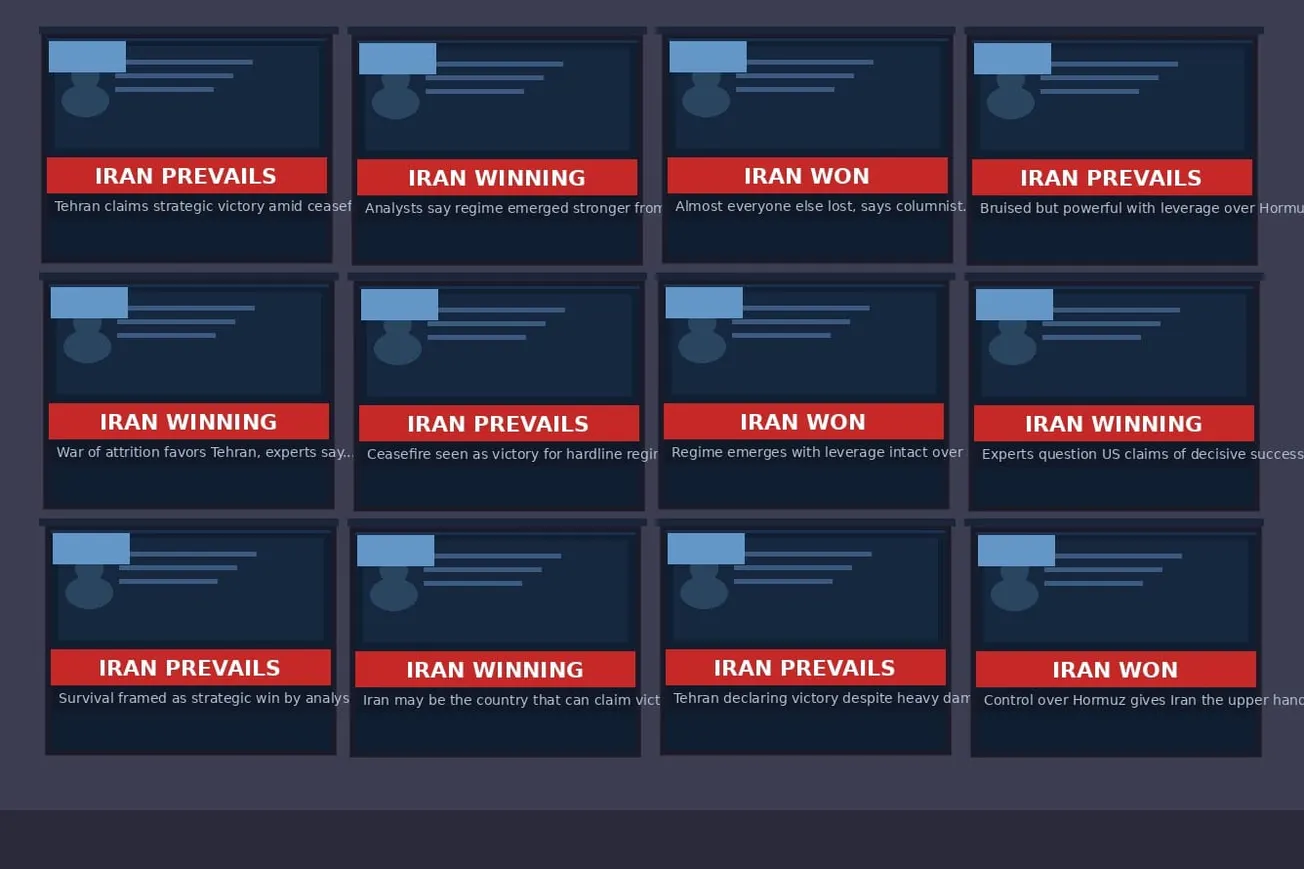
Iran was “winning.” Tehran was “prevailing.” The hardline regime had turned survival into a strategic advantage.
It didn’t come from one place. It showed up across outlets and analysts, almost in sync.
Al Jazeera published a prominent analysis declaring that “Iran has been bloodied, but it is winning against the US-Israel axis,” framing the outcome as a victory in a war of attrition. The Intercept asked “Who Won the Iran War?” and concluded that “Iran may, in fact, be the country that can claim the victory,” pointing to its control over the Strait of Hormuz. The Globe and Mail was even more blunt, running a column titled “Iran won. Almost everyone else lost.” Reuters noted that while Trump claimed victory, Iran was emerging “bruised but powerful with leverage over Hormuz.”
At the same time, U.S. officials were saying something very different. They pointed to destroyed air defenses, wrecked infrastructure, and clear operational wins. Iran, for its part, was declaring victory of its own.
That’s not unusual. In any conflict, both sides claim success. The early picture is never clean.
What’s different now is how quickly that mess gets turned into a clean story.
We’ve seen this pattern before. The first wave of reporting is tentative, as it should be. But within hours, the tone shifts. Tentative becomes confident. Competing claims get sorted into a storyline.
And once that storyline takes hold, it sticks—even when the facts don’t fully line up.
This isn’t about catching one bad headline or arguing that the outcome was clear-cut. It wasn’t. Modern conflicts rarely are. Military wins don’t always mean political gains. Adversaries absorb damage. They adapt. The final picture takes time.
And that’s exactly the point.
Uncertainty should slow things down. Instead, it seems to speed things up.
There’s a difference between reporting what’s happening and deciding what it means before we actually know. That line is disappearing. Not in every story. Not by every reporter. But often enough that people are starting to notice.
And they’re reacting.
In our latest national TIPP Poll, just 30% say they trust the traditional media to report the news accurately and fairly. A clear 61% say they do not. The rest aren’t sure.
That number doesn’t come from nowhere.
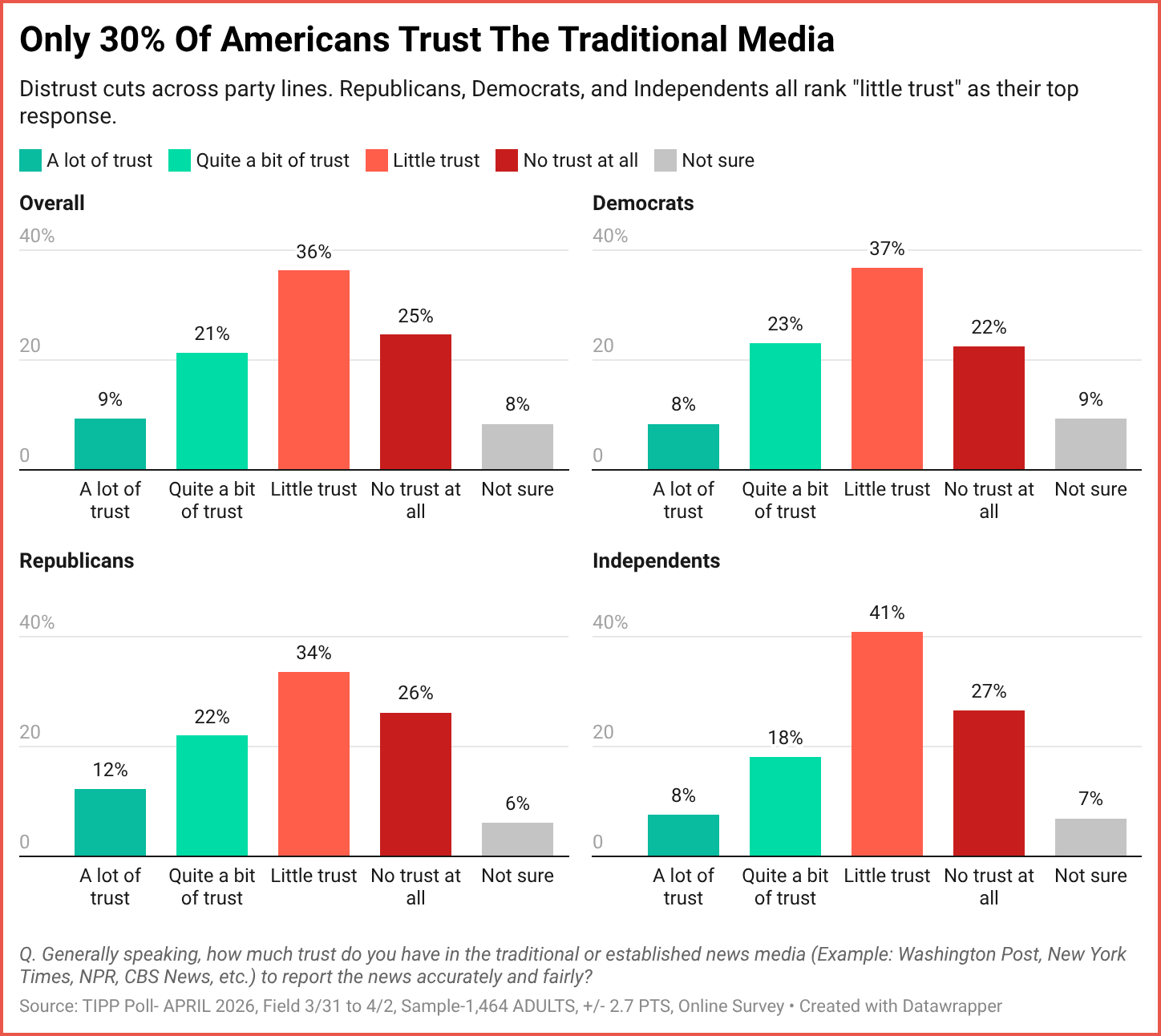
People can tell when a story feels settled too quickly. They can tell when the conclusion comes before the facts. And when that happens again and again, trust dies.
This isn’t a call for the press to be perfect. It’s a call for them to be careful.
There’s nothing wrong with saying, “We don’t know yet.” In moments like these, it’s probably the most honest thing to say.
Because when the story is still unfolding, rushing to close it doesn’t inform anyone.
It misleads them.
Is this journalism—or malpractice?
The public has already answered.
👉 Show & Tell 🔥 The Signals
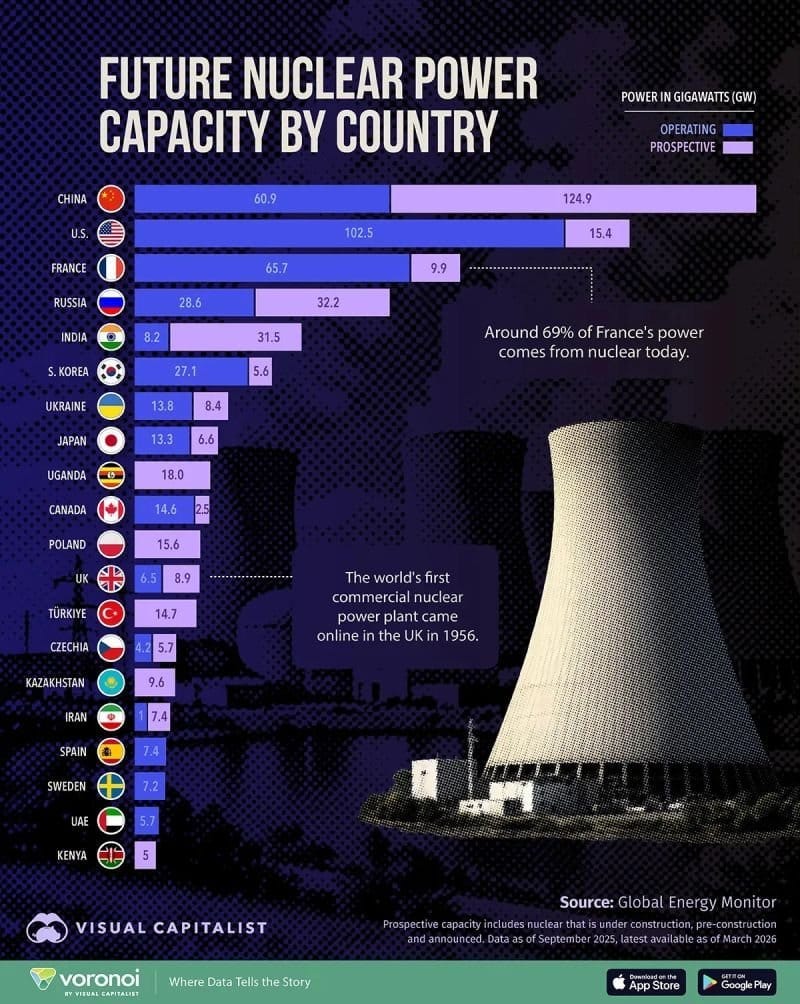
I. The Energy Crisis Is Rewriting the Nuclear Debate
The Hormuz shock is exposing a simple divide. Countries that built nuclear capacity have a buffer. Those that didn’t are paying the price.
France generates about 70% of its electricity from nuclear. Germany shut its plants and is now scrambling for energy.
This isn’t about climate anymore. It’s about security.
II. China Is Pulling Away in the AI Race
China leads the world in AI patents, ahead of the U.S. and the rest of the field. The gap is not small. China alone accounts for more patents than several major economies combined.

The TIPP Stack
Handpicked articles from TIPP Insights & beyond
1. Trump’s Base Wants Accountability—So What Happened At Pam Bondi’s DOJ?—Victor Davis Hanson, The Daily Signal
2. Trump Admin Claims Victory In Iran But Prepares For More—Mehek Cooke, The Daily Signal
3. Iran Demands Lebanon Ceasefire, Unfreezing Of Assets Before Peace Talks— Reuters Staff, The Daily Signal
4. Statement Of Iran’s Supreme National Security Council On The Two-Week Ceasefire And Negotiation Conditions—Larry C. Johnson, Ron Paul Institute for Peace and Prosperity
5. Israel Seeks Lebanon Talks After Bombardments Threaten Iran Truce—Reuters Staff, The Daily Signal
6. War, Peace, And The State—Murray N. Rothbard, Mises Wire
7. The Irresistible Promise Of John Law—C.J. Maloney, Mises Wire
8. Is Donald Trump Another Bismarck?—Gregory Bresiger, Mises Wire
9. Melania Trump Says She Never Had A Connection To Epstein—Reuters Staff, The Daily Signal
10. DOJ Probes Whether NFL Is Pricing Out Fans—Fred Lucas, The Daily Signal
11. Killing And Indifference—Andrew P. Napolitano, The Ron Paul Institute for Peace and Prosperity
12. Turns Out The Elites Like The Administrative State Better Than Democracy—William L. Anderson, Mises Wire
13. Complaint Alleges Maryland Schools Concealed Student Gender Identity Changes From Parents— Fred Lucas, The Daily Signal
14. The Theft Of Your Good Deflation— John McKearn, Mises Wire
15. Peru And Polling: Will Another Latin American Country Move Toward The U.S.?—Steve Cortes, American Greatness
editor-tippinsights@technometrica.com