I. A Bipartisan Case For Confronting Iran
Editor’s Note
In this monologue, Larry Kudlow highlights a Wall Street Journal op-ed by Democratic lawyer David Boies. Boies argues that Iran’s nuclear ambitions and long record of supporting terrorism left the United States little choice but to act. He also warns that opposing the war simply because President Trump ordered it risks turning national security into a partisan fight.
Every once in a while you come across a terrific op-ed where you might least expect it.
So, if you didn’t see it today, you must read in the Wall Street Journal, “Partisanship on Iran Is Dangerous for America. Trump is doing the right thing for the U.S., and we Democrats should judge the war on the merits.”
This may be the best op-ed piece I have read all year. And certainly during the Iran war. The author is the famed defense lawyer, David Boies, a Democrat who has no love for President Trump, but who has written a clear logical hard-hitting piece as to why Iran must be crushed.
Again, he’s no Trump supporter, in fact he is longing for a Democrat to win in 2028. But I know Mr. Boies and he’s a very smart fellow, just saying.
From this must-read piece: “Every past president since Bill Clinton, Republican and Democrat alike, has declared that Iran couldn’t be permitted to develop nuclear weapons. Not one acted to prevent it.”
Mr. Boies adds that “every president since Ronald Reagan has condemned Iran’s role in terrorism against American citizens, interests and allies. Not one acted to stop it. Instead each president left his successor with a more dangerous Iran and a more complicated threat to address.”
He goes on to say that because Iran’s nuclear threat and their constant terrorist campaigns, Mr. Trump had to act.
“In the face of Iran’s refusal to forswear nuclear weapons and evidence that it was rapidly increasing the number, sophistication and range of its missiles, Mr. Trump began the current military campaign,” Mr. Boies writes.
If the president “hadn’t acted, his successor would have been left with an even more dangerous choice than his predecessors left him,” Mr. Boies asserts.
Mr. Boies, the Democrat, is honest about his politics, saying “I understand some of the hostility to Mr. Trump’s action.” Yet he goes on to say “what is harder to understand, and particularly troubling for our country, is opposition rooted simply in antipathy toward Mr. Trump himself.”
Mr. Boies makes a good case that in the past Republicans have supported military actions by Democrats like Presidents Clinton and Obama, and many Democrats have supported President George W. Bush in Afghanistan and Iraq.
Yet he then argues that “those of us who generally oppose Mr. Trump but who recognize the threat Iran poses need to support the military action not because we owe anything to Mr. Trump but because we owe it to ourselves, our country and our children.”
Then he says “America’s national security is too important to hold hostage to partisanship.” And then he concludes “if we believe that Iran presents a serious threat, we need to support the president on this issue. There’s plenty to disagree with him about, and we don’t need to like or admire him. But on Iran we should be on common ground.”
And Mr. Boies finishes by saying “it is the right thing to do for our country, our children and the Democrat who will succeed Mr. Trump as president.”
Perhaps Mr. Boies’ hard-hitting piece will be a wake-up call for some Democrats who have opposed the war.
Yet I have said repeatedly that war opposition is a huge political mistake.
In this midterm election year, a vast majority of voters back Mr. Trump in order to stop the Iranian nuclear threat and their terrorist activities.
Pollster John McLaughlin shows 57 percent of likely voters back military action. Even voters still undecided about their Congressional vote, the majority support military action in Iran by 51 percent to 29 percent.
Independents support it by 46 percent to 40 percent. Hispanic voters support 56 percent to 33 percent. Among women the margin was 47 percent to 38 percent.
Of course, the lefty press are missing all of this. They’re trying to make the case, actually, that America is losing the war. That is patent nonsense.
The successful conclusion to the Iran war will be a sleeper issue come November. Democrats are making a huge mistake and instead they should listen to the logic of Mr. David Boies.
II. Why The War May Be Nearing Its End
Editor’s Note
In this segment, Kudlow argues that the administration set limited and clear objectives. These include preventing Iran from developing nuclear weapons, destroying missile and drone capabilities, and keeping the Strait of Hormuz open. Kudlow suggests that those goals may already be close to being achieved and that financial markets appear to be responding to that possibility.
When President Trump keeps telling the press that Operation Epic Fury is almost over, and based on the information you’re looking at several more weeks before American war goals have been met, people should listen to him.
You don’t have to take my word for it. Here’s what a veteran legacy reporter says:
“I’ve covered five presidents, I have never seen one other than Donald Trump who regularly takes phone calls from reporters. I’ve spoken to him over the phone three times since the military operation, the war against Iran started. In each of those cases, I simply called him and he answered.”
There you go, Jonathan Karl, I know him well.
Ironically, while so many politicians and media people don’t listen to Mr. Trump, financial markets are listening quite carefully. For example, markets know that our war aims have nearly been met to prevent Iran from ever having nuclear weapons to destroy their long and short-term missiles and the launchers, and to keep the Strait of Hormuz open.
Those are the main goals. So, because of Mr. Trump’s credibility and the credibility of the mighty U.S.-Israel military and intelligence operations, oil prices have come down a lot and stock prices have rallied because they believe what the president is telling them.
I know he’s the rare president who has credibility, but he has credibility. When he posts on Truth Social that America will provide reinsurance for oil tankers and will likely provide assistance from our Navy, we should believe him.
When he says there’s not going to be boots on the ground, with a very narrow possible exception of special ops, we should believe that too.
My pal Jason Trennert is probably right to say that it would be a mistake to confuse Mr. Trump for a neo-conservative. He is no George W. Bush, and there is no Donald Rumsfeld to persuade him that it’s in America’s interest to make Iran safe for democracy.
Well, Mr. Trump will get out of Iran as soon as the war aims are met. Now, Mr. Trennert is a little harsh on Mr. Bush and Mr. Rumsfeld, but the point is that Mr. Trump is more pragmatic and does not want forever wars. His goal is to end the forever war waged by Iran on America and on civilized peoples.
Mr. Trump can achieve this with military might in a relatively short period of time. That’s exactly what he’s doing. And the job is nearly complete, as he keeps telling us, but so many political geniuses don’t want to listen.
Of course, there’s always a certain fog of war, information can change, unexpected events can certainly occur. Yet if you look carefully at what’s happened, the war is basically over. That’s what I think.
To quote the commander in chief himself: “I think the war is very complete. Iran has navy, no communications, they’ve got no air force. Their missiles are down to a scatter. Their drones are being blown up all over the place.”
I think we’re really entering the mop-up stage. At this point, the way I see it, Mr. Trump is moving to win the peace after having crushed the Iranian enemy during the war.
He is bending the arc of terrorism, he is changing the course of history, he is remaking the entire world’s balance of power, and oddly enough a lot of people don’t seem to understand it.
They should, though, because he’s been telling it to them straight. He’s the most accessible, truth-talking president.
Listen to President Trump, he is telling the truth.
Lawrence Kudlow is a Fox News Media contributor and host of both “Kudlow” on weekdays and the nationally syndicated “Larry Kudlow Show” each Saturday. This column is adapted from his monologues on “Kudlow.”
👉 Show & Tell 🔥 The Signals
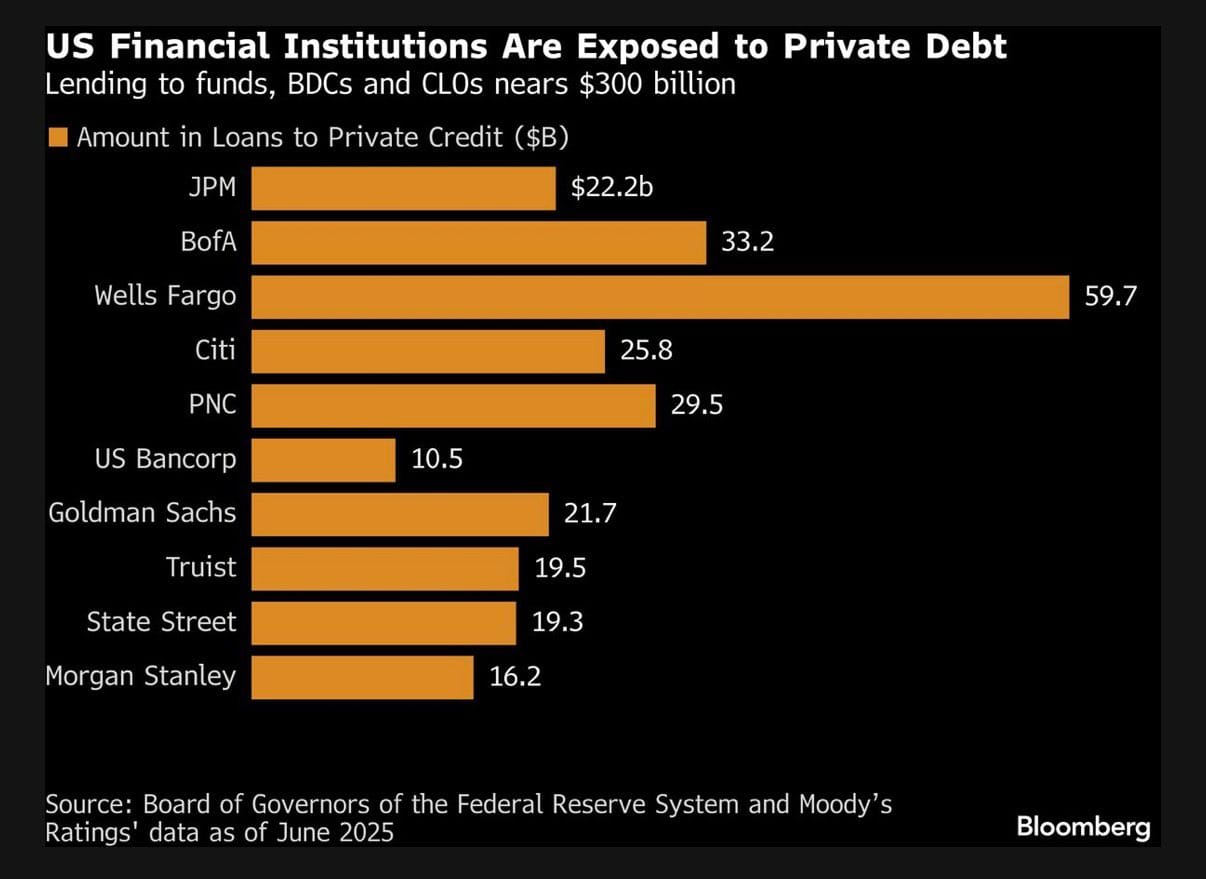
I. U.S. Banks Have Large Exposure To Private Credit
Private credit funds lend money to companies that often cannot get traditional bank loans. But many of these funds borrow their own money from big banks to make those loans.
That means even though private credit operates outside the traditional banking system, banks are still heavily exposed to it. If more companies start defaulting on those loans, losses could spread back to the banks that financed the funds.
Much of this lending happens through vehicles such as BDCs (Business Development Companies), which lend to smaller businesses, and CLOs (Collateralized Loan Obligations), which bundle corporate loans and sell them to investors.
II. Inflation Remains Sticky As Consumer Spending Slows
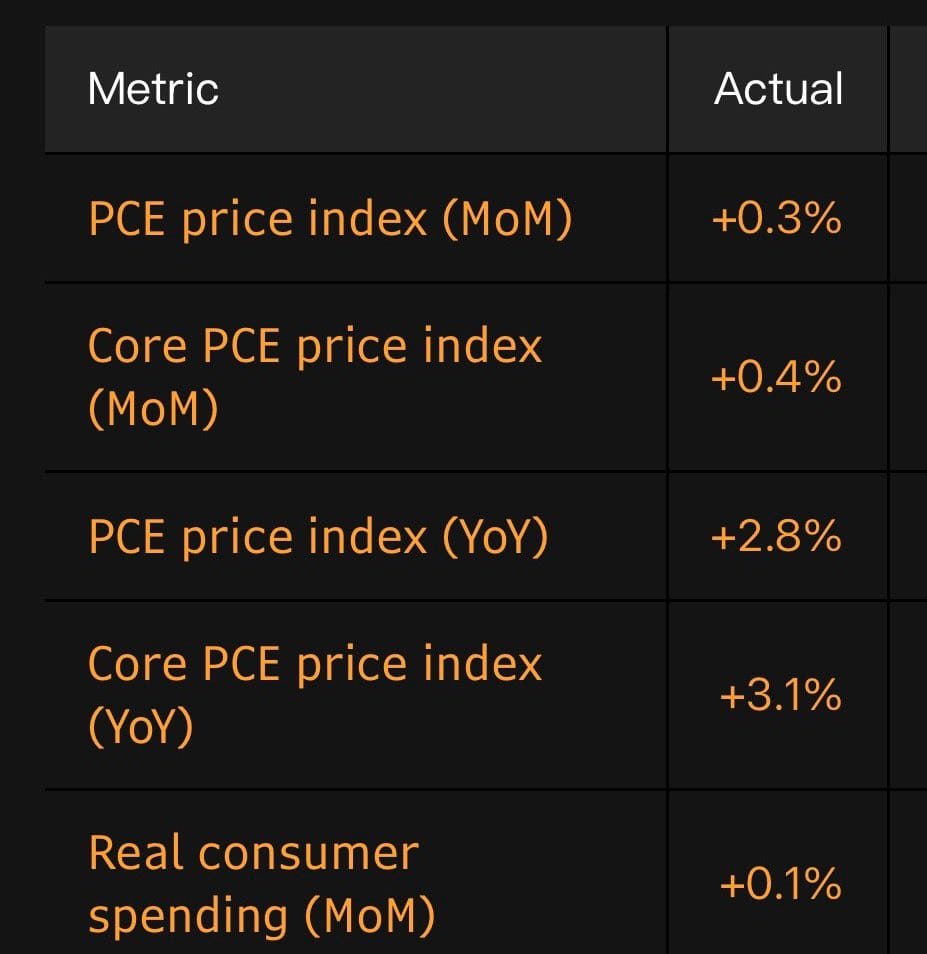
Recent economic data suggest U.S. consumers were already starting to pull back even before the Middle East conflict intensified. Core PCE inflation remains elevated at about 3.1% year over year, still well above the Federal Reserve’s 2% target, while real consumer spending shows signs of softening.
III. The World Runs On Energy Chokepoints
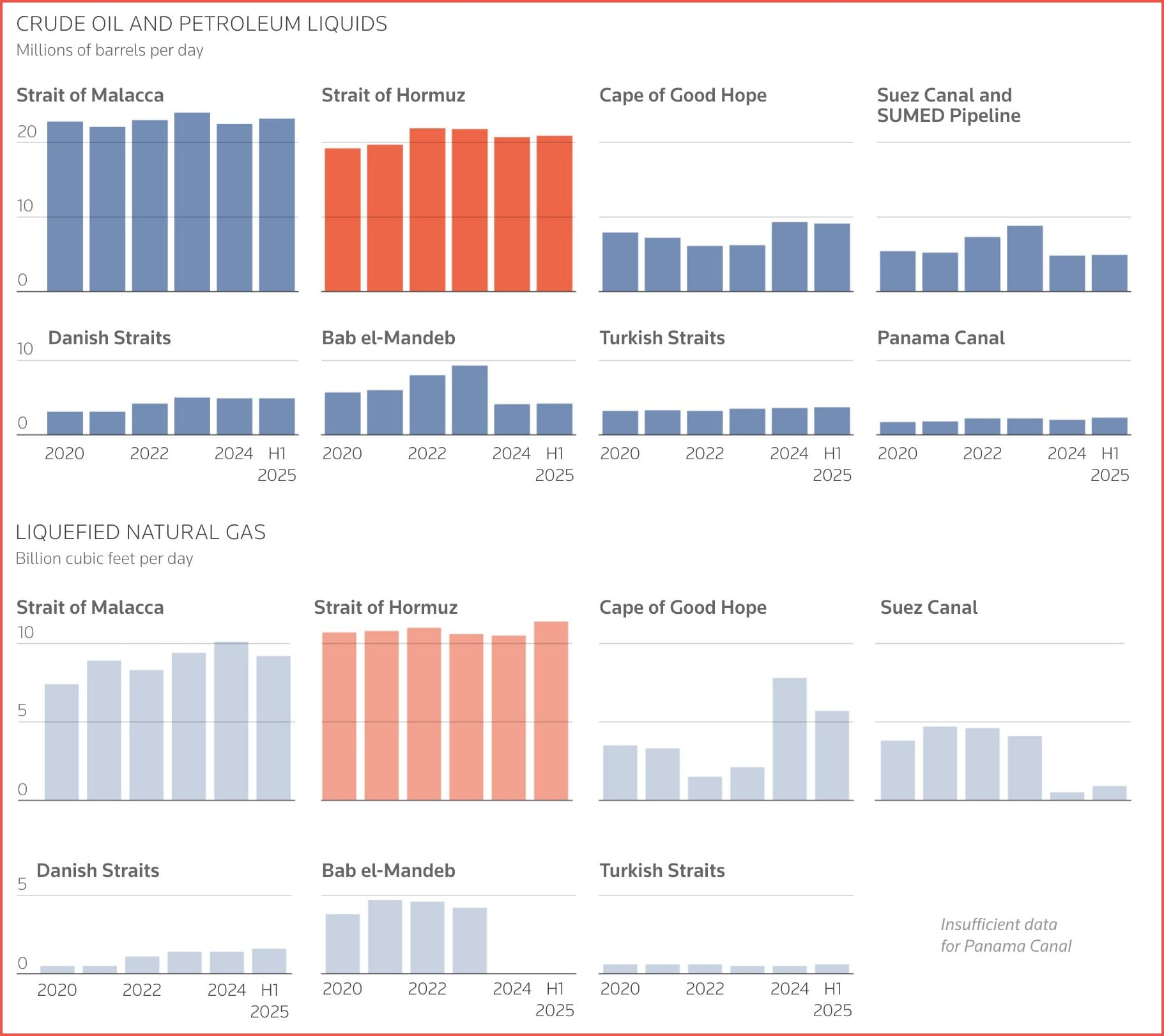
Global energy flows depend on a handful of strategic maritime corridors. The Strait of Hormuz alone carries about 20 million barrels of crude per day, while the Strait of Malacca moves even larger volumes toward Asian markets. Disruptions across these chokepoints can quickly ripple through global energy prices and supply chains.
editor-tippinsights@technometrica.com