Skip to content

By Mustafa Suleyman, Project Syndicate | Nov 7, 2025

For AI to deliver its promised benefits, it must be designed in the humanist tradition, with people remaining unequivocally in control, and with human dignity always coming first. Systems that can endlessly improve and adopt their own purposes must be avoided at all costs.
REDMOND – For decades, the Turing test was AI researchers’ North Star. Today, it’s been quietly surpassed. With reasoning models and agentic capabilities emerging, and with the pace of AI infrastructure build increasing, we have crossed an inflection point on the journey to superintelligence: the point at which AI exceeds human-level performance at all tasks.

Indeed, the most consequential question for our time is not whether AI will surpass us, because in some ways it already has (try beating an AI at general knowledge), in many other ways, it will, and in some ways we will always be unique. The real question, then, is whether we can shape AI to advance human flourishing rather than undermine it. That is the most important challenge of our time.

To be sure, everyone is primed by now to roll their eyes at AI hype. I get it. But the stakes could not be higher. Science and technology have always been humanity’s greatest engine of progress. Over the last 250 years, that engine has doubled life expectancy, lifted billions of people out of poverty, and given us antibiotics, electricity, and instant global communication. AI is the next chapter in this story. It represents our best shot at accelerating scientific discovery, economic growth, and human well-being. Whenever you hear about AI, this potential is worth keeping in mind.

Like pieces like this? Support our work with a $99/year subscription.

Subscribe

But harnessing AI’s potential will work out right only if we build AI the right way. The costs of getting it wrong are immense. No one yet has reassuring answers about how we contain or align these systems. We are caught at an odd moment, faced with history’s most powerful technologies and unsure how they can be controlled or whether they will remain beneficial.

I think we can cut through the noise and understand it like this: AI, like all technology, can be judged by a simple test. Does it improve human life? Is it clearly working in service of people?

As we embark on the next phase of AI, the answer to these questions lies in what I call Humanist Superintelligence (HSI): advanced AI designed to remain controllable, aligned, and firmly in service to humanity. This project is explicitly about avoiding, at all costs, an unbounded entity with total autonomy.

Instead, we must focus on domain-specific superintelligence. Rather than simply making a system that can endlessly improve and run away with itself for whatever purpose it might eventually arrive at, the core purpose is to deliver practical real-world benefits to billions of people. It must forever remain unequivocally subordinate to humanity. This is the vision of our Superintelligence Team at Microsoft, where our core mission is to keep humanity secure and firmly in control.

Why humanism? Because history has demonstrated the humanist tradition’s enduring power to preserve human dignity. AI built in that spirit can unlock extraordinary benefits while avoiding catastrophic risks. We need a vision of AI that supports humanity, amplifies creativity, and protects our fragile environment – not one that sidelines us.

The prize for humanity is enormous: a world of rapid advances in living standards and science, and a time of new art forms, culture, and growth. It is a truly inspiring mission that has motivated me for decades. We should celebrate and accelerate technology as the greatest engine of progress that humanity has ever known. That’s why we need much, much more of it.

HSI offers a safer path forward. Remaining grounded in domain-specific breakthroughs with profound societal impact is an example of this. Imagine AI companions that ease the mental load of daily life, enhance productivity, and transform education through adaptive, individualized learning. Imagine medical superintelligence delivering accurate, affordable expert-level diagnostics that could revolutionize global health care, capabilities already previewed by our health team at Microsoft AI. And consider the potential for AI-driven advances in clean energy that will enable abundant, low-cost power generation, storage, and carbon removal to meet soaring demand while protecting the planet.

With HSI, these are not speculative dreams. They are achievable goals that can benefit people around the world, providing concrete improvements to everyday life.

To state the obvious, humans matter more than tech or AI. Superintelligence could be the best invention ever, but only if it sticks to this maxim. That means ensuring accountability and transparency, and a willingness to make safety a top priority. Our goal is not to build a superintelligence at any cost, but to follow a careful path toward one that is contained, value-aligned, and always focused on human well-being.

Everybody needs to ask themselves this: What kind of AI do we actually want? The answer will shape the future of civilization. For me, that answer is Humanist Superintelligence.

Mustafa Suleyman is CEO of Microsoft AI and the author of The Coming Wave: Technology, Power, and the Twenty-First Century’s Greatest Dilemma (Crown, 2023). He previously Co-Founded Inflection AI and DeepMind.

Copyright Project Syndicate

Your feedback is incredibly valuable to us. Could you please take a moment to grade the article here?

Simple Algorithm Solves Bank Card Errors

Mistyping a single digit of your card number or swapping two adjacent digits will account for almost 90% of errors at the Christmas checkout – but a simple 1960’s algorithm catches them.

The 16-digit number on bank cards (occasionally 15 or 19 digits) is made up of four elements: the first digit is the Major Industry Identifier (MII), for example 2 or 5 for Mastercard and 4 for Visa. The first six digits (including the MII) is the Issuer Identifier and describes the financial institution, the country of origin and whether the card is a debit or credit card. The following digits relate to the specific account with the bank, and the final digit, known as the Check Digit is used to validate the while sequence using the Luhn formula.

Devised by IBM scientist Hans Peter Luhn in the 1960’s to allow a computer to quickly check a human-entered number sequence for errors, is also known as modulo 10 for the result to be divisible by 10. In the “checksum” algorithm, the final number is the Check digit, the others are the payload. Skipping the check digit and starting from the right, every other number is multiplied by 2. Each digit in the result is then added together, e.g. 6 x 2 = 12, 1+2=3. These numbers are then added to the undoubled digits within the sequence, and the check digit.

The final sum must be divisible by 10 for the number to be valid, and because all the other numbers are pre-determined by the bank, the Check Digit is used to ensure that the sum is indeed a multiple of 10.


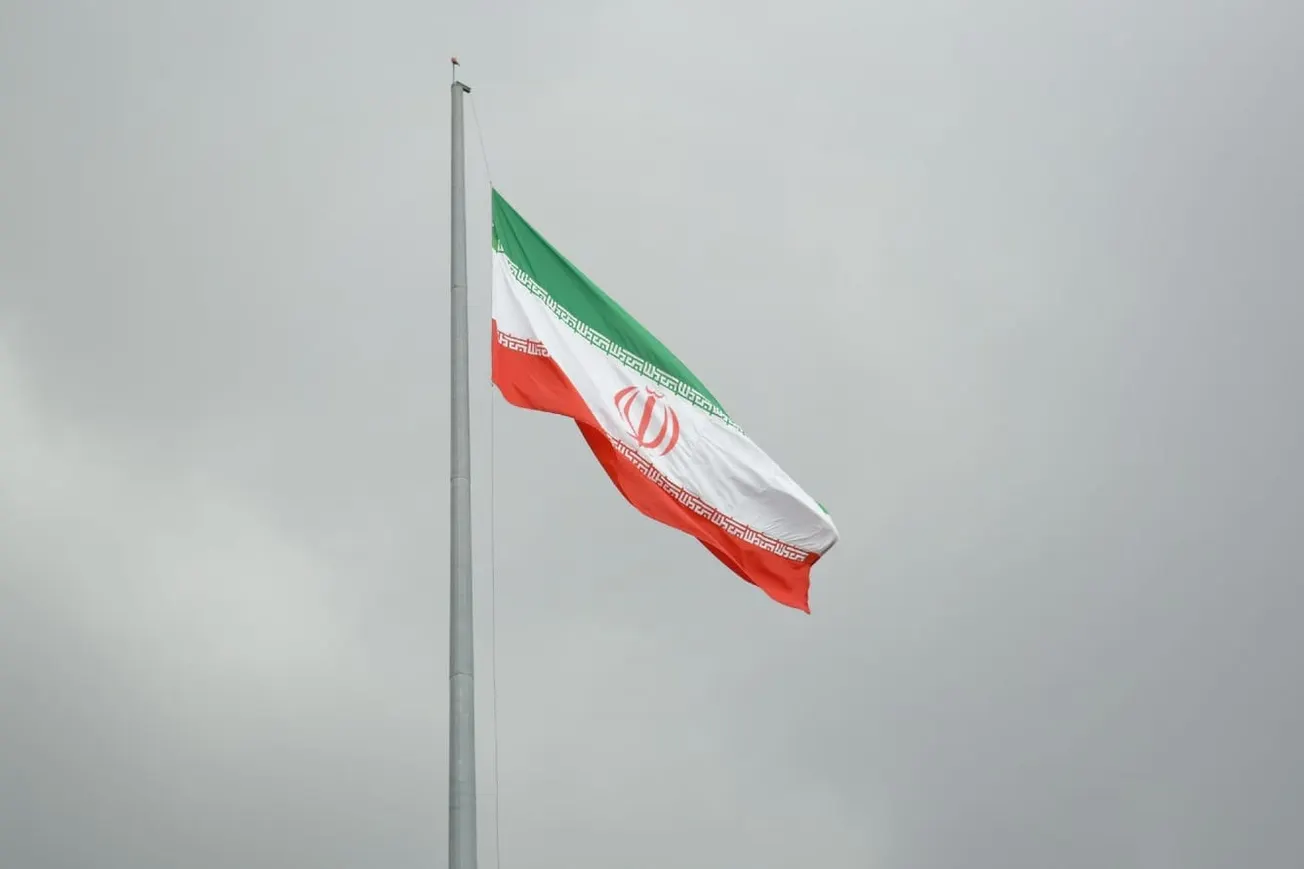
Iran Struggles With A Dire Water Crisis

Iran is grappling with its worst water crisis in decades, and officials warn that if the drought sweeping the country continues, Tehran – a city of more than 10 million – may soon become uninhabitable.

In the capital, the situation is already acute. The five major dams that supply Tehran – Amir Kabir, Lar, Latian, Taleqan and Mamloo – are averaging only about 10% capacity, raising fears of severe shortages in the months ahead.

President Masoud Pezeshkian has cautioned that without significant rainfall before winter, even the capital could face partial evacuation.

Conditions are similarly dire in Mashhad, Iran’s second-largest city. The four main dams serving its population of 4 million are currently holding less than 3% of their total capacity.

Nationwide reservoir data underlines the scale of the crisis. As of early November, Iran’s 193 reservoirs contain just 17.2 billion cubic meters of water – only 33% of their total capacity, leaving 67% effectively empty.

Since the start of autumn, only 1.35 billion cubic meters of water have flowed into the country’s dams, compared with 2.19 billion cubic meters during the same period last year.


Catch up on today’s highlights, handpicked by our Breaking News Editor at TIPP Insights.

1. Deadly Strikes Pound Kyiv As Russia Claims Of Ukrainian Assassination Attempts

2. Russian Military Ship Near Hawaii Sparks Fresh U.S. Monitoring

3. Russia To Import 12,000 North Koreans To Boost Drone Production, Claims Ukraine Military

4. Iran Seizes Oil Tanker In Strait Of Hormuz As Regional Tensions Spike

5. Why Trump’s Meeting With Saudi Crown Prince Could Redefine Middle East Security

6. Chinese Hackers Used Anthropic AI To Run Near-Fully Automated Cyberattacks

7. China Slams First Taiwan Arms Deal Since Trump Returned To White House

8. EU Ends Duty-Free Low-value Parcels In Blow To China’s E-Commerce Giants

9. Macron To Host Zelensky As Russia Escalates Strikes On Ukraine

10. In Search Of The AI Bubble’s Economic Fundamentals

11. Why Law Enforcement Isn’t Ready For The New Wave Of AI-Driven Crime

12. BBC Admits Editing Error As Trump Threatens Massive Lawsuit

13. Walmart CEO Doug McMillon To Step Down After Decade Of Transforming Retail

14. Trump Orders DOJ To Probe Epstein’s Ties To Top Democrats And Banks

15. Top Agencies To Meet At White House, Push Back On Trump’s Nuclear Testing Plan

16. Texas Prison Fires Staff After Leak Of Ghislaine Maxwell Emails


Market Pulse

Credit: Barchart.com
📧
Letters to the editor email:
editor-tippinsights@technometrica.com
📰
Subscribe Today And Make A Difference. Consider supporting Independent Journalism by upgrading to a paid subscription or making a donation. Your support helps tippinsights thrive as a reader-supported publication. Contact us to discuss your research or polling needs.

Comments

Latest