Editor’s Note: The following commentary argues that tackling cartel influence requires political pressure as well as security action.
By Guillermo Ortiz, Project Syndicate | Feb 4, 2026
Since intervening in Venezuela, US President Donald Trump has escalated his threats to use direct military action against Mexico’s drug cartels. But this would be ineffective, because curbing the cartels' power requires exposing their connections to the ruling Morena party.
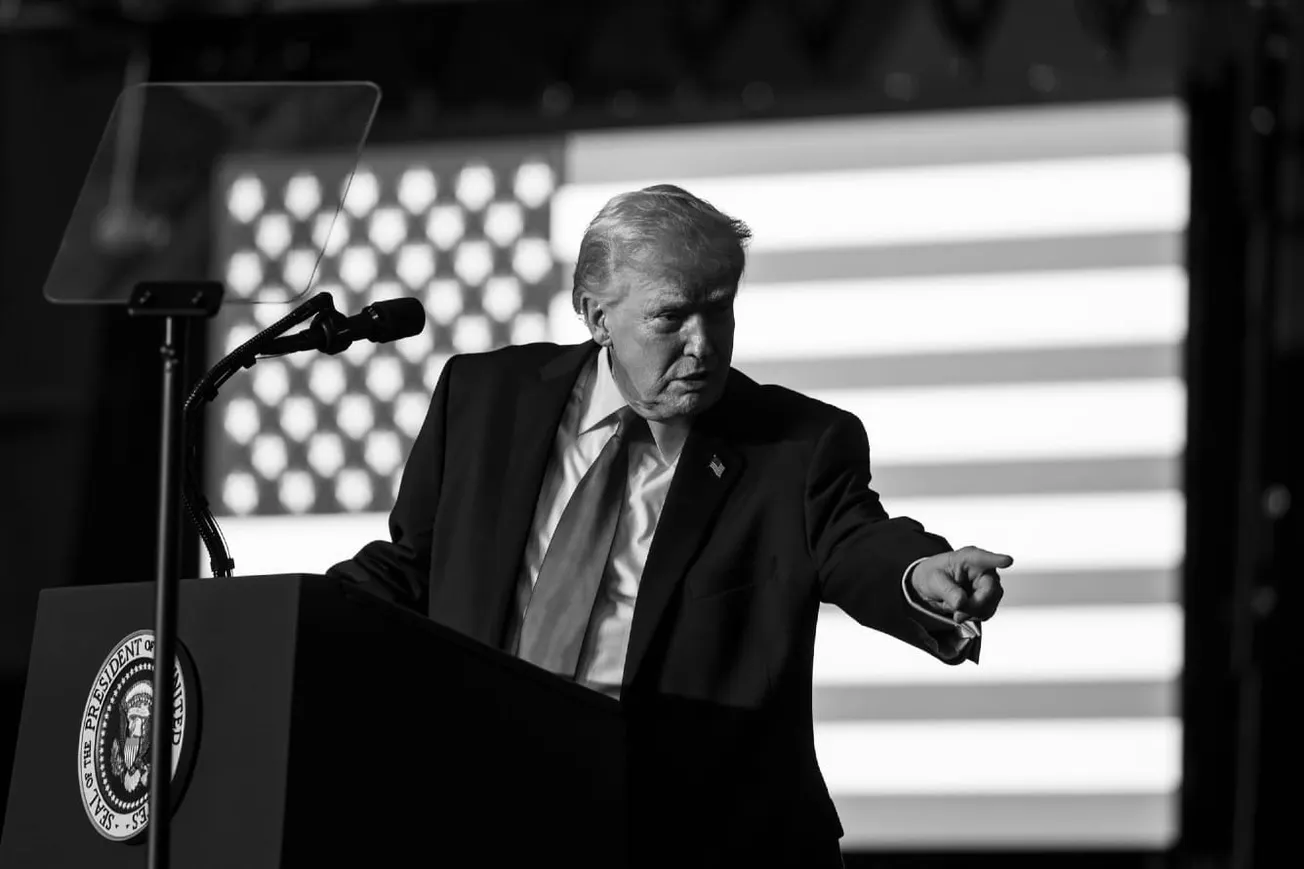
MEXICO CITY – In several interviews after US forces extracted Nicolás Maduro from Venezuela, US President Donald Trump said that his administration will “have to do something about” Mexico, America’s southern neighbor. Trump again praised Mexican President Claudia Sheinbaum as a “terrific person,” but reiterated his belief that drug cartels run the country. This notion was recently reinforced by the US indictment of Maduro, which alleged that he and other Venezuelan officials worked with Mexican cartels to traffic cocaine and launder drug proceeds.
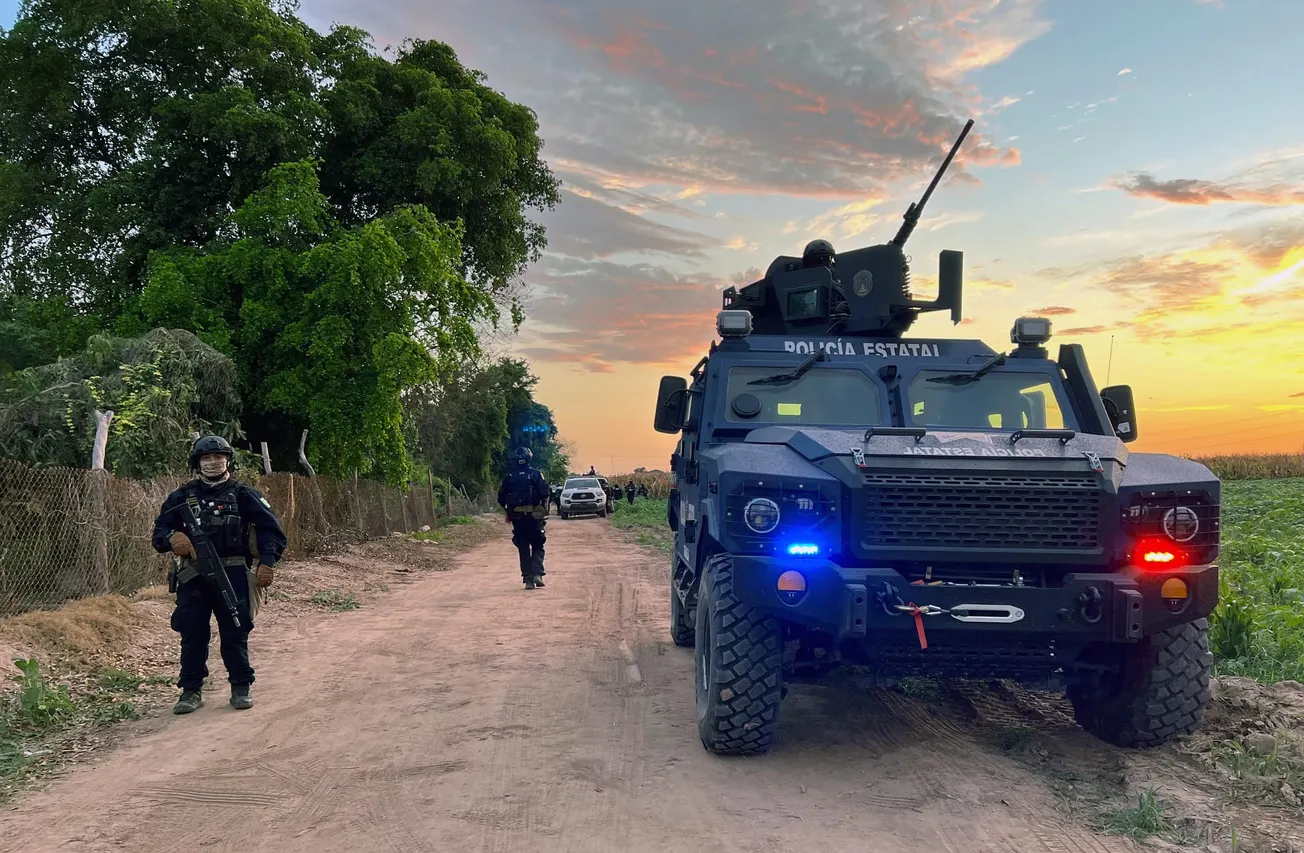
On several occasions since returning to the White House, Trump has threatened military action against the cartels and offered to send special forces to accompany Mexican troops on drug raids. Sheinbaum has repeatedly rebuffed these moves because US intervention would be politically devastating for her and the ruling Morena party that her still-powerful predecessor, Andrés Manuel López Obrador (AMLO), founded and controls.
Trump is at least partly right that organized crime has vastly expanded its influence in Mexico and controls large swaths of the country’s territory. Accurate data on the extent of criminal activity in Mexico are difficult to obtain, but reliable sources point to an increase during AMLO’s presidency, a trend that continues today.
In addition to drugs and human trafficking, the cartels maintain lucrative extortion rackets, which have become a more important source of income following the effective closure of the US-Mexico border to undocumented migration and the consequent fall of human trafficking revenues. Recent reports find increased levels of extortion across regions and sectors, including merchandise transport.
Whereas AMLO “paused” relations with the US embassy on security matters during his term, Sheinbaum has sought to appease Trump by increasing cooperation and information sharing with US authorities on drug trafficking and other illicit activities. The US Department of State and others in the Trump administration have praised the Mexican government’s willingness to collaborate.
As part of this effort, Mexico has extradited dozens of cartel members to the US, including 37 people in late January. Sheinbaum has also appointed an experienced and competent Secretary of Public Security to coordinate the army and the National Guard in intelligence operations, resulting in confrontations with notorious cartels and the arrests of many organized-crime leaders.
The supply of fentanyl from Mexico to the US – a main focus of the Trump administration – appears to have slowed considerably (or at least seizures of the drug have fallen sharply). Homicides have decreased, but disappearances have increased sharply, and last year’s discovery of a cartel’s “extermination” camp, with forced recruits believed to be among the victims, triggered widespread outrage about the worsening problem.
Despite the seeming reversal of AMLO’s “hugs, not bullets” approach toward organized crime and increased cooperation with the US, the data suggest that these groups are still expanding. That is certainly how the White House and the Mexican population see it (surveys in Mexico and across Latin America show that security is a top concern). But American intervention in the country without the consent of the Mexican military would be dangerously counterproductive, severely damaging bilateral relations and turning public opinion in Mexico against the US.
It would also be ineffective, because curbing the power of organized crime requires severing their ties to political power. The ruling Morena party is widely known to have received funds from criminal organizations to finance electoral campaigns in several states and municipalities over the years. Moreover, prominent party members, including state governors and congresspeople, have alleged ties to organized crime.
The straightforward answer is for Sheinbaum’s government to investigate these links. But all the politicians with alleged cartel ties were appointed by AMLO, and Sheinbaum is clearly unable or unwilling to risk a rupture with her predecessor that would fracture Morena and put her administration at risk. Sheinbaum must call a midterm election in 2027 to retain her presidency, and thus needs Morena’s electoral machine. (That vote is a trap invented by AMLO to ensure his continued control of Morena even while out of power.)
Trump is not similarly constrained. If he is serious about targeting Mexico’s cartels, he should focus on revealing their links to Morena politicians rather than pushing for military action. The dozens of cartel members extradited to the US have surely provided detailed information on these ties. The revocation of Baja California governor Marina del Pilar Ávila’s US visa in 2025 and the arrest of former Chihuahua governor César Duarte for alleged money laundering are promising first steps. More arrests and indictments could have a positive impact on Mexico-US relations.
Such actions would reduce AMLO’s grip on Morena, allowing Sheinbaum to take control of the party and expand the fight against organized crime. In the future, politicians would be less likely to work with the cartels if they knew it could lead to their arrest and imprisonment.
Another potential benefit is that the Morena alliance could splinter, opening the possibility of real political competition and a move away from the autocratic path that AMLO set the country on. Of course, Trump cares little about the robustness of Mexican democracy. But a more competitive political system might lead to the easing of the constraints that AMLO imposed on the electricity sector, particularly the restrictions on private investment – a development that could be of great interest to US companies and Trump.
Perhaps more importantly, stronger law enforcement against the cartels could improve investors’ perception of Mexico, both at home and abroad. Given that stagnant investment is probably the main reason why the Mexican economy has performed so poorly in recent years, this shift could be a win-win for Mexico and the US. But it can happen only if Trump combats the cartels with political pressure, not military force.
Guillermo Ortiz, a former finance minister of Mexico and governor of Banco de Mexico, is Co-Chair of the G30 Working Group on Latin America.
Copyright Project Syndicate
👉 Show & Tell 🔥 The Signals
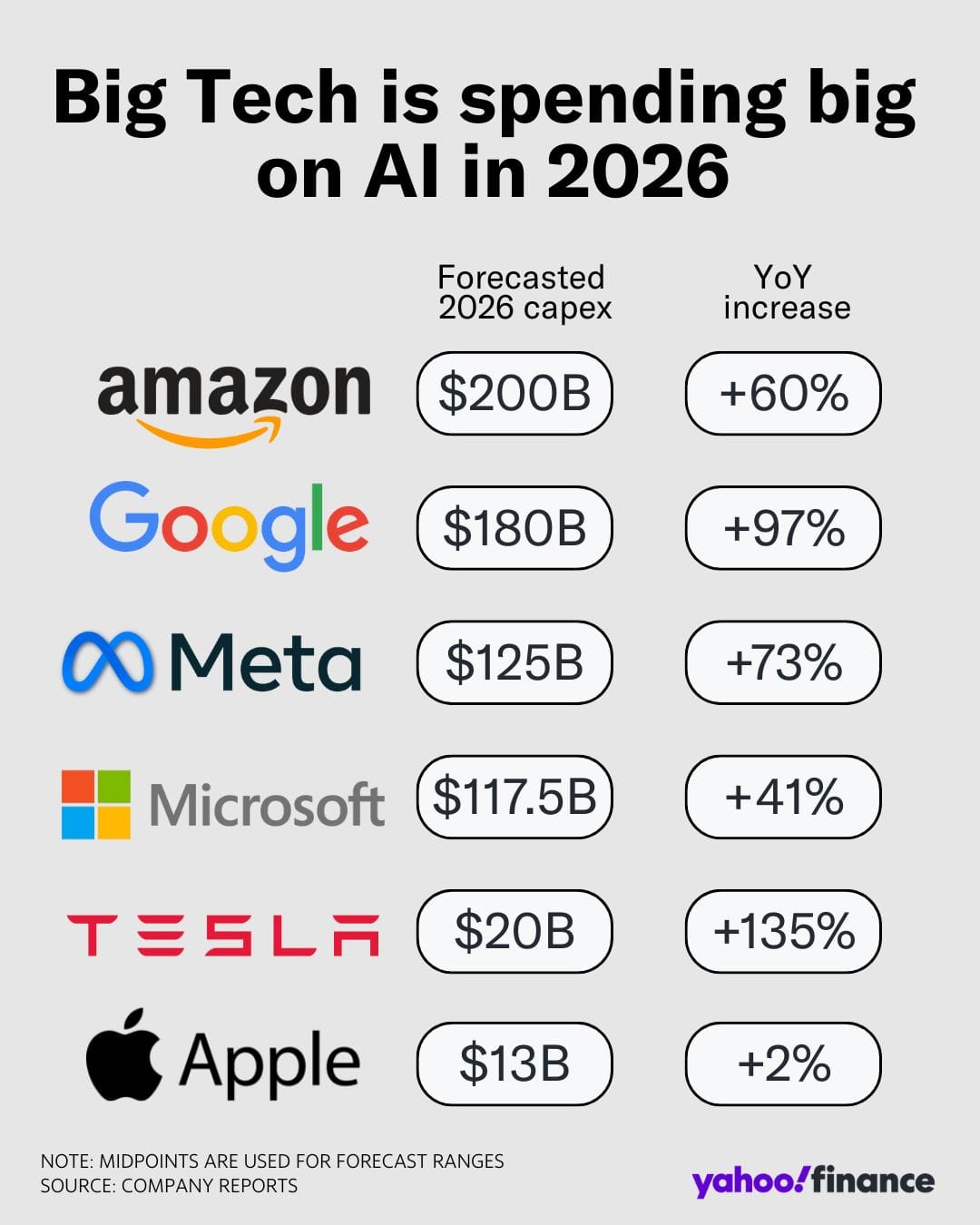
I. Big Tech Set To Spend Over $650 Billion On AI In 2026
Major technology companies are projected to spend more than $650 billion in capital investments in 2026, much of it aimed at expanding artificial intelligence infrastructure. Amazon, Google, Meta, and Microsoft account for the bulk of the spending, with several firms planning sharp increases from current levels as competition in AI intensifies.
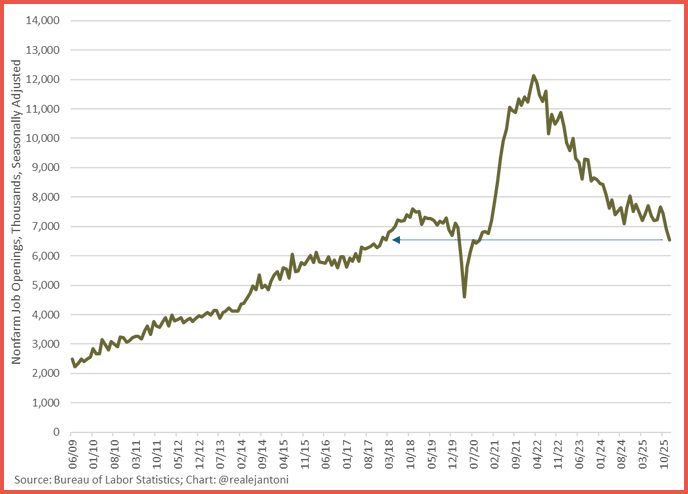
II. U.S. Job Openings Fall To Lowest Level In Eight Years
U.S. job openings in December fell to their lowest level since before the pandemic, marking an eight-year low outside the brief COVID shutdown period. The decline suggests the labor market is cooling as companies slow hiring after the post-pandemic surge in demand for workers.
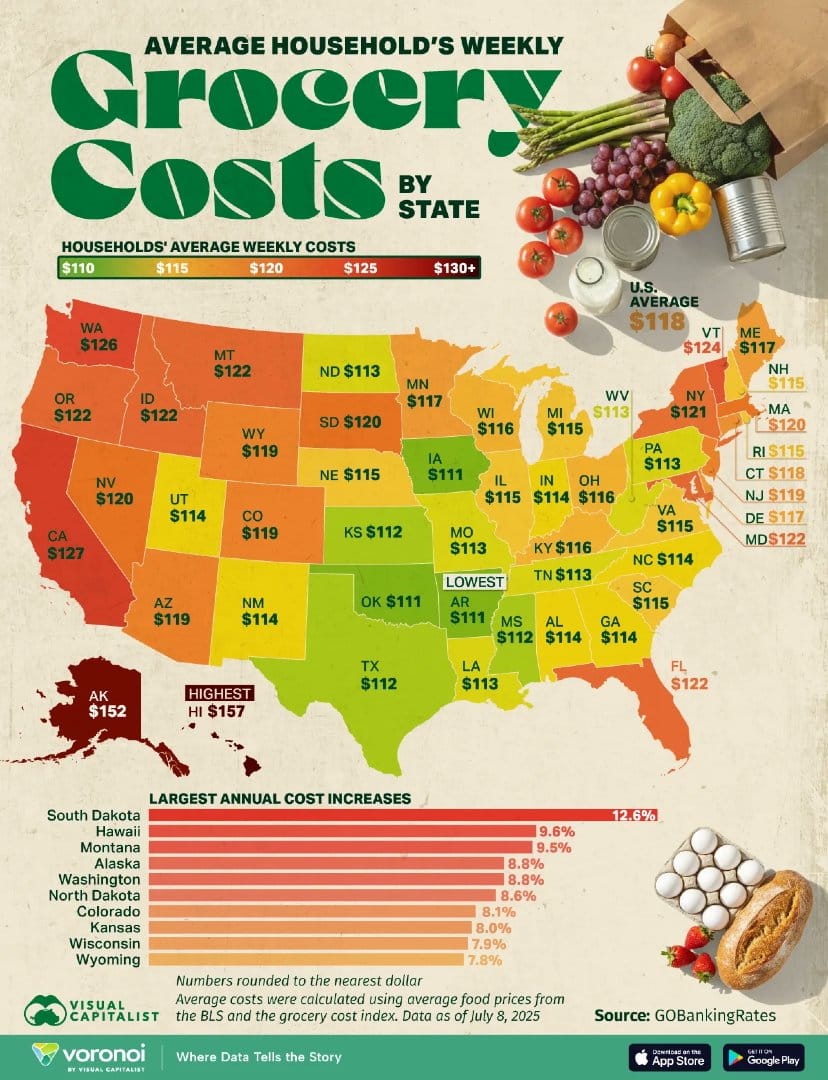
III. Weekly Grocery Costs Vary Widely Across U.S. States
The average U.S. household spends about $118 per week on groceries, but costs vary widely by state, ranging from roughly $110 per week in the lowest-cost states to about $152 in the highest-cost states. Western and non-contiguous states tend to see the highest grocery bills, while many Southern and Midwestern states report lower average costs.
The TIPP Stack
Handpicked articles from TIPP Insights & beyond
1. Trump’s Iran Gamble—Ian Bremmer, Project Syndicate
2. Journalism’s Kamikaze Mission—Editorial Board, TIPP Insights
3. The FDA’s Lethargy Is Harming Women And Overburdening Doctors—Dr. Christina Francis, The Daily Signal
4. How TikTok’s Algorithm Poisoned The Minds Of Young, Liberal Women—Brent Buchanan, The Daily Signal
5. GOP Lawmakers Vow To Fight Radical Islam— Pedro Rodriguez, The Daily Signal
6. 700 Immigration Agents Are Leaving Minnesota. Tom Homan Explains Why.— Virginia Allen, The Daily Signal
7. Supreme Court Won’t Hear Challenge To California Gerrymandering— Fred Lucas, The Daily Signal
8. They Disrupted A Congressman’s Event At A Jewish Center. Now The DOJ Is Investigating.—George Caldwell, The Daily Signal
9. Professors Sue Over Trump ‘Gold Card’ Visa Program—Fred Lucas, The Daily Signal
10. The Mirage Of Public Finance: Italy’s Budget Bill—Bernardo Ferrero, Mises Wire
📊 Market Mood — Friday, February 6, 2026
🟩 Futures Slip as Tech Selloff Deepens
U.S. markets head toward weekly losses as pressure on tech stocks continues to weigh on sentiment.
🟧 Amazon Spending Surge Spooks Investors
Amazon shares fall after announcing a massive jump in AI-related capital spending despite solid cloud growth.
🟦 Bitcoin Slides Into Heavy Weekly Loss
Bitcoin tumbles over 20% this week as investors pull back from speculative assets amid tighter policy expectations.
🟨 Oil Eyes Weekly Drop Ahead of U.S.–Iran Talks
Crude prices stabilize but remain on track for a weekly loss as markets await developments in Washington–Tehran negotiations.
🗓️ Key Economic Events — Friday, February 6, 2026
None today
editor-tippinsights@technometrica.com