

By Ryan McMaken, Mises Wire | September 10, 2026
Bond yields are ripping today, with the 10-year climbing above 4.9% and at the highest level since 2007. Meanwhile, the 30-year yield has risen above 5.3 percent, the highest level seen since 2002.
There are many reasons that Treasury yields might increase, but given the current fiscal situation in the United States, the most likely dominant factor behind the current upward surge in the demand for higher yields is this: investors expect that federal deficits will further rise and will flood the market with trillions in new Treasurys in coming years. Moreover, price-inflation metrics show that inflation isn’t going away. This will push down demand on long-term bonds.
To illustrate where we are fiscally right now, let’s look at the Treasury Department’s most recent monthly report.
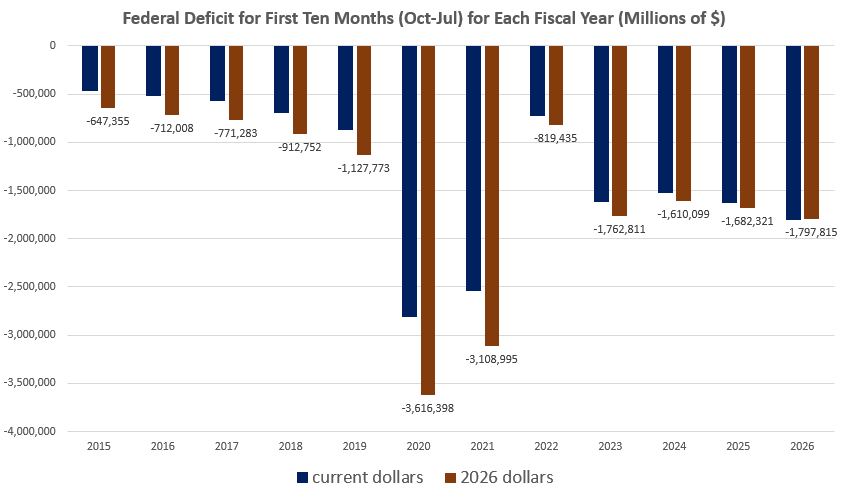
The current fiscal year began in October, so we are now ten months in. The cumulative deficit, so far, for fiscal year 2026 is $1.79 trillion. Even when adjusted for CPI inflation, that’s the largest deficit in five years, and the largest since the Covid panic when the federal government racked up huge deficits to pay people to stay home and not work. In 2026 dollars, the Covid-era deficits reached beyond an eye-watering $3 trillion, but the current year’s deficit, which could reach $2 trillion by the end of the year, is an example of shocking profligacy in a period of anything other than a major pandemic or global war.
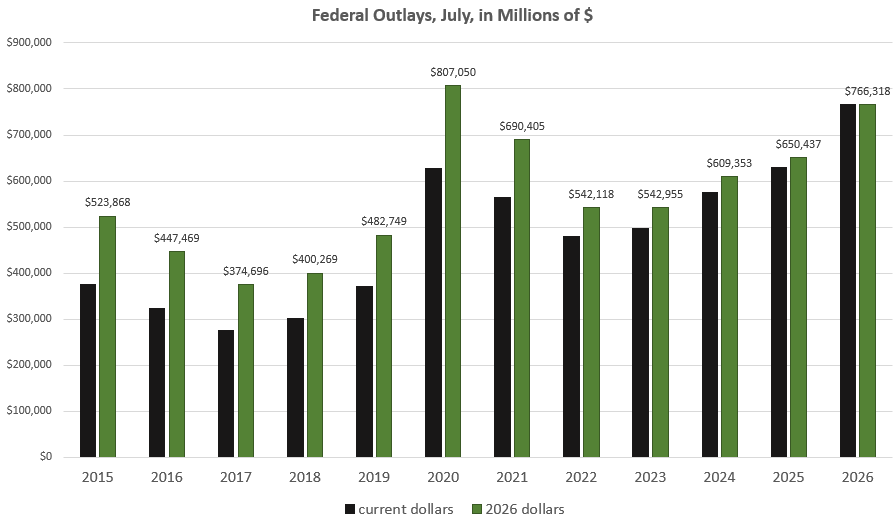
July, after all, showed total federal spending (outlays) at the second highest level ever, even when adjusted for inflation. In July alone, federal spending totaled $766 billion, which was second only to July 2020’s spending total of $807 billion.
Given July’s spending, and the administration’s continued escalation of its Iran war, its is increasingly clear that the Trump administration has no intention of reining in spending in any meaningful way, and we can expect enormous amounts of new federal government debt to be in search of buyers in coming years.
These large deficits will, of course, further add to the federal government’s total national debt, which now has nearly reached $40.1 trillion. Although the new deficit added this fiscal year is, so far, $1.7 trillion, the total added to the overall debt is more than $1.9 trillion.
This continues to drive very large debt-service obligations, and according the Treasury report, the US government paid out more than $117 billion during July alone. So far in this fiscal year, the US government has paid out more than $1.1 trillion in interest on the debt, and is expected to pay more than $1.3 trillion by the end of the fiscal year on September 30.
For context, remember that total federal spending on the Defense department is less than $950 billion. Moreover, federal debt payments are rising as the US is now facing a debt-to-GDP ratio of more than 120 percent, and is higher than where it was during the Second World War. This will continue to require that more and more of the taxpayers’ money be put toward financing old debts. This will only become more of a burden as overall interest rates rise. This looks to be the reality in coming years as the US is in the process of refinancing more than $9 trillion in debt. Most of that will be refinanced with short term debt meaning it will have to be refinanced all over again the following year. With the US already so deeply in debt, this will continue to put upward pressure on yields, and further contribute to a growing overall debt burden. Rising yields also add immense uncertainty about the future fiscal state of the federal government. As noted in a recent GAO report:
- Uncertainty about future interest rates. Treasury’s debt management goal is to borrow at the lowest cost over time. In addition to financing government operations each year, Treasury must also refinance maturing debt. For example, in FY 2026, Treasury will need to refinance $9.7 trillion in maturing securities at market interest rates. Treasury must manage its debt portfolio to balance low financing costs with rollover risk (the risk that it may have to refinance its debt at higher interest rates). To do this, Treasury considers the mix of long-term and short-term securities that it offers. Long-term securities typically have higher interest rates but reduce rollover risk because they do not mature as frequently. Short-term securities usually have lower interest rates but must be refinanced more frequently, potentially at higher interest rates.
Bond investors realize all of this, and this is why—combined with assumptions that price inflation will continue—investors are now demanding higher yields. The federal government badly needs to issue new debt, refinance old debt, and pay interest bills that are now well in excess of a trillion dollars per year.
All this helps explain why yields on long-term bonds are now rising to some of the highest levels we’ve seen in nearly two decades.
Original article link