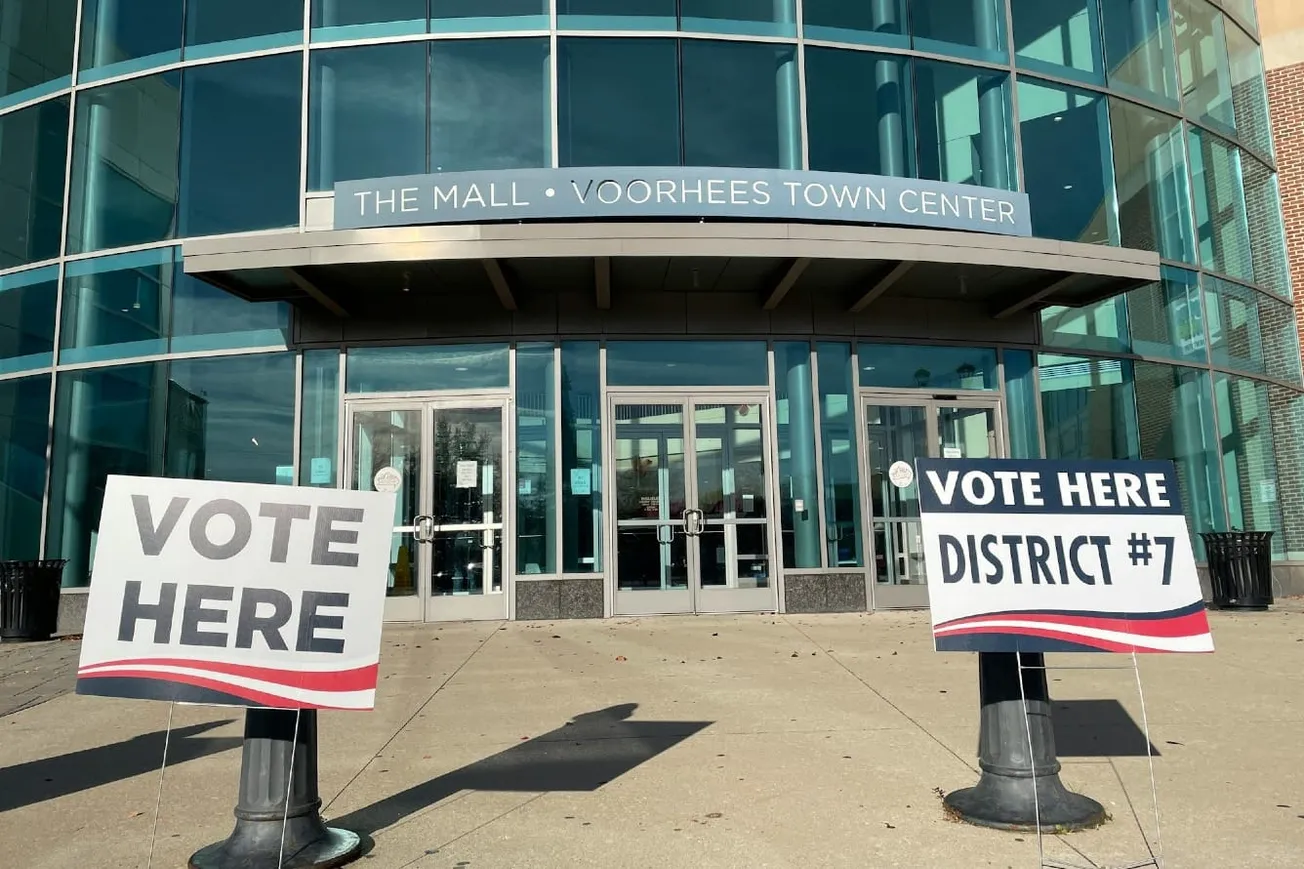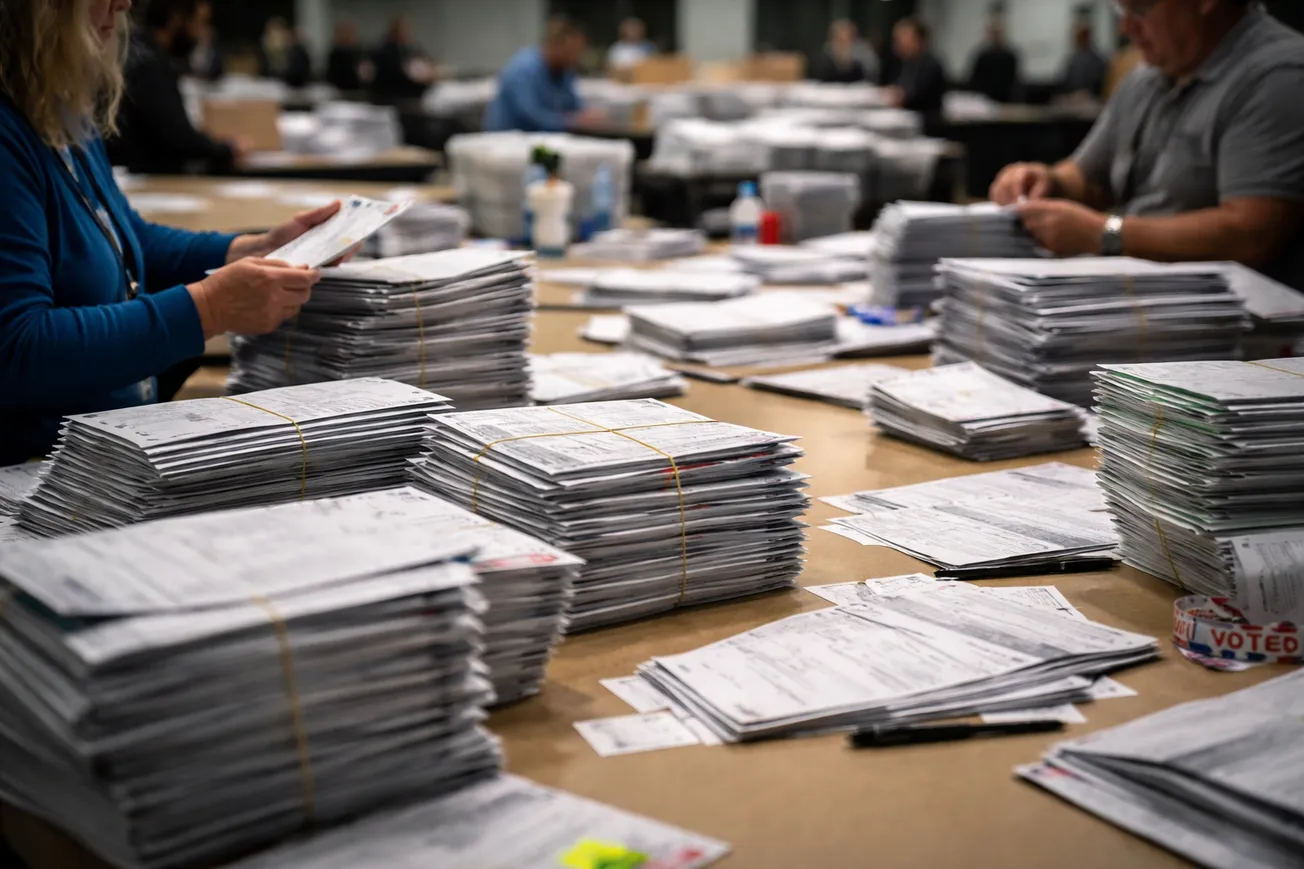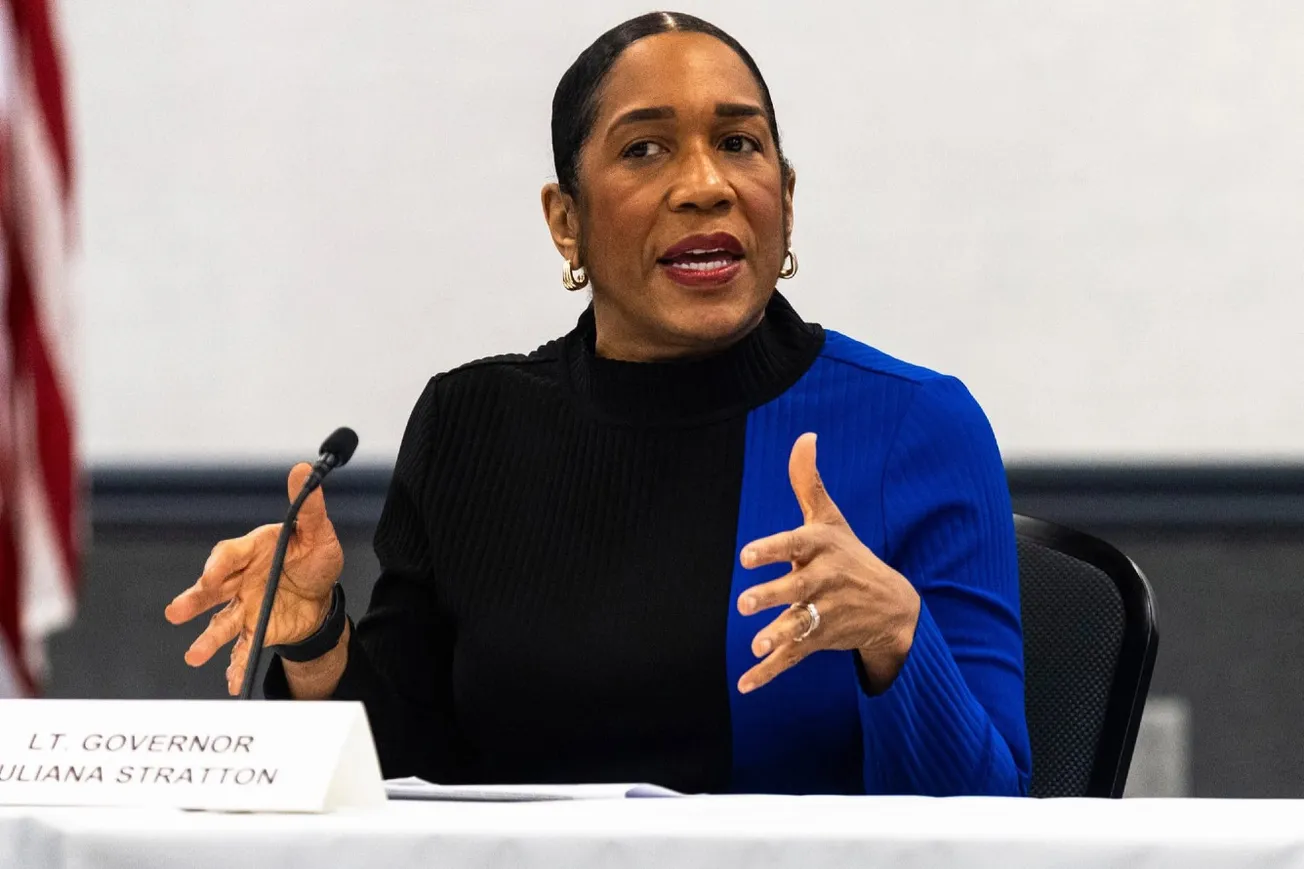
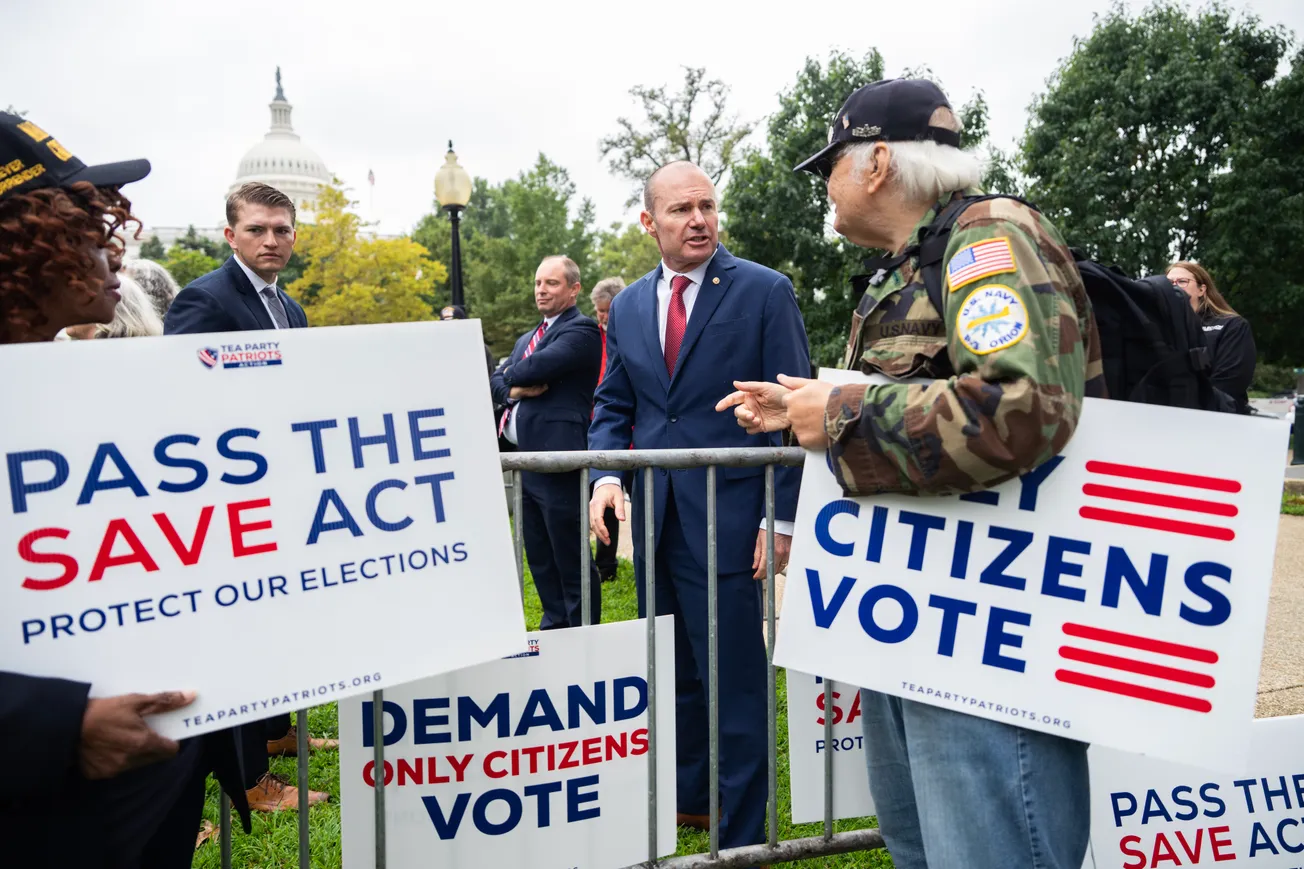
The bitter debate between Democrats and Republicans over the SAVE Act — which would require voters to provide a valid ID to cast a ballot — has roiled political waters as both major parties gird themselves for the 2026 midterms. But do voters care? They sure do, and it's not good news for the Democrats, the latest I&I/TIPP Poll results indicate.
The online poll, taken from Feb. 24 to Feb. 27 by 1,456 adults nationwide, asked voters: "The SAVE Act (Safeguard American Voter Eligibility Act) is a proposed federal law that would require individuals to present identification and prove U.S. citizenship to vote in federal elections. What comes closer to your view?"
The results weren't really close. A hefty 64% agreed with the statement that "It is a good idea and would help ensure that only eligible citizens are able to vote."
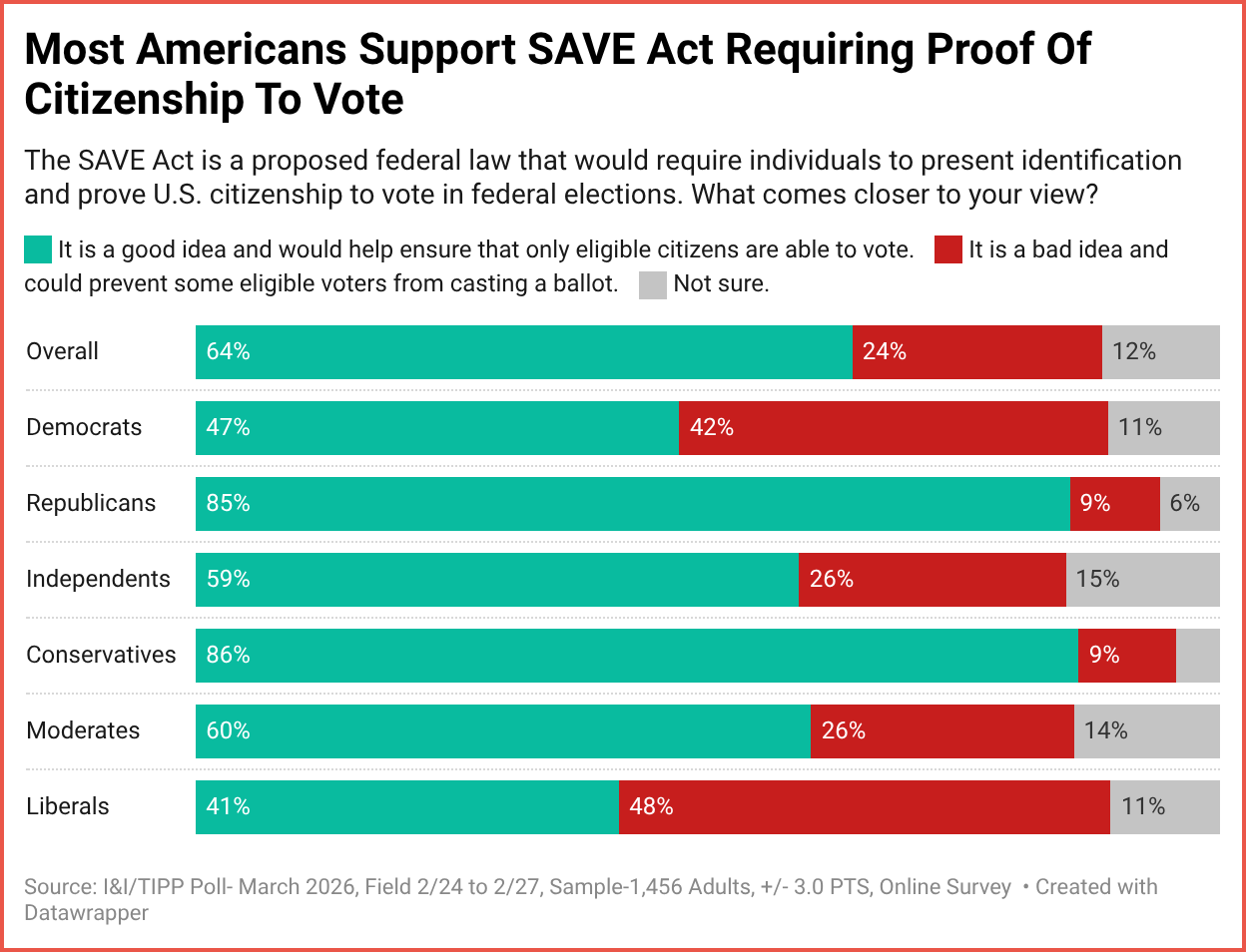
Meanwhile, just 24% agreed with "It is a bad idea and could prevent some eligible voters from casting a ballot." The remaining 12% were "not sure."
The SAVE Act is one of the most popular proposals to go before Congress in years. Indeed, all three major parties have either a majority or plurality which supports requiring IDs to vote.
Even among Dems, 47% say it's "good idea," versus 42% who say it's a "bad idea," a 5-point edge. But the idea is by far strongest among Republicans (85% "good," 9% "bad"), followed by independents and third-party voters (59% "good," 26% "bad").
Indeed, among I&I/TIPP's 36 demographic groups, just one — those who self-describe as "liberals" — opposed SAVE, with 46% calling it a "bad idea" and 41% calling it a "good idea."
By comparison, those who call themselves conservatives support SAVE by 86% to 9%, while self-described moderates give 60% support versus 26% opposition.
In short, actual opposition to voter ID is small and ideologically narrow.
The SAVE Act also finds majority support among blacks and Hispanics (53% "good idea," and 31% "bad idea") and whites (70% "good," 21% "bad").
I&I/TIPP tacked on a second question: "Regardless of whether you personally support or oppose voter ID requirements, who do you think should set the rules for voter identification in federal elections?"
Overall, on this question, the preference margins were smaller, with a plurality picking "the federal government" (49%) over "each state should decide its own rules" (40%).
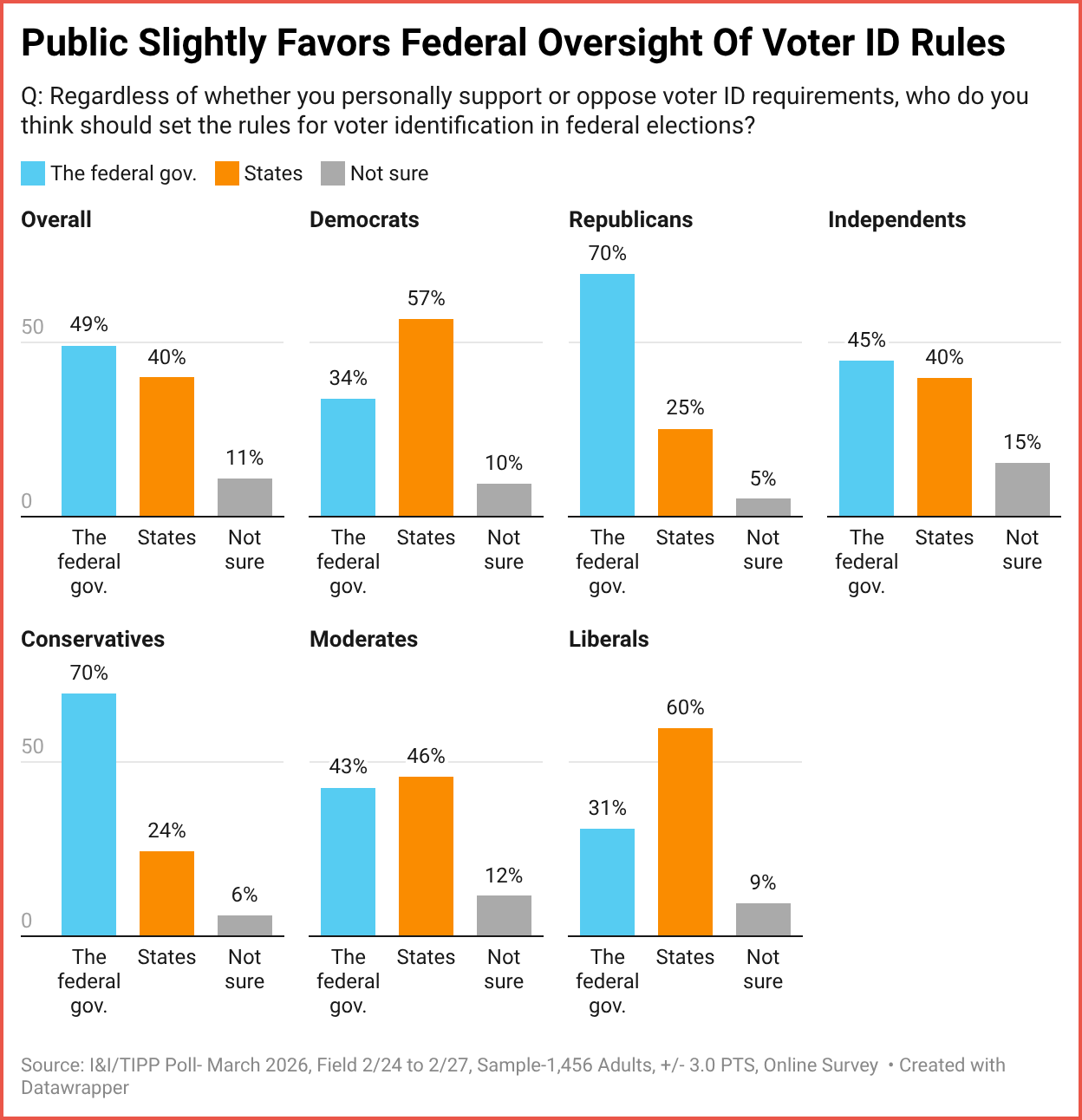
Broken down, however, the responses show sharp partisan splits. Democrats, who are pushing hard at shaping creatively favorable districts in blue state redistricting efforts, clearly prefer state control: Just 34% answered "federal government," while a solid majority 57% picked "each state."
Independents and Republicans both prefer federal control of voter ID rules by 70% to 25%, while indie voters went for federal control by a much smaller plurality of 45% to 40%.
This partisan split over control should come as no surprise.
Democrats have been cagey about voter registration strategies over the years, using big majorities in major cities to apportion votes favorably to their party. They have done quite well with this system. And with aggressive reapportionment plans in place in blue states, Dems hope to gain seats in Congress.
As such, they hope to keep voting rules at the state level in the blue states they dominate.
But they're bucking a big demographic trend, and they know it.
Red states, mainly in the south, are gaining in population, while big blue states are losing some of their disgruntled voting population to those same red states. The result, if current demographic trends continue, augur a major shift in state voting power from blue to red.
"Assuming that population trends since 2020 continue for the rest of the decade, Florida, Georgia, North Carolina, and Texas are all expected to pick up congressional districts in the next reapportionment," wrote Michael Li of the Brennan Center for Justice. "Florida and Texas would be the biggest gainers, with three and four new districts respectively, while Georgia and North Carolina would each add a seat."
Meanwhile, impeccably blue California, Oregon, Minnesota, and New York, along with bluish Wisconsin, Illinois and Pennsylvania, will lose a total of as many as 11 seats. The GOP's much-dreaded Democratic electoral "blue wall" that in the past straddled the nation's Rust Belt and served as a graveyard for Republican electoral hopes, could lose its deciding-power in future elections.
In all those states, the one advantage Dems get is to decide their own voting rules. Republicans would rather have one uniform law for the entire country.
President Donald Trump has made SAVE his No. 1 legislative priority, saying he won't sign any legislation until SAVE is passed by Congress. That turns up the heat under the Republican leaders in Congress to make it their priority, too.
"Congress should unite and enact this commonsense, country-saving legislation right now," Trump said during his Feb. 24 State of the Union Address. "And it should be before anything else happens."
As important as passage of the SAVE Act is to Trump and the GOP, it might be overturned in 2027 if Democrats retake Congress in the midterm elections. If so, Dems will still have to deal with the 2030 Census, expected to show a big population shift from blue states to red states. And they'll also have to deal with an angry bipartisan majority of Americans who want SAVE passed, as the I&I/TIPP Poll shows.
I&I/TIPP publishes timely, unique, and informative data each month on topics of public interest. TIPP’s reputation for polling excellence comes from being the most accurate pollster for the past six presidential elections.
Terry Jones is an editor of Issues & Insights. His four decades of journalism experience include serving as national issues editor, economics editor, and editorial page editor for Investor’s Business Daily.
👉 Show & Tell 🔥 The Signals
I. Tankers Still Moving Through Hormuz
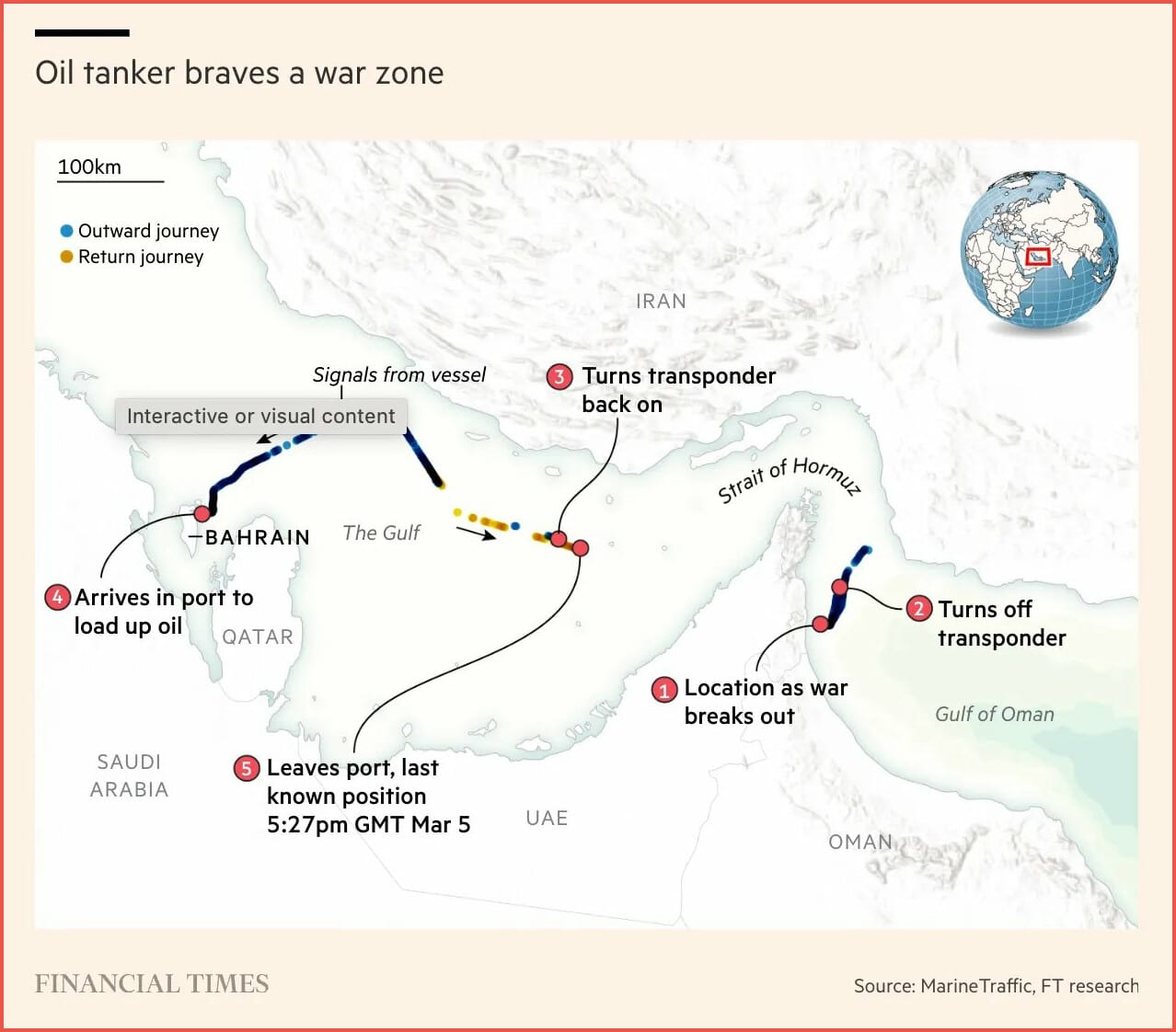
Oil shipments continue to move through the Strait of Hormuz, though under unusually tense conditions. Tracking data show tankers navigating the narrow passage—sometimes switching off transponders briefly near Iranian waters—before continuing to Gulf ports to load crude. The activity highlights how global energy markets still depend on this critical corridor even as security risks rise sharply.
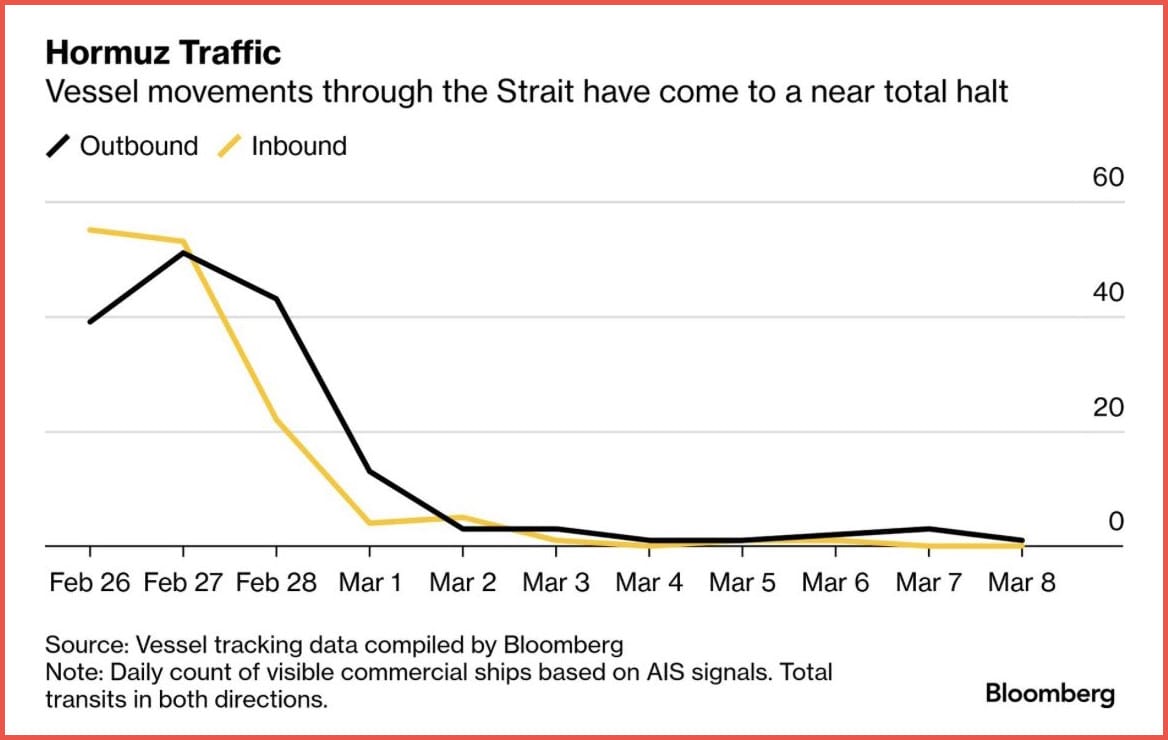
II. Hormuz Shipping Traffic Has Slowed To A Trickle
While some tankers are still making the passage, overall traffic through the Strait of Hormuz has dropped sharply. Vessel-tracking data show commercial ship movements collapsing in recent days, with many operators delaying or rerouting voyages amid escalating tensions in the Gulf. The slowdown underscores the fragility of a chokepoint that carries a large share of the world’s oil supply.
📊 Market Mood — Monday, March 9, 2026
🟩 Oil Shock Rattles Global Markets
Crude surged above $100 a barrel as the Iran conflict threatens supplies through the Strait of Hormuz.
🟧 Stocks Slide on Geopolitical and Growth Fears
U.S. stock futures dropped sharply as investors weighed rising energy costs and a weaker-than-expected jobs report.
🟦 Inflation Concerns Return to Center Stage
Surging oil prices are raising fears that global inflation could rebound and delay Federal Reserve rate cuts.
🟨 China Inflation Picks Up Amid Holiday Spending
Chinese consumer prices rose faster than expected in February, boosted by Lunar New Year travel and spending.
🗓️ Key Economic Events — Monday, March 9, 2026
🟧 10:00 ET — CB Employment Trends Index (Feb)
Composite indicator tracking labor market momentum and potential future hiring trends.
🟧 11:00 ET — NY Fed 1-Year Inflation Expectations (Feb)
Survey measuring consumers’ outlook for inflation over the next year.
🟧 11:30 ET — U.S. Treasury Bill Auctions
Results for 3-month and 6-month Treasury bills provide a read on short-term borrowing demand and interest rate expectations.
editor-tippinsights@technometrica.com